



Victorian Dessert Serving Set
A victorian dessert serving set brings polished silver plate, sterling silver and velvet-lined presentation cases to the table for fruit, berries and post-meal courses.
Victorian Dessert Serving Set
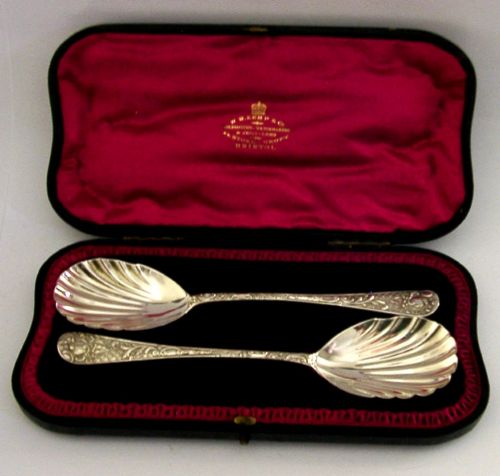
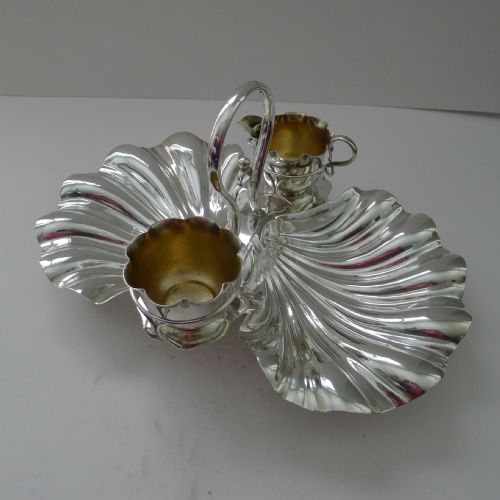
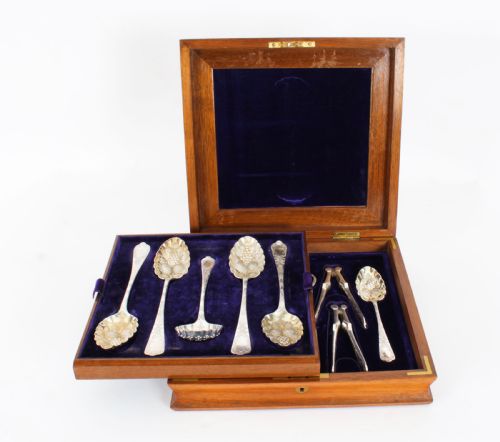
When you search for a victorian dessert serving set, you are looking at matched or cased collections of cutlery and serving pieces designed for fruit, berries, nuts and dessert courses. These ensembles range from boxed pairs of silver gilt berry spoons to elaborate fruit sets complete with matching knives, forks, nutcrackers and grape scissors.
You are most likely to meet cased silver plate and sterling silver services on this page, often presented in fitted boxes lined with silk, satin or velvet. The forms span individual cutlery for twelve persons as well as specialised serving spoons and strawberry sets intended for nineteenth-century dining tables.
The periods and origins represented in these pieces stretch from the mid nineteenth century through the Edwardian era, capturing the Victorian appetite for specialised dining silver. Styles lean heavily towards ornate Victorian decoration and Rococo Revival engraving, reflecting the formal presentation of dessert.
How they were made
Makers utilised sterling silver and silver plate, frequently applying a gold wash, known as silver gilt, to the bowls of berry spoons to protect the metal from the acids in fruit. Metalwork was combined with hand engraving on handles and blades, often featuring elaborate floral and foliate motifs.
Presentation was central to the manufacturing process, resulting in fitted wooden cases lined with velvet, silk or satin to house the cutlery securely. Specialised sets incorporated diverse implements such as steel-bladed fruit knives, cast nutcrackers and articulated grape scissors alongside traditional spoons.
Victorian Dessert Serving Set Retail Price Guide 2026
Typical asking prices for victorian dessert serving set among the pieces listed under this phrase on Sellingantiques today, from the lower quarter to the upper quarter. They describe what is for sale here now, not the wider market.
Grape scissors allowed diners to snip fruit from the bunch without touching the stem, keeping Victorian fingers impeccably clean.
What varies in quality
The standard of a victorian dessert serving set is determined by the depth and crispness of the hand engraving on the metalwork and the completeness of the original fitted case. Pieces featuring heavy sterling silver rather than electroplated nickel silver, alongside intact silk or velvet linings, represent the upper tier of production.
Quality also rests on the cohesion of the set, where matched cased collections with specialised implements like grape scissors and nutcrackers display superior original curation compared to assembled groupings.
Daniel Arter·John Ridgway·Hukin and Heath
The Victorian Dessert Serving Set Glossary
- Berry spoon
- A large serving spoon with a deep bowl, specifically decorated with fruit and leaf motifs for serving soft fruits.
- Silver gilt
- Sterling silver or silver plate that has been coated with a thin layer of gold, providing a rich interior finish to spoon bowls.
- Electroplated nickel silver
- A base metal alloy of copper, nickel and zinc coated with a layer of silver, commonly used for nineteenth-century serving sets.
- Rococo Revival
- A nineteenth-century design style characterised by asymmetrical scrolls, C-scrolls and naturalistic floral ornamentation.
- Cased set
- A collection of tableware housed in a fitted box specifically manufactured to hold each individual piece securely in velvet or satin.
Victorian Dessert Serving Set: Frequently Asked Questions
What is in a dessert serving set?
These sets include specialised cutlery and serving pieces designed for post-meal courses, such as berry spoons, fruit knives, forks, nutcrackers and grape scissors.
Many are housed in fitted presentation cases lined with velvet, satin or silk to protect the metal components.
How were these sets used?
They were utilised during the formal dessert course of nineteenth-century meals to serve fresh fruit, berries, nuts and sweet dishes.
The inclusion of specific implements like grape scissors and gold-washed spoon bowls prevented fruit acids from tarnishing the silver directly while serving.
Are all sets made of solid silver?
Materials vary between sterling silver and various grades of silver plate, including electroplated nickel silver.
Many pieces combine silver or silver-plated handles and bowls with steel blades on the fruit knives necessary for cutting.
How do I date a serving set?
Dating relies on hallmarks stamped into the silver, stylistic cues such as Rococo Revival engraving, and the construction of the fitted presentation case.
Most surviving examples date from the Victorian and Edwardian periods, marked by distinct manufacturing techniques and decorative motifs.