



Cased Fruit Serving Spoons
These cased fruit serving spoons bring presentation and refinement to the table, housed in fitted boxes lined with silk or velvet.
Cased Fruit Serving Spoons
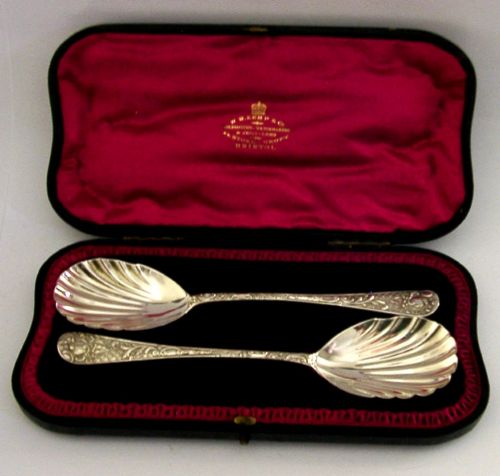
When you search for cased fruit serving spoons, you are looking at matched pairs and sets designed specifically for serving fruit, dessert or berries. These utensils are typically accompanied by fitted presentation cases lined in materials such as satin or leatherette.
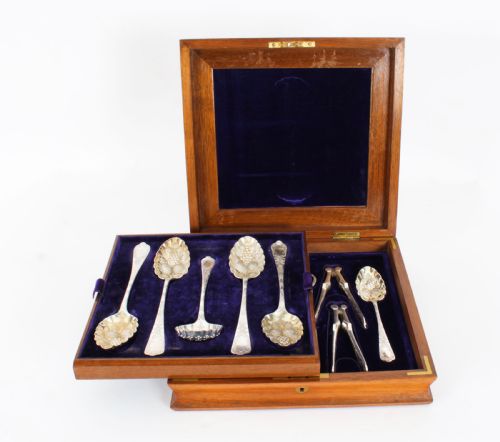
The pieces on this page span the Georgian, Victorian and Edwardian eras, with sterling silver and silver plate being the predominant materials. You will encounter both single pairs and larger sets that often include companion pieces like grape scissors or nutcrackers.
How they were made
Silversmiths utilised sterling silver or silver plate to form the bowls and handles, frequently applying rich silver gilt finishes for a decorative sheen. Many examples exhibit ornate engraving upon the metal surface, reflecting the aesthetic preferences of their period.
The presentation cases were constructed with rigid exteriors covered in leatherette and lined internally with soft fabrics like velvet, silk or satin to protect the metalwork and keep the sets intact.
Presentation boxes associated with these sets utilise protective interior linings made from velvet, silk, satin, and leatherette.
What varies in quality
The distinction between standard and superior pieces rests upon the crispness of the handle engraving and the weight of the silver used in the spoons. Richer ornamentation, such as deep berry embossing, elevates the visual appeal.
Box quality also plays a role, with intact hinges, sound latches and well-preserved velvet or silk linings marking out better-surviving sets from those with worn interiors.
Hukin & Heath
The Cased Fruit Serving Spoons Glossary
- Berry spoon
- A large serving spoon, often historically adapted with embossed fruit and foliage decorations added during the Victorian period. These spoons were principally intended for serving soft fruits and berries at the table.
- Silver gilt
- Sterling silver that has been coated with a thin layer of gold, providing a warm, rich tone to the bowl and handle. This technique was frequently applied to dessert and fruit services.
- Leatherette
- A simulated leather material utilised for the exterior of presentation cases to protect the contents while offering a smart finish. It is durable and commonly found on late nineteenth and early twentieth-century boxes.
- Sifter
- A specialised spoon featuring pierced or perforated bowl work designed to drain liquid when serving stewed or juicy fruits. It frequently appears alongside standard serving spoons in fitted cases.
Cased Fruit Serving Spoons: Frequently Asked Questions
What were cased fruit serving spoons used for?
These sets were utilised at the dining table for serving delicate fruits, berries and desserts during formal meals. The inclusion of specialised utensils made them practical for handling soft foods cleanly.
They were equally popular as wedding gifts or presentation pieces, housed securely in fitted boxes ready for gifting.
How do I care for silver serving spoons?
Silver requires gentle cleaning with a specialised soft cloth to maintain its lustre without wearing away the underlying metal or engraving. Avoid harsh chemical dips that can damage delicate silver gilt surfaces.
Store the spoons within their original fitted cases when not in use to protect the velvet or silk linings and minimise tarnishing from atmospheric exposure.
How can I tell a Georgian spoon from a Victorian one?
Georgian pieces, dating around the late eighteenth and early nineteenth centuries, often display simpler, cleaner lines or restrained hand-engraving. Their construction reflects the prevailing neoclassical or early Regency tastes of the era.
Victorian and Edwardian pieces tend towards heavier, more ornate decoration, frequently featuring deeply embossed fruit designs and elaborate floral handles characteristic of later nineteenth-century manufacturing.
What is normally included in a fruit service?
A standard cased fruit service often contains a matched pair of large serving spoons, sometimes accompanied by matching sugar sifters or dessert-sized utensils. Larger configurations occasionally incorporate grape scissors and nutcrackers.
Every element fits snugly into a custom-moulded interior lined with satin or velvet, designed to keep the complete service organised.