




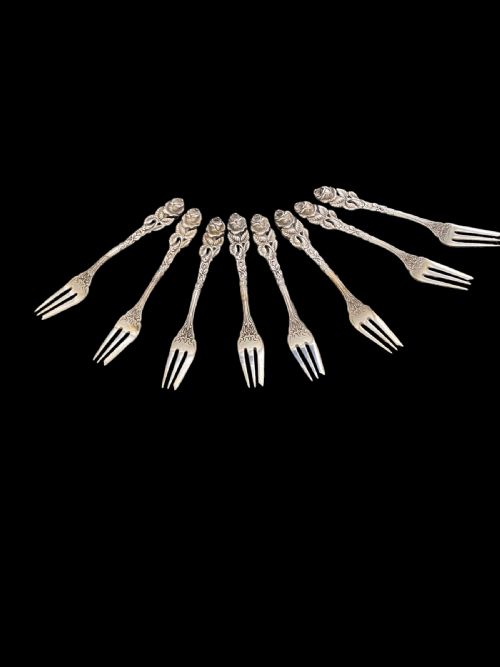

Silver Dessert Forks
Silver dessert forks complete the formal table setting with refined period style, offering lighter service for fruit, pastries and sweets.
Silver Dessert Forks
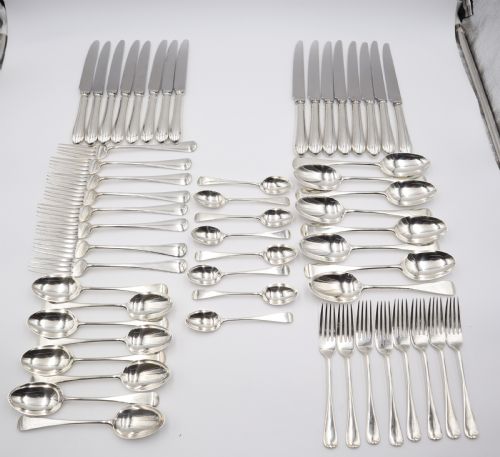
Silver dessert forks appear across multiple historical periods, ranging from eighteenth-century examples to mid-twentieth-century designs. Sets vary in size from small pairs and matched groups of four or five to standard sets of six or twelve, alongside harlequin collections gathered over time.
Makers produced these pieces in various regional styles, including traditional British patterns, George II designs, and traditional German forms. Many examples feature specialised handles or tines designed for specific dining uses, such as cake forks and pastry forks.
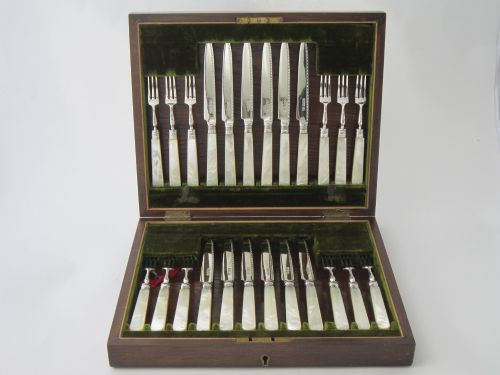
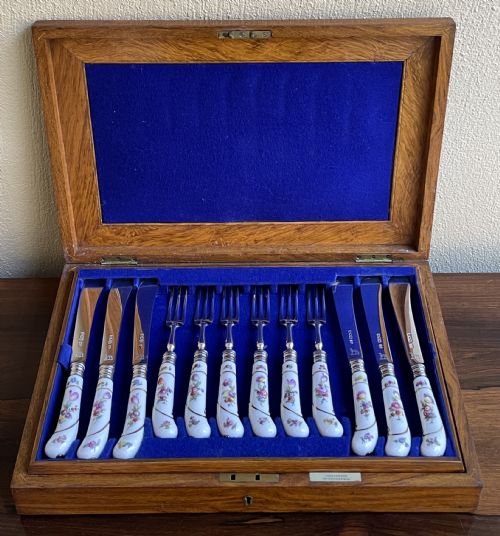
The materials span solid silver, sterling silver, and steel, often paired with organic handles like mother of pearl. Certain sets include accompanying knives, housed in fitted mahogany cases or original presentation boxes.
Making Silver Dessert Forks
Silversmiths forged these utensils from solid silver or sterling silver, frequently employing techniques like casting and hand-beating to shape the metal. Three-pronged and four-pronged tines were individually cut, filed, and polished to achieve precise symmetry.
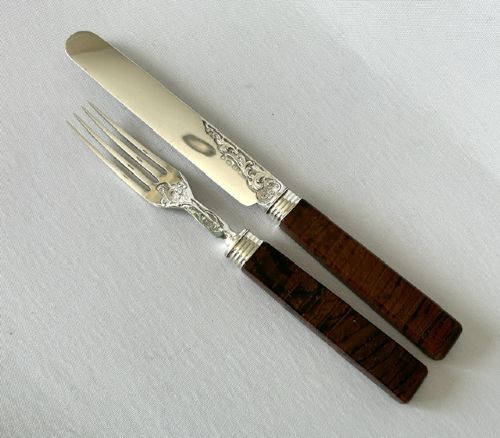
Handles combined silver with natural materials such as mother of pearl, requiring careful pinning and fitting to secure the components. Decorative elements like crests, rose motifs, and traditional patterns were hand-engraved or die-stamped onto the metal surfaces.
Listings feature periods spanning the eighteenth century through to 1950, utilising silver, sterling silver, and steel.
Assessing Silver Dessert Forks
Quality rests upon the crispness of the maker marks, the uniformity of the pattern across the set, and the integrity of any applied crests or hand-engraving. Maker attribution to notable workshops elevates an assembly, as does the presence of original fitted cases.
The condition of alternative handle materials, such as mother of pearl, influences desirability, alongside the original gauge of the silver used in the tines and shafts. Matched sets command greater cohesion than assembled harlequin groups.
E Coker·Liberty and Co·Paul Storr·Aaron Hadfield·Mappin and Webb
The Silver Dessert Forks Glossary
- Sterling silver
- An alloy containing 92.5 percent silver by mass, with other metals added to increase durability for daily dining use.
- Mother of pearl
- The iridescent internal layer of mollusc shells, utilised as a decorative handle material on nineteenth-century and early twentieth-century cutlery.
- Harlequin set
- A collection of cutlery pieces gathered together that match in general form or period but originate from different makers or dates.
- Tines
- The pointed prongs at the end of a fork, numbering three or four on dessert and pastry variations.
- Silver gilt
- Silver objects that have been coated with a thin layer of gold on the surface, also known as vermeil.
Frequently Asked Questions
How do I date silver dessert forks?
Examination of the hallmarks stamped onto the silver reveals the assay office, standard mark, and date letter corresponding to the year of manufacture.
Stylistic cues such as tine count, handle shape, and decorative patterns like fiddle and thread provide additional chronological context.
What is the difference between dessert forks and table forks?
Dessert forks are scaled smaller than primary table forks to accommodate sweet courses, fruit, and cheese service at the end of a meal.
They frequently feature three tines rather than four, or narrower profiles suited for pastry and cake.
Can I use antique silver forks every day?
Solid silver and sterling silver utensils tolerate regular use provided they receive gentle hand washing without abrasive cleaners.
Stoneware and dishwashers risk damaging organic handle materials like mother of pearl and wearing down antique hallmarks.
Why do some sets include knives?
Victorian and Edwardian dining customs often paired dessert forks with matching fruit knives for cutting soft foods cleanly.
These combined sets were frequently preserved together in fitted mahogany or velvet-lined presentation canteens.