




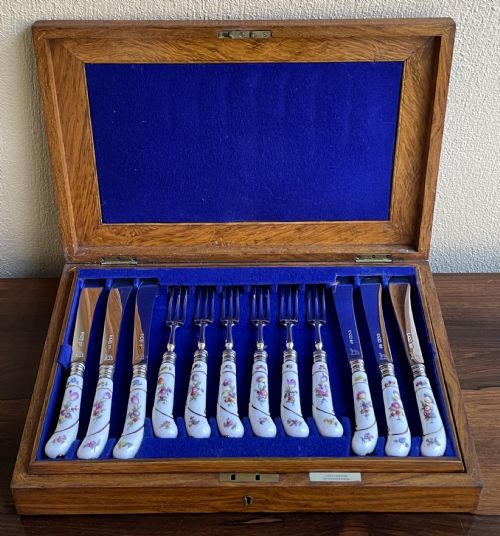

Silver Dessert Cutlery Set
A silver dessert cutlery set brings refined detail to the table, pairing gleaming metal with natural handles.
Silver Dessert Cutlery Set
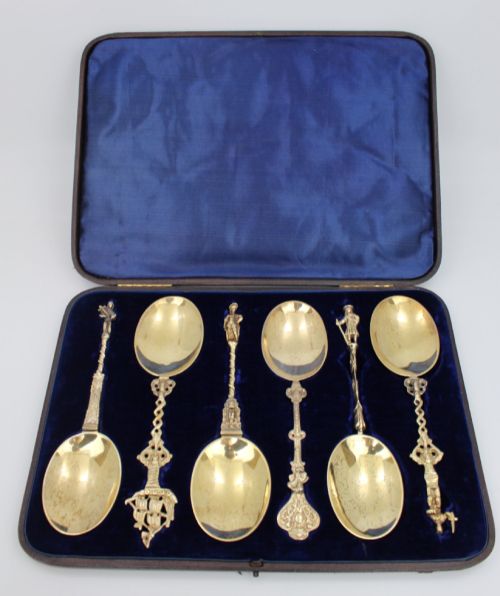
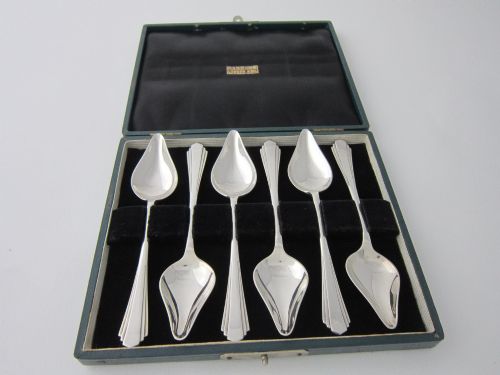
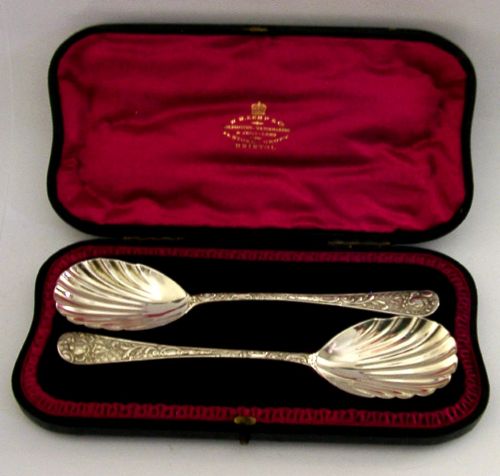
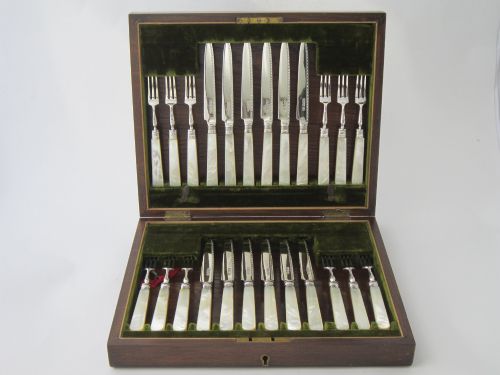
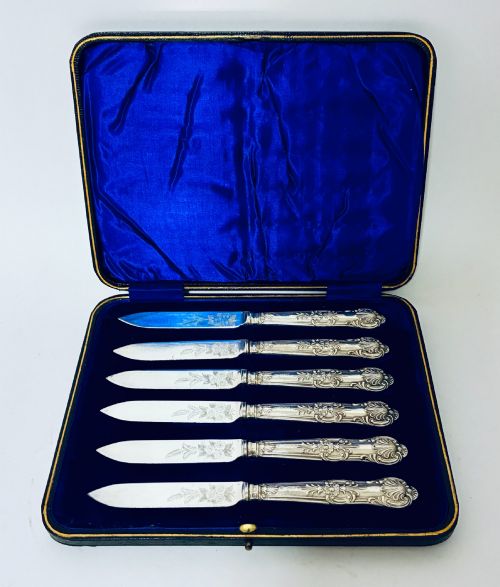
A silver dessert cutlery set encompasses specialised forks, knives, and spoons designed for the final course of a meal, appearing frequently in Victorian and Edwardian iterations. These collections often feature dedicated fruit knives, cake forks, and berry spoons housed in fitted wooden or velvet-lined boxes.
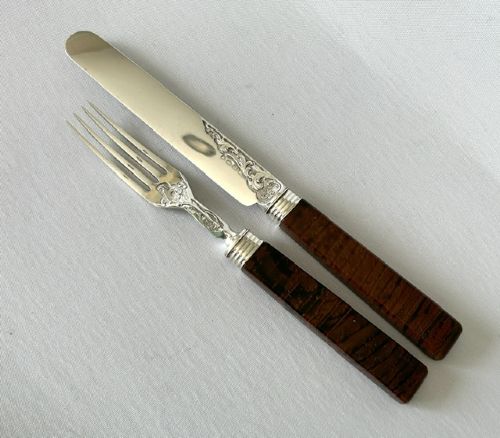
The versions most commonly met on this page span the nineteenth and twentieth centuries, reflecting changing dining habits from grand Georgian services to sleek Art Deco designs. Many include mixed materials where metal blades meet handles carved from organic substances.
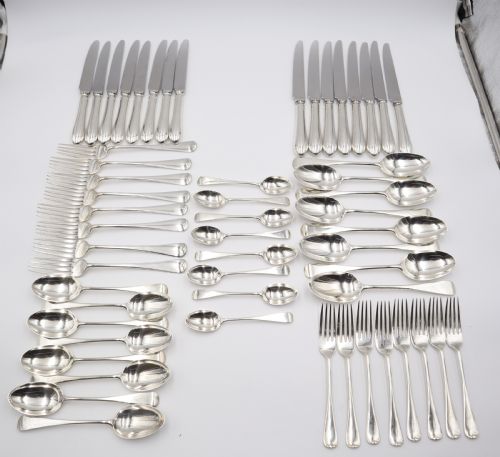
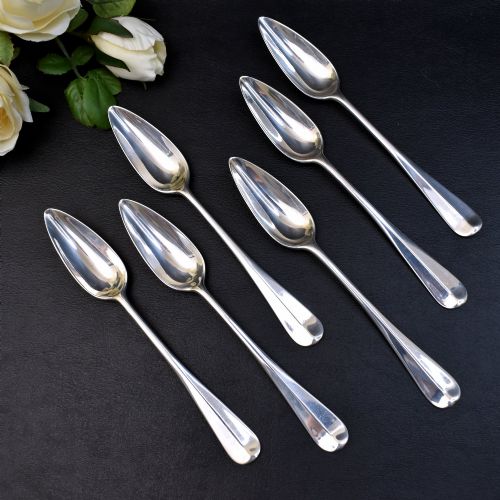
Buyers encounter individual cased sets alongside larger service canteens, demonstrating how these utensils transitioned from formal dining rooms to everyday display. The variety ranges from Scottish grapefruit spoons to French silver-plated cake servers.
How they were made
Sterling silver and silver plate provide the primary metal components, shaped into blades, tines, and bowls through casting, stamping, and smithing. Many Victorian and Edwardian examples combine these silver elements with steel for cutting edges or internal strength.
Engraving and chasing techniques decorate the metal surfaces, employing floral motifs, crests, and geometric patterns typical of Georgian, Victorian, and Art Deco periods.
Silver Dessert Cutlery Set Retail Price Guide 2026
Typical asking prices for silver dessert cutlery set among the pieces listed under this phrase on Sellingantiques today, from the lower quarter to the upper quarter. They describe what is for sale here now, not the wider market.
Several sets include dedicated grape scissors alongside nutcrackers, ensuring that even stubborn fruit offers no resistance to the determined Victorian diner.
What varies in quality
The distinction between standard production and superior craftsmanship rests in the depth of engraving and the harmony of matched components within a fitted case. Maker attribution, such as work by identified silversmiths, elevates certain sets above anonymous workshop output.
Material selection dictates durability and tactile appeal, where thick gauge silver or high grade mother of pearl commands attention over thinner plating and lesser organic substitutes. The preservation of original velvet or satin linings inside oak and mahogany boxes also influences desirability.
Hamilton and Inches·Tiffany·E Coker·Carrington·Christofle·Hukin and Heath
The Silver Dessert Cutlery Set Glossary
- Sterling silver
- A silver alloy containing 925 parts per thousand of pure silver combined with other metals for strength. This standard is frequently stamped with hallmarks indicating the assay office and year.
- Silver plate
- A base metal substrate coated with a thin layer of pure silver. This technique offered a bright finish at a lower cost than solid silver.
- Mother of pearl
- The iridescent internal layer of certain mollusc shells, carved into scales to form knife and fork handles. It provides a smooth, tactile grip with natural colour variations.
- Berry spoon
- A large serving spoon with a wide bowl, typically heavily chased or embossed with fruit and foliage motifs. These spoons gained popularity during the Victorian era for serving soft fruits.
- Canteen
- A fitted box, chest, or cabinet designed to store a complete set of cutlery securely. These wooden containers often feature multiple velvet-lined tiers.
- Gilt
- Silver or another metal surface coated with a thin layer of gold. This treatment adds a warm tone and protects the underlying metal from tarnishing.
Silver Dessert Cutlery Set: Frequently Asked Questions
What is a silver dessert cutlery set used for?
These sets serve the course following the main meal, including fruit, cake, cheese, and pastries. The smaller scale of the knives and forks suits delicate foodstuffs.
Historically, specialised utensils prevented acidic fruits from tarnishing standard dining silver. Today, they remain functional additions to formal dining and afternoon tea.
How do I date a silver dessert cutlery set?
Dating relies heavily on hallmarks stamped onto the metal components, which indicate the assay office and exact year of manufacture. Stylistic clues also help, such as elaborate Victorian engraving or geometric Art Deco lines.
Box construction and interior lining materials provide secondary evidence for the production era. Matching a set to documented maker marks narrows the timeline further.
Are these sets safe to use for dining?
Most solid silver and silver-plated items function safely for food service after gentle cleaning. Mother of pearl handles require careful hand washing rather than immersion in hot water.
Older steel blades need regular drying to prevent corrosion. Modern owners often reserve these pieces for special occasions to preserve their condition.
How should I store a cased dessert set?
Storing utensils inside their original fitted wooden box protects them from accidental scratching and tarnish. Keeping the case in a stable environment away from direct sunlight prevents wood warping and fabric fading.
Acid-free tissue paper can provide extra separation between pieces within the compartment. Proper storage maintains the integrity of both the metal and the organic handle materials.