


Silver Cut Glass Salt
A silver cut glass salt brings together heavy lead crystal and bright metal mountings to grace a dining table or vanity.
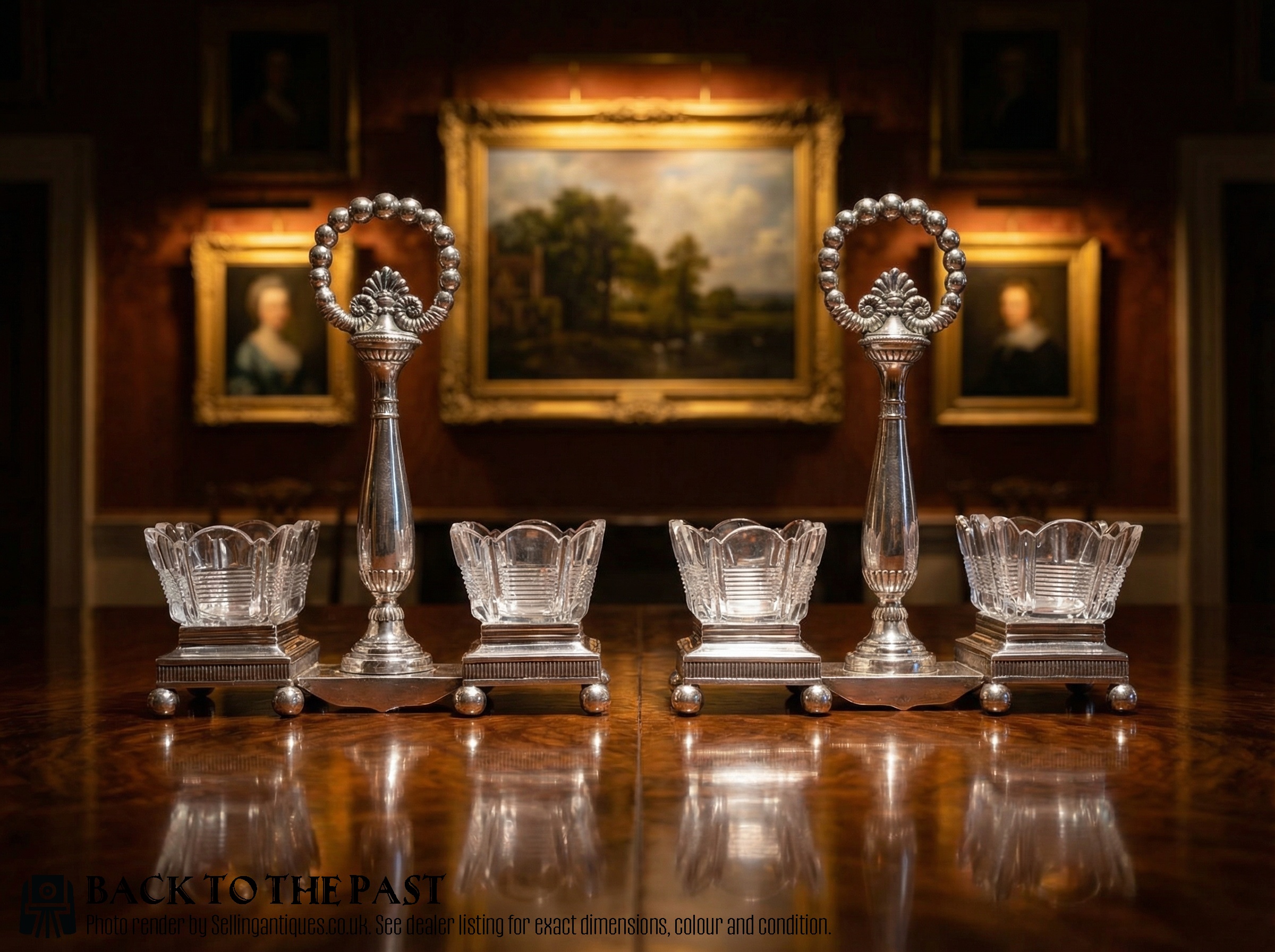
Silver Cut Glass Salt
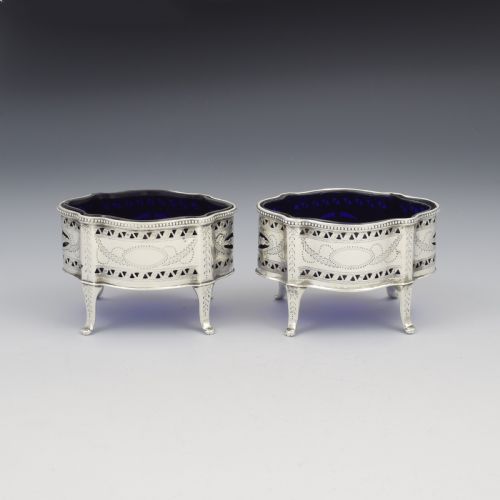
A silver cut glass salt unites a glass or crystal vessel with metal components, appearing frequently across Victorian, Edwardian, and Georgian periods. These pieces include open table salts, cruet sets, and lidded cellars designed for serving condiments or holding small luxuries.
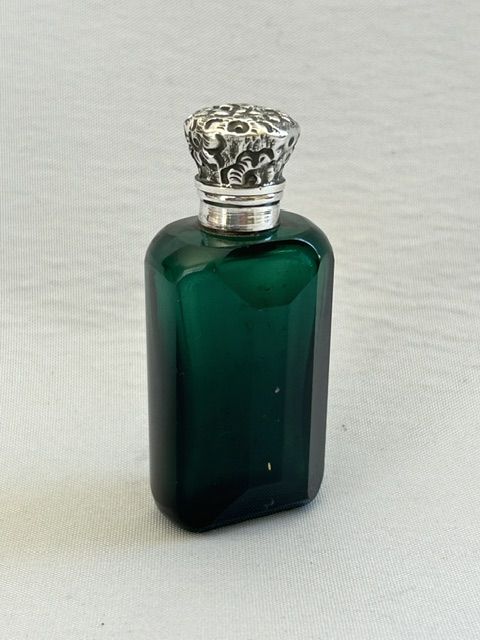
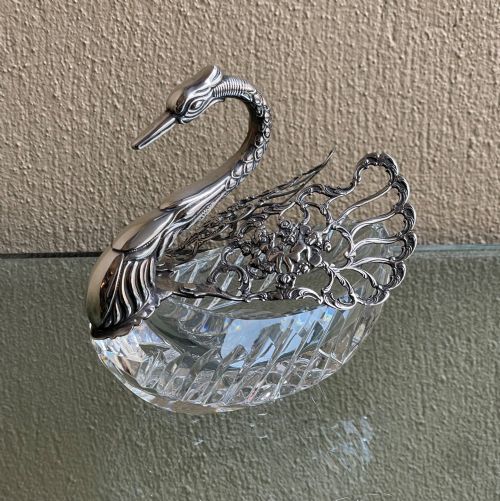
The materials span from clear lead crystal and coloured glass such as Bristol Green, cranberry, and amethyst, paired with sterling silver, silver plate, or silver-gilt. Forms range from simple open bowls to novelty animal shapes and multi-bottle cruet frames.
Buyers encounter these items in various configurations, including matched pairs, cased sets with spoons, and individual desk or dining table accessories. Their origins extend across British workshops and continental makers from the nineteenth century into the mid-twentieth century.
How they were made
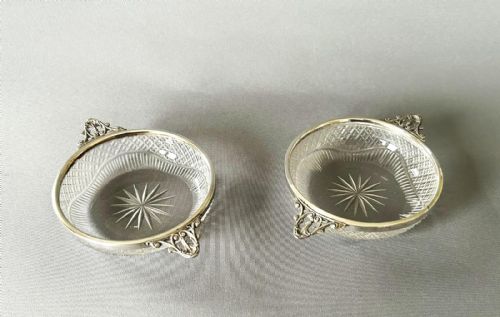
Makers shaped the glass vessels through heavy cutting, pressing, or etching to create facets and hobnail patterns that catch the light. Skilled artisans then fitted these glass bodies with cast or pierced silver mounts, rims, and hinged lids.
Metal components involved sterling silver or silver plate applied over base metals, occasionally enhanced with silver-gilt finishes or vibrant enamel details. Workshops secured these mounts using specialised adhesives, collars, or precise mechanical friction to hold the glass firmly.
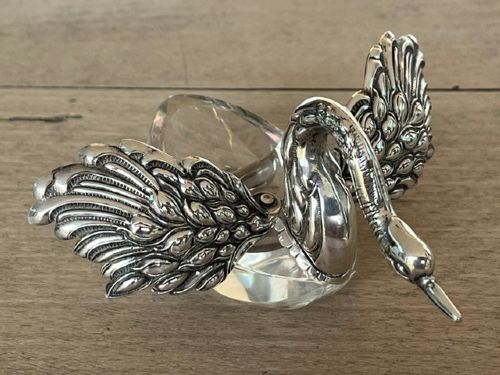
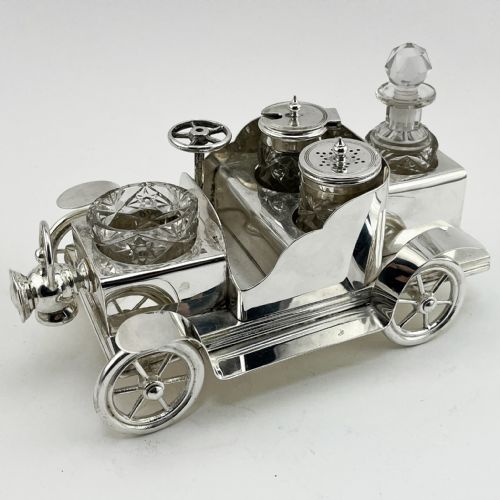
Several Victorian and Edwardian examples take the form of miniature cars, swans, and oak butlers' trays to amuse diners.
What varies in quality
Quality rests in the crispness of the glass cutting and the weight of the metal mountings rather than simple ornamentation. Superior examples show deep, sharp facet work on heavy crystal paired with thick silver rims that fit the glass precisely.
The distinction between standard production and exceptional work lies in the hand-finishing of the silver, the clarity of coloured glass, and the presence of original matched components or fitted presentation cases.
Walker and Hall·William Hutton and Sons·S Morden and Co·Henry Williamson
The Silver Cut Glass Salt Glossary
- Cruet set
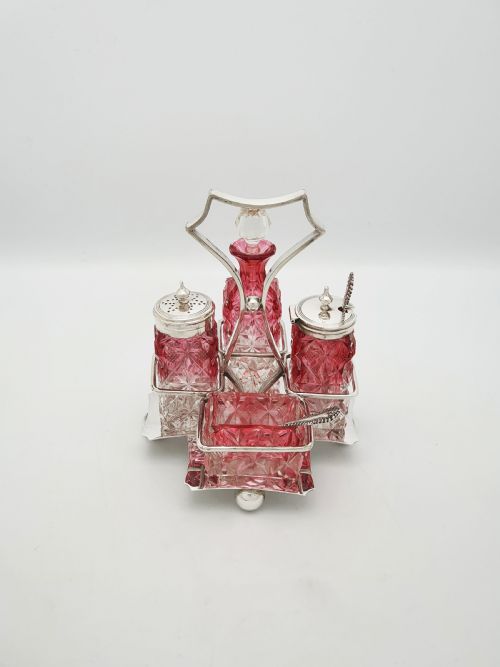
- A fitted frame holding multiple bottles, jars, or shakers for condiments at the dining table. These stands often combine silver-plated frameworks with cut glass vessels.
- Sterling silver
- An alloy consisting of silver and other metals, traditionally copper, meeting a specific standard of purity for manufactured objects. This material appears frequently in table salt rims and condiment caps.
- Silver-gilt
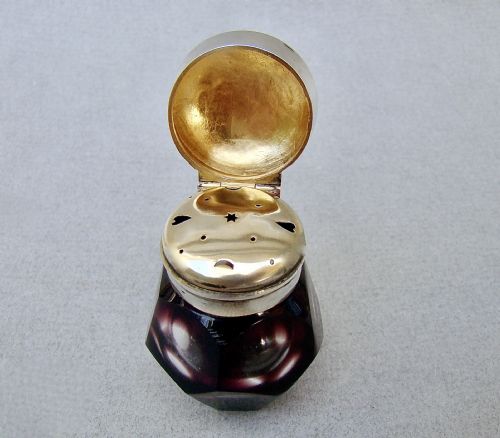
- Silver that has been coated with a thin layer of gold on its surface to provide a rich, warm tone. This technique often appears on the interior of salt cellars to protect the metal from corrosive contents.
- Hobnail cut
- A decorative glass-cutting pattern featuring a series of raised, faceted pyramidal points resembling hobnails on a boot. It adds texture and refraction to scent bottles and salt bodies.
- Open salt
- A small tabletop bowl designed to hold loose salt before the widespread adoption of individual shakers. Diners used tiny spoons or pinched the salt directly from these vessels.
Silver Cut Glass Salt: Frequently Asked Questions
What were salt cellars used for?
Salt cellars held granular salt on the dining table before the invention of spring-loaded shakers. Diners used small spoons or their fingers to sprinkle seasoning onto food.
Wealthier households placed decorative open salts near each guest or shared larger master cellars across the length of the table.
How do I clean the silver mounts?
Clean silver mounts gently with a soft cloth and a specialised metal polish, taking care to avoid harsh abrasives. Keep moisture away from any glued joints or paper linings inside the bases.
Wash the glass portions separately in warm soapy water and dry them completely before reassembling the piece.
How can I tell the period?
Examine the hallmarks stamped on the silver components, as assay office marks and date letters provide precise years of manufacture. Stylistic clues such as heavy Victorian casting or Art Deco geometric enamel also indicate the era.
Glass manufacturing techniques and colours further help distinguish Georgian hand-blown pieces from later machine-pressed items.
Are these safe for daily use?
Most antique pieces function well for modern dining, provided you handle them with care and wash them by hand. Avoid exposing old crystal and delicate silver plate to extremes of temperature or automatic dishwashers.
Silver-gilt interiors help protect the metal from salt corrosion during regular use.