
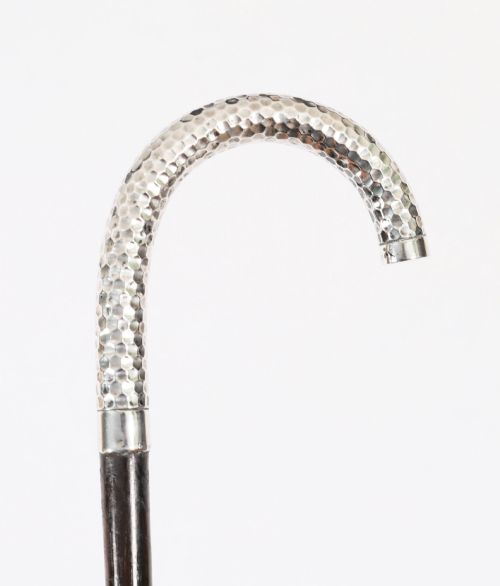
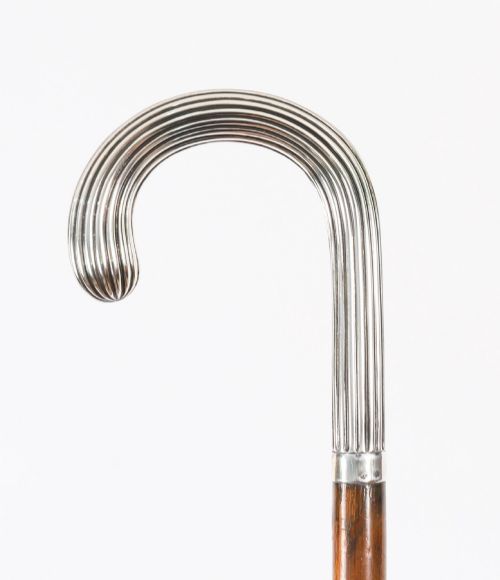
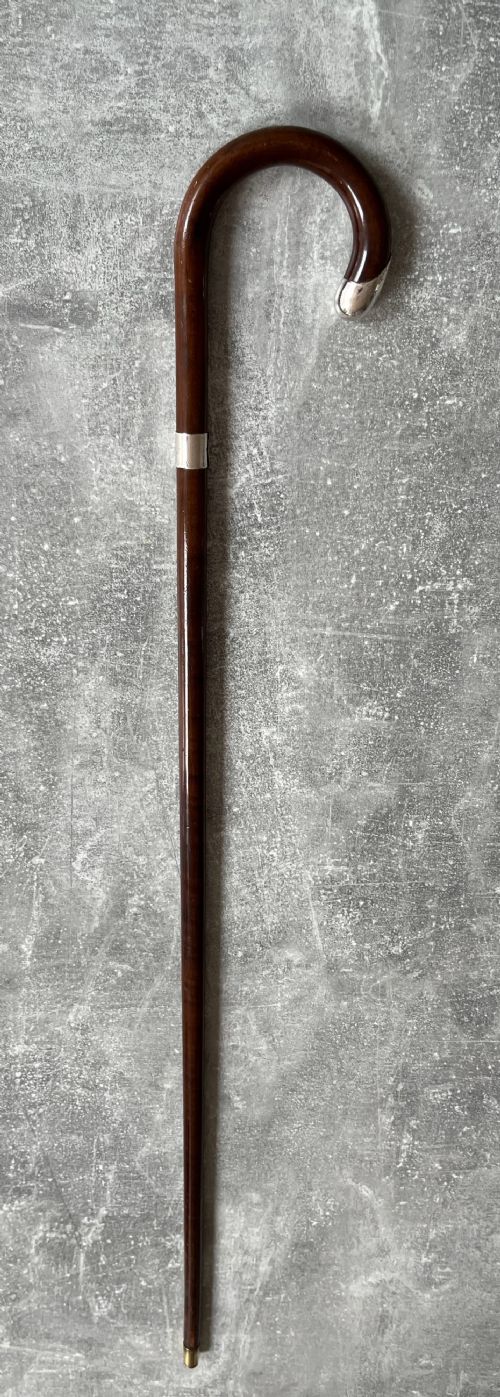
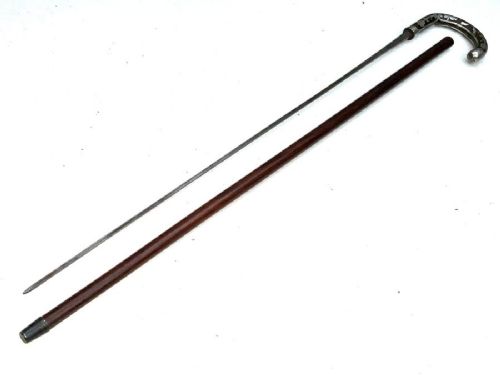
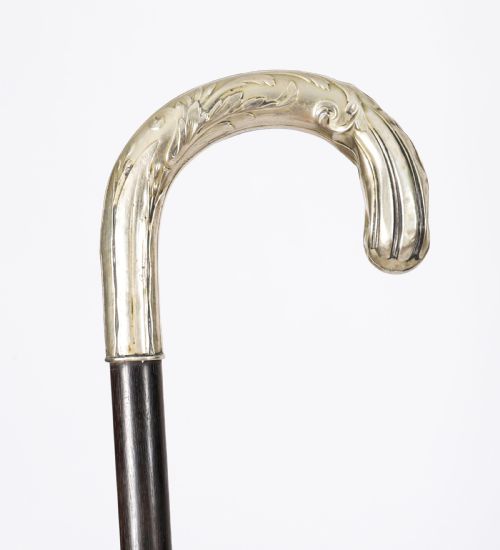


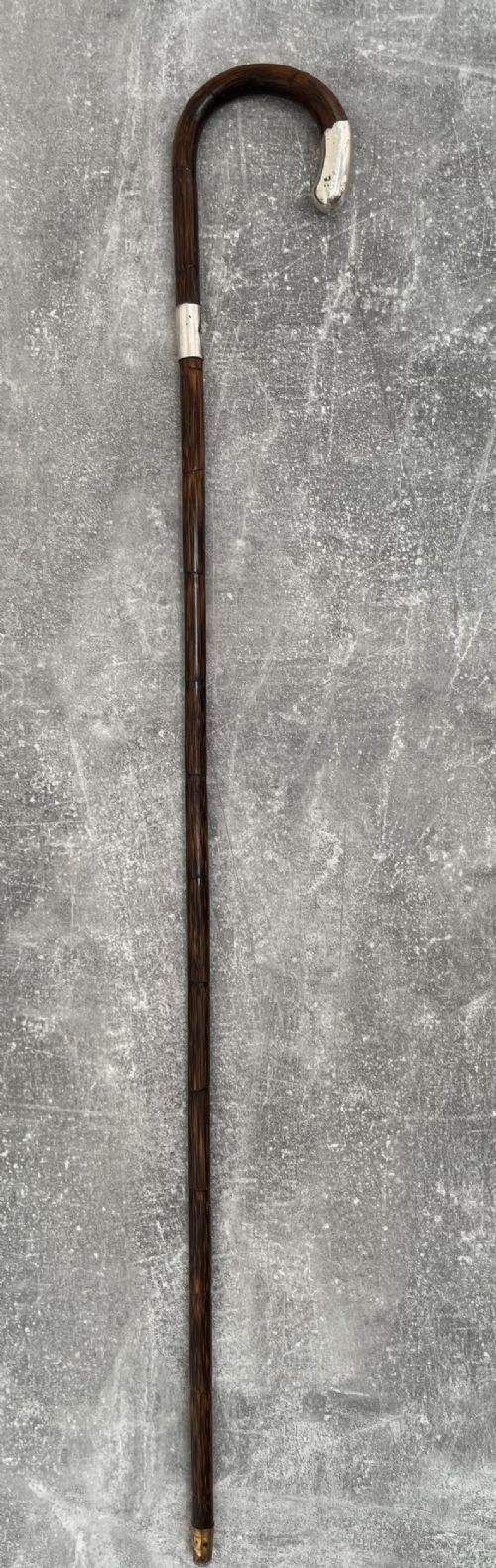

Silver Crook Walking Stick
A silver crook walking stick is a gentleman's support with a curved handle, combining silver mounts or handles with wood, horn, and steel.
Silver Crook Walking Stick
When you search for a silver crook walking stick, you encounter accessories shaped for the hand with a curved top. These items serve as walking aids and dress accessories across the nineteenth and twentieth centuries.
The pieces on this page span the Edwardian era, the nineteenth century, and the nineteen-thirties. Forms include standard walking sticks alongside concealed sword sticks.
Origins range from British workshops to French Belle Epoque pieces, continental European examples, and Chinese export items. Handles appear in horn, embossed silver, and silver plate.
How they were made
Shafts rely on hardwoods such as ebony, malacca, thorn wood, and ebonised oak, paired with brass, steel, and silver collars or mounts. Some examples incorporate bamboo or horn.
Silversmiths formed handles through embossing or casting, attaching them to timber shafts alongside metal collars. Sword sticks conceal blades within the wooden body, secured beneath the crook handle.
Silver Crook Walking Stick Retail Price Guide 2026
Typical asking prices for silver crook walking stick among the pieces listed under this phrase on Sellingantiques today, from the lower quarter to the upper quarter. They describe what is for sale here now, not the wider market.
Children's walking sticks appear alongside gentleman's sword sticks, proving that miniature promenaders required armaments too.
What varies in quality
Quality rests in the weight and definition of the silver work, from plain mounts to deeply embossed handles. The choice of shaft material, such as malacca or ebony against standard hardwood, alters the character of the piece.
Maker marks and regional origins distinguish standard production items from signed workshop pieces. The integration of concealed blades and horn handles introduces further variation in construction.
Jonathan Howell·Wang Hing and Company·Brigg
The Silver Crook Walking Stick Glossary
- Crook
- A curved handle shaped like a shepherd's crook for holding in the hand. This profile defines the upper section of these walking sticks.
- Malacca
- A slender stemmed rattan palm used for walking stick shafts. It is valued for its strength and mottled brown finish.
- Sword stick
- A walking stick containing a concealed blade within the shaft. These pieces require a secure locking mechanism beneath the handle.
- Silver plate
- A thin layer of silver applied to a base metal core. This technique appears on continental child's sticks and decorative pieces.
Silver Crook Walking Stick: Frequently Asked Questions
What is a silver crook walking stick?
A silver crook walking stick is a traditional accessory featuring a curved handle adorned with silver mounts, collars, or full silver construction.
These items combine timber shafts of ebony, malacca, or oak with metal work designed for daily use or formal attire.
How do I date a walking stick?
Dating relies on hallmarks, regional styles, and materials characteristic of periods like the Edwardian era or the nineteenth century.
Maker marks and specific construction methods, such as embossed silver or French Art Nouveau designs, provide further chronological clues.
What woods are used for shafts?
Makers utilised hard woods including ebony, malacca bamboo, thorn wood, and ebonised oak for strength and appearance.
These timbers are paired with horn handles and silver collars to complete the construction.
Are all these sticks sword sticks?
No, many pieces function purely as standard walking aids or dress canes without hidden blades.
Sword sticks represent a specific subcategory where a steel blade is housed securely inside the wooden shaft.