
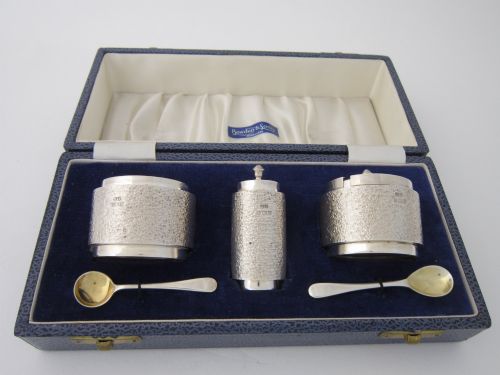
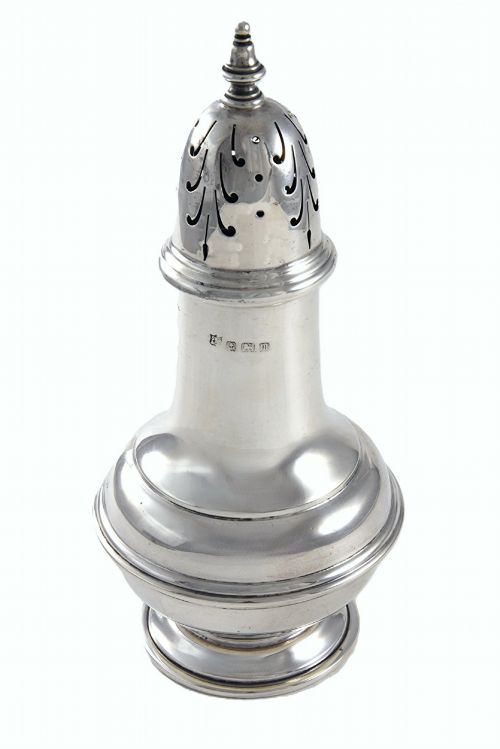
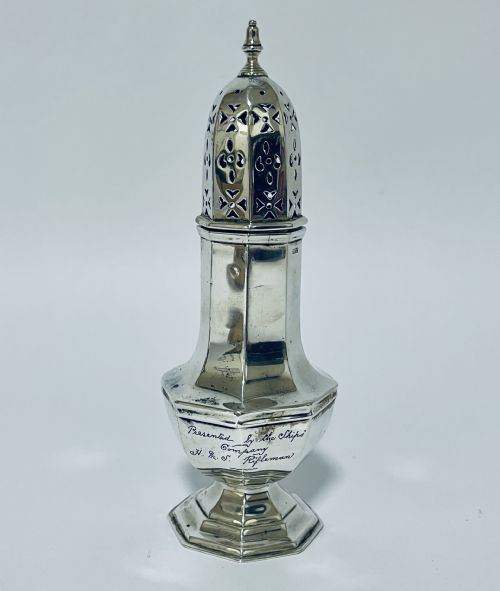

Silver Condiment Shaker
A silver condiment shaker brings domestic silver onto the dining table, offering useful form alongside polished shine.
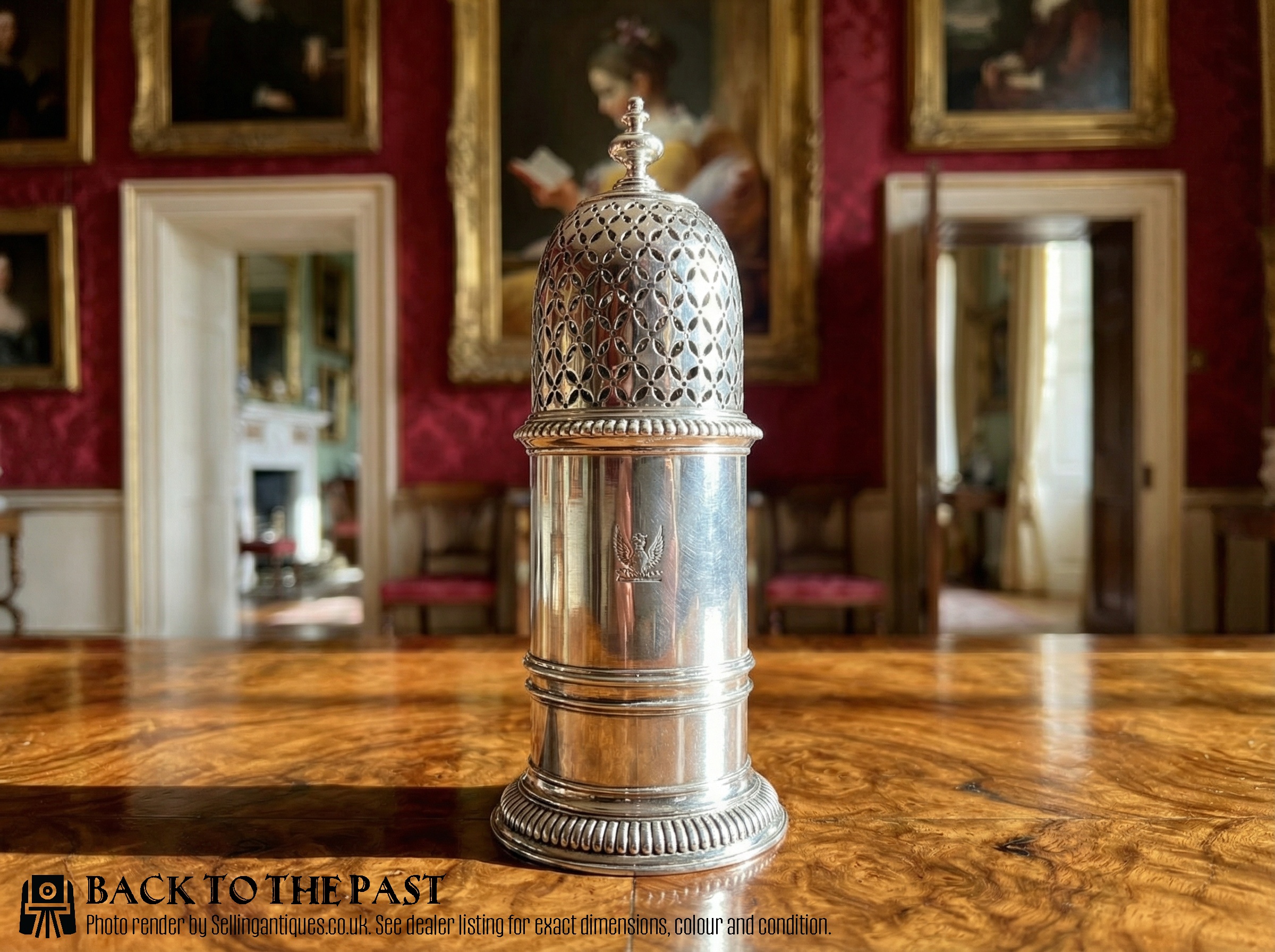
Silver Condiment Shaker
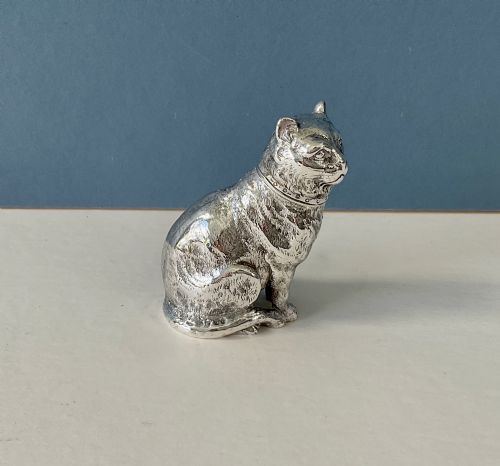
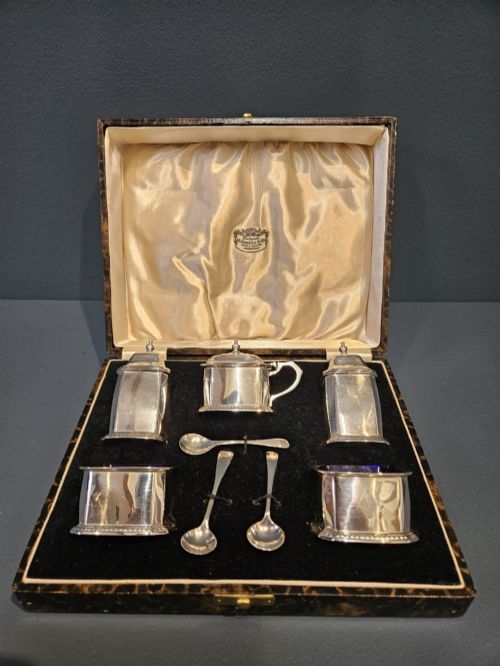
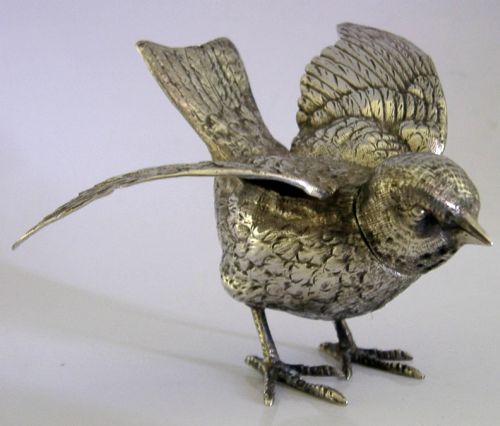
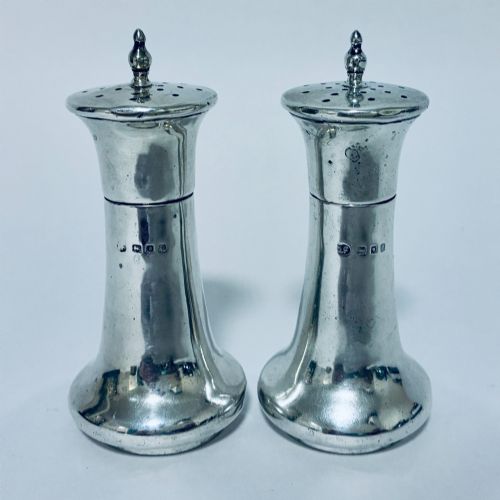
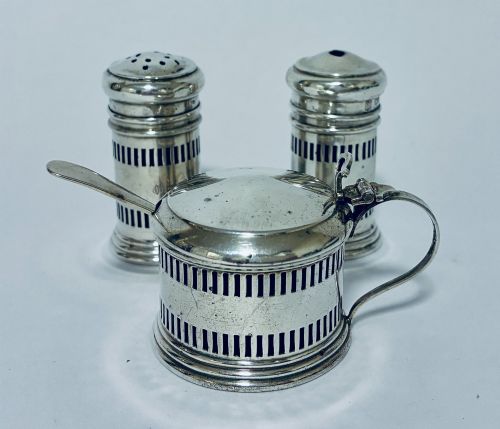
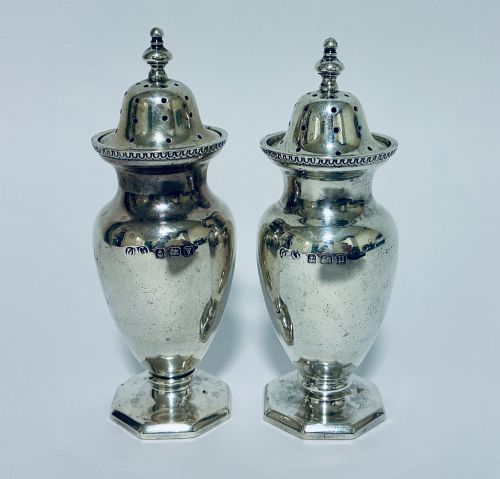
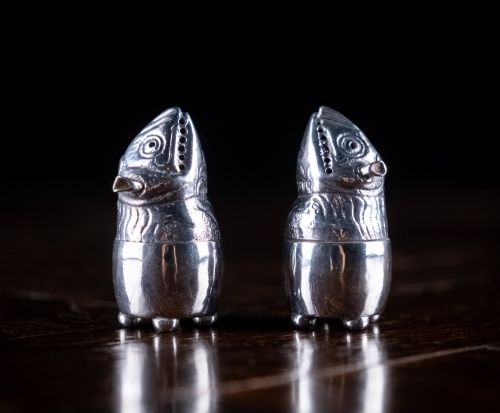
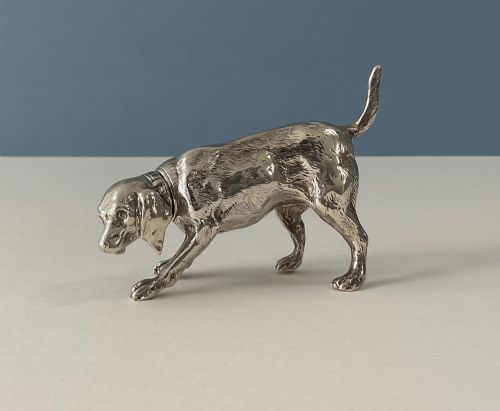
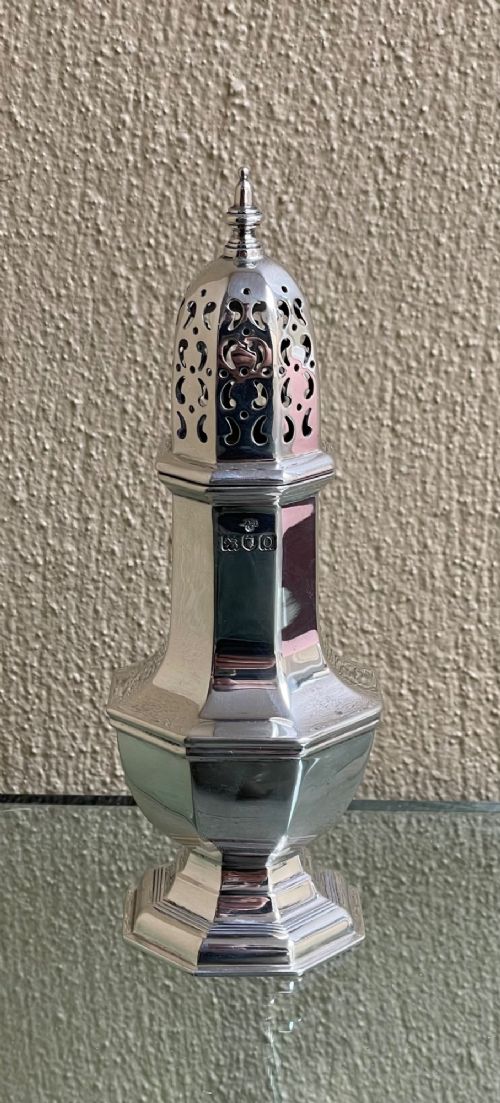
A silver condiment shaker is a table accessory designed for dispensing seasonings such as pepper, salt, or sugar. When searching this phrase, a buyer encounters single pots, pairs of pepperettes, and larger multi-piece cruet sets holding bottles and shakers together. The forms range from plain nineteenth-century casters to whimsical Victorian and Edwardian novelties shaped as birds, cats, and dogs.
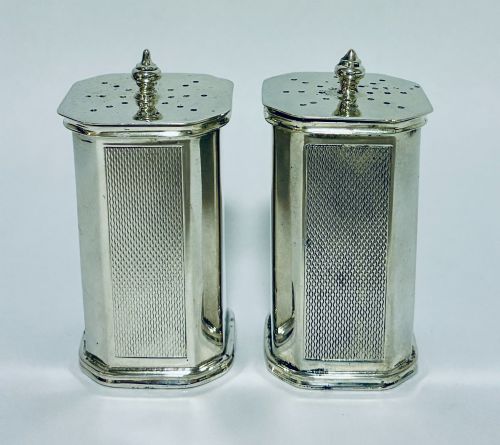
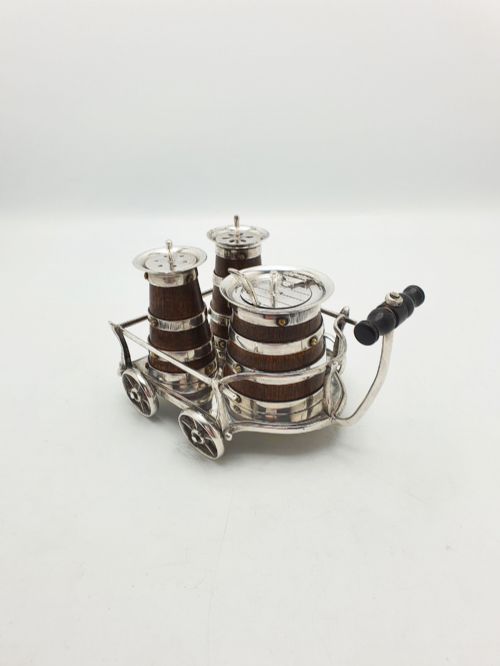
The pieces appearing on this page span several decades, crossing the Victorian and Edwardian eras into the Art Deco period of the nineteen-thirties. Standard upright casters and pepper pots sit alongside fitted silver-plated frames and oak barrel cruet sets. Most examples function as part of matched sets or serve as individual tabletop novelties.
Materials and Construction
Makers utilised solid sterling silver, eighty-hundredths silver, and silver plate over base metals to produce these table wares. Glass inserts, cut glass bottles, and interior velvet linings frequently accompany the metal frames in larger multi-piece cruet sets. Enamel work also appears on Continental pieces from the Art Deco period, adding colour to the metal body.
Production techniques combined traditional silversmithing with specialist casting for sculptural animal novelties like owls, chicks, and foxes. Pierced lids and screw-fitting tops allowed for the controlled distribution of dry condiments. Hallmarks stamped directly into the silver record the assay office, standard, and year of manufacture.
Listings feature silver condiment shakers spanning the Victorian, Edwardian, and Art Deco periods, alongside Georgian revival pieces.
Distinctions in Quality
Quality rests upon the crispness of the modelling in animal novelties and the structural integrity of the fitted frames in multi-piece cruet sets. Pieces with sharp feather or fur detailing demonstrate superior craftsmanship compared to worn or softly cast examples. The thickness of the silver and the weight of the piece dictate substantial handling.
Condition of the glass inserts and the preservation of original silver plating determine the merit of plated sets. Clear hallmarks and legible maker stamps provide assurance of origin, distinguishing standard workshop production from finer signed works.
Frederick Brasted·Sampson Mordan·Roberts and Belk·Goldsmith and Silversmith
The Silver Condiment Shaker Glossary
- Cruet set
- A matched collection of bottles, jars, or shakers held within a metal or wooden stand for table service. These sets often group mustard pots, salt cellars, and pepper casters together.
- Caster
- A tall shaker with a pierced dome top used for sprinkling sugar or fine spices over food. They typically feature a pedestal foot and a detachable lid.
- Pepperette
- A small shaker designed specifically for ground pepper, often produced in matched pairs. They appear in both classical urn shapes and novelty animal forms.
- Hallmark
- A series of official marks stamped onto precious metal items to guarantee the purity of the silver. These symbols identify the maker, assay office, and year of testing.
- Novelty silver
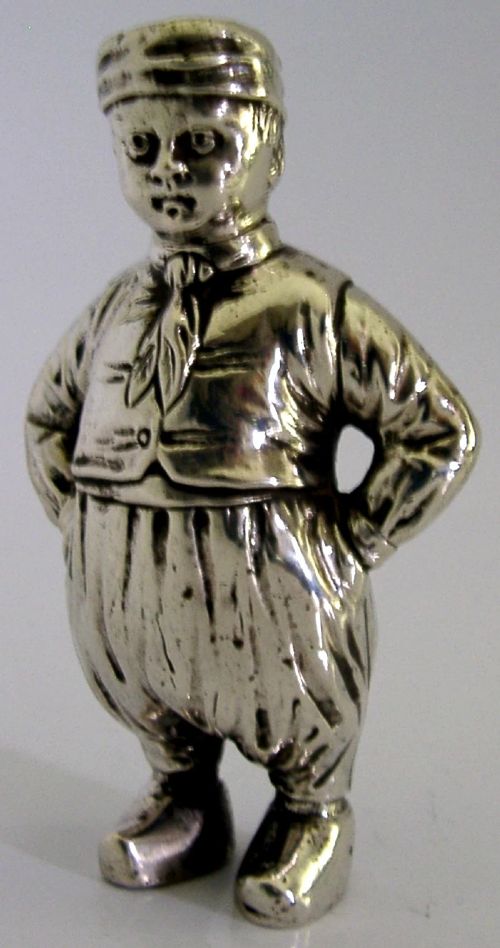
- Silver objects fashioned into humorous or realistic shapes such as animals, figures, or everyday items. Victorian and Edwardian makers produced these pieces in large quantities.
Silver Condiment Shaker: Frequently Asked Questions
What is a silver condiment shaker used for?
These vessels hold and dispense dry seasonings such as salt, pepper, and caster sugar at the dining table. They allow diners to add seasoning directly to food during meals.
Larger versions double as display objects when not in active use on the dining table.
How do I clean a silver condiment shaker?
Wash the piece gently in warm water with mild soap, avoiding harsh abrasive cloths that might scratch the metal surface. Dry thoroughly with a soft polishing cloth to maintain the shine.
Take care around pierced lids and glass inserts to prevent moisture from becoming trapped inside.
Are these shakers made of solid silver?
The listings include both solid sterling silver pieces and silver-plated items over a base metal frame. Hallmarks stamped on the metal indicate the specific standard of silver used.
Some multi-piece sets combine silver frames with cut glass bottles and interior glass liners.
How can I tell the period of a shaker?
Assay office hallmarks and date letters stamped into the silver provide the exact year of manufacture. Stylistic indicators, such as Art Deco geometric lines or Victorian novelty animal designs, also point to the era.
Comparing the weight, construction method, and form helps place the piece within a specific decade.