

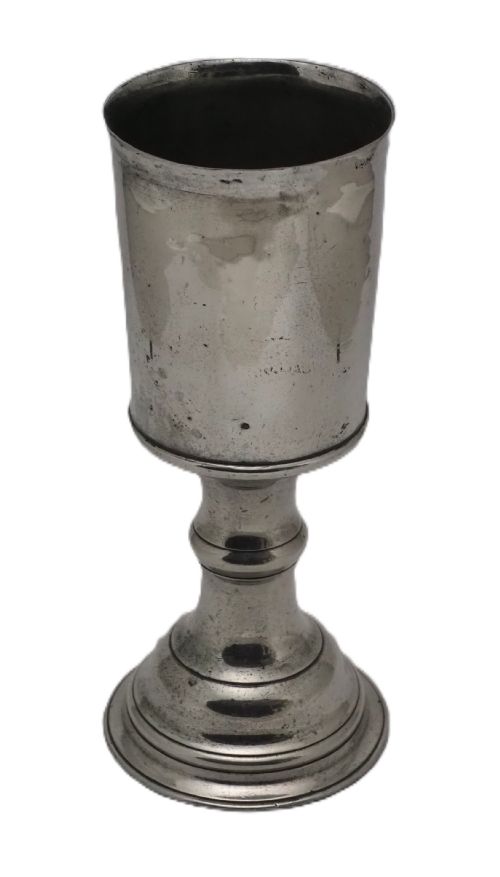
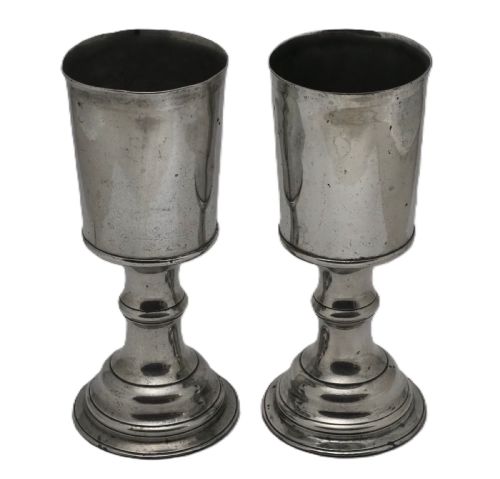


Silver Communion Chalice
A silver communion chalice carries centuries of ecclesiastical craftsmanship, offering a tangible link to historic sacred rituals through enduring metalwork.
Silver Communion Chalice
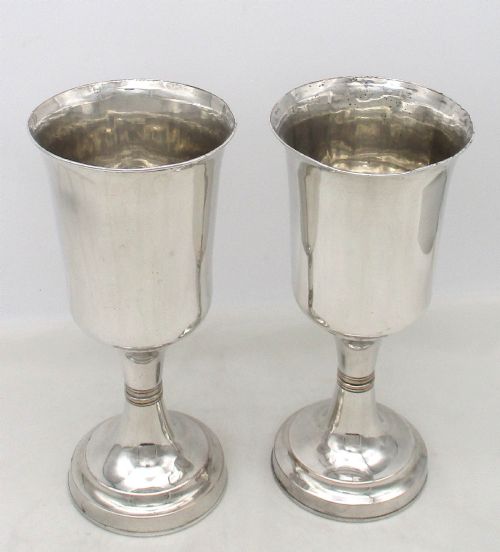
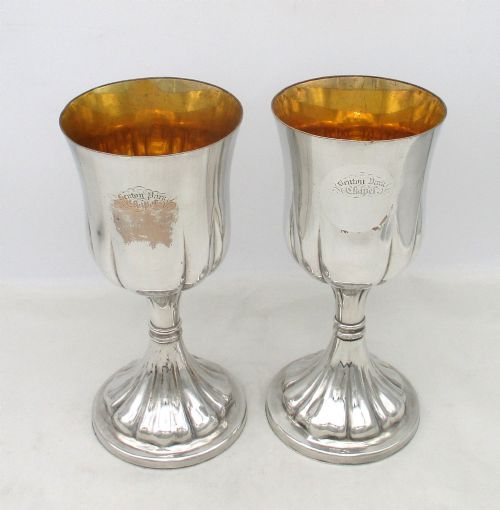
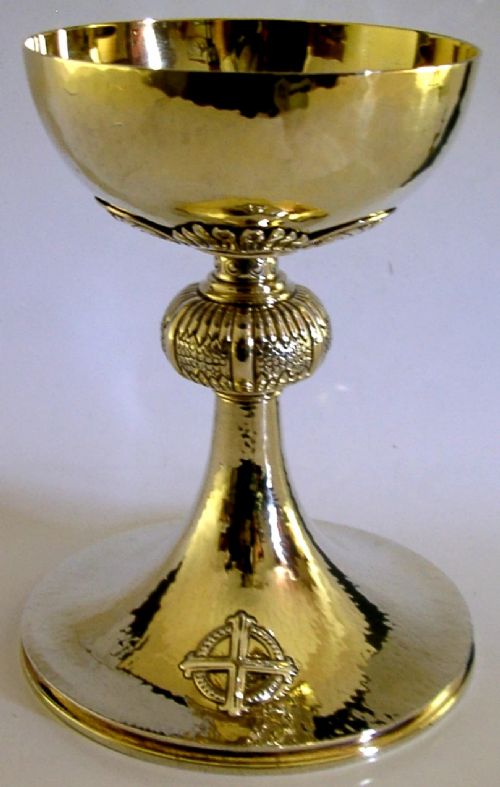
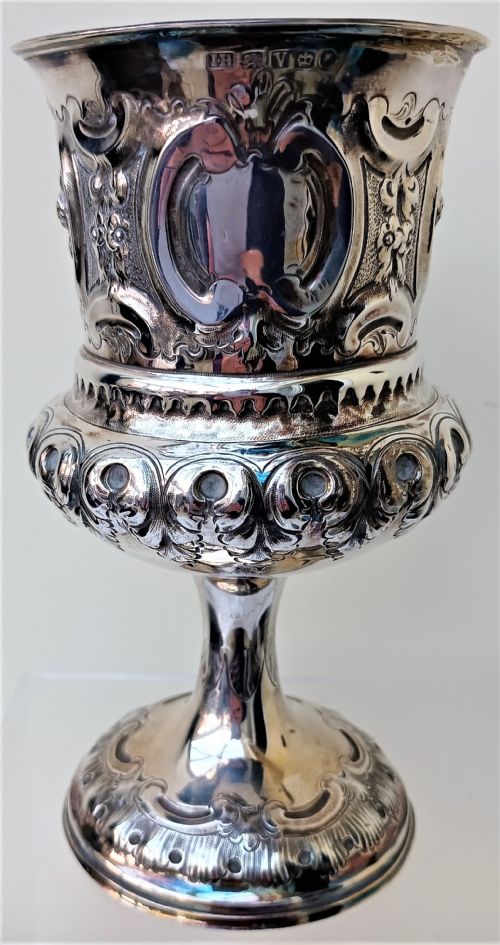
A silver communion chalice represents a sacred vessel designed for sacramental wine, often taking the form of a deep cup raised on a stem and a spreading foot. When browsing for a silver communion chalice, buyers encounter forms ranging from heavy Victorian ecclesiastical silver to Georgian sterling silver goblets and mid-century modern religious chalice cups. The selection also includes plated wares such as Old Sheffield Plate and silver plate, alongside pewter examples from the eighteenth century.
These vessels frequently appear in pairs or within boxed travelling sets intended for portable religious services. The origins span English and Irish workshops, shifting from plain eighteenth-century tavern-style pewter and Georgian bright-cut silver to the ornate Gothic revivalism of the nineteenth century.
Materials and Techniques
Makers shaped sterling silver and silver gilt through hammering, spinning, and casting, applying parcel gilding to the interior bowl to protect the metal from acidic wine. Old Sheffield Plate and standard silver plate utilise a base metal core, such as copper, fused or electroplated with a thin layer of silver.
Pewter chalices relied on tin alloy casting to achieve sturdy, weighty vessels with simple domed feet. Silversmiths inscribed hallmarks, maker marks, and dates directly into the metal surface, documenting city assay offices and production years.
Chaplains carried compact silver chalices into World War field services, proving that reverence travels light.
Assessing Craftsmanship and Condition
Quality rests in the weight of the metal, the balance of the stem, and the crispness of the chased, engraved, or parcel-gilt details. Substantial sterling silver examples with deep gilding and intact assay marks sit at the upper end of the scale.
Plated vessels vary according to the preservation of the silver layer over the underlying copper or base metal, where wear reveals the warm metal beneath. The distinction between standard domestic goblets and dedicated church chalices also shapes desirability.
John hunt and Robert Roskell·Elkington Mason·William Eaton·James Deakin and Sons·Edward and Sons·Dixons·George Unite
The Silver Communion Chalice Glossary
- Parcel gilt
- Silver objects that have been partially coated in gold leaf or wash, specifically on the interior bowl of a chalice.
- Old Sheffield plate
- A material made by fusing a thin sheet of silver to a copper core before rolling and shaping.
- Paten
- A small shallow plate used to hold the bread during communion, often accompanying a chalice in a set.
- Kiddush cup
- A ritual goblet used for sanctifying the Sabbath or festivals, sharing forms similar to domestic silver goblets.
- Bright cut
- An engraving technique utilising faceted cuts to create a sparkling geometric or floral pattern on the silver surface.
Silver Communion Chalice: Frequently Asked Questions
How do I clean a silver chalice?
Clean sterling silver vessels gently with a soft microfibre cloth and specialised silver polish to preserve delicate engravings and hallmarks. Avoid abrasive cleaners that strip thin silver plating or damage parcel gilt interiors.
For pewter or plated items, use mild soapy water and dry thoroughly to prevent tarnishing and spotting without wearing down the historic metal surface.
Were these chalices used in churches?
Many examples on the market originated in Anglican, Catholic, or nonconformist ecclesiastical settings, bearing church inscriptions or coming from fitted travel communion sets.
Others served domestic or secular liturgical purposes, functioning as presentation cups, loving cups, or Kiddush vessels despite sharing the exact chalice form.
How can I tell the age of a chalice?
Dating relies on reading the hallmarks stamped into the silver, which identify the assay office, date letter, and maker's mark for British pieces. Unmarked pewter or plated items require stylistic analysis, comparing foot shapes, stem turning, and engraving styles to eighteenth and nineteenth-century baselines.
Can I use an antique chalice for drinking?
Sterling silver and parcel gilt chalices are generally safe for use, provided the interior gilt layer remains intact to separate the wine from the silver. Plated or pewter pieces require careful inspection for wear that exposes base metals, making them better suited for display.