






Silver Calling Card Box
A silver calling card box is a small, hinged receptacle for visiting cards, most commonly found here in Victorian and Edwardian sterling silver.
Silver Calling Card Box
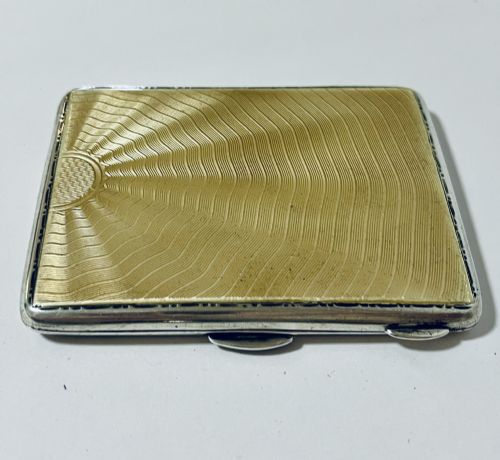
A silver calling card box serves to hold the visiting cards that gentlemen and ladies exchanged during the nineteenth and early twentieth centuries. The examples encountered on this page span the Victorian and Edwardian periods, stretching from the mid-nineteenth century into the twentieth, alongside Art Deco, Soviet Era, and Anglo-Indian variations.
Most items on this page take the form of card cases or card boxes, occasionally combined with stamp cases, aide-memoires, or cigarette cases. Formats vary from slim pocket companions to heavier boxes intended for a desk or hall table.
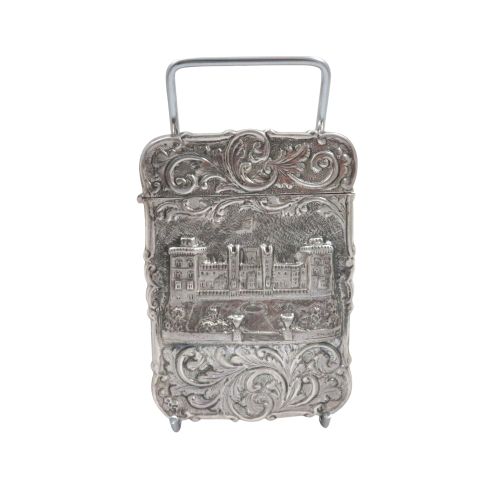
Origins stretch across English provincial and metropolitan workshops, notably Birmingham, alongside Continental, Russian, and Indian makers. Decoration ranges from plain sterling silver surfaces to intricate castle top engravings depicting landmarks such as Windsor Castle and St Paul’s Cathedral, as well as repoussé scenes of deities.
How they were made
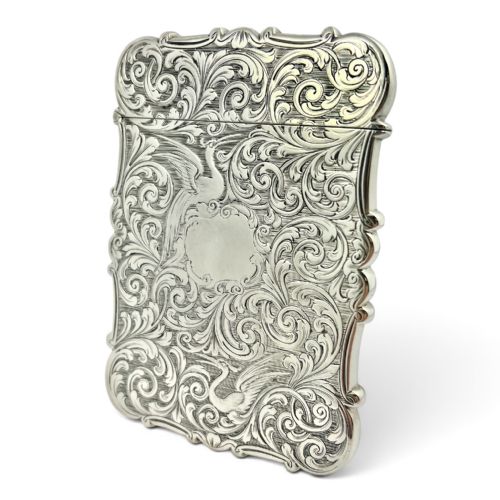
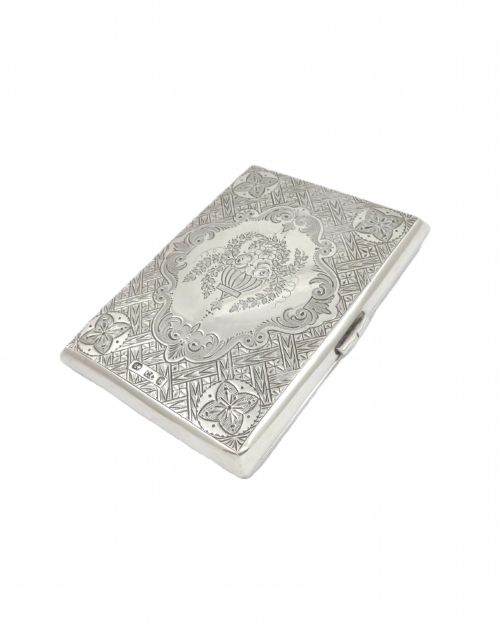
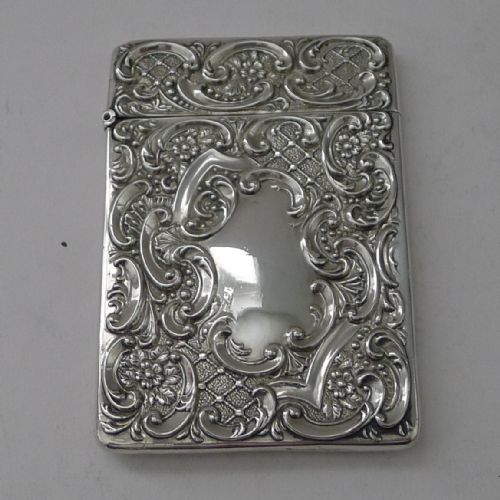
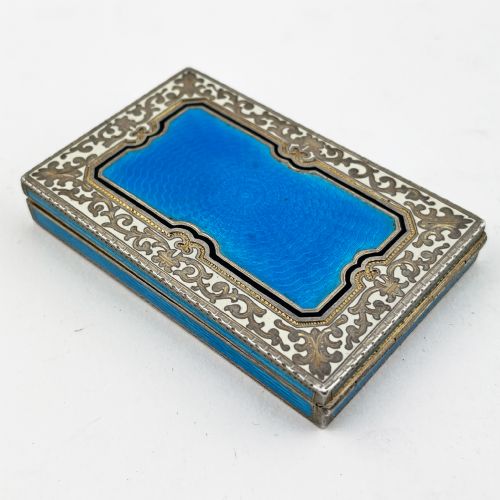
Makers utilised sterling silver and silver gilt, frequently combining metalwork with organic materials such as tortoiseshell, mother of pearl, bone, and enamel. Surfaces were worked using techniques like repoussé, engraving, and the application of vitreous enamel.
Construction relies on precise hinges and secure clasps to protect delicate paper cards within a rigid outer shell. Many pieces incorporate interior linings of gilt or fabric to separate and preserve the contents.
Listings span the Victorian and Edwardian periods, incorporating materials such as tortoiseshell, mother of pearl, bone, and vitreous enamel alongside sterling silver.
What varies in quality
The distinction between standard production and exceptional work rests on the crispness of the engraving and the depth of the repoussé relief. Architectural subjects, such as castle top pieces depicting specific cathedrals or royal residences, demonstrate superior hand-chasing when the details remain sharp and legible.
Material combination and internal execution further define the grade of an object. The integration of tortoiseshell, mother of pearl, or vitreous enamel alongside silver gilt linings elevates a standard card case into a more elaborate item of desk or pocket furniture.
Nathaniel Mills·George Unite·Foxall & Co
The Silver Calling Card Box Glossary
- Castle top
- A style of card case featuring a detailed architectural engraving of a specific building, such as a cathedral or castle, on the exterior lid.
- Repoussé
- A metalworking technique where the artisan hammers the design from the reverse side to form a raised relief on the front.
- Sterling silver
- An alloy consisting of silver and other metals, predominantly copper, maintaining a standard purity proportion.
- Silver gilt
- Silver objects that have been coated with a thin layer of gold on the interior or exterior surfaces.
- Aide-memoire
- A small pocket notebook or memorandum pad often combined with a card case for recording appointments.
Silver Calling Card Box: Frequently Asked Questions
What is a silver calling card box?
A silver calling card box is a small decorative container designed to hold visiting cards during the nineteenth and twentieth centuries. These pieces allowed individuals to present their names formally when visiting acquaintances.
Examples range from pocket cases to desk boxes, often fashioned from sterling silver with engraved or repoussé decoration.
How do I date a silver card case?
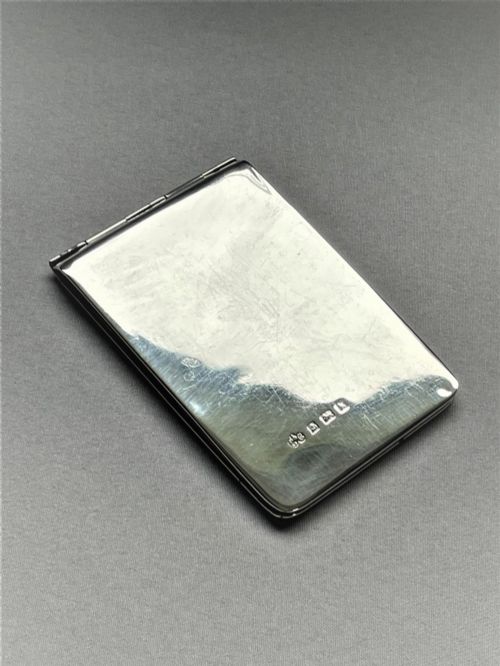
Dating relies heavily on hallmarks stamped into the metal, which indicate the assay office, year of production, and maker. Stylistic clues such as Victorian Gothic revival motifs or later Art Deco geometry also point to specific eras.
Matching the design characteristics with known production periods helps narrow down the decade of manufacture.
How were calling cards used?
Calling cards were left at a residence to signal a social visit or dropped off to announce one's arrival and departure. Servants collected and stored these cards in dedicated boxes or trays in the hallway.
The condition of the cards inside surviving cases often reflects the formal etiquette of the period.