
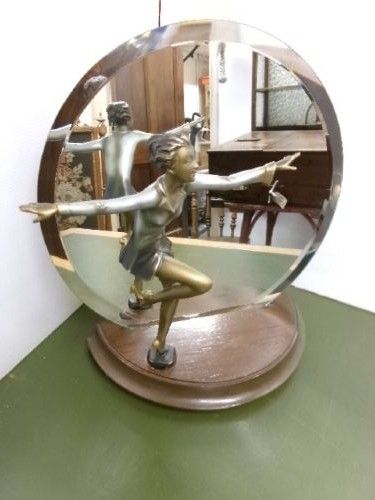
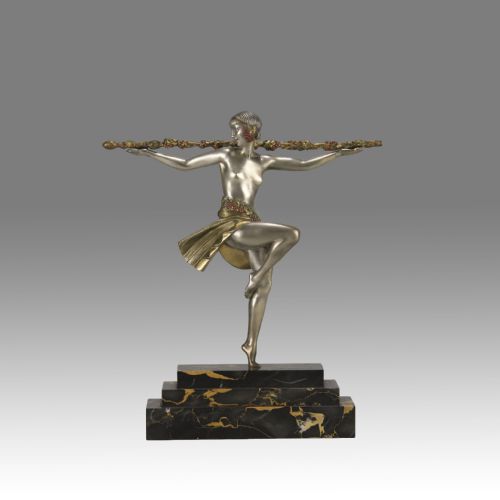
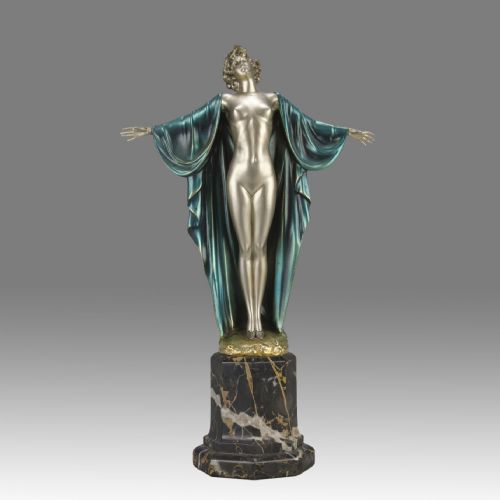
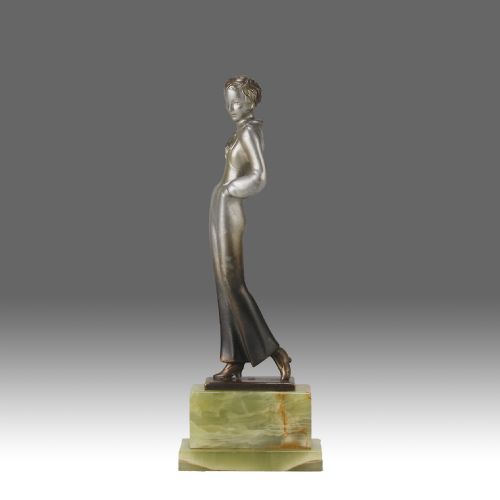


Silver Bronze Figurine
These silver bronze figurine pieces combine metalwork and sculpture, offering striking forms for display.
Silver Bronze Figurine
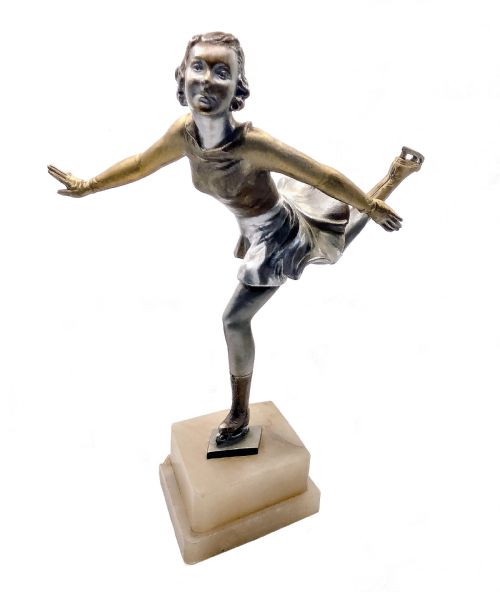
A silver bronze figurine represents sculptural work shaped in bronze, often treated with silvering, cold painting, or gilt plating to alter the surface finish. These objects appear frequently in forms such as dancers, animals, and historical figures.
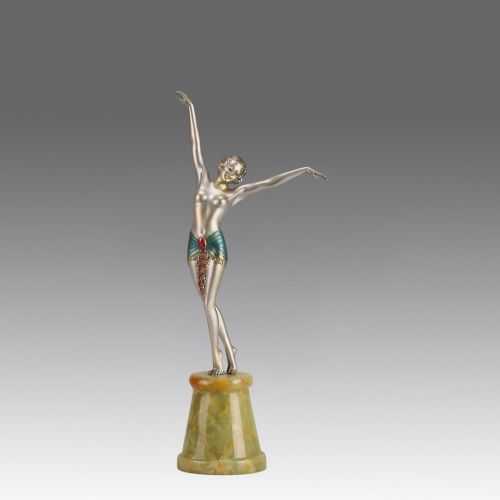
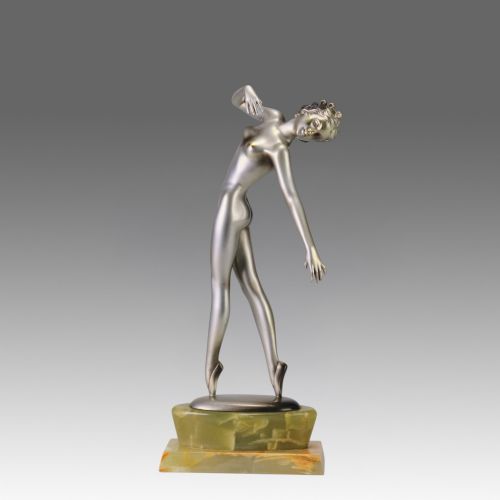
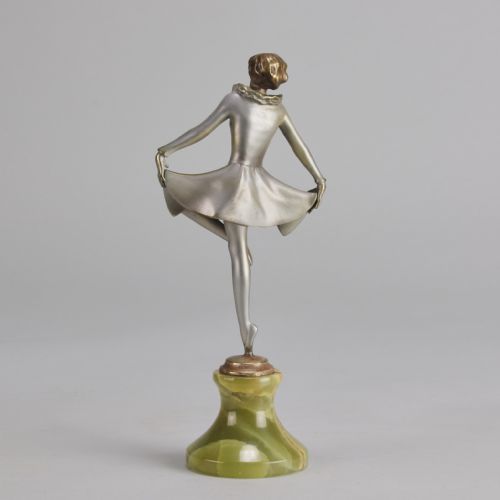
The selections span distinct periods, with many pieces originating from the Art Deco era of the 1920s and 1930s, alongside nineteenth-century works and earlier examples like fifteenth-century shrines. Figures frequently stand upon bases made of marble or onyx.
Collectors searching this phrase encounter animal studies, human figures, and clock garnitures executed in bronze, silvered bronze, and spelter. These works range from French decorative figures to Japanese Meiji period models and Italian sculptures.
How they were made
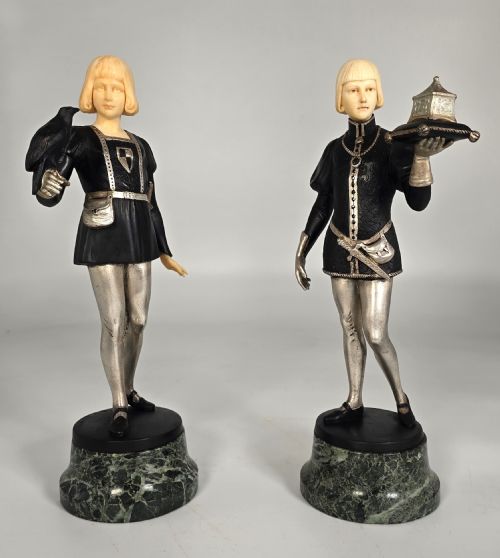
Makers utilised casting techniques to shape bronze and spelter, often finishing the metal with silver plating, cold-painted polychrome details, or enamel. Many figures incorporate carved ivory elements or are mounted directly onto heavy marble and onyx bases.
Surface treatments require precision, particularly in cold-painted pieces where pigment is applied directly to the cold metal surface. Silvered bronze surfaces demand careful plating to achieve an even, lustrous finish across intricate drapery and animal forms.
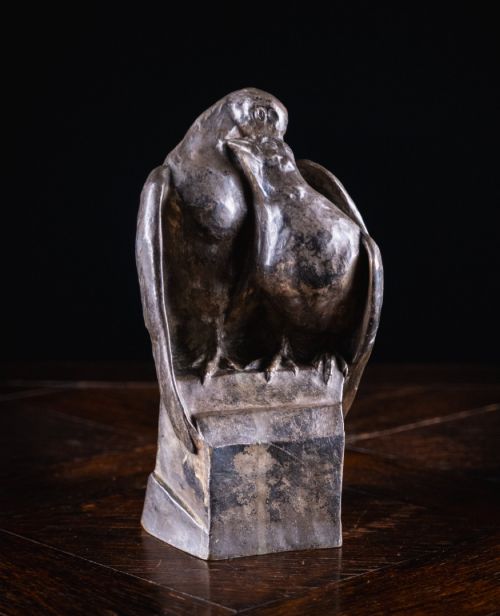
Greyhounds, foxes, pigeons, and a falconer share space with dancers, dice players, and an Assyrian king.
What varies in quality
Original polychrome cold painting and intact silvering retain greater integrity when they show minimal flaking or later restoration. The quality of the supporting stone base, whether veined marble or onyx, also contributes to the overall cohesion of the piece.
Pierre le Faguays·Ferdinand Preiss·Josef Lorenzl·Frederique Cederlund-Ozanne·Gotthilf Jaeger·Claire Jeanne Roberte Colinet·Demetre Chiparus·Pierre Laurel·Karl Hagenaur·Alexandre Kelety·Geo Maxim·Paul Joris·Michel Decoux
The Silver Bronze Figurine Glossary
- Cold-painted bronze
- Bronze sculpture finished with paint applied without heat after the casting process. The pigments are often delicate and prone to wear over time.
- Spelter
- A zinc-based alloy used as an economical alternative to bronze. It takes patination well but is softer and more brittle than bronze.
- Animalier
- A nineteenth-century artistic style focusing on the realistic depiction of animals. Sculptors in this tradition studied animal anatomy closely.
- Silvered bronze
- Bronze metal treated with a thin layer of silver or silver plating. This technique imparts a bright metallic sheen to the sculpture.
- Art Deco
- A design style from the 1920s and 1930s characterised by streamlined forms and geometric patterns. Figures from this period often depict dancers and modern machinery.
Silver Bronze Figurine: Frequently Asked Questions
What materials make up a silver bronze figurine?
These pieces incorporate cast bronze, silvered bronze, or spelter. Many examples feature added elements such as ivory, enamel, and cold-painted finishes.
Bases are frequently constructed from solid marble or onyx to support the weight of the metal sculpture.
How do I care for cold-painted surfaces?
Cold-painted finishes require gentle treatment because the paint sits on the metal without high-temperature firing. Dust them softly with a dry cloth.
Keep them away from direct sunlight and moisture to prevent the pigment from flaking or fading.
How can I tell bronze from spelter?
Bronze is heavier, denser, and colder to the touch than spelter. It also develops a stable patination and resists bending.
Spelter is a softer zinc alloy that may show a greyish metal underneath worn areas of paint or plating.
When were most of these figures made?
The majority of the listings originate from the Art Deco period of the 1920s and 1930s. These reflect modern dance, animal studies, and stylized human forms.
Earlier examples from the nineteenth century and pre-sixteenth century appear alongside these twentieth-century works.