



Silver Blue Glass Liner Pot
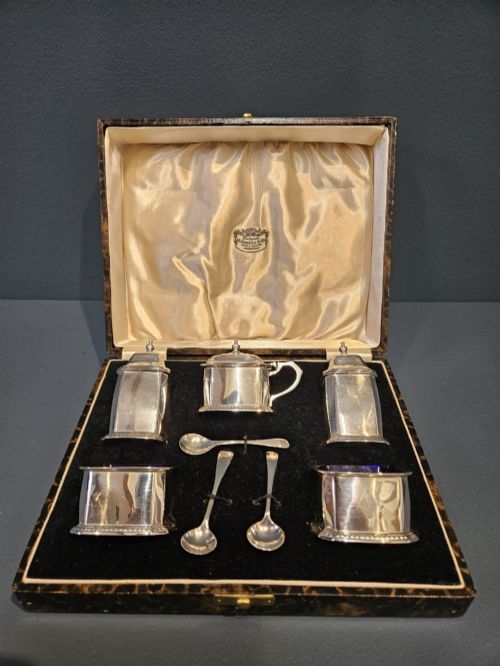
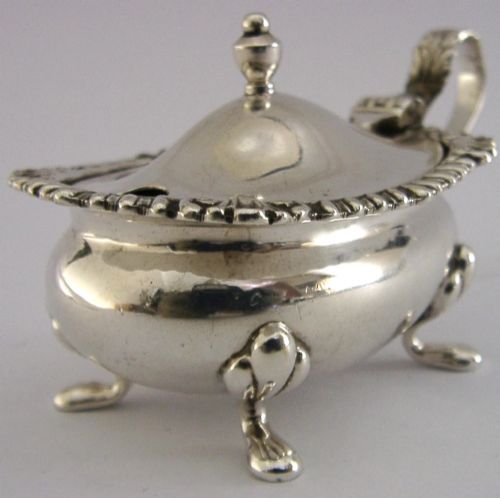
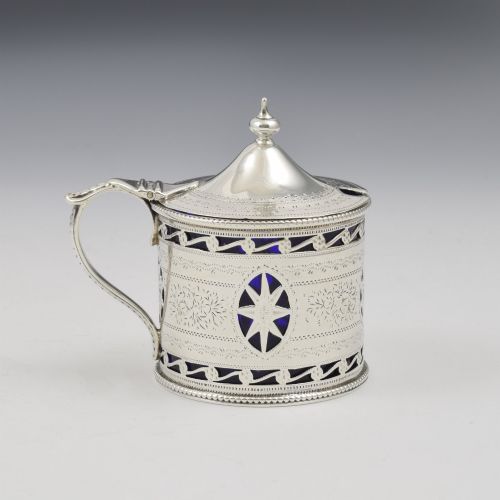
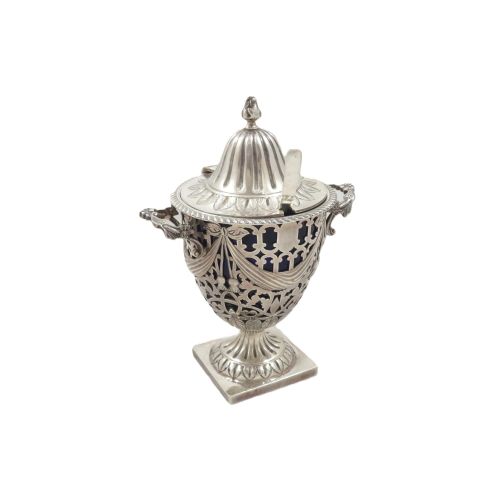
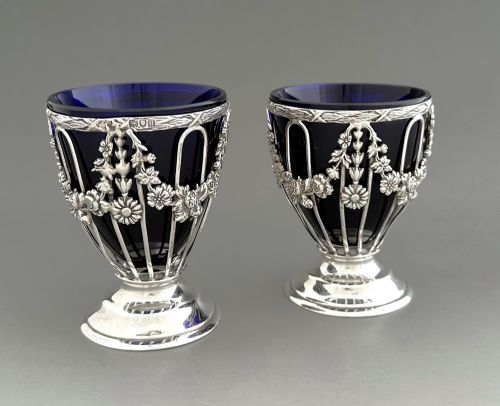
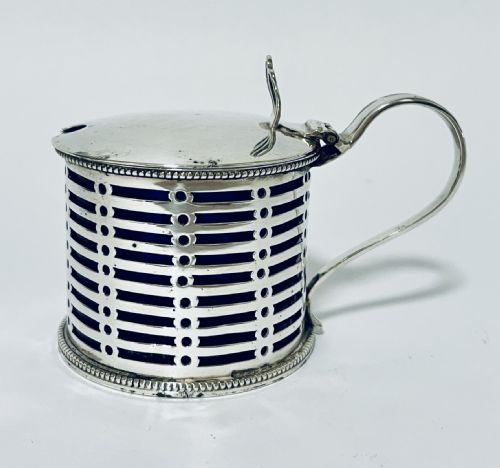
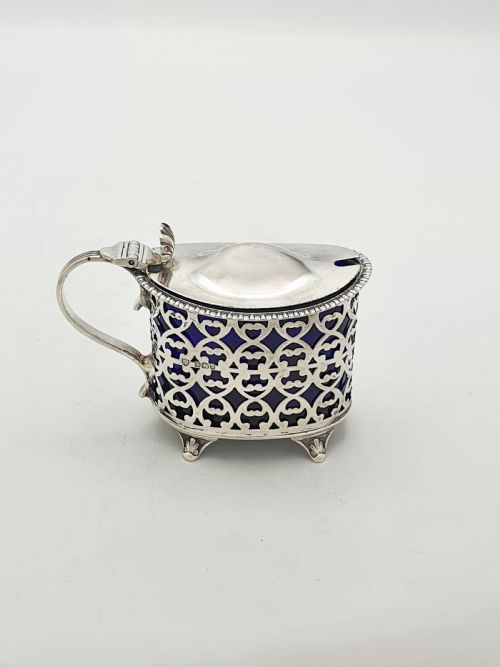
These pieces are a silver blue glass liner pot, combining metalwork and coloured glass to hold condiments at the dining table.
Silver Blue Glass Liner Pot
A silver blue glass liner pot combines a metal frame with a coloured glass insert, typically functioning as a mustard pot, salt cellar, or condiment pot. When searching this phrase, a buyer encounters forms ranging from Victorian drum mustard pots to Edwardian sugar baskets and George V cruet sets.
The objects stem from periods including the Victorian era, the Edwardian period, and the 1930s, utilising styles such as Art Deco, Georgian Revival, and William IV. Pierced silver designs frequently reveal the blue glass liner nestled inside.
Tableware formats vary from single mustard pots to larger cruet sets and condiment sets. The integration of glass and silver allows the bright interior colour to show through openwork metal patterns.
What varies in quality
The heaviness of the silver construction distinguishes standard vessels from substantial pieces with significant metal weight. Pierced decoration ranges from simple geometric perforations to detailed motifs involving cherubs and birds.
The presence of an original blue glass liner alongside the silver exterior preserves the integrity of the object. Maker attributions, from silversmiths like Omar Ramsden or Nathan & Hayes, elevate the standing of the piece.
Some nineteenth-century novelty examples feature figural devil legs supporting the silver pot beneath the blue glass.
Nathan & Hayes·William Neale·Charles Stuart Harris·Omar Ramsden·Thomas Bradbury & Son
The Silver Blue Glass Liner Pot Glossary
- Sterling silver
- A silver alloy containing 92.5 percent silver by mass, widely utilised in British tableware manufacture. This standard ensures durability for everyday dining items.
- Pierced silver
- Metalwork decorated by cutting or piercing patterns through the silver plate. This technique allows the blue glass liner to remain visible from the exterior.
- Cruet set
- A matched collection of small condiment containers holding items like mustard, salt, and pepper. These sets often share a unified design style.
- Bristol blue glass
- A deep vibrant blue glass associated with production in Bristol and used widely for decorative container liners. Its intense colour contrasts sharply with polished silver.
Silver Blue Glass Liner Pot: Frequently Asked Questions
What is a silver blue glass liner pot used for?
These vessels primarily function as mustard pots, salt cellars, or condiment containers on the dining table. The glass insert protects the silver from corrosive condiments while displaying a bright interior colour.
Over time, their roles expanded across various dining settings, appearing individually or as part of larger cruet and condiment sets during the Victorian and Edwardian periods.
How do I identify the period of these pots?
Dating relies on hallmarks stamped into the silver, which indicate the assay office, date letter, and maker's mark. Stylistic clues such as Art Deco geometric lines or Victorian pierced scrollwork also point to specific decades.
Examining the construction methods and the shape of the silver body helps narrow down the era of manufacture, ranging from the mid-nineteenth century through the 1930s.
Are the blue glass liners removable?
The glass liners lift out of the silver frames to facilitate cleaning and refilling. This removable design prevents condiment residues from damaging the metal interior over prolonged use.
Original liners matched to the exact dimensions of the silver frame add historical completeness to the piece.
How do I care for silver and blue glass?
Cleaning requires mild soap and warm water for the glass liner, ensuring it is dried thoroughly before reinsertion. Silver components benefit from occasional polishing with a soft cloth and appropriate silver cleaner to maintain their finish.
Harsh chemical abrasives should be avoided to protect both the polished metal surface and the coloured glass.