
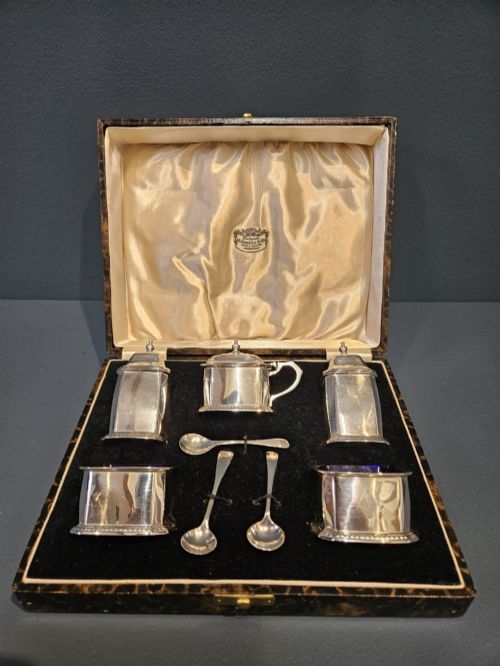
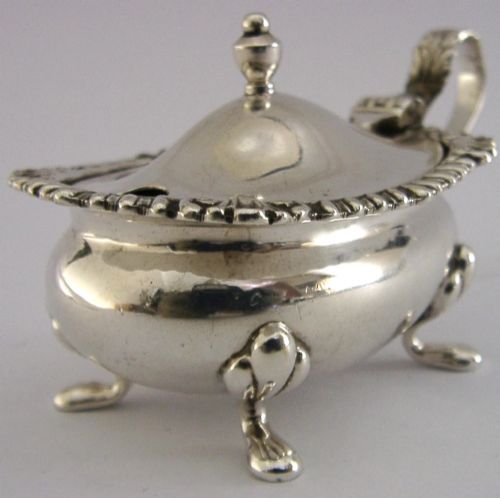
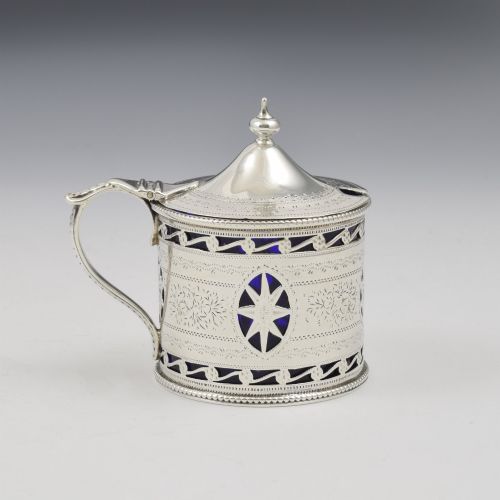

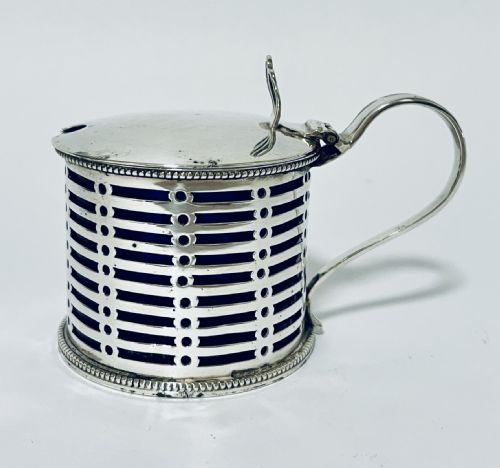
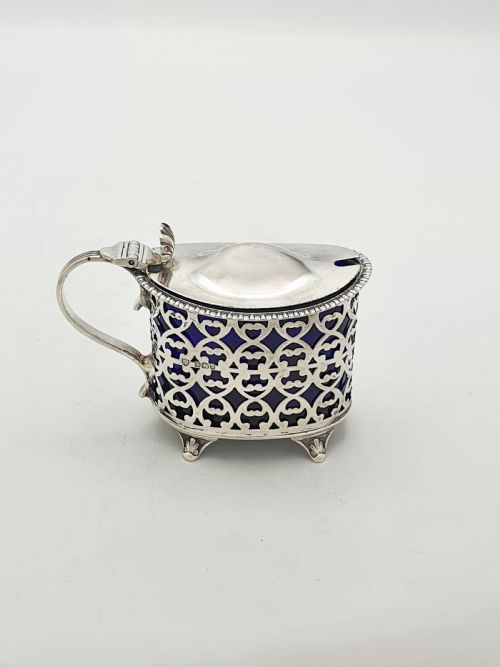


Silver Mustard Pot Blue Glass
A silver mustard pot blue glass pairing brings bright colour and formal sparkle to any dining table through pierced metalwork and cobalt liners.
Silver Mustard Pot Blue Glass
A silver mustard pot blue glass combination consists of a precious metal exterior housing a vibrant glass liner designed to hold prepared mustard safely. These table wares appear across the Victorian, Edwardian, and Art Deco periods, alongside Georgian revival pieces and mid twentieth century examples.
Makers shaped these condiment vessels as drums, octagons, and ovals, frequently piercing the outer silver case to reveal the rich cobalt or Bristol blue glass container within. Cruet sets and standalone condiment pots frequently incorporate these liners as part of a larger dining service.
The materials recorded in the evidence encompass sterling silver, silver plate, and 800 silver paired with plain, cobalt, and Bristol blue glass. Styles span from William IV and George V eras to novelty figural designs featuring devil legs and cherub motifs.
Materials and construction
Silversmiths formed the outer bodies using sterling silver or silver plate, often employing piercing techniques to cut decorative patterns into the metal walls. These pierced galleries allowed the vivid blue glass liner to show through brightly.
Liners were cast or blown from cobalt and blue glass to fit snugly inside the silver frames, protecting the metal from mustard acid. Hinged lids and delicate thumbpieces completed the construction of each pot.
Listings feature mustard pots spanning the Victorian, Edwardian, and Art Deco eras, rendered in sterling silver, silver plate, and blue glass.
Factors of quality
Quality rests on the crispness of the silversmith's piercing work, the weight of the silver used in the body, and whether the blue glass liner remains original to the piece. Heavier gauge silver and refined chasing elevate certain items above standard production wares.
The presence of undamaged glass liners with correct historical fitment distinguishes superior examples from those with later or mismatched replacements.
Nathan & Hayes·William Neale·William Neale & Son·Charles Stuart Harris·Omar Ramsden·Thomas Bradbury & Son
The Silver Mustard Pot Blue Glass Glossary
- Pierced silver
- Metalwork cut through to create decorative open patterns. This technique lightens the visual weight of the pot and reveals the coloured glass liner.
- Cobalt glass
- Deep blue glass coloured with cobalt oxide. It provides the brilliant interior contrast seen in many mustard pots.
- Cruet set
- A matched group of condiment containers held on a stand. These often include mustard pots alongside salt cellars and pepper shakers.
- Thumbpiece
- The small lever attached to the hinged lid of a mustard pot. It allows the user to open the lid easily with one finger.
Silver Mustard Pot Blue Glass: Frequently Asked Questions
How do I clean the glass liner?
Remove the glass liner from the silver outer case before washing it in warm soapy water. Avoid harsh abrasives that might scratch the surface.
Dry the liner thoroughly with a soft cloth before sliding it back inside the silver mount to prevent moisture retention.
Are these mustard pots safe for use?
Most antique mustard pots function well for modern dining if cleaned carefully after use. Vinegar and mustard acids can stain silver if left in contact for extended periods.
Hand wash the vessels immediately after meals to preserve both the metal and the blue glass insert.
How can I date my mustard pot?
Examine the hallmarks stamped on the silver body, which indicate the assay office, the maker, and the exact year of production. Stylistic clues such as Art Deco geometric lines or Victorian pierced scrollwork also help narrow the period.
Compare the form against known manufacturing dates for drum, oval, and octagonal condiment vessels.
What is a Bristol blue glass liner?
Bristol blue glass is a distinct deep cobalt shade historically produced in the English city of Bristol. These liners were blown to fit individual silver pots.
Original liners display slight manufacturing bubbles and pontil marks on the base, confirming their age.