
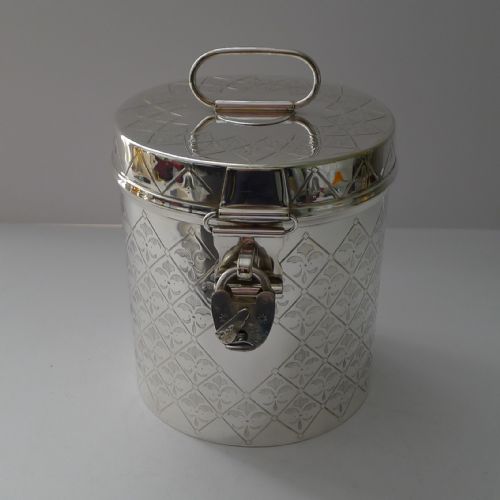


Silver Biscuit Caddy
A silver biscuit caddy is a refined container for the tea table, prized for storing dry goods with elegance.
Silver Biscuit Caddy
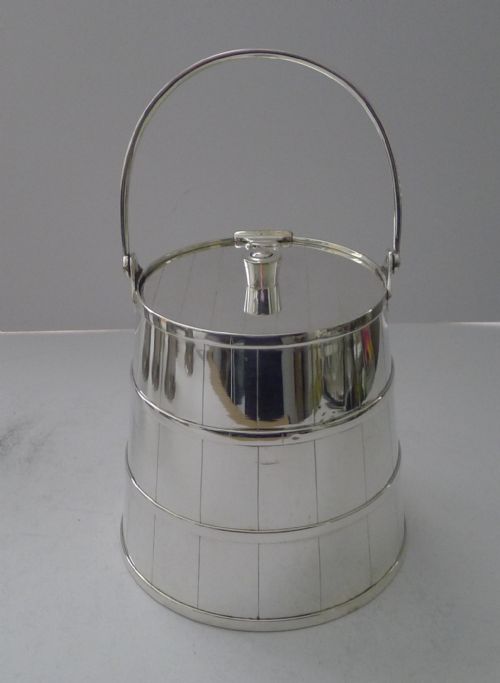
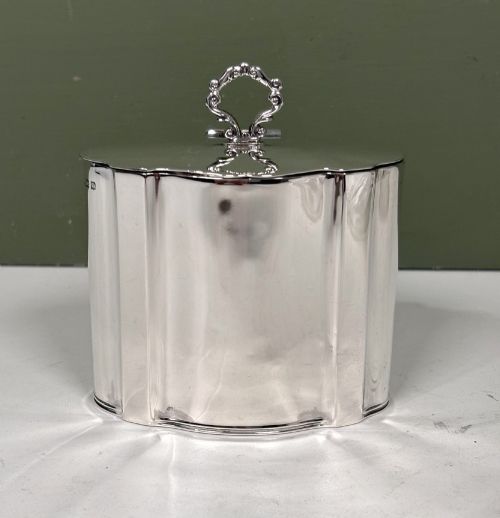
A silver biscuit caddy, often catalogued as a biscuit barrel or box, is a specialised container designed for the formal parlour or dining room. These vessels appear in various forms, from cylindrical drums and glass jars to novelty shapes such as weights.
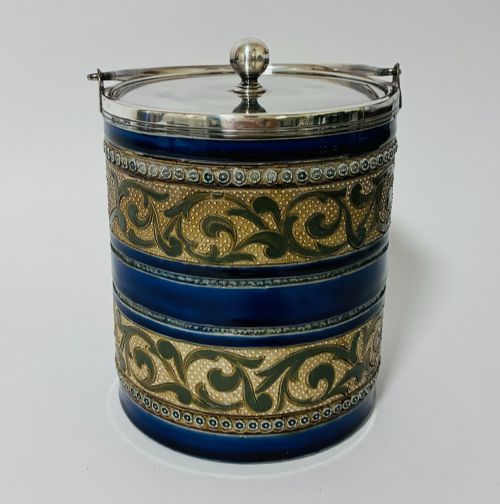
The pieces encountered span from the Georgian era through the Victorian and Edwardian periods up to the reign of George V. Alongside traditional metalwork, many examples combine sterling silver or silver plate with materials like cut glass, oak, and earthenware.
Materials and Construction
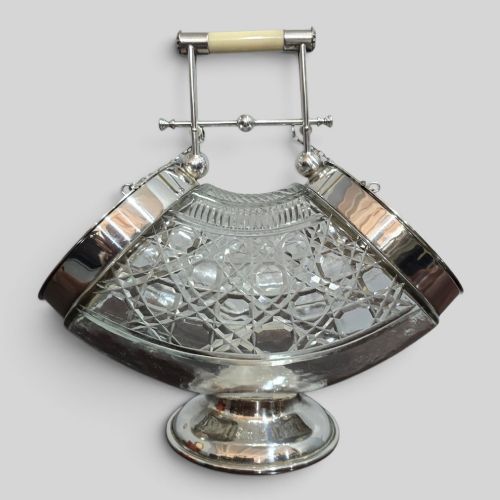
Makers utilised solid sterling silver and silver plate alongside structural elements of oak, cut glass, and earthenware ceramic bodies such as Doulton Lambeth and Carlton Ware. Metal mounts, swing handles, and hinged lids were cast or stamped before being fitted to glass liners and wooden barrels.
Engraving, piercing, and hobnail cutting decorate the metal and glass surfaces, while specialised locking mechanisms or folding shell actions demonstrate intricate mechanical skill in domestic silverwork.
Some Victorian manufacturers produced novelty biscuit boxes shaped precisely like twenty-eight-pound iron weights.
Assessing Quality
Distinction in these pieces lies in the weight of the metal, the precision of the piercing, and the integrity of any fitted glass liner or ceramic body. Maker attribution to notable silversmiths elevates a piece significantly.
The sophistication of mechanical actions, such as locking lids or folding shell designs, separates standard domestic containers from high-end presentation examples.
Mappin and Webb·Robert and Belk·Elkington and Co·John Grinsell and Sons·Goldsmiths and Silversmiths
The Silver Biscuit Caddy Glossary
- Biscuit barrel
- A cylindrical container used in the nineteenth and early twentieth centuries to serve dry biscuits at the tea table. These vessels typically feature a hinged lid and a swing handle.
- Silver plate
- A layer of silver bonded to a base metal core such as copper or Britannia metal. This technique permitted the manufacture of substantial household items at a lower cost than solid silver.
- Hobnail cut
- A decorative glass-cutting pattern consisting of closely spaced pyramid-like facets. This treatment refracts light and adds tactile texture to the exterior of glass bodies.
- Flow blue
- A cobalt blue transfer-printing style used on ceramics where the pigment blurred slightly during firing. This technique created a soft, hazy outline on earthenware bodies.
- Hallmark
- An official stamp applied to precious metals indicating purity, origin, and maker. These marks provide a reliable method for dating silver pieces.
Silver Biscuit Caddy: Frequently Asked Questions
What is a silver biscuit caddy?
A silver biscuit caddy is a lidded container created to hold and present dry biscuits during Victorian and Edwardian tea services.
These pieces combine silver or silver plate with glass, ceramics, or oak to sit as ornamental items on the dining table.
How were biscuit caddies used?
They were placed on the parlour or dining table during afternoon tea or after dinner for guests to help themselves to dry biscuits.
The fitted lids and liners helped keep baked goods crisp in domestic settings.
How do I identify a Victorian caddy?
Victorian examples often feature heavy silver plating, ornate piercing, or combinations with oak and Doulton Lambeth earthenware.
Checking for hallmarks or maker marks associated with nineteenth-century firms helps confirm the period.
Are glass liners original?
Many caddies utilise cut glass or earthenware liners designed to fit snugly inside pierced or solid metal frames.
Original liners match the interior dimensions and decorative style of the outer metalwork.