


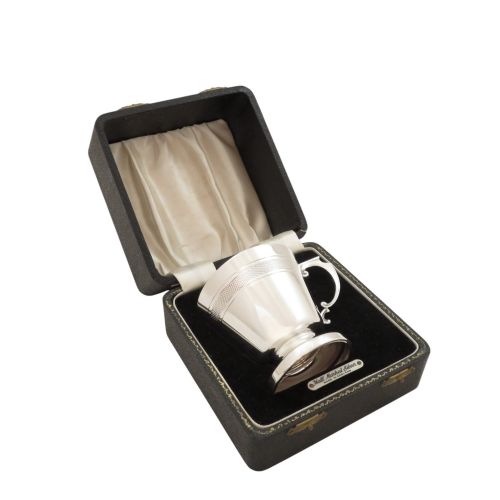

Silver Baptism Cup
A silver baptism cup marks a child's entry into life with enduring metal shaped into mugs, porringers, and sets.
Silver Baptism Cup
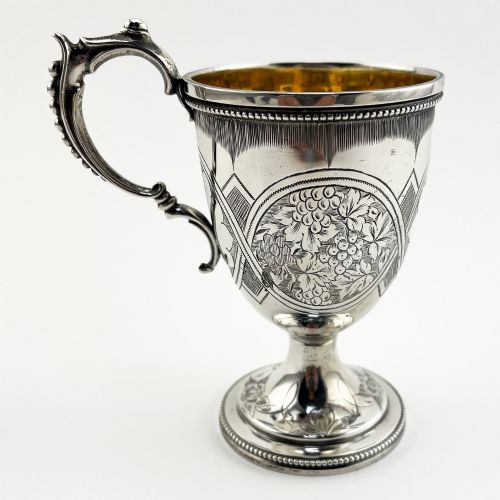
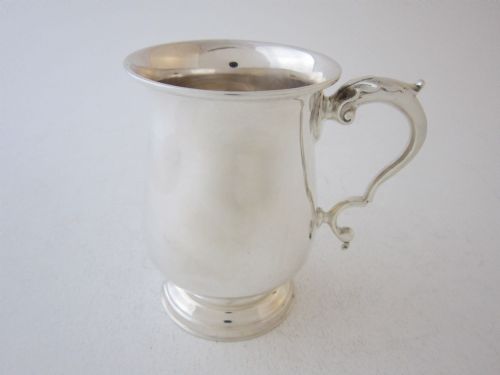
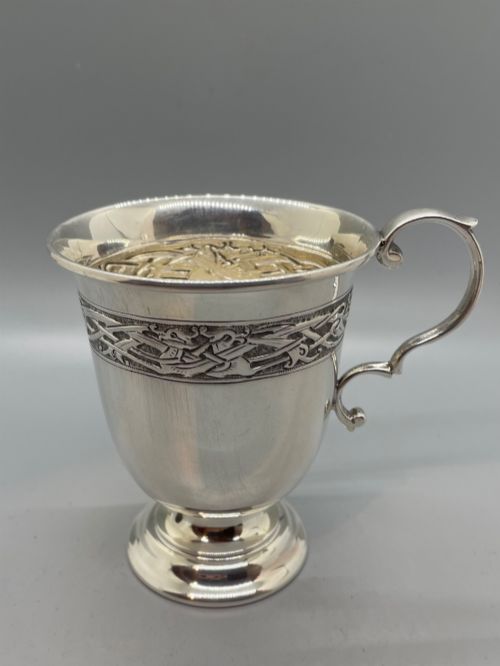
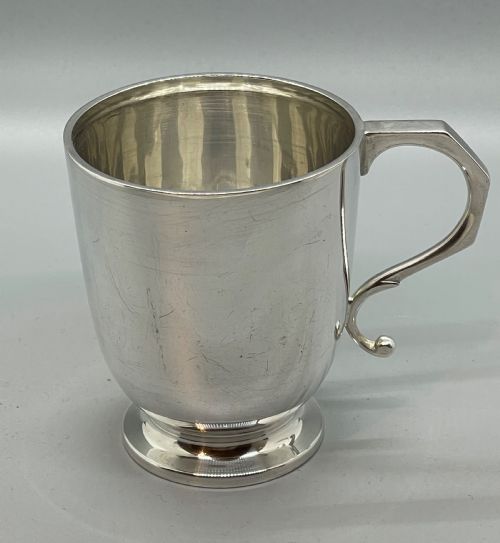
A silver baptism cup serves as a traditional gift for a christening, taking the form of a mug, tankard, porringer, or bowl. These pieces appear in styles from the Victorian period through to George V and Mid-Century Modern designs.
The objects seen here include christening sets and individual vessels designed to be held in small hands or kept as lifetime possessions. Origins span multiple decades, connecting modern buyers directly to nineteenth- and twentieth-century silversmithing.
How they were made
Makers shaped these pieces from sterling silver and solid silver, occasionally applying silver gilt, gold gilt, or gold plate to the interiors. These metalworking techniques provided both durability and a lustrous finish suited to ceremonial use.
Presentation pieces often involved fitted cases lined with materials such as leather, velvet, and silk to protect the polished metal within. Such textiles added an extra layer of craftsmanship to complete the gift set.
Some mugs spent more time nestled in silk and velvet boxes than they ever did holding milk.
What varies in quality
Quality depends upon the weight of the metal and the complexity of the form, distinguishing simple plain cylinders from elaborately shaped vessels. Pieces featuring baluster forms or rococo scroll handles demonstrate greater sculptural ambition in the workshop.
The crispness of hallmarks and the integration of decorative elements define the better examples of the craft. Balance and proportion in the handle and body separate standard production items from superior workshop output.
R E Stone
The Silver Baptism Cup Glossary
- Porringer
- A shallow bowl with one or two flat horizontal handles, often used as a christening gift. It represents a domestic form that dates back centuries.
- Baluster
- An architectural shape featuring a swelling lower portion tapering toward the top, commonly seen in the profile of these mugs. This contour gives the vessel a sturdy yet graceful stance.
- Hallmark
- An official stamp applied to precious metals to indicate purity, origin, and the year of assay. These marks provide the primary evidence for dating an antique piece.
- Gilt
- Silver or another metal covered with a thin layer of gold, often applied to the interior of a cup. This technique protected the metal from tarnishing when in contact with liquids.
Silver Baptism Cup: Frequently Asked Questions
How were christening mugs used?
While many were intended for actual use by children during early meals, others served purely as decorative keepsakes displayed in the home. Their robust metal construction allowed them to survive generations of handling.
Fitted presentation sets often included matching items meant to be stored securely in velvet- or silk-lined boxes when not on display.
How do I date a silver christening cup?
Dating relies primarily on the official hallmarks stamped into the silver, which reveal the assay office and the exact year of manufacture. Stylistic clues such as a rococo scroll handle or a plain mid-century silhouette also point toward specific decades.
Comparing the form and decorative motifs against known periods helps narrow down the era when documentation is thin.
What styles are common for these cups?
The styles span Victorian, George V, Edwardian, and Aesthetic Movement designs, alongside mid-century British and modern interpretations. Each era brought its own aesthetic preferences to the surface of the metal.
Victorian pieces often display heavier ornamentation and scrollwork, whereas later twentieth-century examples lean towards smooth, plain surfaces.