
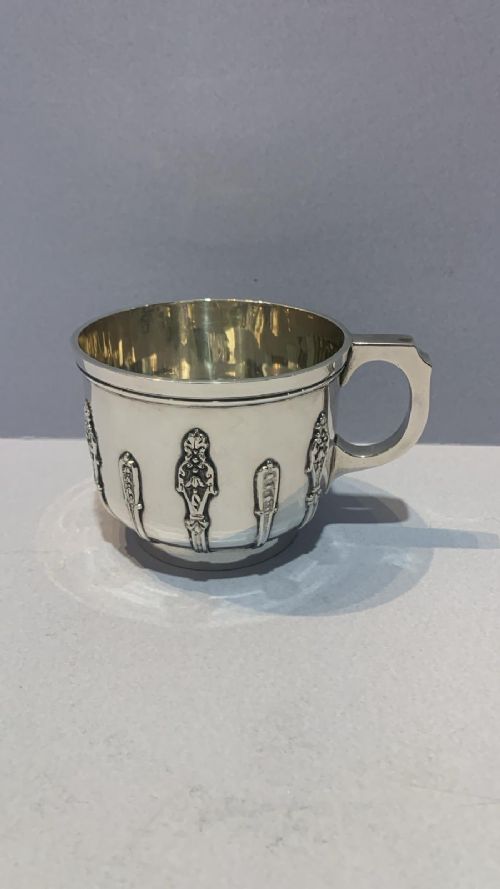


Antique Silver Christening Beaker
An antique silver christening beaker is a traditional small drinking vessel given to mark a birth or baptism, prized for its enduring precious metal and personal engraving.
Antique Silver Christening Beaker
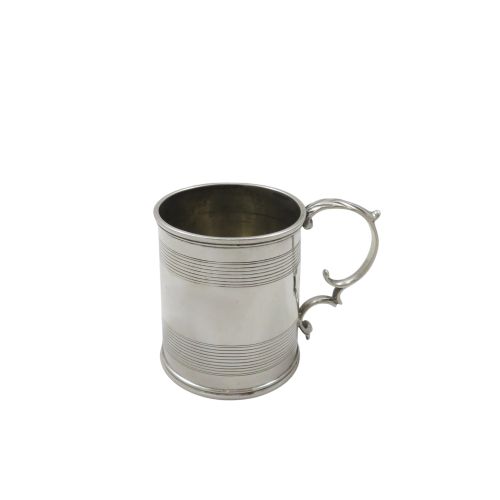
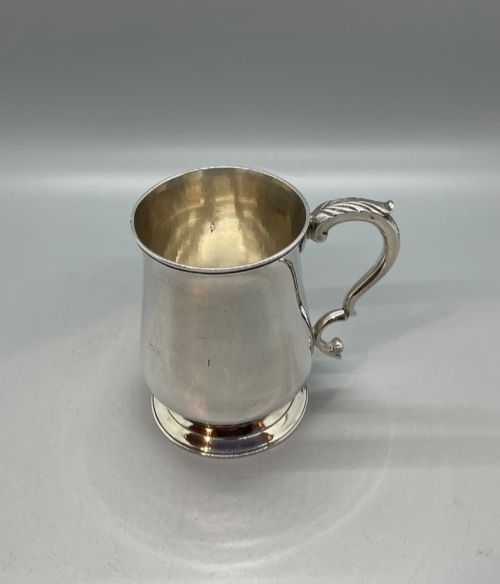
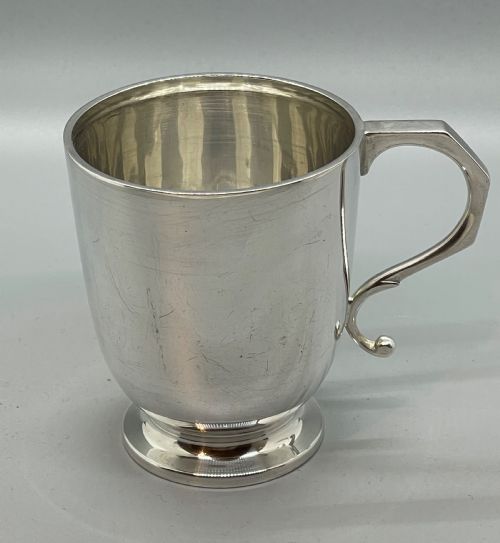
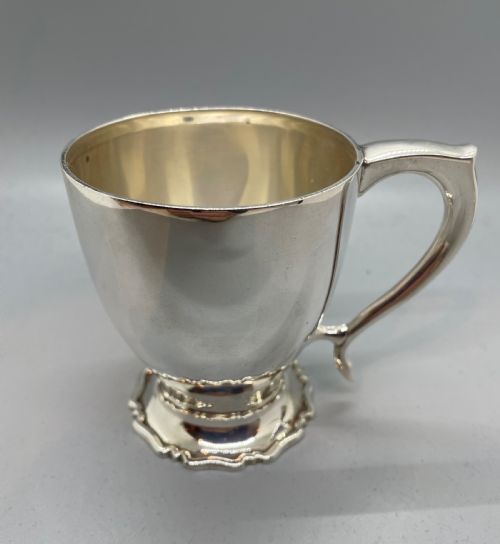
An antique silver christening beaker represents a portable personal gift, appearing frequently as a small handled mug or tankard designed for a child's hand. These vessels span multiple eras from the Georgian period through the Victorian age and into the twentieth century, reflecting shifting domestic tastes across generations.
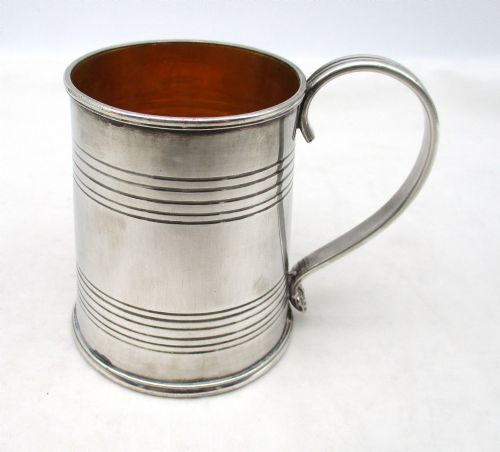
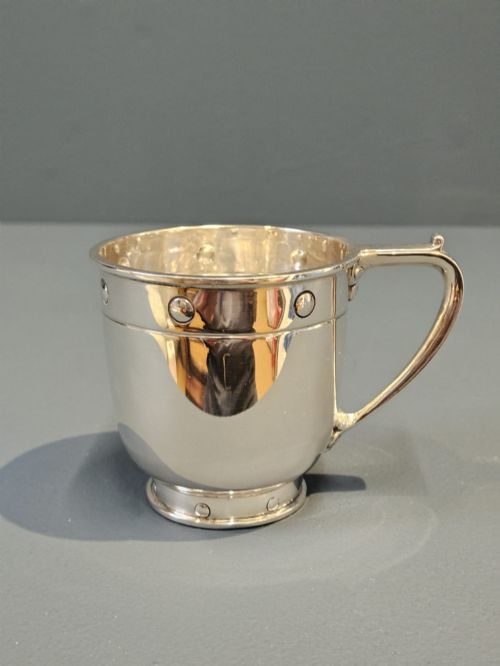
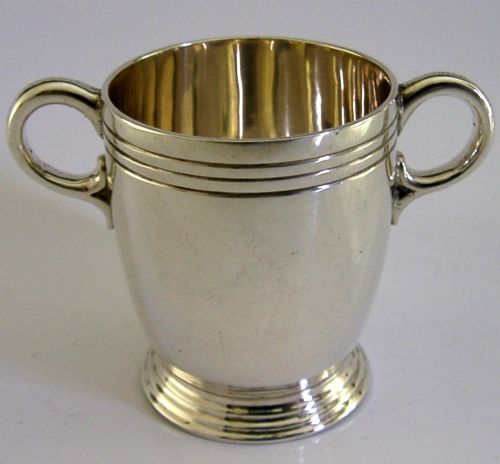
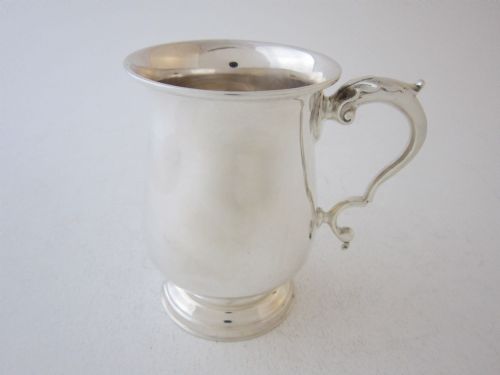
The pieces on this page emerge from distinct British manufacturing centres including London, Birmingham, and Sheffield, alongside international origins such as Australia. Common forms encompass baluster bodies, straight sides, and novelty shapes fitted with scroll handles.
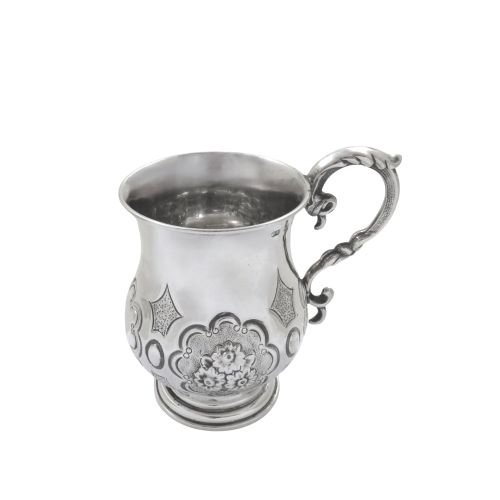
Makers ranged from notable silversmiths to larger firms, producing items in sterling silver, silver gilt, and Old Sheffield plate. Buyers encounter both plain polished surfaces and heavily embossed or floral engraved decoration.
Materials and technique
Silversmiths utilised sterling silver and Old Sheffield plate as primary materials, sometimes applying gold gilt to the interior surfaces of the vessels. Construction involved shaping sheet metal into cylindrical or baluster forms, soldered securely to flat bases.
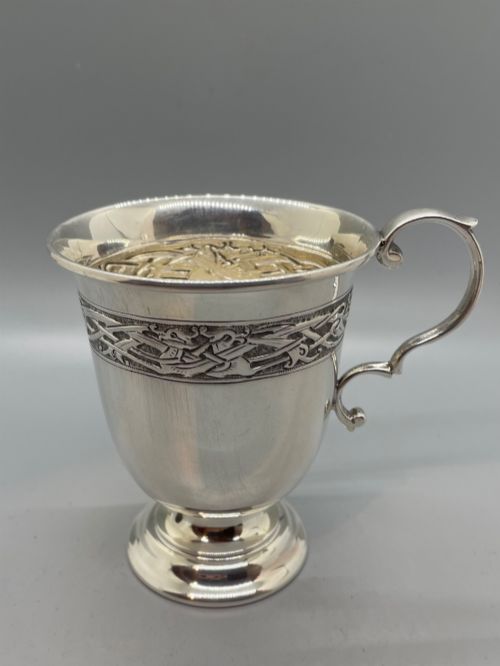
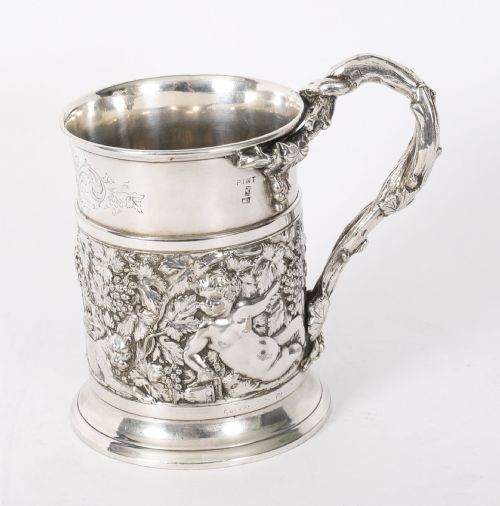
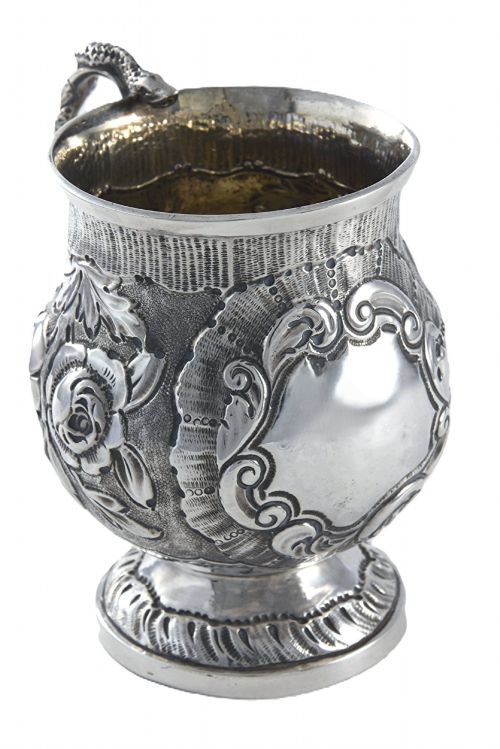
Decoration relied on manual embossing and floral engraving executed by hand tools to create surface patterns on the metal body. Handles were cast separately and attached firmly to the main vessel, often featuring scrollwork or distinctive profiles.
The selection includes various object forms such as baluster tankards, plain cylindrical beakers, and novelty shapes with detailed scroll handles.
Distinctions in quality
Quality rests upon the weight of the metal utilised in the construction and the crispness of the hand-engraved or embossed detail. Substantial gauge silver provides a reassuring heft in the hand, setting apart heavier presentation pieces from lighter utilitarian versions.
The clarity of the hallmarks stamped into the metal indicates the precision of the maker and the standard of official testing. Refined craftsmanship appears in the balance of the scroll handle and the seamless integration of the base to the body.
Barker Bros·R E Stone·Tiffany & Co·William Bateman·G R Collis
The Antique Silver Christening Beaker Glossary
- Hallmark
- Official stamp applied to precious metals indicating the assay office, metal standard, and date letter. These marks allow collectors to trace the exact origin and year of manufacture.
- Baluster
- A curved architectural form resembling a vase or pillar, frequently seen on the profile of mug bodies. This shape provides a comfortable grip and a stable base.
- Old Sheffield Plate
- A composite material made by fusing a thin layer of silver to a thicker copper base before rolling into sheets. This technique preceded modern electroplating methods.
- Gilt
- A thin layer of gold applied to the interior or exterior surface of a silver object. This treatment protected the metal from tarnishing through beverage contact.
- Tankard
- A tall drinking vessel equipped with a single handle, often produced in smaller scales for children. Many examples include hinged or open lids in larger formats, though christening variants remain open-topped.
Antique Silver Christening Beaker: Frequently Asked Questions
How do I date a silver mug?
Dating a silver mug involves reading the stamped hallmarks located on the exterior or base of the vessel. Assay office symbols and specific date letters reveal the exact year the piece was tested.
Stylistic indicators such as Arts and Crafts influences or Victorian floral engraving also provide a reliable guide to the period of manufacture.
Were these mugs used daily?
Many christening mugs were designed as practical drinking vessels for children despite their decorative appearance and precious materials. The inclusion of sturdy scroll handles made them functional for daily use at the nursery table.
Other examples functioned purely as commemorative display pieces, remaining pristine within fitted presentation boxes.
What metals were used?
Silversmiths primarily utilised sterling silver, silver gilt, and Old Sheffield plate for these historical mugs. Sterling silver offered solid durability, while plated copper provided an accessible alternative for families.
Interior gilding was frequently added to prevent acidic beverages from reacting directly with the silver surface.