


Embossed Silver Tankard
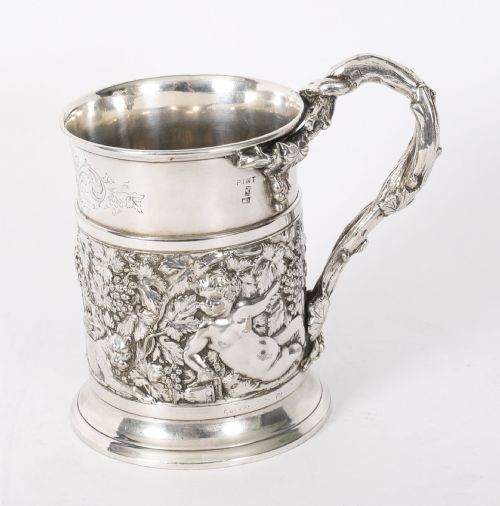
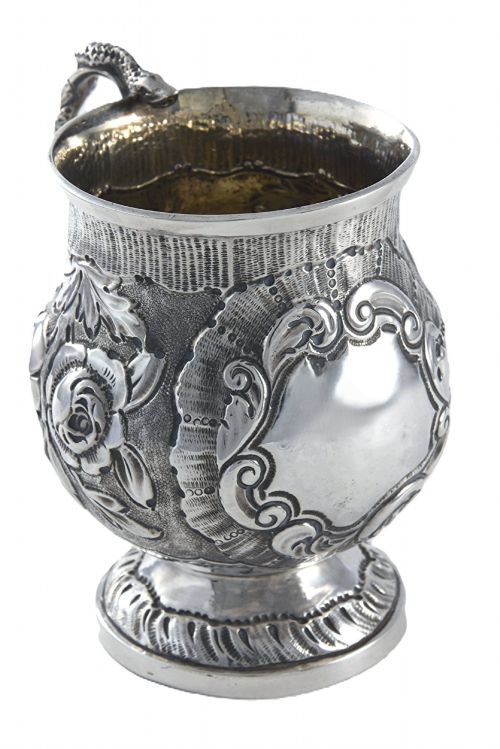
These embossed silver tankard pieces are traditional drinking vessels adorned with raised ornamentation, prized for their historical craftsmanship and decorative presence.
Embossed Silver Tankard
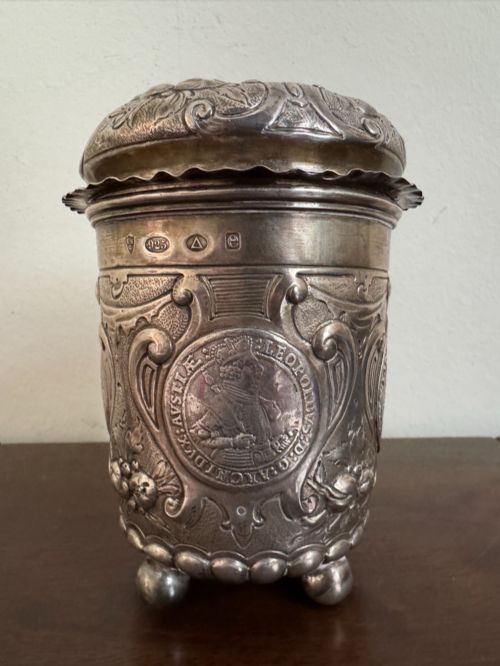
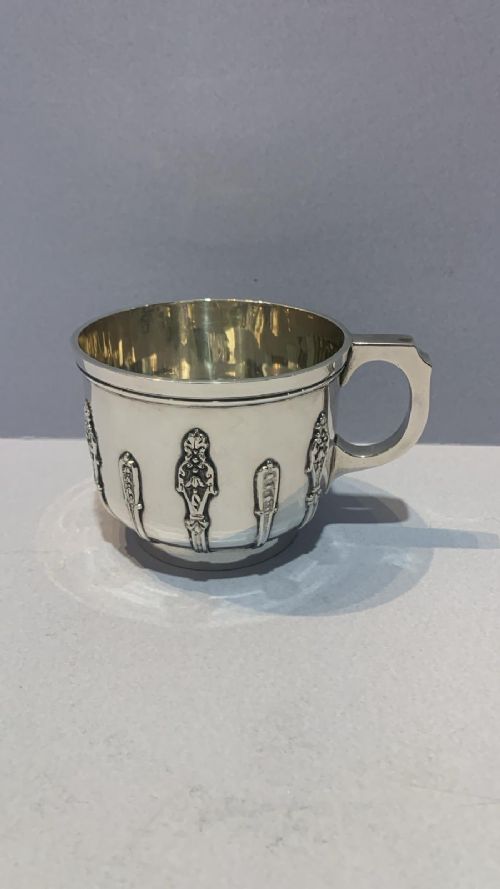
An embossed silver tankard is a drinking vessel characterised by raised relief decoration beaten into the metal, appearing across several eras including the Georgian, Victorian, and Edwardian periods. Collectors encounter these items in various forms such as christening mugs, lidded beakers, and standard tankards produced in solid sterling silver or silver plate.
The pieces listed on this page span the nineteenth and early twentieth centuries, reflecting changing domestic habits from formal presentation pieces to everyday family christening gifts. While some examples are straightforward mugs, others incorporate covers, coin insets, or glass bodies mounted with silver collars and handles.
How they were made
Silversmiths formed the body of each embossed silver tankard from sheet metal, hammering the walls into shape and soldering the seams before attaching cast handles. Artisans then applied the embossing technique by working the metal from the reverse side to push out decorative motifs, finishing the surface with fine chasing and engraving.
Makers utilised sterling silver, silver plate, and specialised materials like coinage silver, occasionally adding gold gilt highlights to the interior. Electroplated nickel silver and silver-gilt techniques also appear in the record, demonstrating how workshops adapted alternative base metals and coatings to suit different budgets.
Some nineteenth-century makers hid tiny barking dogs and fleeing rabbits deep within the swirling foliage of their tankard designs.
What varies in quality
The distinction between average and exceptional pieces rests upon the crispness of the raised relief and the weight of the metal. Superior examples display deep, deliberate chasing that retains sharp contours without thinning the silver wall during the hammering process.
Artistic execution dictates value, particularly where naturalistic scenes or floral motifs are rendered with anatomical and botanical accuracy rather than generic stamping. Furthermore, the integration of structural components like sturdy handles and well-fitted lids separates utilitarian vessels from masterwork presentation pieces.
G R Collis·Charles Price
The Embossed Silver Tankard Glossary
- Embossing
- The technique of raising a design from the reverse side of a metal sheet using hammer and punches. This method creates a three-dimensional relief effect across the surface of the vessel.
- Sterling silver
- A standard alloy consisting of ninety-two point five percent silver and seven point five percent other metals, usually copper. This composition provides the durability required for functional drinking vessels.
- Silver-gilt
- Silver objects that have been coated with a thin layer of gold on the interior or exterior surface. This treatment protects the silver from tarnishing when in contact with acidic liquids.
- Hallmark
- A system of official marks stamped on precious metals to guarantee purity and origin. These marks typically include maker initials, assay office symbols, and date letters.
- Chasing
- Working metal from the front side with punches to refine and sink the background around an embossed design. This process sharpens the details established during the initial hammering.
Embossed Silver Tankard: Frequently Asked Questions
How were christening mugs used?
Christening mugs served as traditional gifts given to infants to mark their baptism or naming ceremony. Families often kept these silver vessels as cherished keepsakes rather than using them for daily meals.
Over time, many accumulated personalized engravings recording the child's name and birth date.
How do I identify Victorian pieces?
Victorian examples of an embossed silver tankard frequently display heavy floral relief work, scroll handles, and distinct nineteenth-century hallmarks. Examining the style of ornamentation alongside official assay marks helps establish the production decade.
Makers during this period also utilised silver plate extensively alongside solid sterling.
Can I use silver tankards daily?
Silver tankards and mugs can hold beverages, though many owners prefer to display them to preserve the finish. Solid silver is durable, but plated items require careful cleaning to avoid wearing down the thin metal coating.
Hand washing with mild soap prevents damage to the antique surface and any gilt interiors.
What is coin silver?
Coin silver refers to metal derived from melted down currency, which was often legally required to meet specific purity standards. Silversmiths utilised these reliable alloys to fashion durable domestic vessels and beakers.
Items incorporating specific currency, such as thalers, often retain the coin as a central decorative element in the base or lid.