





Silk Embroidered Sampler
A silk embroidered sampler brings centuries of quiet handiwork and personal history directly onto your wall.
Silk Embroidered Sampler
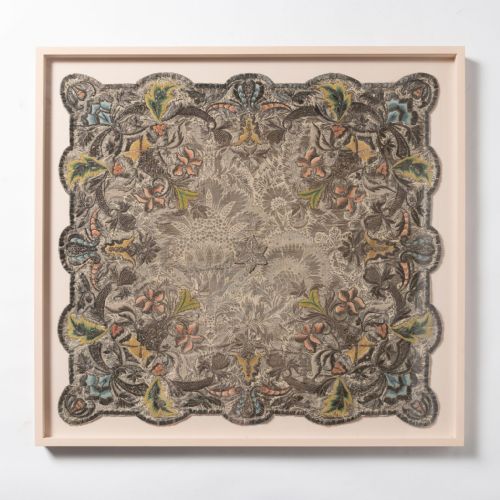
A silk embroidered sampler is a historic textile piece created by hand, often recording the maker's name, age, and date alongside intricate motifs. When you search for this phrase, you encounter needlework spanning the seventeenth, eighteenth, and nineteenth centuries, taking forms such as band samplers, map displays, and pictorial scenes.
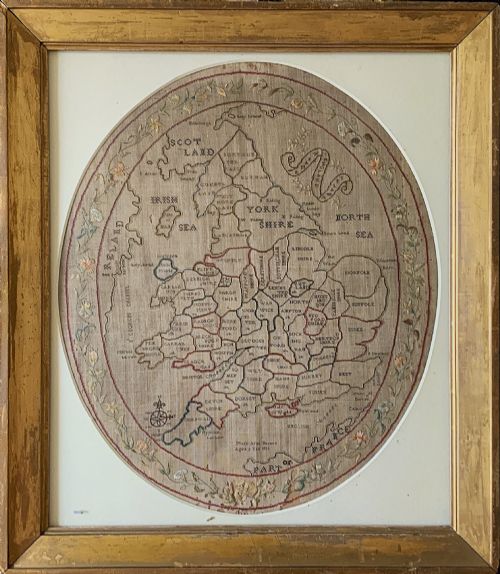
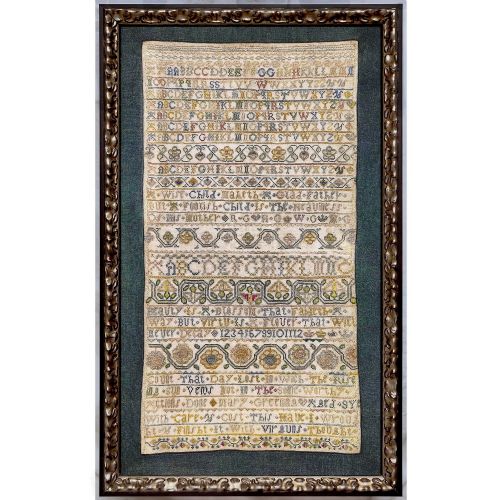
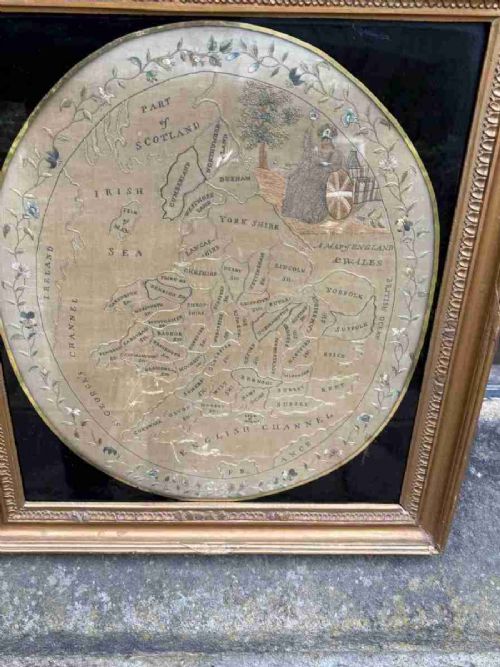
The pieces appearing on this page range from early English band samplers and Georgian geographical maps to Victorian schoolgirl exercises. Common subjects include cartography, such as maps of England and Wales, alongside narrative pictorials derived from traditional stories.
Most examples survive mounted behind glass within wooden frames, preserving the delicate silk threads and linen grounds from environmental damage. These objects bridge domestic craft and educational record, offering direct insight into the lives of young makers like Mary Banion or Louiss Elkins.
How they were made
Makers stitched using silk thread and wool onto woven linen grounds, employing a variety of needlework techniques to build texture and colour. The stitches formed alphabets, numerals, heraldic symbols, and pictorial elements, often executed with remarkable precision by young hands.
Surviving examples typically sit within protective surrounds of wood or gilt wood, paired with glass to shield the fragile textiles from dust and handling. This traditional framing method has kept the organic threads intact across hundreds of years.
Several makers carefully stitched their exact ages into the linen, leaving permanent records of nine-year-olds and twelve-year-olds at work.
What varies in quality
Quality in a silk embroidered sampler rests upon the complexity of the design, the ambition of the composition, and the clarity of the stitchwork. Elaborate cartographic layouts and detailed pictorial narratives demand greater skill than standard alphabets or repetitive borders.
The preservation of the silk threads and the legibility of the maker's inscription also dictate the standing of a piece. Strong survival of the original materials without excessive fading or loss separates exceptional historic examples from more distressed survivors.
The Silk Embroidered Sampler Glossary
- Band sampler
- A long, narrow textile displaying horizontal rows of different embroidery patterns, stitches, and alphabets.
- Needlepoint
- Embroidery stitched on a canvas or linen grid, covering the foundation fabric completely to form a dense pictorial surface.
- Gilt wood
- Wood covered with a thin layer of gold leaf or gold paint, commonly used for traditional framing.
- Cartography
- The art or practice of drawing maps, frequently seen on Georgian examples depicting England and Wales.
Silk Embroidered Sampler: Frequently Asked Questions
What is a silk embroidered sampler?
A silk embroidered sampler is a historic piece of needlework created to practice or display stitching skills, often recording the maker's name and age.
These textiles frequently incorporate alphabets, numbers, maps, or pictorial scenes worked in silk thread on a linen ground.
How old are these samplers?
The pieces available span from the seventeenth century through the eighteenth and nineteenth centuries, encompassing the Georgian and Victorian eras.
Many examples bear specific dates stitched directly into the fabric by the original young makers.
How should I display a sampler?
Samplers are best displayed away from direct sunlight to prevent the delicate silk threads and linen grounds from fading over time.
Most pieces come already mounted behind glass within wooden frames, which helps protect the textile from dust and atmospheric moisture.
How can I tell the period?
Stylistic clues such as the lettering style, framing materials, and specific pictorial motifs help indicate the era in which a piece was worked.
Inscribed dates and signatures provide direct evidence of the exact year and occasionally the school or location of origin.