


Signed Watercolour Portrait
A signed watercolour portrait captures individual likeness through fluid pigment, offering a direct link to past sitters and named artists.
Signed Watercolour Portrait
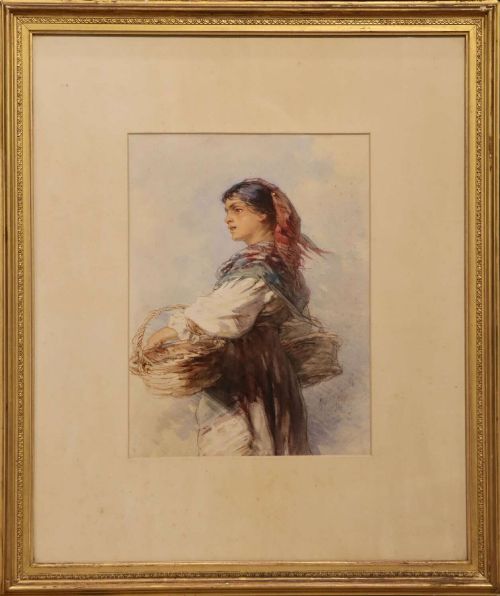
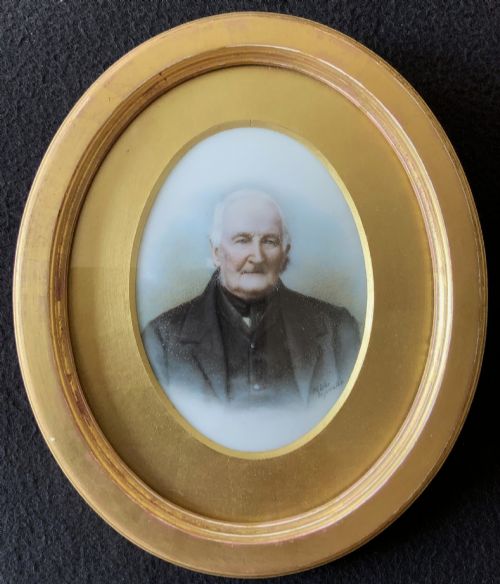
A signed watercolour portrait presents painted likenesses ranging from intimate miniature studies to detailed Victorian and Edwardian works on paper. When searching for a signed watercolour portrait, buyers encounter formats spanning the eighteenth century through to the mid-twentieth century, including works by named artists and miniaturists.
The selections on this page encompass various scales, from small pendant pieces housed in gilt frames to larger framed artwork depicting individuals, family groups, and figures in interior or landscape settings.
Materials and technique
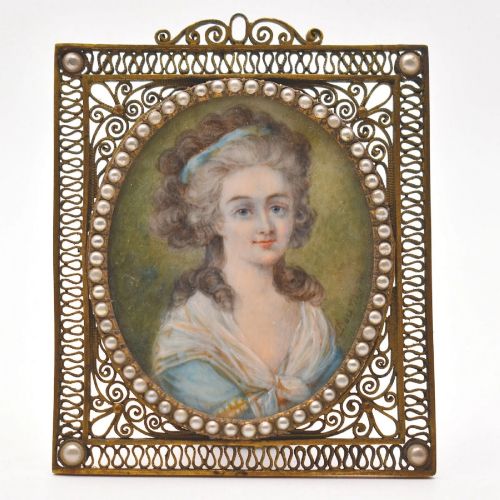
Artists painted primarily with watercolours and gouache over pencil sketches on paper or glass surfaces, employing fine brushes to build translucent layers of pigment. Finished works were secured within protective wooden or gilt frames, often incorporating brass fittings, glass covers, and occasionally seed pearl ornamentation.
Miniature iterations required immense precision, executed on delicate grounds and housed in specialised enclosures designed to protect the fugitive pigments from light and moisture damage.
Several portraits preserve the likenesses of Victorian pugs, hunting dogs, and a meditating monk in a cowl.
Factors determining quality
Quality rests upon the draughtsmanship of the underlying pencil work and the control of the fluid watercolour medium, where accomplished brushwork achieves convincing flesh tones and textile textures without muddying the paper. The clarity of the artist signature and the preservation of the pigment intensity further separate standard decorative examples from masterworks.
The sophistication of the framing, the integrity of the original glass or housing, and the documented attribution to a recognised painter or miniaturist contribute substantially to the standing of an individual piece.
Guido Bach·Basil Nightingale·Susie Lassam·Thomas Woolnoth·Takashi Nakayama·Dame Laura Knight·William Lee Hankey·Sir Joshua Reynolds·Richard Dighton·Miles Birket Foster
The Signed Watercolour Portrait Glossary
- Gouache
- An opaque watercolour medium often used alongside transparent washes to add body, highlights, and solid areas of colour to a portrait. It allows artists to build dense, flat colour fields or crisp details.
- Miniature painting
- A small-scale portrait executed with extreme delicacy, frequently created on ivory, paper, or glass. These portable objects were commonly worn or kept in private domestic spaces during the eighteenth and nineteenth centuries.
- Watercolour wash
- A diluted layer of transparent pigment flooded across paper to create atmospheric backgrounds or soft skin tones. It forms the translucent foundation of traditional British watercolour technique.
- Gilt frame
- A wooden protective border coated in gold leaf or metallic paint, designed to enhance the visual depth of the artwork. Many period portraits retain their original frames.
- Provenance
- The documented history of ownership or creation that links a portrait to a specific sitter, artist, or collection. Signed works often derive strong attribution value from clear signatures and inscriptions.
Signed Watercolour Portrait: Frequently Asked Questions
How should I display a signed watercolour portrait?
Keep watercolours away from direct sunlight to prevent the pigments from fading permanently over time. Hang them on interior walls with stable humidity and temperature levels.
Ensure the frame is properly sealed at the back to protect the paper from dust and atmospheric moisture. Using museum glass can also reduce ultraviolet light exposure during exhibition.
What is the difference between a miniature and a standard portrait?
Miniatures are significantly smaller in scale, often painted on specialised surfaces like glass or ivory and housed in protective cases or pocket frames. They were designed for intimate, personal handling rather than large wall display.
Standard portraits utilise larger sheets of paper for framed wall art, allowing artists more room for expansive backgrounds and detailed costume rendering.
How do I identify the period of a watercolour portrait?
Examine the clothing, hairstyle, and decorative accessories of the sitter, which typically reflect the fashion trends of the era in which the work was created. Period framing styles and backing materials also offer reliable chronological clues.
Signatures, dates inscribed on the front or verso, and stylistic indicators such as Victorian realism or Art Deco simplification help narrow down the decade.