



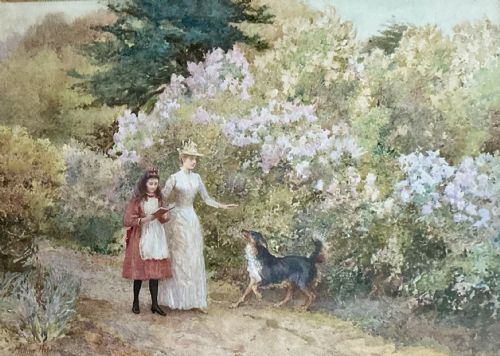


Figurative Watercolour Painting
When you want a figurative watercolour painting, you are looking at works on paper centring on human subjects from the nineteenth and twentieth centuries.
Figurative Watercolour Painting
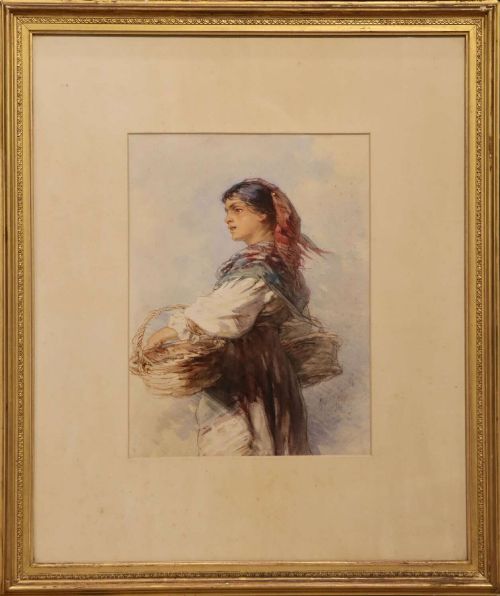
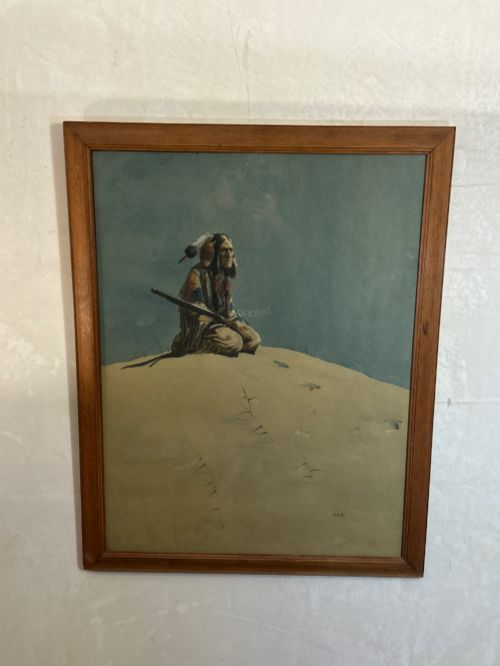
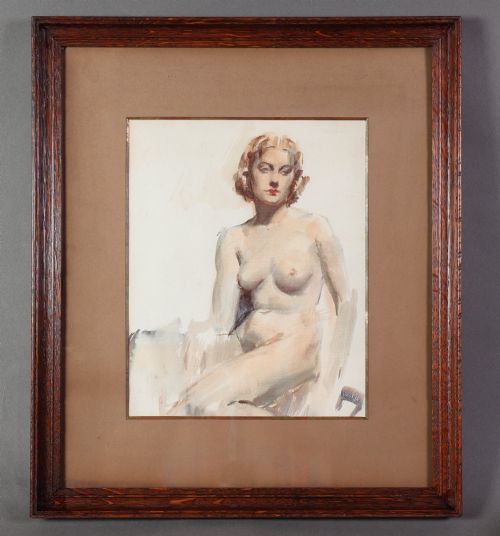
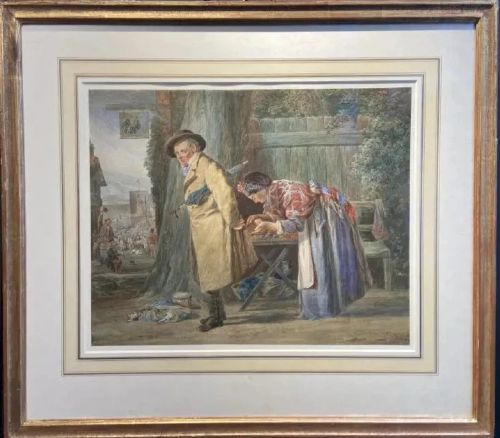
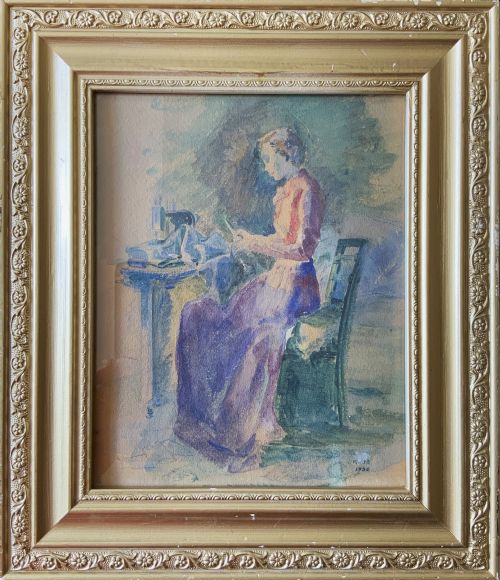
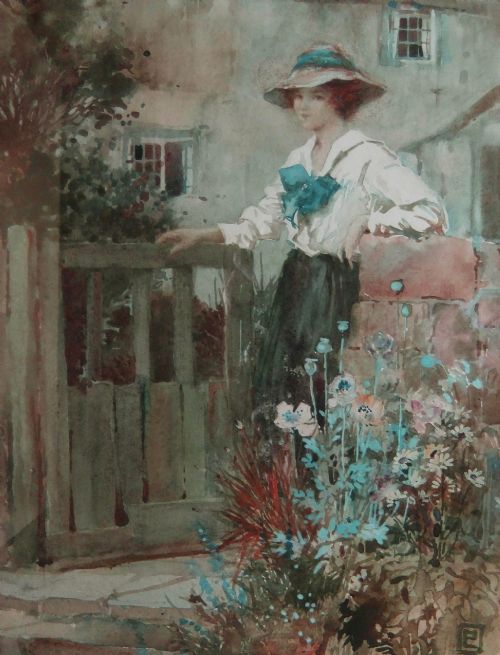
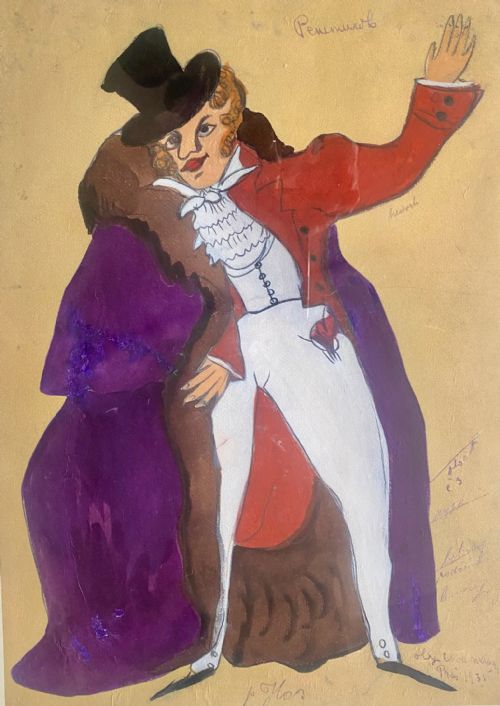
A figurative watercolour painting depicts human subjects in varied domestic, rural, and theatrical settings across the nineteenth and twentieth centuries. You will frequently encounter Victorian genre scenes, Edwardian character studies, and mid-century impressionist compositions.
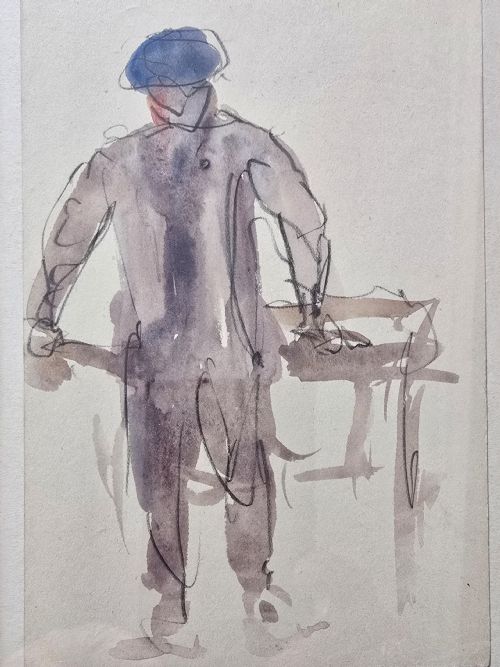
The selections span British, Irish, and European schools alongside Chinese works on paper. Subjects range from individual portraits of children and labourers to group gatherings in interiors and gardens.
How they were made
Artists painted primarily with watercolour pigment suspended in water, occasionally adding bodycolour, gouache, ink, and gold leaf onto paper supports. Framed works are typically protected behind glass within wooden frames.
Techniques combine transparent washes with fine linework to build depth, texture, and detail in the figures and settings.
Among the painted gatherings, several figures balance precarious boots, hold lanterns, or tend sheep.
What varies in quality
Quality rests upon the artist's command of anatomy, expression, and the fluid medium of watercolour. Stronger examples display confident brushwork and precise draughtsmanship that capture the immediacy of the human subject.
The integration of light and pigment across the paper surface distinguishes accomplished works from simpler illustrative sheets.
Guido Bach·John Hassall·Joseph H Barnes·Percy Lancaster·Michael Healy·James Hayllar·Olga Choumansky·Philip Richard Morris·Henry E Hobson·Arthur Hopkins·Rowland Henry Hill·Robert Eadie·Raoul Millais·Martinetti·Sir William Russell Flint·Robert Richard Scanlan·Augustus Jules Bouvier·Thomas James Lloyd·Usabal y Hernandez·Emil John Hess·George Kilburne·Roland Batchelor·Leonardo Morello·David Woodlock·William Lee Hankey
The Figurative Watercolour Painting Glossary
- Watercolour
- A painting method where fine pigment is mixed with water-soluble binders and applied to paper. This medium allows for luminous washes and delicate colour blending.
- Gouache
- An opaque water-based pigment that provides heavier coverage and solid colour areas. Artists often combined it with transparent watercolour to heighten details.
- Genre Realism
- An artistic style depicting scenes from everyday life involving ordinary people. These works focus on narrative moments rather than formal portraiture.
- Impressionism
- A style emphasising transient effects of light and loose brushwork rather than meticulous finish. Mid-century examples apply this approach to figurative subjects.
- Bodycolour
- Watercolour mixed with a white pigment to render it opaque. It introduces solid highlights and dense areas into a composition.
Figurative Watercolour Painting: Frequently Asked Questions
How do I care for a watercolour painting?
Keep the artwork away from direct sunlight to prevent the pigments and paper from fading over time. Ensure it remains in a stable environment with low humidity to protect the paper and framing.
Display the piece behind glass with acid-free mounts to maintain proper separation between the surface and the protective cover.
Are these works original or prints?
The listings consist of original hand-painted works on paper created directly by the artists. Pigment application, brush texture, and the interaction with the paper support confirm their hand-drawn nature.
Individual sheets show the authentic touch of the maker rather than mechanical reproduction.
What periods do these paintings cover?
The available pieces span from the nineteenth century through the mid-twentieth century. Key eras represented include the Victorian, Edwardian, and mid-century modern periods.
Stylistic shifts reflect changing artistic approaches from detailed genre realism to looser impressionism.
How do I identify different artistic styles?
Victorian and Edwardian works typically feature narrative detail and careful academic draughtsmanship. Mid-century pieces lean towards looser brushstrokes and atmospheric colour application.
Subject matter also guides attribution, with genre scenes pointing to the nineteenth century and impressionist portraits suggesting later decades.