




Signed Victorian Watercolour
Signed victorian watercolour paintings capture authentic nineteenth-century landscapes and portraits bearing the individual marks of their makers.
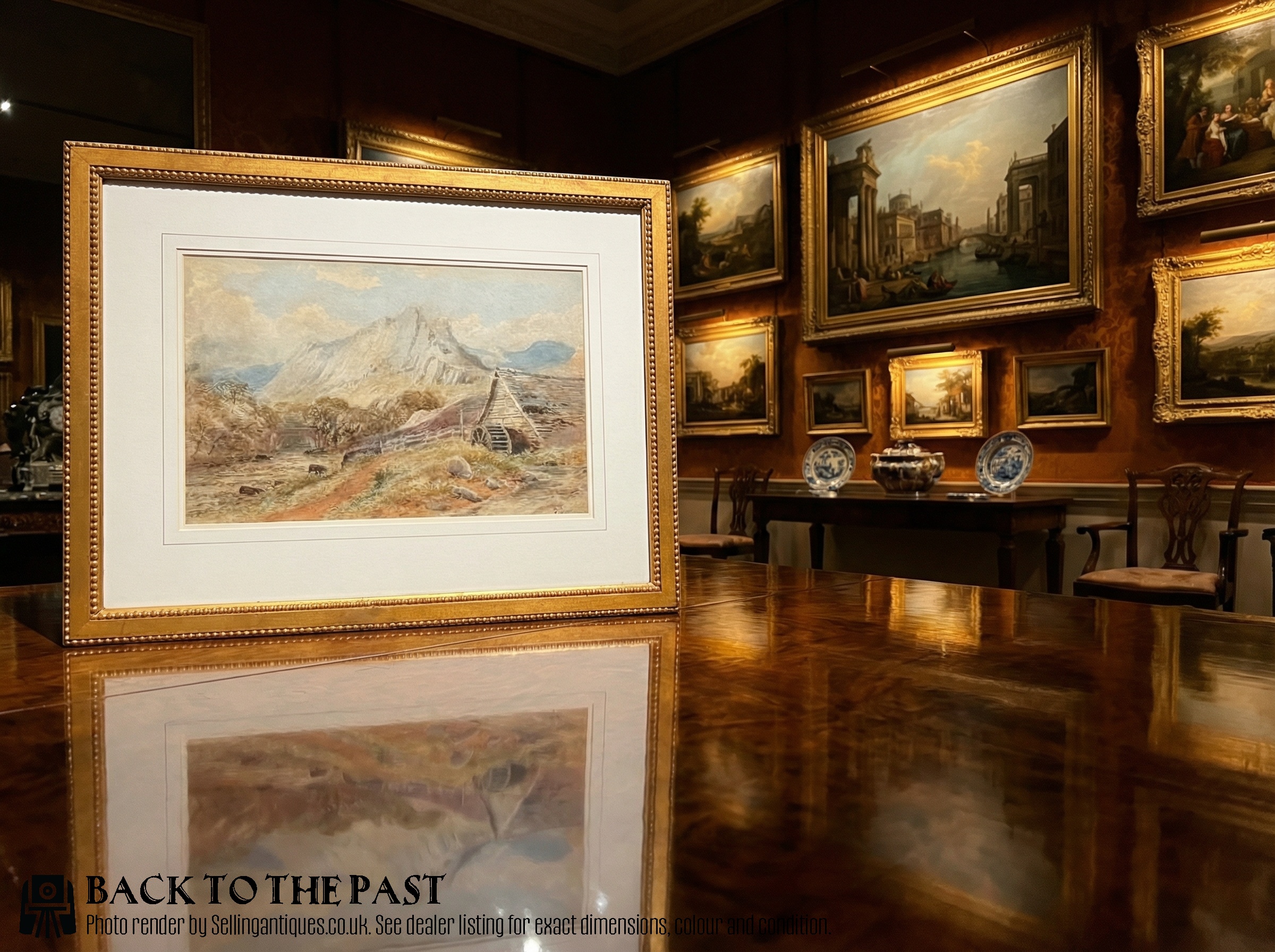
Signed victorian watercolour pieces
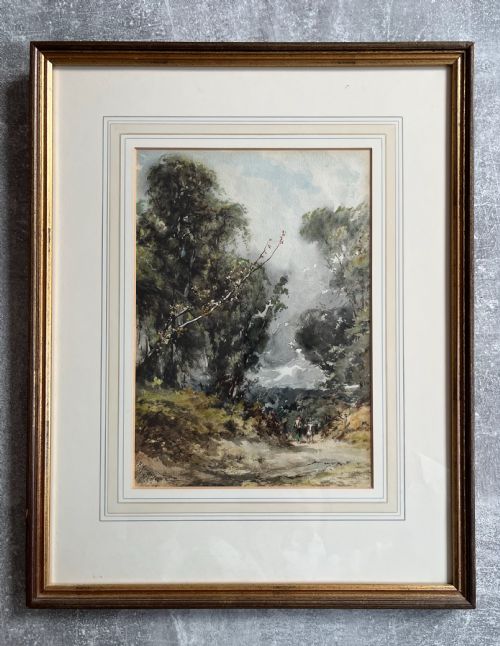
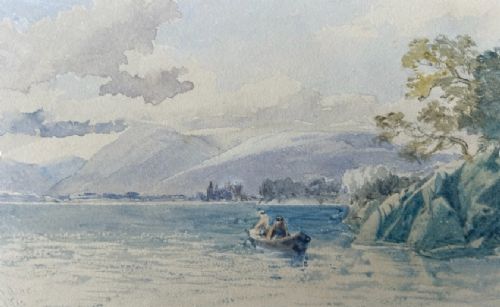
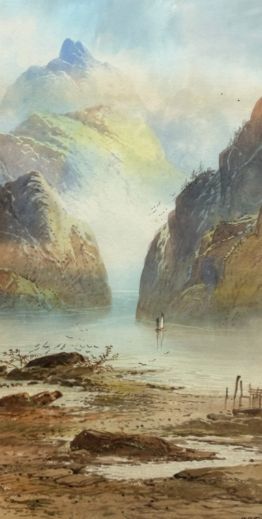
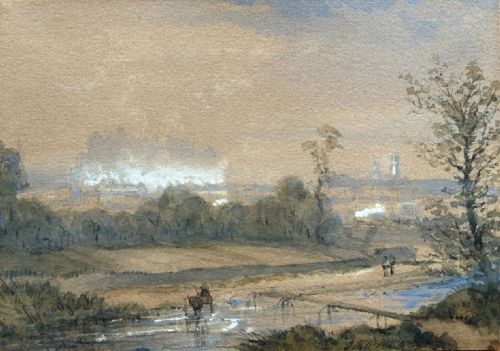
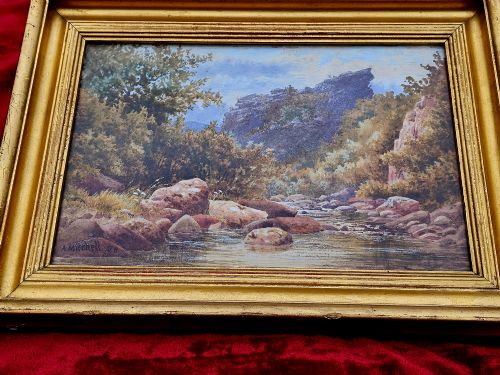
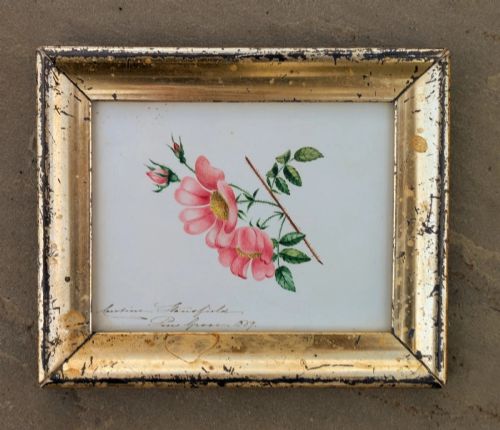
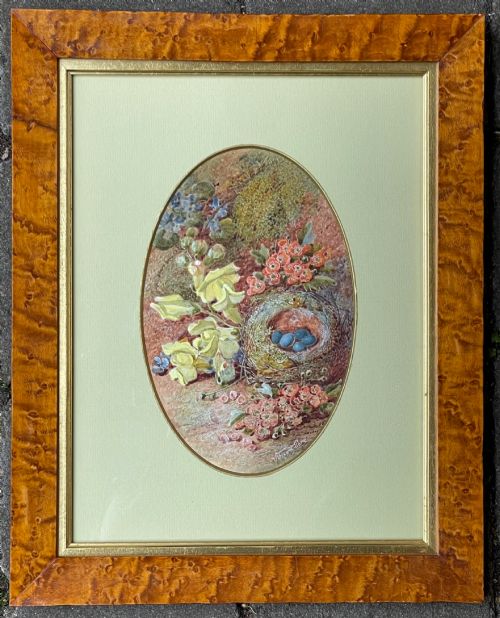
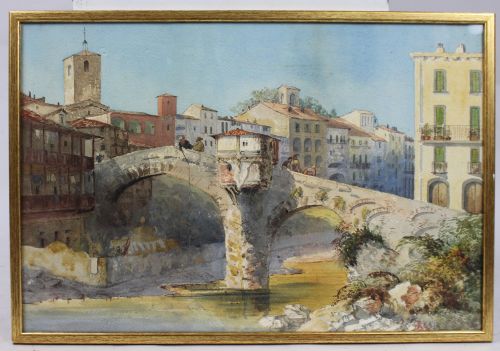
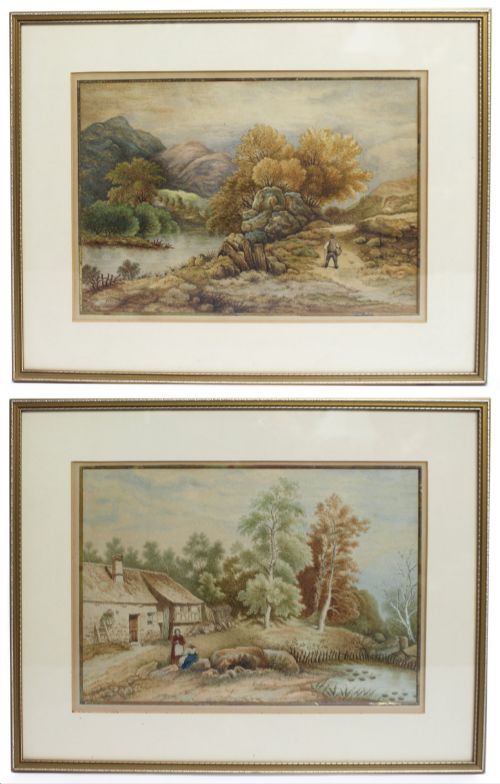
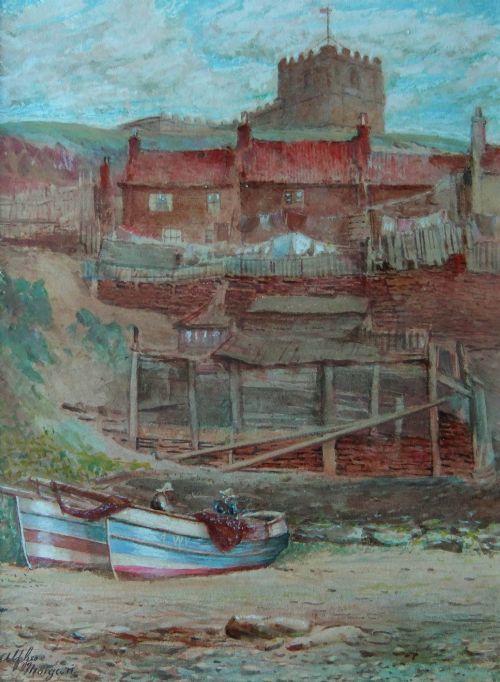
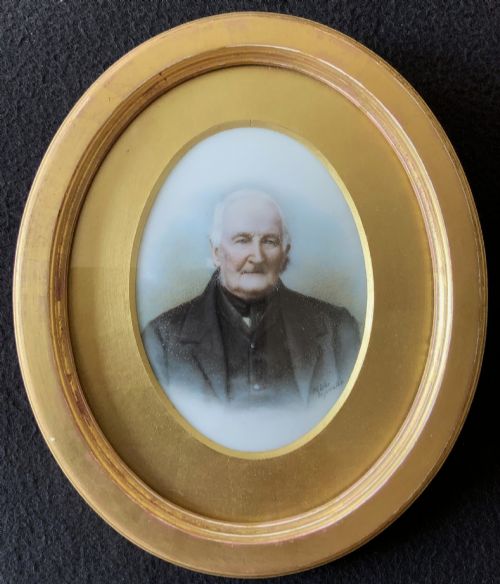
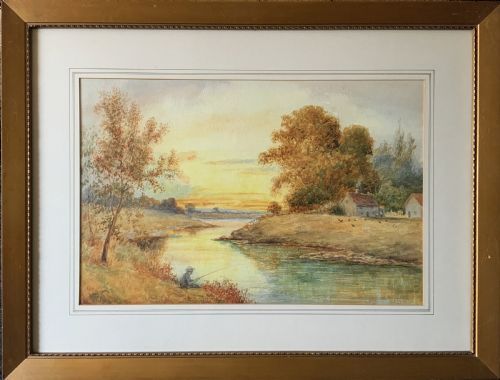
A signed victorian watercolour brings nineteenth-century British scenery, architecture and portraiture directly into a modern room. The pieces seen here span rural landscapes, coastal views, historical cityscapes and figurative studies.
Most examples date from the mid to late nineteenth century, created during the height of the British watercolour school. Buyers frequently encounter framed works depicting identifiable locations across England, Wales and Scotland alongside intimate portrait studies.
Landscapes form the core of what survives, ranging from northern lakes and Welsh valleys to quiet country lanes and village cottages. Figurative subjects appear less often, offering glimpses of Victorian life through detailed depictions of people and domestic scenes.
Materials and technique
Watercolour pigments were applied to heavy paper, card or occasionally prepared board using water-soluble binders. Artists worked with washes of varying opacity, building transparent layers of colour to capture light and atmosphere.
Retail Price Guide 2026
Typical UK retail prices for signed victorian watercolour, calculated from the Sellingantiques database of over a million retail prices indexed since 2003. This retail price guide relies exclusively on Sellingantiques data; no external sources or auction records are used, so the figures do not describe the wider market.
The archive shows subjects spanning Welsh valleys, northern lakes, Yorkshire cityscapes and French landscapes.
Markers of distinction
Quality rests in the confidence of the brushwork and the artist's command of light across the paper. The finest works display subtle tonal gradations and precise detail without appearing stiff or laboured.
The prominence of the signature and the documentary value of the subject matter influence the standing of a piece. Works recording specific historical buildings, now demolished, or named topographical locations carry additional weight.
William Taylor Longmire·John Syer·H P Ditmas·Ferdinand E Gröne·William Stephen Coleman·Bernard Walter Evans·Keeley Halswelle·W H Grey·Claude Hayes·David Hardy·J Moffat·A E Story·Bernard Foster·Francis Cecil Boult·Emma Oliver
The Signed Victorian Watercolour Glossary
- Watercolour
- A painting method where fine pigment powders are suspended in a water-soluble vehicle. The resulting medium allows for luminous washes on paper.
- Gilt frame
- A wooden picture surround covered with a thin layer of gold leaf or metallic gilt paint. These often feature ornate moulded decoration typical of the period.
- Topographical landscape
- An artwork depicting a specific, recognisable real-world location rather than an imaginary scene. These pieces often serve as historical records of changing countryside and architecture.
- Portrait study
- A detailed depiction of a specific individual, capturing likeness and character. They range from formal seated poses to intimate sketches.
Frequently Asked Questions
How do I identify a genuine period watercolour?
Examine the paper quality, framing materials and pigment behaviour closely under magnification. Nineteenth-century papers often carry distinct watermarks and show natural ageing characteristics that modern reproductions cannot replicate.
Signatures should appear integral to the surface rather than added later. Comparing the hand with known examples from the same period helps confirm authenticity.
Where should I hang these paintings?
Keep watercolours away from direct sunlight and damp environments to protect the fragile pigments and paper support. Wall placement in rooms with stable temperature and humidity ensures long-term preservation.
Traditional gilt frames pair well with period interiors, though simple neutral mounts suit contemporary settings equally well.
Why do some landscapes include historical buildings?
Victorian artists frequently documented specific topographical sites, village streets and rural cottages before industrial expansion altered the landscape. Many structures recorded in these works have since been demolished.
This documentary aspect gives topographical watercolours local history value alongside their artistic merit.
What subjects are most common?
British landscapes dominate the available material, featuring lakes, valleys, coastal scenes and rural cottages from England, Wales and Scotland. Pastoral views involving rivers, bridges and travellers appear frequently.
Figurative works and portraits of Victorian gentlemen, ladies and children form a smaller but distinct category of surviving pieces.