




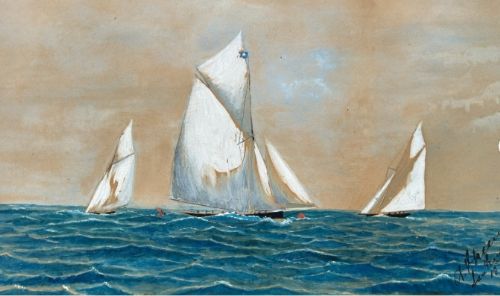


Signed Seascape Painting
A signed seascape painting captures the timeless movement of coastal waters and working vessels through the confident hand of a named artist.
Signed Seascape Painting
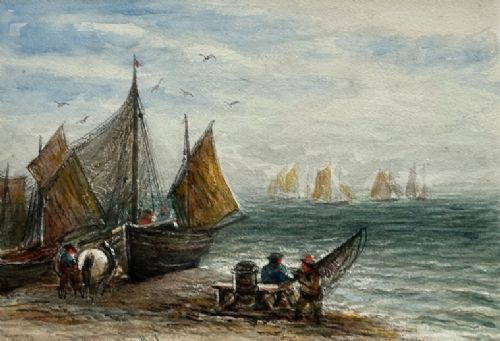
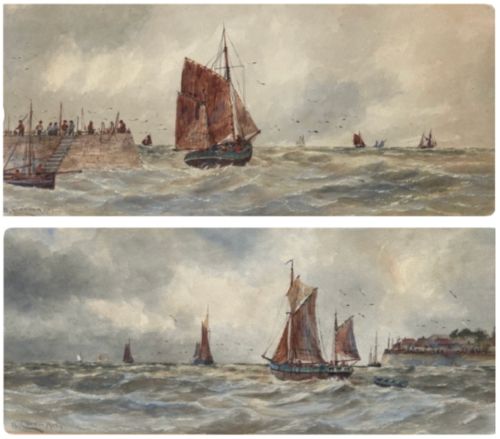
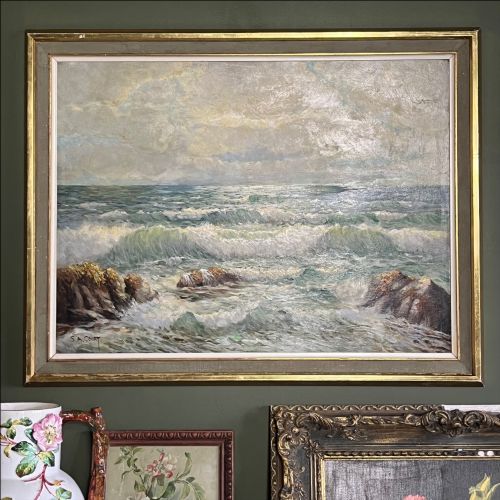
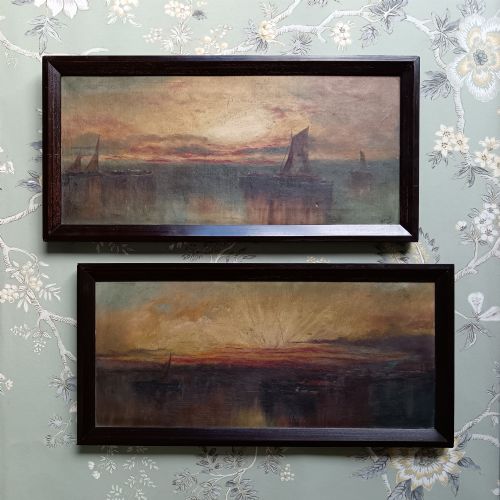
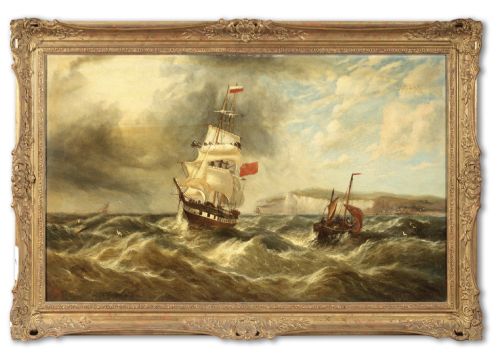
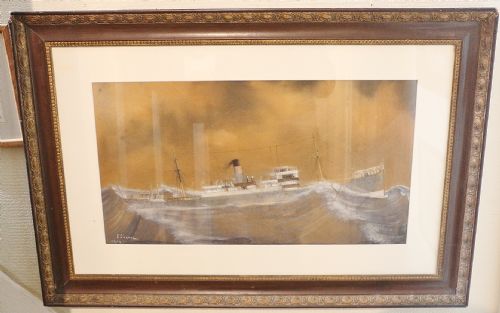
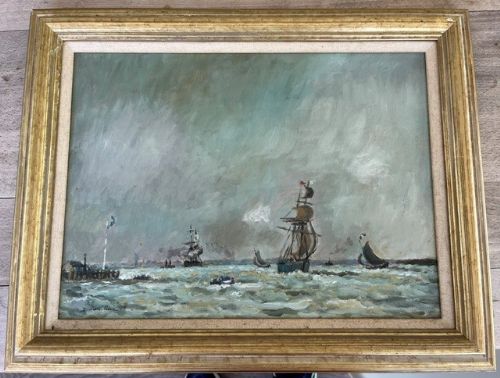
A signed seascape painting encompasses original works on paper, canvas, and board that focus on maritime scenes, coastal harbours, and crashing waves. These pieces range from detailed nineteenth-century watercolours of fishing boats to mid-century oil paintings depicting quiet coves and open seas.
Collectors encounter both British and continental coastal views, frequently featuring named locations such as St Ives, Whitby, and the Venetian lagoons. The works span Victorian and Edwardian realism through to post-war modernism, recording the changing moods of the sea across generations.
How They Were Made
Artists typically worked with watercolour on heavy paper or applied oil paint directly onto stretched canvas, wooden panels, or card supports. Many nineteenth and early twentieth-century painters favoured en plein air execution to capture transient light and weather conditions accurately along the shore.
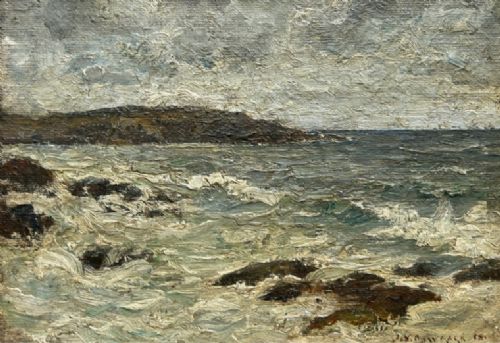
Brushwork varies from tight, academic control in depicting rigging and hulls to thick impasto techniques that render the physical weight and motion of rough water.
Listings feature paper, canvas, wood, and glass materials across Victorian, Edwardian, and mid-century periods.
What Varies In Quality
Quality rests upon the artist's command of light, atmosphere, and maritime architecture, where a confident touch brings vessels and waves to life without hesitation. Stronger examples display an acute understanding of marine perspective and meteorological accuracy rather than formulaic composition.
The relationship between the medium and the support also dictates the enduring visual strength of the piece, with stable pigments and well-preserved paper or canvas preserving the original vibrancy of the coastal palette.
James Orrock·William Cannon·John Wilson Carmichael·Thomas Bush Hardy·John Syer
The Signed Seascape Painting Glossary
- Impasto
- Paint applied thickly to a canvas or board, leaving visible brush or palette knife marks that create a textured, three-dimensional surface.
- En plein air
- The practice of painting outdoors to capture direct observations of natural light, weather, and coastal atmosphere.
- Coble
- A traditional type of open fishing boat native to the north-east coast of England, featuring a flat floor and high bow.
- Triptych
- A work of art divided into three sections or panels, often hinged together to display a continuous or thematic maritime scene.
- Provenance
- The documented history of ownership of an artwork, helping to establish its authenticity and origin.
Signed Seascape Painting: Frequently Asked Questions
How do I identify the artist if the signature is indistinct?
Compare the style, brushwork, and subject matter with documented examples from the same regional school or period. Examining exhibition labels or framing details on the reverse can also provide vital clues.
Secondary indicators such as specific local vessel types or coastal landmarks often point towards a particular artist's known sketching grounds.
Were most marine paintings created outdoors or in a studio?
Artists generally relied on quick watercolour sketches and pencil drawings made directly on the shoreline during changing weather conditions. They then used these observational studies to finish larger oil paintings or more complex watercolours back in the studio.
Some practitioners completed entire works en plein air, particularly when working on smaller wood panels or canvas boards.
How should I frame and hang a vintage maritime painting?
Select a frame that complements the period of the artwork, using traditional gilt or wooden moulding that respects the aesthetic of the piece. Ensure watercolours are mounted behind glass with adequate spacing to prevent direct contact with the paper surface.
Keep paintings away from direct sunlight and fluctuating humidity to protect both the support and the original pigments over time.
What distinguishes a coastal scene from a pure seascape?
Coastal scenes typically anchor the viewer on the shore, featuring cliffs, harbours, buildings, and beach-bound figures alongside the water. Pure seascapes focus almost entirely on the open ocean, weather, and shipping activity far from the land.
Many nineteenth-century works bridge these categories by placing working fishing boats in the foreground against a receding coastline.