





Signed Japanese Pottery
Signed japanese pottery brings together Satsuma and Sumida Gawa pieces carrying artist signatures from the Meiji period.
Signed Japanese Pottery
Signed japanese pottery encompasses decorative vessels and tablewares originating from the Meiji period and the early twentieth century. When searching for signed japanese pottery, collectors encounter finely painted Satsuma wares alongside heavily modelled Sumida Gawa ceramics.
The objects span varied functional and decorative forms, including vases, decorative bowls, mugs, incense burners, sugar bowls, and brush washers. Many date from the late nineteenth century through to the Meiji and Taishō transition around nineteen ten.
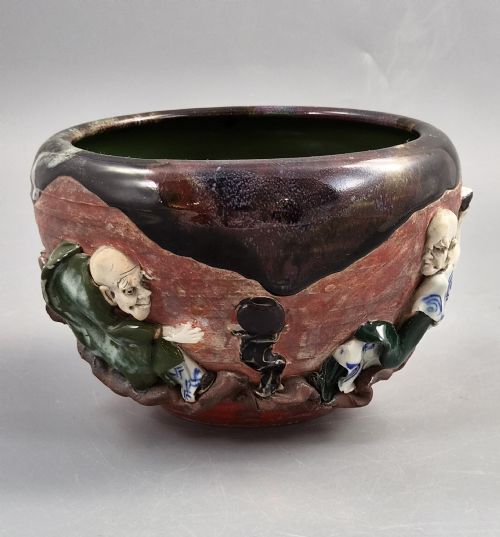
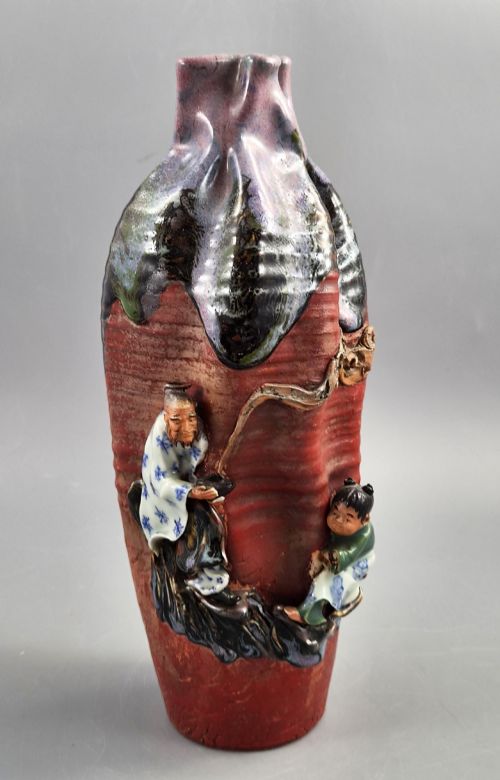
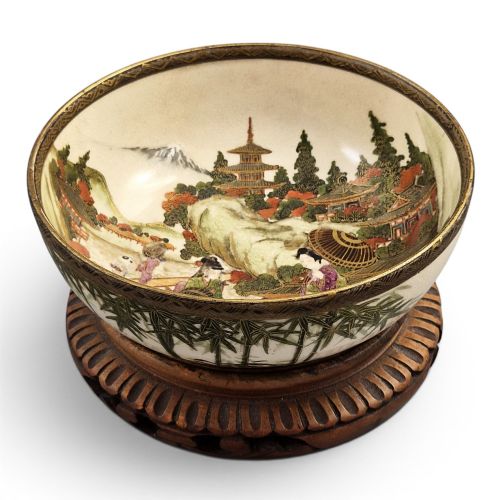
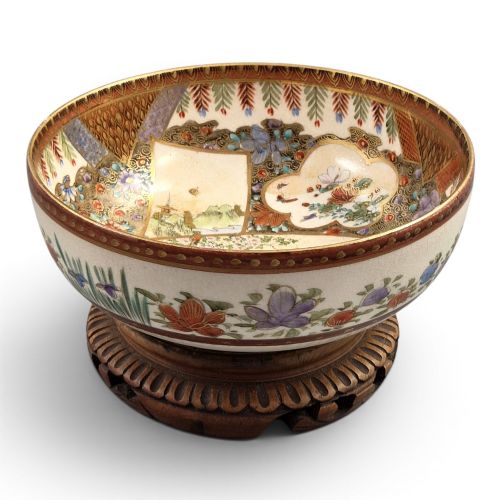
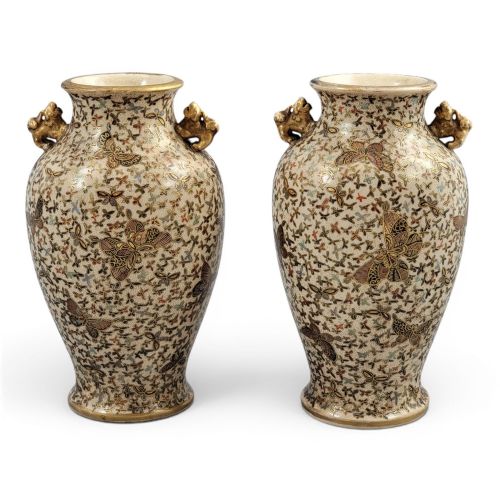
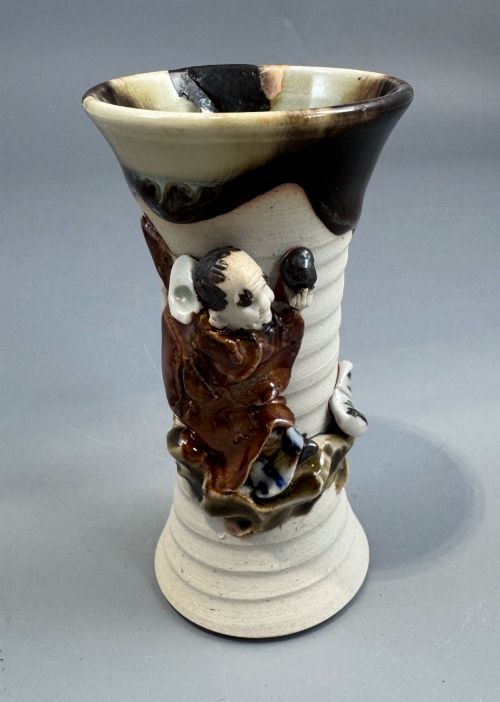
Satsuma pieces frequently display intricate enamel and gold leaf painting depicting figures, birds, and floral subjects. Sumida Gawa examples typically feature distinctive oxblood or lavender flambé glazes combined with applied clay figures in relief.
How they were made
Makers utilised earthenware, stoneware, and terracotta bodies as foundations for elaborate surface decoration. Satsuma ware relied on a characteristic fine-crackled glaze which accepted detailed overglaze enamel painting and gold leaf enrichment.
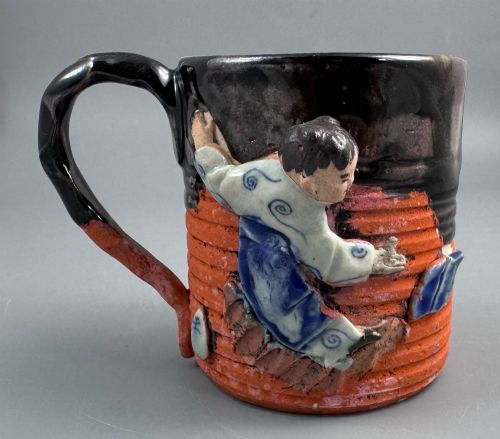
Sumida Gawa pottery employed contrasting techniques, incorporating heavily textured glazes such as oxblood and lavender flambé alongside applied relief figures modelled separately from the main vessel body.
Materials documented across these ceramics range from terracotta and wood to rich gold leaf, enamel, and specialised glazes.
What varies in quality
Quality rests upon the precision of the hand-painted brushwork and the clarity of the maker's signature or studio mark. Finer Satsuma pieces exhibit microscopic detail in floral panels and figural processions, executed with disciplined control over gold leaf and enamel.
Relief modelling defines the standard in Sumida Gawa ceramics, where spirited execution of applied figures separates superior sculptural forms from stiffer, repetitive outputs. The depth and richness of glazes, from glossy oxblood to mottled flambé, further determine the standing of individual vessels.
Inoue Ryōsai·Kinkozan·Gyokkō·Kozan·Kinzan·Kōko·Ryōsai·Chosei·Shuzan·Seiko-en Chokei·Nikko·Kizan·Tagawa·Shozan·Hiroshi·Hododa
The Signed Japanese Pottery Glossary
- Satsuma
- A type of earthenware originating from the Satsuma domain, known for its ivory crackle-glazed surface and polychrome enamel and gold decoration.
- Sumida Gawa
- A distinctive ceramic tradition associated with the Tokyo region, characterised by heavily textured glazes and dramatic applied figural relief.
- Meiji Period
- The era of Japanese history spanning from eighteen sixty-eight to nineteen twelve, which produced the vast majority of finely signed export ceramics.
- Koro
- A traditional Japanese incense burner, often fitted with a pierced cover and supported on three feet.
- Flambé
- A streaky, variegated glaze effect produced by chemical reactions during high-temperature kiln firing, frequently seen in lavender or oxblood tones on Sumida Gawa wares.
- Karako
- A traditional decorative motif depicting a Chinese child at play, commonly modelled in relief on Sumida Gawa vases and mugs.
Signed Japanese Pottery: Frequently Asked Questions
How do I identify a signed japanese pottery piece?
Signatures typically appear as handwritten characters, painted monograms, or impressed seals on the base of the vessel. They may indicate the individual artist, the studio, or the kiln where the ceramic was produced.
Matching the character style and associated studio marks, such as the Shimazu crest on Satsuma wares, helps place the object within its proper historical context.
What is the difference between Satsuma and Sumida Gawa pottery?
Satsuma ceramics feature cream-coloured crackle earthenware covered in meticulous enamel and gilt painting, often depicting traditional figures or natural scenes. Their surface remains largely smooth beneath the glaze.
Sumida Gawa pottery utilises heavily textured, dripping glazes combined with three-dimensional figures modelled in clay and applied directly to the exterior wall of the vessel.
How should I display signed japanese pottery at home?
Display these ceramics away from direct sunlight to protect delicate overglaze enamels and gold leaf detailing from fading. Placing them on stable, level surfaces ensures that fragile applied relief elements on Sumida Gawa pieces remain secure.
Allowing adequate surrounding space around monumental vases or detailed bowls highlights their intricate hand-painted narratives.