
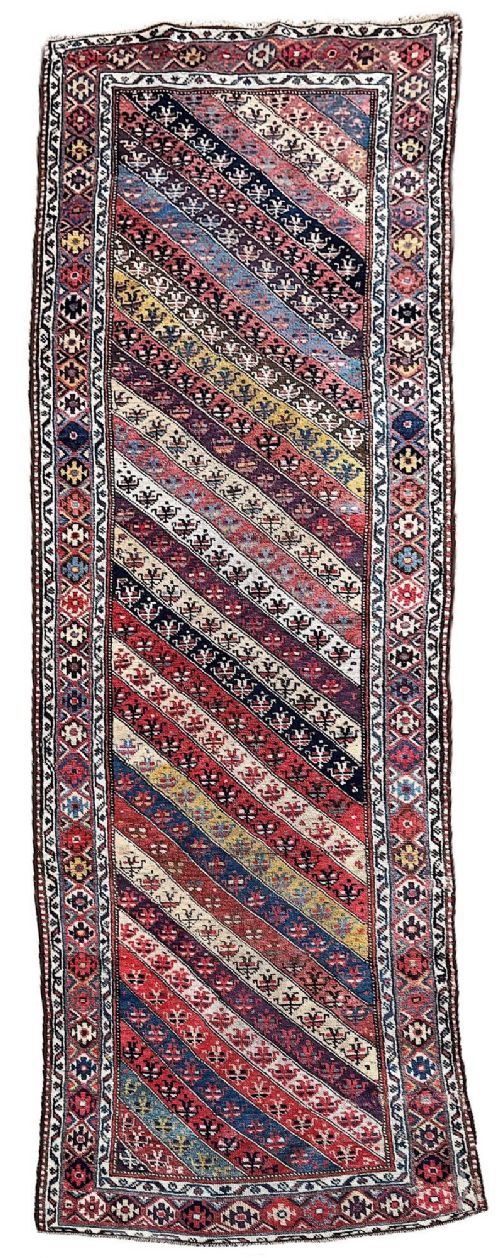
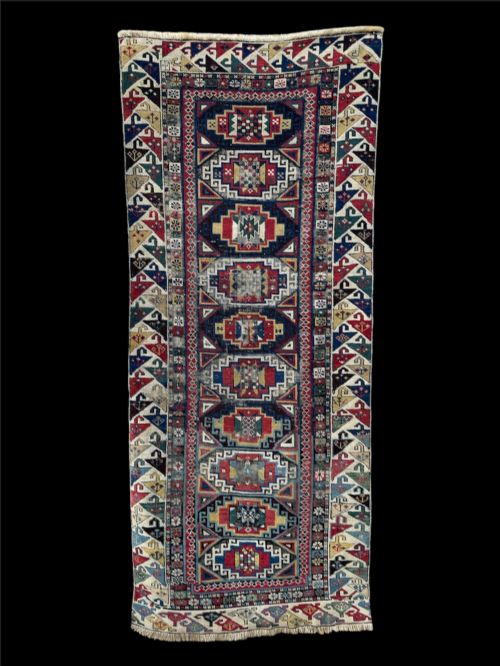


Shirvan Wool Carpet
A shirvan wool carpet brings the bold geometric rhythms and rich natural dyes of the eastern Caucasus directly into a room.
Shirvan Wool Carpet
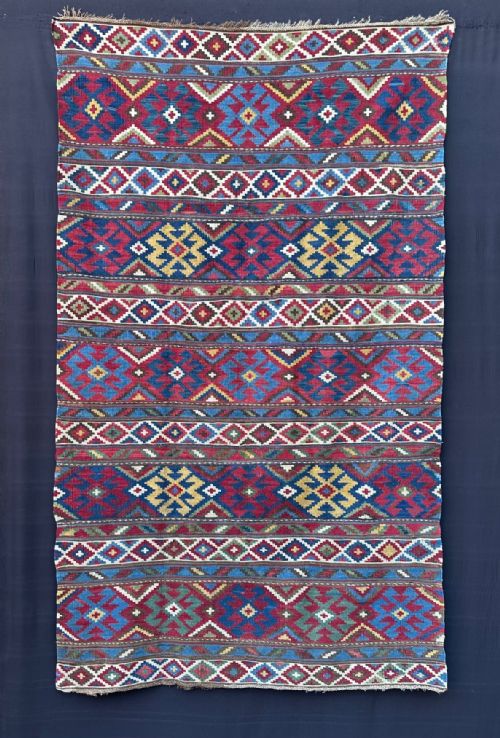
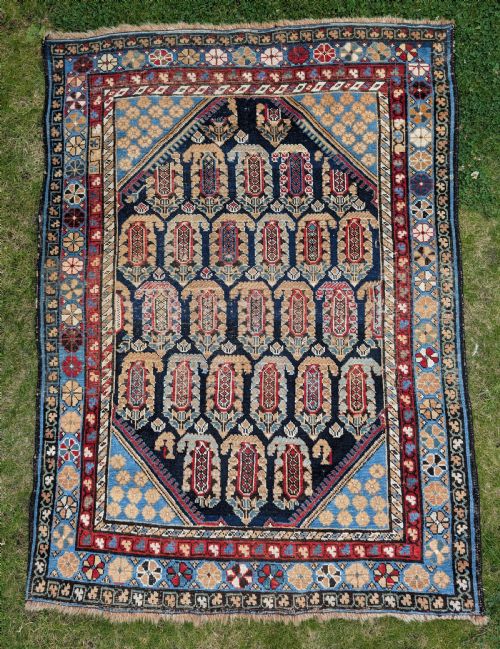
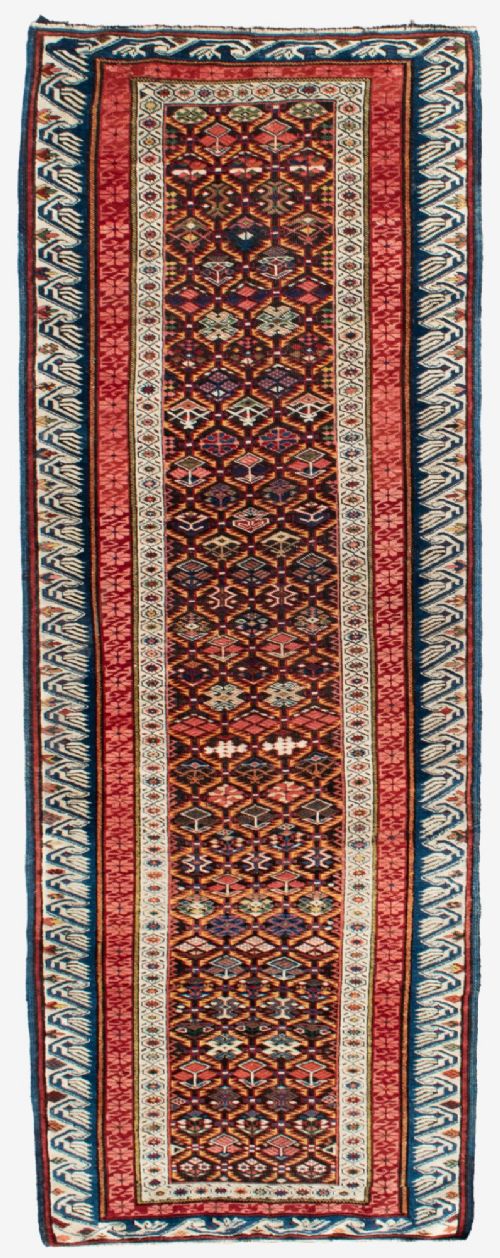
A shirvan wool carpet is a woven textile originating from the Caucasus, appearing in forms such as prayer rugs, runners, flatwoven kilims, and larger area formats. These pieces typically date from the nineteenth century into the early twentieth century, reflecting traditional tribal and regional weaving practices.
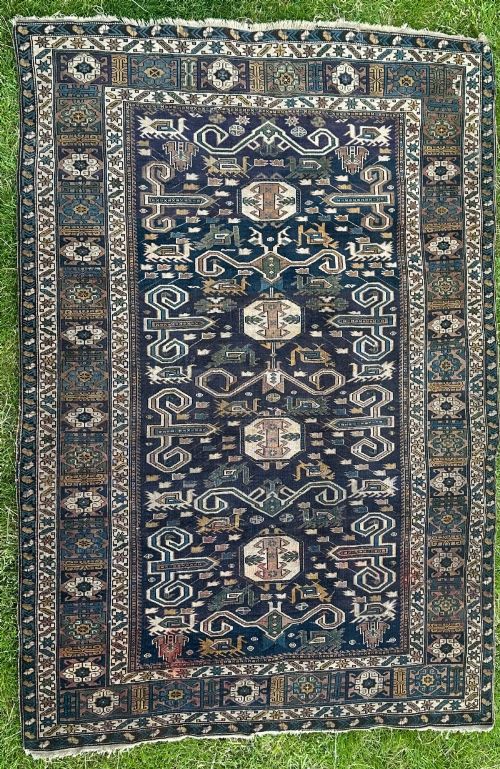
The aesthetic centres on structured geometric layouts, floral lattices, and distinct motifs like boteh and star patterns. Buyers encounter everything from narrow runner formats to square room-size carpets, each bearing the characteristic palette of the eastern Caucasus workshop or village weaver.
Materials and Construction
Makers utilised hand-spun wool for the pile and structure, frequently combining it with cotton foundations for stability in larger formats. This hand-spun fibre absorbs dye unevenly in certain lights, creating a subtle variation across the surface of the textile.
Colour comes from natural dyes derived from plants and minerals, yielding deep blues, soft yellows, and ivory grounds that age with a characteristic patina. Weavers tied these piles firmly onto foundation warps, producing either dense knotted surfaces or flatwoven kilim structures.
Look closely to spot flocks of stylized birds peering out from the geometric borders of certain Shirvan carpets.
Judging Quality and Execution
Quality rests in the crispness of the drawing and the saturation of the natural dyes, where finer knots permit sharper geometric definition. Weavings that maintain balanced proportions and clear articulation of motifs stand apart from simpler or more crowded compositions.
The handling of secondary details, such as Kufic borders or complex bird motifs, indicates the weaver's skill and adherence to regional traditions. Condition also plays a role, as intact borders and minimal structural intervention preserve the integrity of the original design.
The Shirvan Wool Carpet Glossary
- Boteh
- A pear-shaped or almond-shaped motif representing a floral shoot or cypress tree. This symbol appears frequently in Caucasian and Persian weaving.
- Kilim
- A flatwoven textile produced without a pile by tightly interweaving warp and weft threads. These pieces function as lightweight rugs or decorative wall hangings.
- Prayer Rug
- A textile featuring a distinct mihrab or arch design at one end, traditionally oriented towards Mecca during daily worship. These rugs often display central floral lattices or ivory grounds.
- Runner
- A long, narrow carpet format designed for hallways, corridors, or alongside furniture. They showcase repeating medallions or continuous border patterns.
- Natural Dyes
- Colourants extracted from roots, leaves, insects, and minerals rather than synthetic chemicals. They age gracefully and develop softer secondary tones over decades.
Shirvan Wool Carpet: Frequently Asked Questions
Where were these carpets made?
These textiles were produced in the Caucasus region, specifically within the Shirvan area and surrounding districts of the eastern Caucasus. Weavers in local villages and regional centres created them using traditional local designs.
Production spanned the nineteenth and early twentieth centuries, drawing on distinct regional aesthetics that set Caucasian weaving apart from Persian or Anatolian counterparts.
How do I style a runner rug?
Runners fit naturally into narrow spaces such as hallways, entryways, or narrow corridors where linear patterns draw the eye forward. Their elongated formats help define walkways while adding warmth to wooden floors.
Pacing them in light traffic areas preserves the hand-spun wool pile and allows the geometric borders to remain visible without heavy wear.
What is a prayer rug?
A prayer rug is a smaller format textile distinguished by a pointed arch or mihrab design at one end. This architectural motif indicates the direction of prayer and frames the central field of the rug.
They function well as decorative wall hangings or accent pieces in smaller spaces where the detailed lattice work can be observed up close.
How do natural dyes age?
Natural dyes mellow over time, developing a soft patina and subtle tonal shifts across the wool pile. Plant and mineral colourants interact with light and air differently than synthetic dyes, creating gentle abrash.
This gradual softening enhances the clarity of geometric motifs and gives antique carpets a depth of colour unique to nineteenth-century production.