

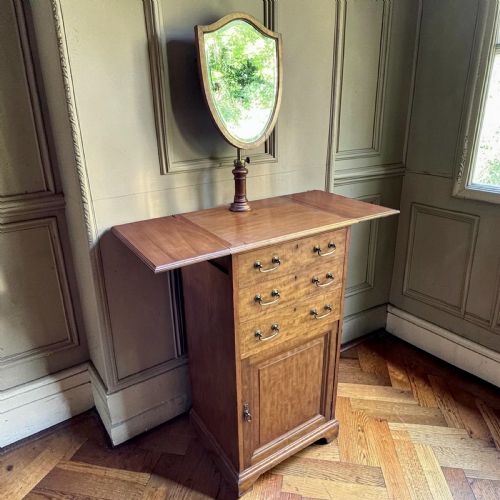


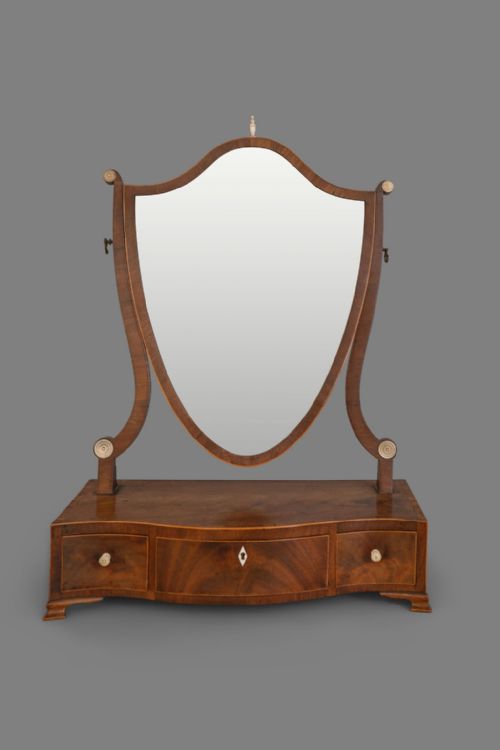


Shield Mirror Vanity
These shield mirror vanity pieces bring genuine Georgian and Edwardian craftsmanship to your dressing routine.
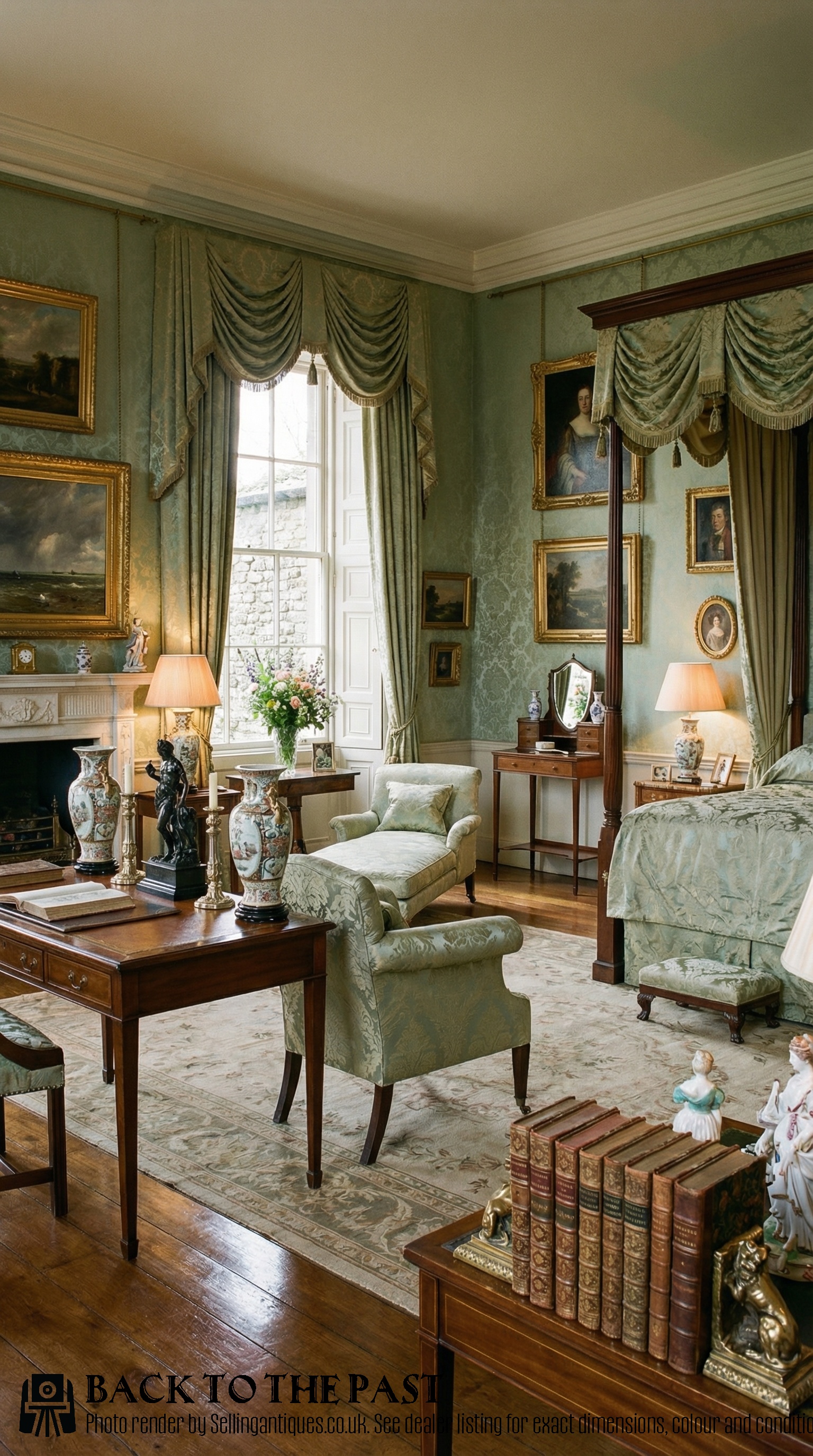
Shield Mirror Vanity
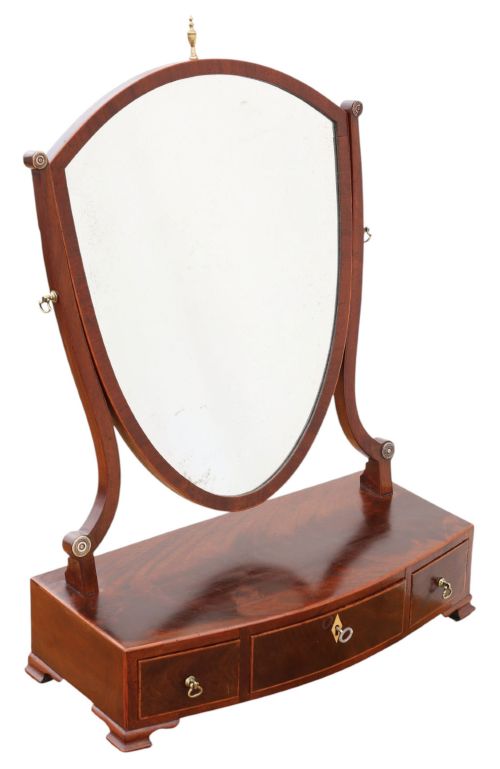
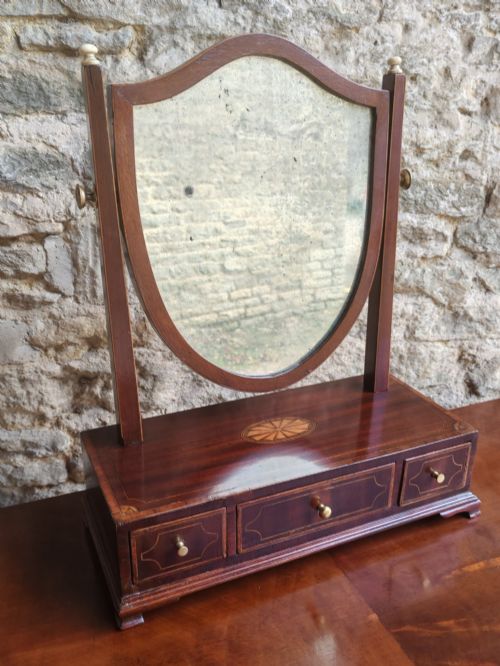
When you search for shield mirror vanity, you are looking at dressing mirrors, toilet mirrors, and dressing tables designed to sit on surfaces or stand independently. These items include table top cheval mirrors, shaving stands, and dressing chests featuring distinct glass plates.
The pieces on this page span several periods, from 18th Century and Georgian examples to 19th Century, Edwardian, and 1910 designs. You will frequently meet mahogany frames, alongside yew, satinwood, and copper or brass fittings.
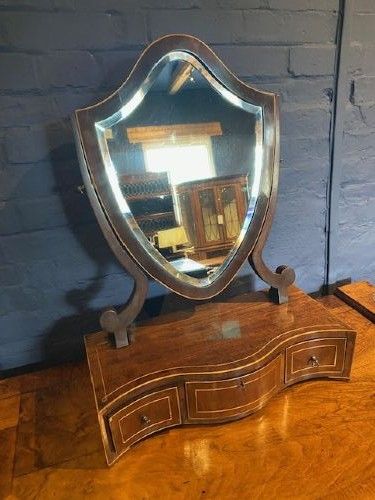
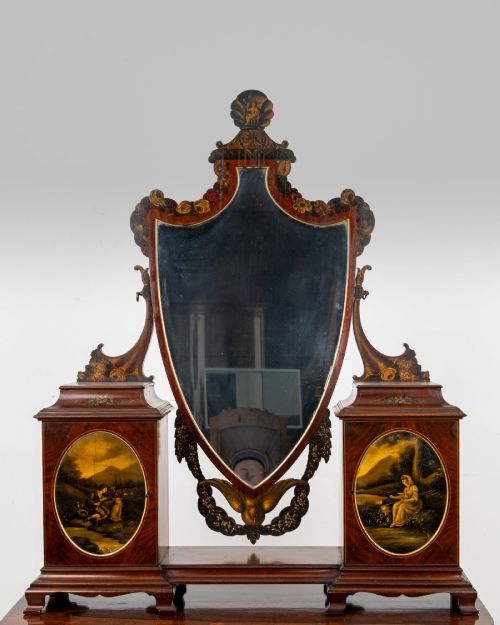
Forms range from simple swing mirrors to large scale serpentine front toilet mirrors and Sheraton Revival dressing tables. Many incorporate jewellery cabinets or crossbanded details within the woodwork.
Distinguishing quality across pieces
The standard of timber selection defines the upper tier of these pieces, particularly rich mahogany grains and precise inlay work. Cabinetmakers who invested time in serpentine fronts and harmonious proportions achieved superior visual balance.
Hardware integrity also separates standard examples from finer ones, notably substantial brass fittings and smooth, reliable pivot mechanisms for the glass. The execution of edge moulding and the depth of the wood finish indicate the level of workshop care.
The Shield Mirror Vanity Glossary
- Shield mirror
- A dressing or toilet glass shaped in the silhouette of a medieval shield. This form became popular during the Georgian period.
- Toilet mirror
- A smaller mirror designed to sit on top of a dressing chest or table. These pieces often feature small drawers in the base.
- Serpentine
- A front contour characterised by a convex centre flanked by concave curves. Makers applied this flowing line to dressing table bases.
- Crossbanding
- A border technique where thin strips of veneer are laid across the grain of the primary wood. This decorative framing appears on Edwardian and Georgian pieces.
- Cheval mirror
- A full length or large scale mirror suspended in a frame that allows it to swing. Table top versions incorporate small cabinets.
Shield Mirror Vanity: Frequently Asked Questions
How do I date a shield mirror?
Examine the secondary woods, construction joints, and framing style to determine the likely period. Georgian examples often show hand-cut dovetails and simpler brass mounts compared to later Edwardian revivals.
Look closely at the mirror glass itself, as older plates may exhibit subtle bevels, minor imperfections, or silvering wear consistent with age.
Were these mirrors fixed or adjustable?
Most pieces utilise brass pivot screws mounted on upright arms, allowing the glass plate to tilt forward or backward. This adjustable mechanism helped users catch the light during daily grooming.
Over time, these fittings can loosen, but original hardware remains a key indicator of authenticity.
Where should I place a toilet mirror?
These pieces suit placement on top of sturdy chests of drawers, sideboards, or dedicated dressing tables. Ensure the supporting surface is deep enough to take the weight of the base and frame.
Keep them away from direct, strong sunlight to protect polished mahogany and delicate veneer work from fading.
What is the difference between a toilet mirror and a dressing mirror?
Toilet mirrors traditionally sat upon a table or chest and included small drawers for cosmetics or jewellery. Dressing mirrors often refer to larger, freestanding glass frames.
Both terms overlap frequently in historical descriptions, so checking the overall dimensions and base configuration is essential.