
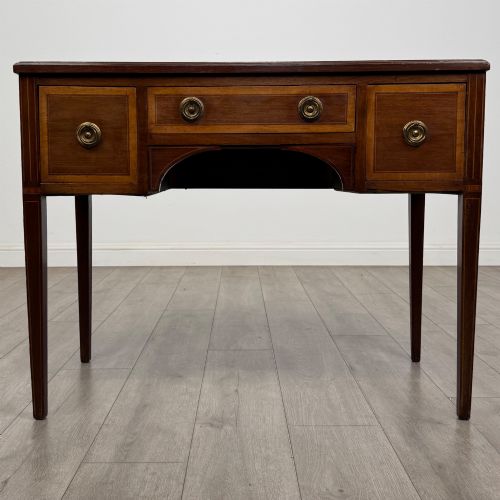
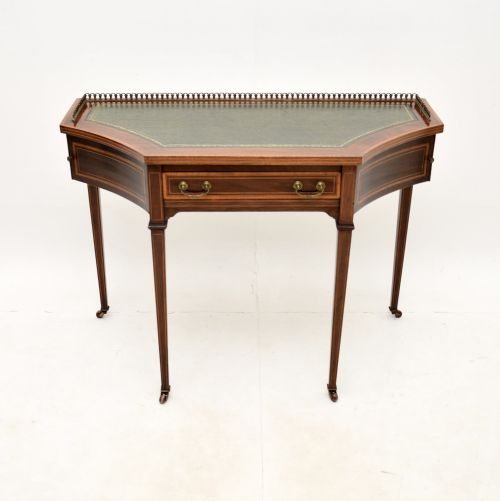
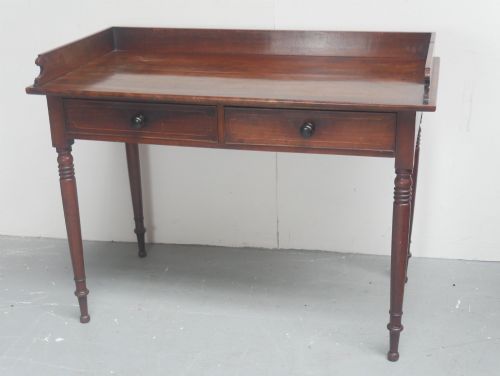
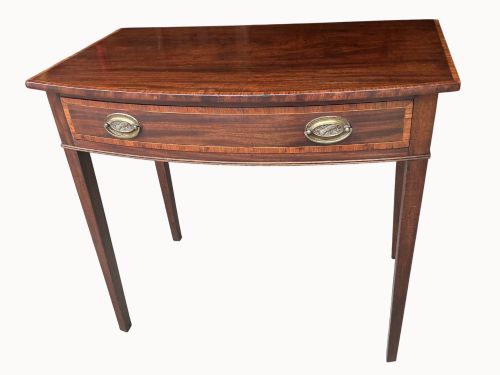



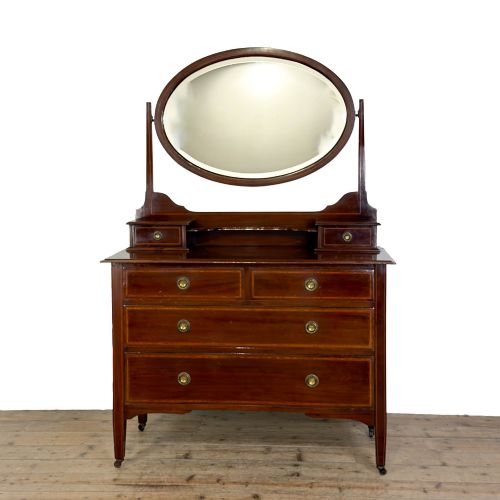
Inlaid Mahogany Dressing Table
An inlaid mahogany dressing table brings a warm timber grain and delicate contrasting stringing into a bedroom, combining practical surface space with refined period craftsmanship.
Inlaid Mahogany Dressing Table
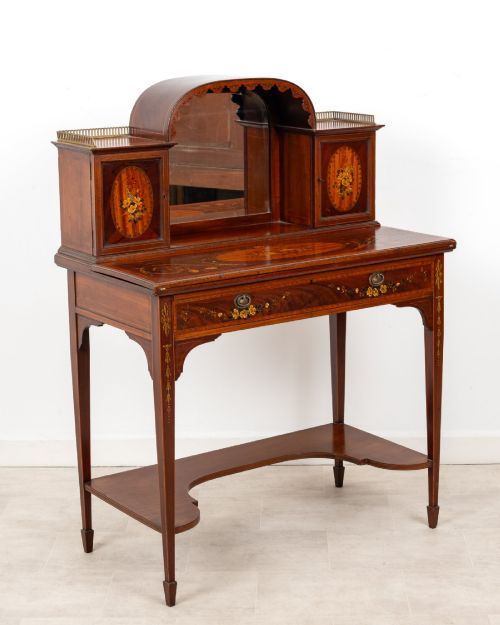
When searching for an inlaid mahogany dressing table, you encounter pieces spanning from the Georgian and Regency eras through the Victorian period and into Edwardian times. The most common form on this page is the Edwardian dressing table, often featuring contrasting wood inlays and an integrated swing mirror.
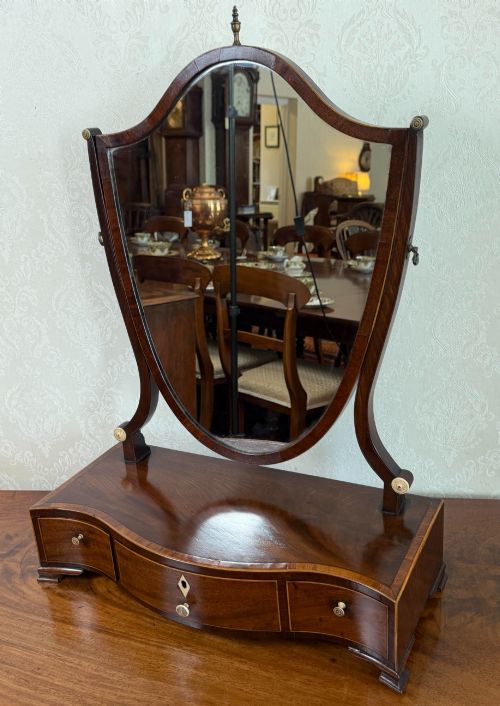
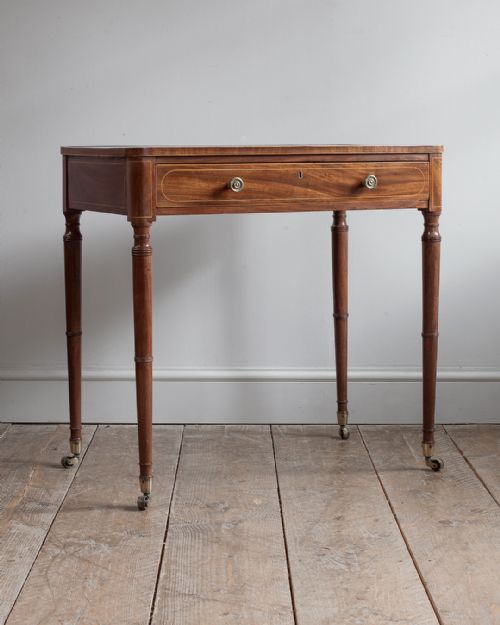
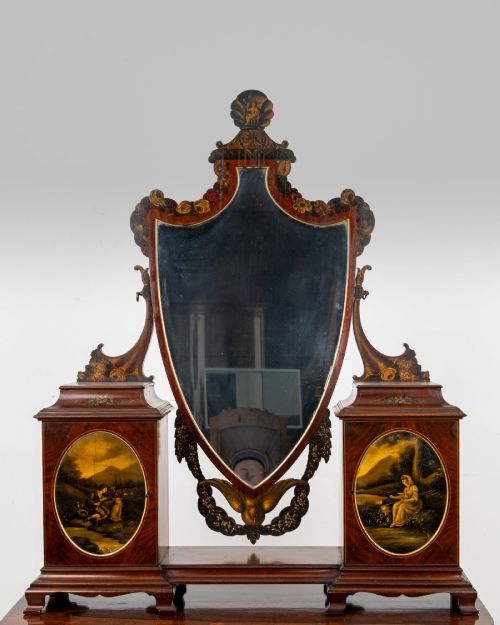
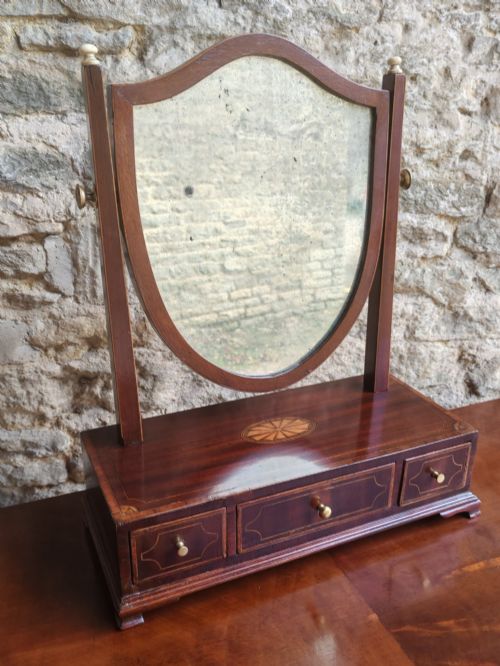
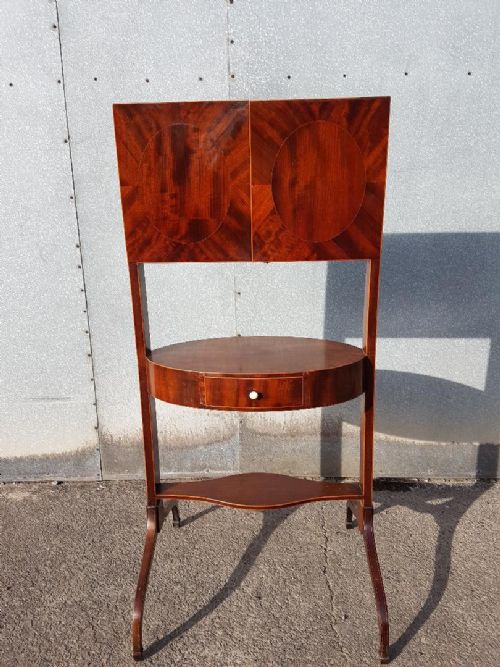
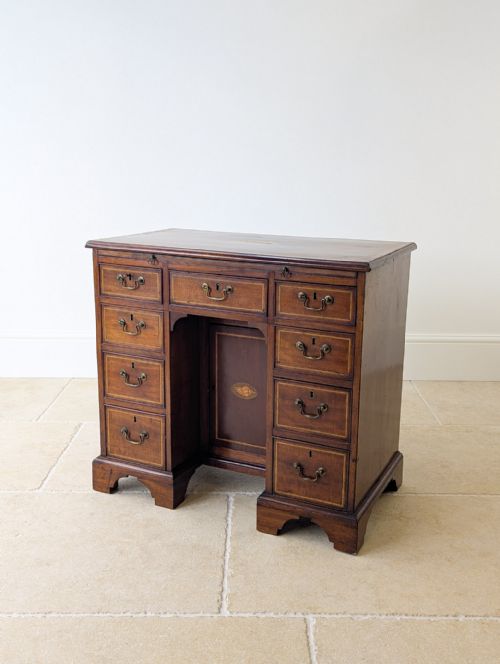
Beyond standard dressing tables, the selection includes related forms such as kidney-shaped desks, lowboys, side tables, and tabletop swing mirrors. These items share the primary timber and decorative inlay traditions associated with bedroom and dressing furniture across multiple centuries.
Origins stretch from the late eighteenth century into the early twentieth century, incorporating styles from Sheraton and Sheraton Revival to Georgian and Victorian interpretations. Each period brings distinct proportions and inlay motifs to the fundamental dressing table form.
Materials and Construction Techniques
Makers utilised solid mahogany and mahogany veneers as the primary structural and visual base, prized for its rich reddish-brown tone and stable grain. This timber was frequently enhanced with lighter contrasting woods for detail.
Boxwood and satinwood inlay, along with general wood inlay and marquetry, created geometric lines, shell motifs, or floral patterns across drawer fronts and top surfaces. Brass hardware such as swing mirror pivots, handles, and escutcheons added metallic accents to the woodwork.
Inlaid Mahogany Dressing Table Retail Price Guide 2026
Typical asking prices for inlaid mahogany dressing table among the pieces listed under this phrase on Sellingantiques today, from the lower quarter to the upper quarter. They describe what is for sale here now, not the wider market.
Several mirrors include hidden jewellery compartments tucked behind the glass for safekeeping.
Distinctions in Quality and Execution
The sophistication of the timber selection and the precision of the inlay work separate standard pieces from finer examples. Crisp, tightly fitted boxwood or satinwood stringing demonstrates higher workshop competence than broader, less defined decoration.
Structural integrity in drawer dovetails, the stability of the mirror supports, and the retention of original brass fittings indicate the level of care and expense invested in the piece's original manufacture.
Edwards & Roberts·James Shoolbred·Maple and Co
The Inlaid Mahogany Dressing Table Glossary
- Inlay
- A technique where pieces of contrasting timber, such as boxwood or satinwood, are inserted into recessed portions of the mahogany base to form decorative patterns. This method defines the surface ornamentation of these tables.
- Satinwood
- A durable, yellowish wood utilised for contrasting inlay work and banding against darker mahogany surfaces. It provides a bright visual border on Edwardian and Sheraton Revival pieces.
- Lowboy
- A small low dressing or side table typically featuring one or more rows of drawers beneath the top surface. Georgian examples of this form frequently appear alongside larger dressing furniture.
- Cheval mirror
- A full-length swing mirror supported by a freestanding frame that allows the glass to tilt. Tabletop variants sit directly on dressing tables or cabinets.
- Marquetry
- Elaborate veneer work arranged to form pictorial or decorative designs using various wood types. Dutch examples often display floral marquetry on mirror frames and tabletops.
Inlaid Mahogany Dressing Table: Frequently Asked Questions
How do I date an inlaid mahogany dressing table?
Dating relies on structural characteristics, drawer construction methods, and prevailing design styles seen in the piece. Georgian and Regency examples exhibit hand-cut dovetails and simpler structural framing.
Later Edwardian versions often incorporate factory-produced components, lighter satinwood banding, and specific revival motifs that distinguish them from eighteenth-century originals.
Are the mirrors on these tables usually original?
Many surviving dressing tables retain their original swing mirrors, secured by period brass pivots and side arms. The glass itself may show signs of age or occasional replacement while the frame remains intact.
Checking the fit of the mirror supports against the tabletop helps determine whether the superstructure belongs to the base.
What is the difference between a dressing table and a writing table?
Dressing tables are designed for personal grooming, typically incorporating mirrors, smaller accessory drawers, or compartments for toiletries. Writing tables focus on a flat working surface with kneeholes and stationery drawers.
Some Edwardian and Victorian designs blur these lines, serving multiple domestic functions within a bedroom or dressing room.
How should I care for mahogany and inlaid surfaces?
Mahogany responds well to traditional wax polishing that feeds the timber grain and maintains a soft sheen without sealing the surface. Inlaid sections require gentle cleaning to protect delicate boxwood or satinwood stringing from moisture.
Keeping the furniture away from direct sunlight and heat sources prevents the wood from drying out and the veneer from lifting.