
Shield Back Side Chairs
These shield back side chairs bring centuries of refined joinery to your dining room or hallway.
Shield Back Side Chairs
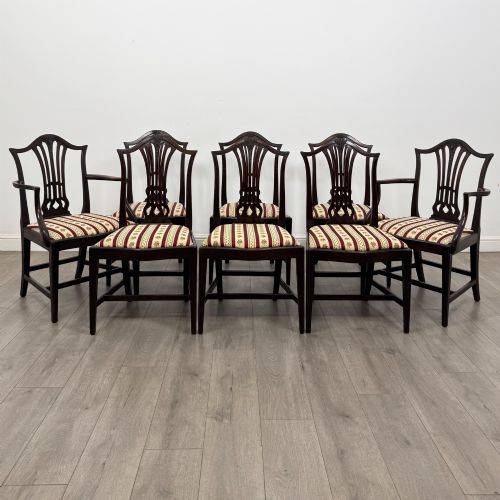
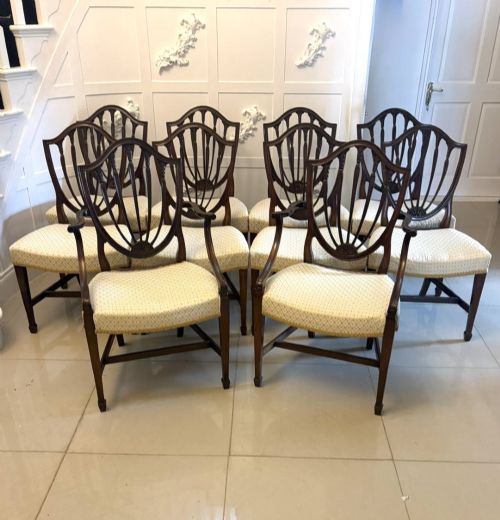
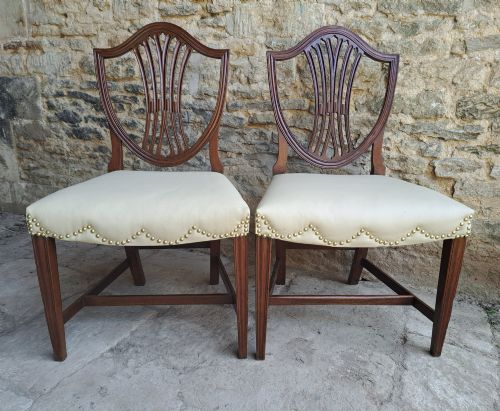
Shield back side chairs are classic seating forms defined by their distinctive heart-shaped or curved shield-like backrests. When you search for shield back side chairs, you will encounter pieces spanning from the 18th century through the Georgian, Victorian, and Edwardian periods up to the 20th century. Mahogany remains the predominant timber, though oak and walnut examples also appear across the listings.
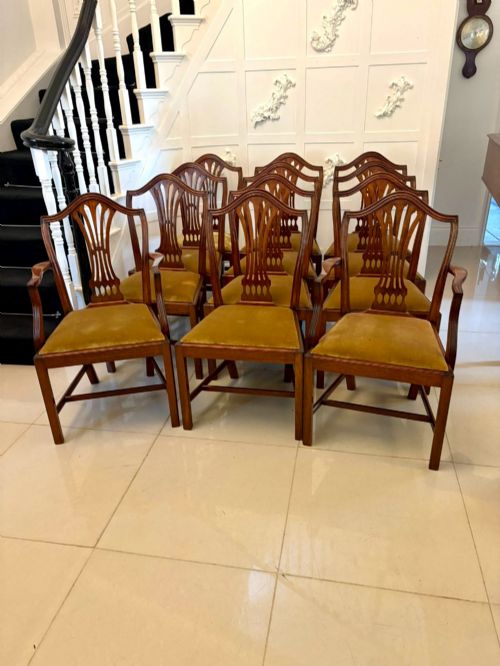
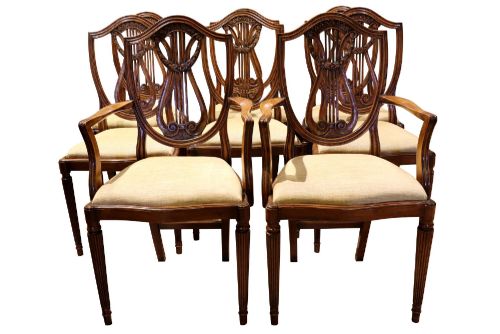
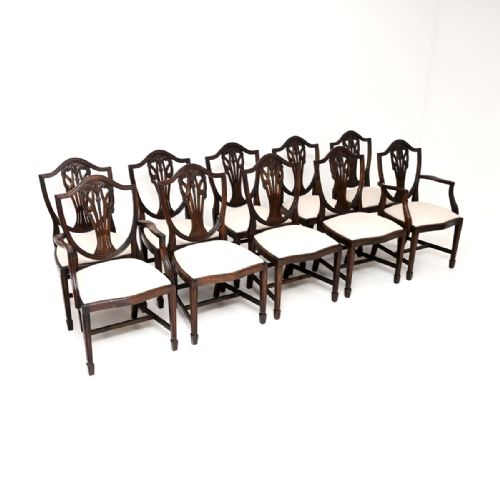
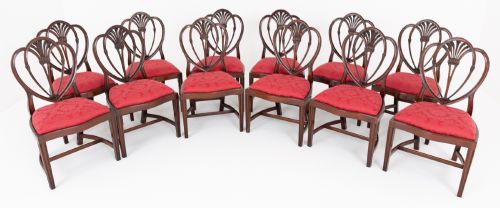
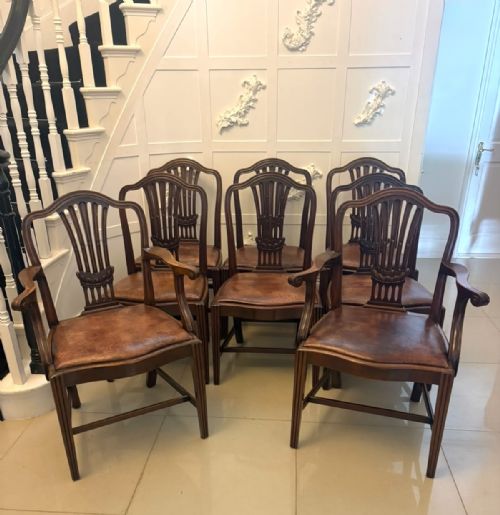
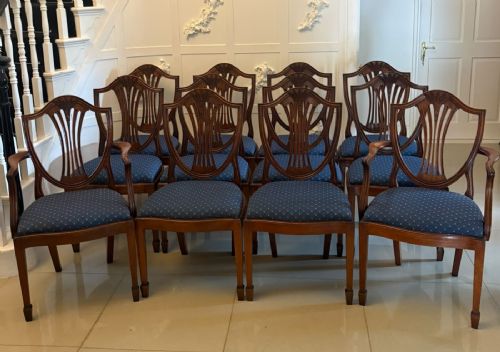
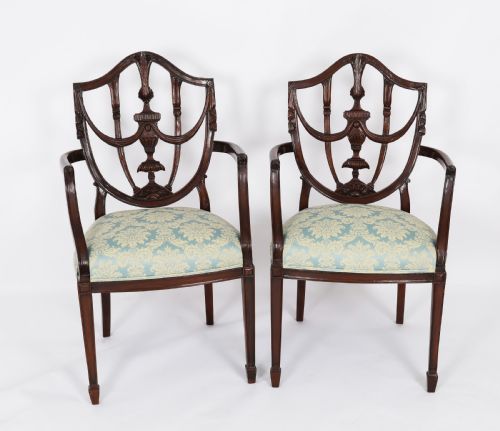
The selections on this page range from single hall chairs to large dining sets numbering up to sixteen pieces, alongside occasional armchairs and carvers. Hepplewhite and Hepplewhite Revival styles dominate the aesthetic, frequently incorporating carved details like the Prince of Wales feathers or anthemion motifs. You are most likely to meet mahogany dining chair sets from the Victorian and later revival eras.
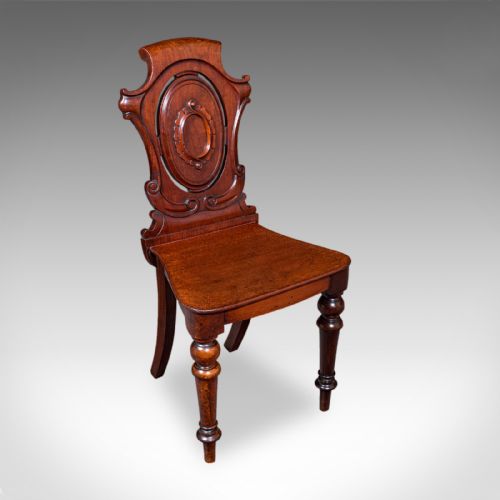
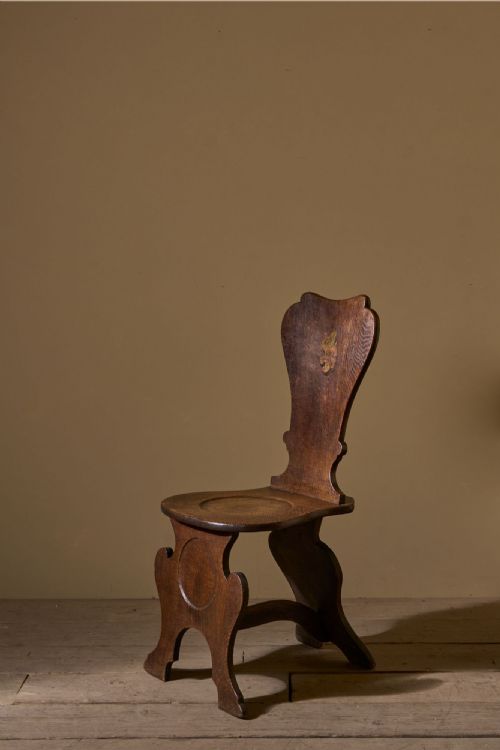
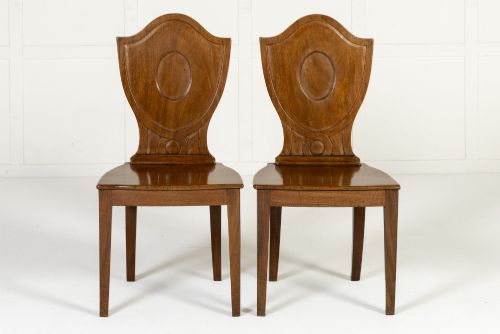
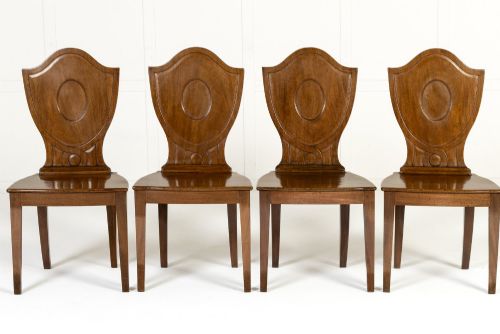
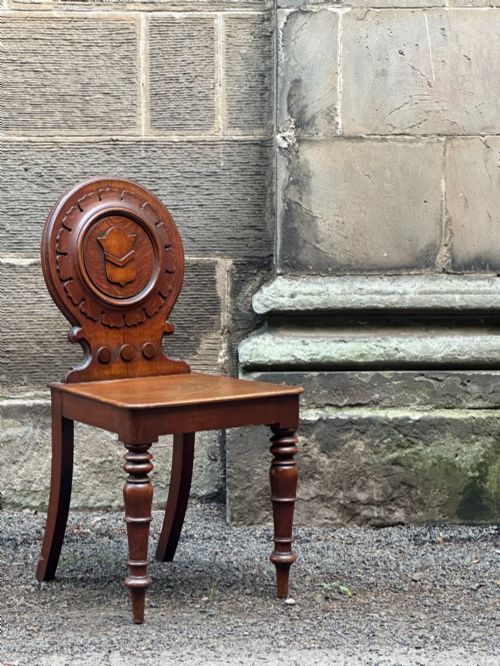
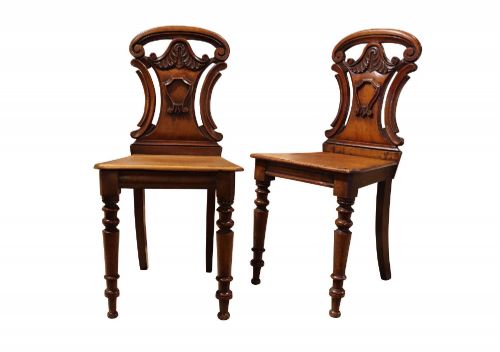
Hall chairs and side chairs serve distinct purposes within this category, with the former often featuring solid wooden seats and heraldic carvings for reception spaces. Dining sets provide coordinated seating around a table, sometimes augmented with original leather or damask upholstery fabric. Each piece reflects the enduring appeal of neoclassical proportions adapted across multiple manufacturing eras.
How they were made
Makers shaped solid timber such as mahogany, oak, and walnut using traditional joinery techniques to form the complex curves of the shield backrest. Central splats inside the shield frame were frequently pierced, carved, or inlaid with contrasting details.
Upholstered variants incorporate webbing, padding, and textile coverings like leather, fabric, or damask fastened to drop-in or fixed seat frames. Brass accents and detailed wood carving complete the construction of both Georgian originals and later revival pieces.
Dining sets range from single pairs up to substantial groups of sixteen chairs.
What varies in quality
The caliber of these chairs depends largely on the crispness of the wood carving within the shield splat and the choice of primary timber. Heavier grain matching and substantial stock timber distinguish finer 18th-century originals and high-grade revival suites from simpler utility seating.
Consistency across a larger set heavily influences the desirability of the group, especially when matching sixteen or twelve dining chairs together. The integrity of the frame construction and the preservation of original leather or fabric upholstery further separate standard examples from superior specimens.
Maple and Co
The Shield Back Side Chairs Glossary
- Shield back
- A chair backrest shaped like a heraldic shield, typically narrower at the base and sweeping out to a curved top rail.
- Side chair
- An upright chair without arms, designed primarily for dining or occasional use around a room.
- Hall chair
- A rigid wooden seat traditionally placed in an entryway, often featuring a solid carved back and no upholstery.
- Hepplewhite style
- A neoclassical furniture design characterised by elegant proportions, tapered legs, and shield backrests popularized in the 18th century.
- Carver
- An armchair designed to match a set of dining side chairs, usually positioned at the head of the table.
- Anthemion
- A floral ornament based on the honeysuckle flower, frequently carved into the crest rail or splat of neoclassical seating.
Shield Back Side Chairs: Frequently Asked Questions
How do I spot a true 18th century chair?
Examine the construction methods beneath the seat, looking for hand-cut joinery, timber shrinkage, and tool marks consistent with period tool use.
Compare the timber density and patination against known Georgian examples to verify age.
Can I mix side chairs with carvers?
Dining sets frequently combine armchairs and side chairs to create a balanced arrangement around the table.
Carvers typically sit at the head of the table while matching side chairs line the sides.
Are hall chairs comfortable for dining?
Hall chairs usually feature solid wooden seats designed for brief seating in entryways rather than long dinner parties.
Upholstered side chairs provide much softer support for extended sitting.
What is a Hepplewhite revival piece?
Revival pieces are later reproductions or interpretations made during the Victorian, Edwardian, or 20th-century eras.
They replicate the classic shield back geometry of 18th-century designs using contemporary manufacturing methods.