


Sheraton Style Furniture
Sheraton style furniture brings neoclassical elegance to interiors through fine satinwood, mahogany, and delicate inlay.
Sheraton Style Furniture
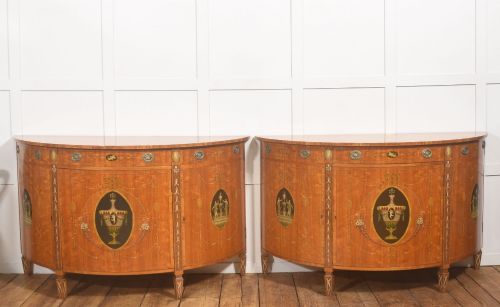
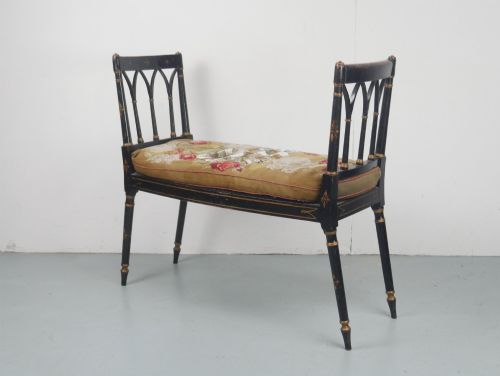
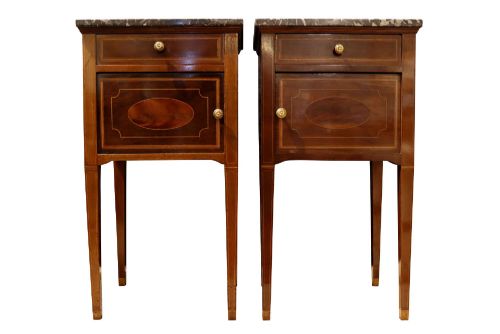
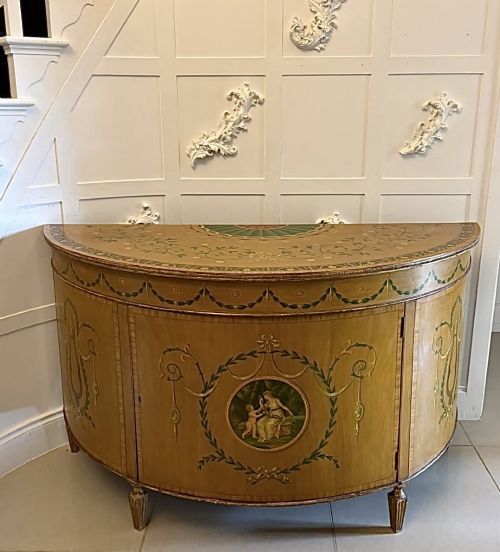
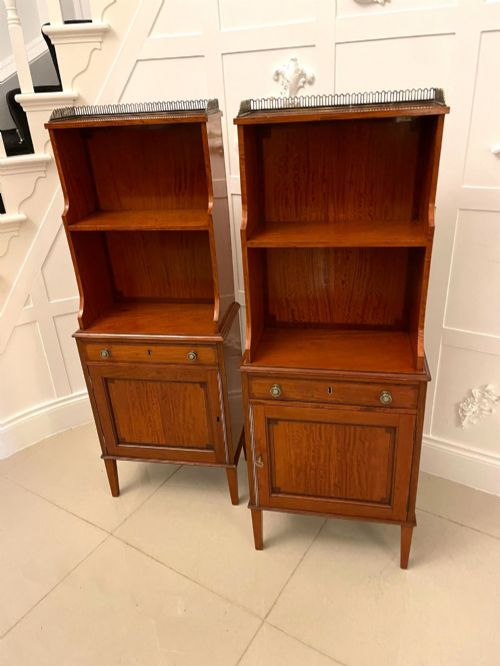
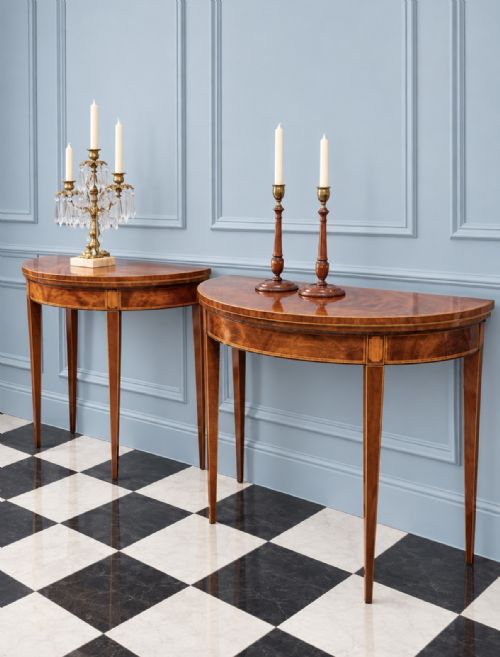
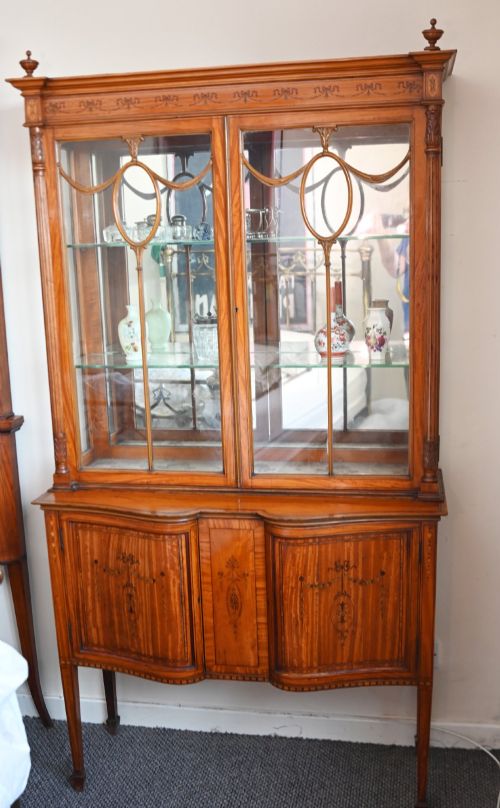
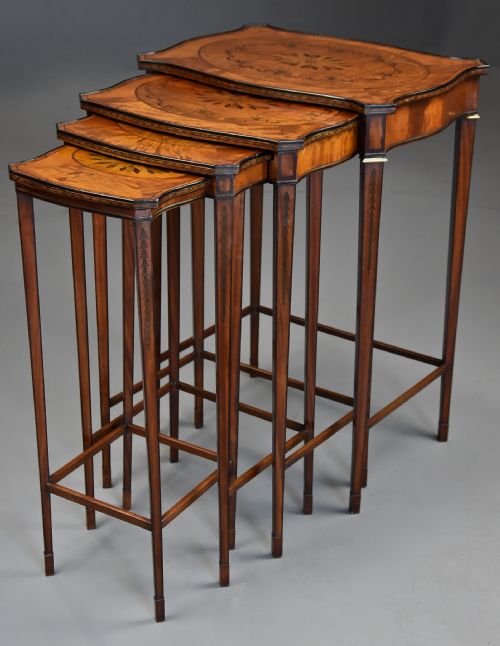
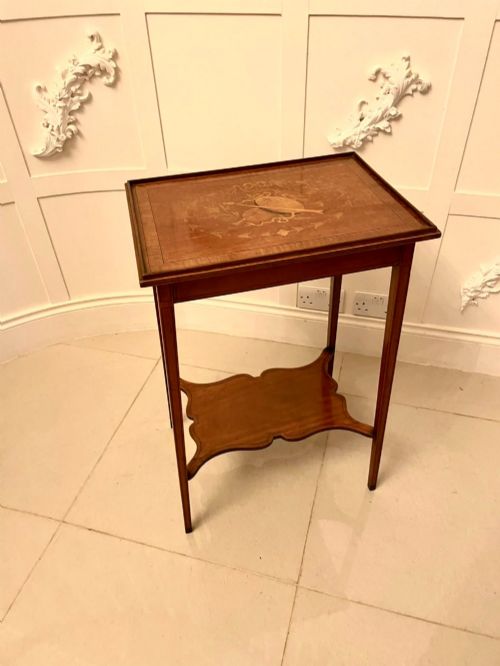
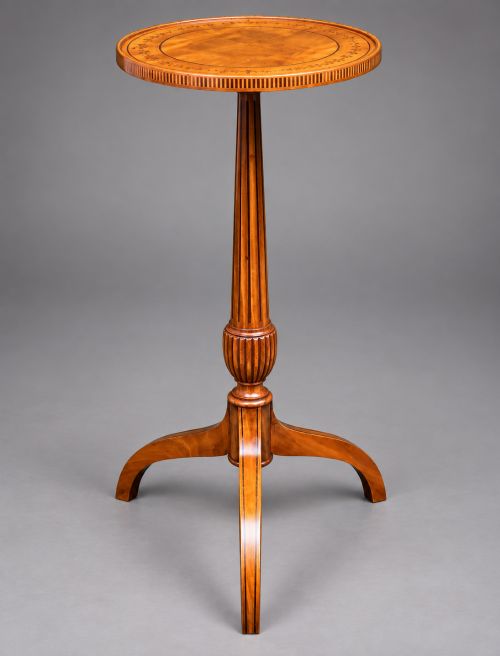
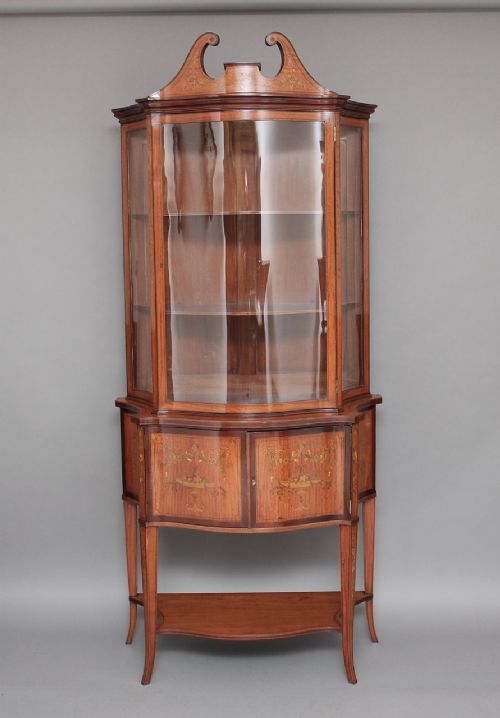
The most common forms on this page include display cabinets, bookcases, sideboards, and occasional tables. These items frequently display fine inlay work, painted floral decorations, and characteristic bow-front or serpentine shapes.
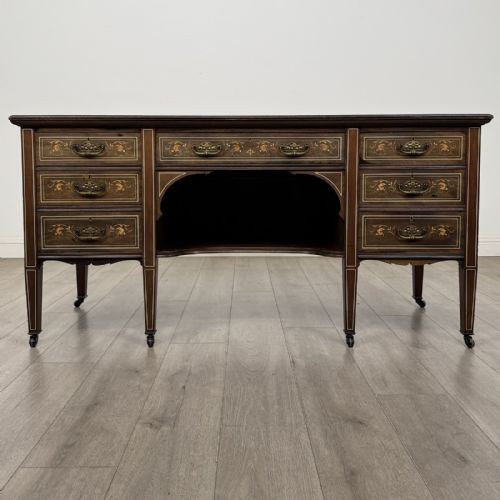
Originating in the designs of the Georgian period, the style reappeared strongly during the Sheraton Revival of the late nineteenth and early twentieth centuries. Pieces range from small lamp tables and nests of tables to large breakfront display cabinets and writing desks.
How they were made
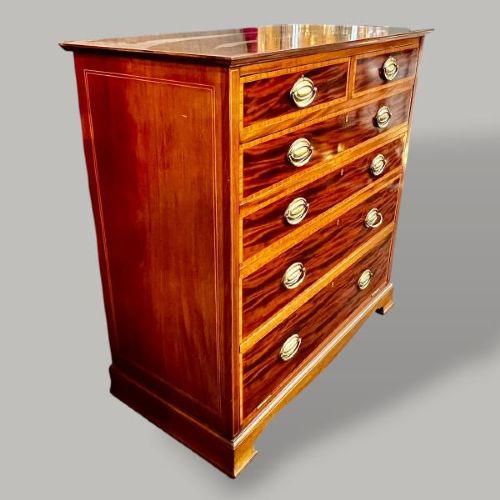
Cabinet makers utilised select timbers such as mahogany and satinwood, frequently enhanced with boxwood stringing and contrasting inlay to define panels and edges. Glazed doors utilised delicate astragal bars to create geometric glass panes.
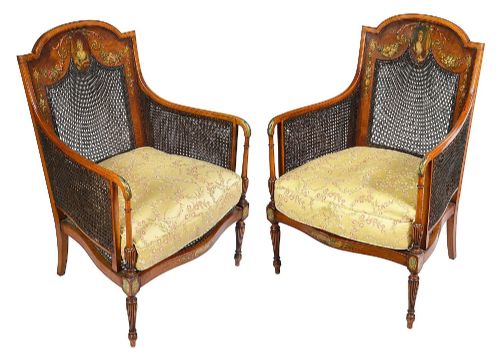
Surface ornamentation often combined natural timber grain with hand-painted floral motifs and decorative panels. Brass handles, key escutcheons, and glass finishes completed the construction of cabinets, desks, and tables.
Sheraton Style Furniture Retail Price Guide 2026
Typical asking prices for sheraton style furniture among the pieces listed under this phrase on Sellingantiques today, from the lower quarter to the upper quarter. They describe what is for sale here now, not the wider market.
Ladies' writing desks of the Edwardian period often hid secret compartments behind miniature satinwood doors for private correspondence.
What varies in quality
The standard of execution in timber selection and inlay work separates everyday examples from superior workshop productions. Crisply cut boxwood stringing and well-matched satinwood veneers indicate higher skill in the cabinet maker.
Painted decoration also dictates distinction, where finely executed floral motifs retain their clarity and colour depth. Structural elements, including the integrity of serpentine curves and the fit of glazed doors, reflect the original workshop investment.
Gillows·Maple & Co.
The Sheraton Style Furniture Glossary
- Satinwood
- A light, lustrous timber native to tropical regions, highly prized for veneering and decorative cabinet work. It forms the primary visual surface for much of the revival furniture seen here.
- Inlay
- A technique where pieces of contrasting wood or other materials are inserted into depressions in the base wood to form a design. Boxwood is frequently used for this purpose.
- Serpentine
- A furniture outline featuring a gently curving front with a convex centre flanked by concave ends. This contour requires precise woodworking skill.
- Astragal
- A narrow moulding used to hold glass panes within a door or window frame. In display cabinets and bookcases, these bars create delicate geometric patterns.
- Etagere
- A set of open shelves for displaying small objects or ornaments. These pieces typically feature multiple tiers supported by slender columns.
- Bow-front
- A convex, outwardly curved furniture front popular in sideboards, chests, and display cabinets. It softens the rectilinear appearance of room interiors.
Sheraton Style Furniture: Frequently Asked Questions
What defines sheraton style furniture?
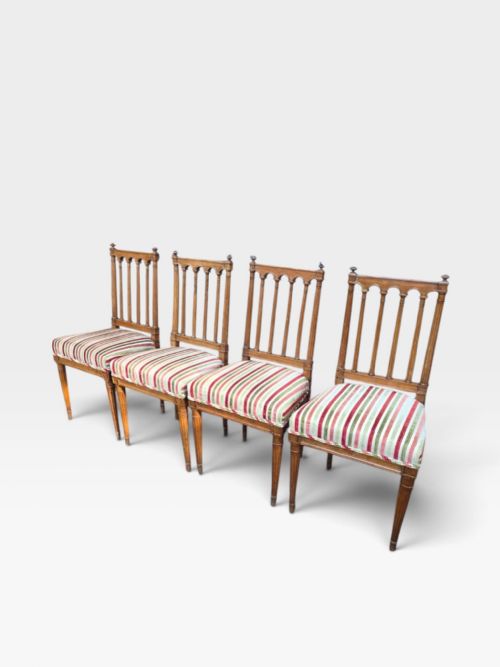
Sheraton style furniture is characterised by neoclassical proportions, straight tapered legs, and refined decorative techniques. Pieces frequently employ satinwood veneers, painted floral details, and subtle inlay work.
Originating in the Georgian era and returning in Edwardian revivals, the style prioritises elegance and utility. Common examples include writing desks, display cabinets, and Pembroke tables.
How do I distinguish original pieces from revival items?
Examining timber construction, secondary woods, and hardware helps determine the age of a piece. Eighteenth-century originals display construction methods and wear consistent with early workshop practices.
Revival pieces, notably from the Edwardian period, often utilise machine-sawn elements while closely copying earlier Georgian forms. Cabinet interiors and drawer linings provide further clues to dating.
Where were these pieces used in a home?
These items were designed for formal reception rooms, drawing rooms, and ladies' boudoirs. Display cabinets and bookcases housed prized collections, while occasional tables served tea or held lighting.
Desks and escritoires provided dedicated writing spaces in studies and bedrooms. Smaller items like nests of tables offered versatile placement options.
How should I care for satinwood surfaces?
Satinwood and polished mahogany require protection from direct sunlight and excessive moisture. Regular dusting with a soft, dry cloth preserves the finish without harming the timber.
Application of appropriate furniture wax maintains the lustre of the wood grain. Avoiding harsh chemical cleaners ensures the painted decorations and inlay remain intact.