

Sheraton Style Display
When you search for sheraton style display, you look for light timbers, delicate inlay and glazed cabinetry rooted in eighteenth-century elegance.
Sheraton Style Display
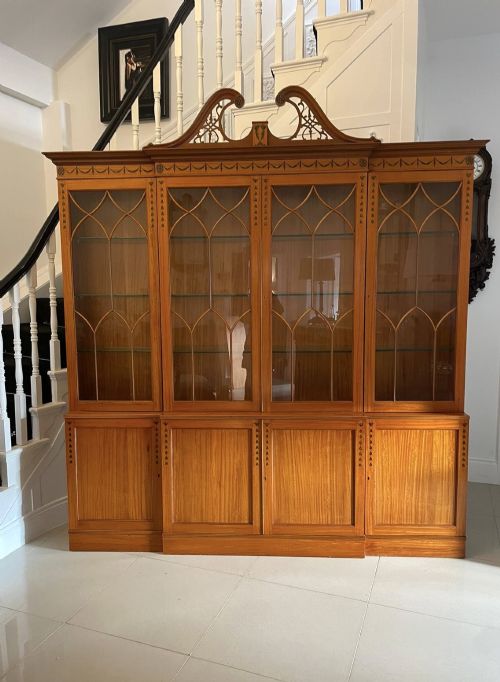
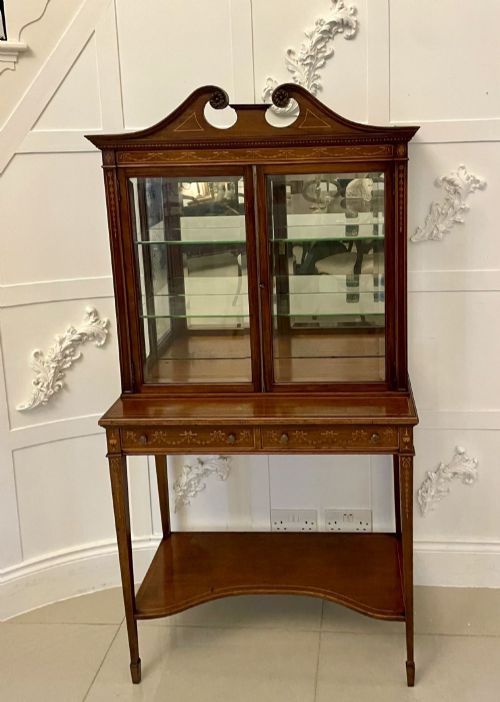
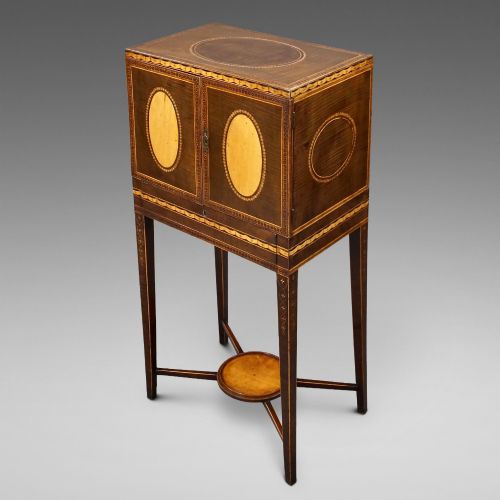
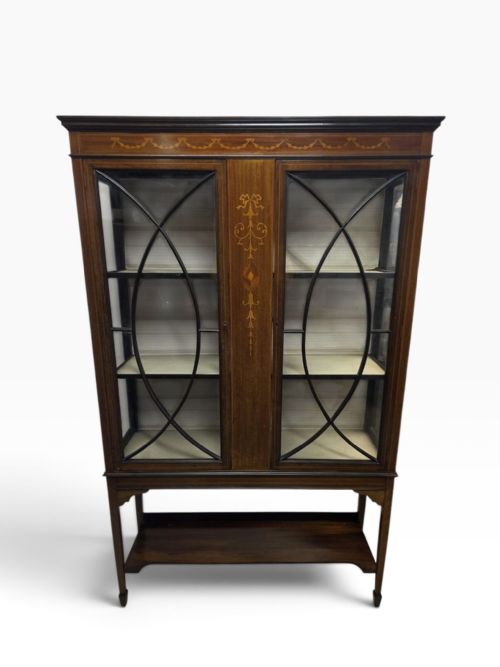
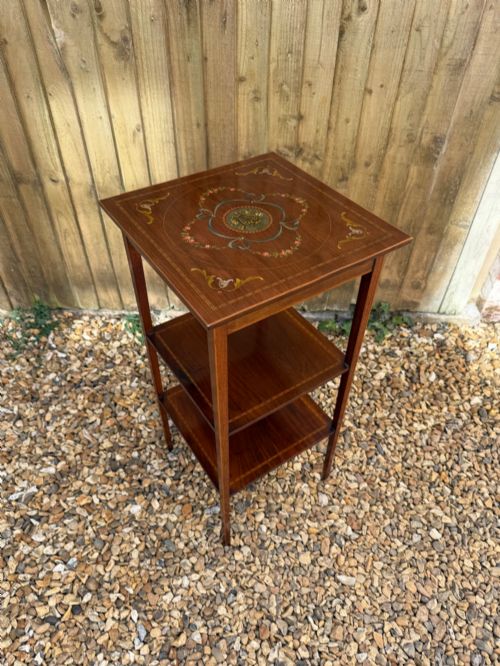
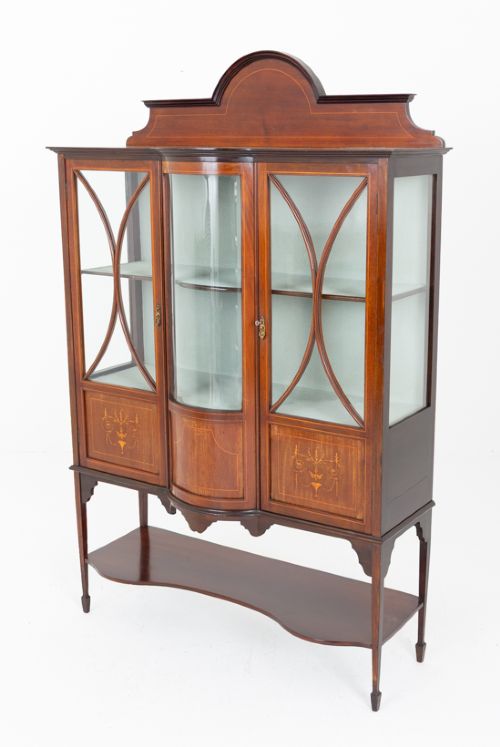
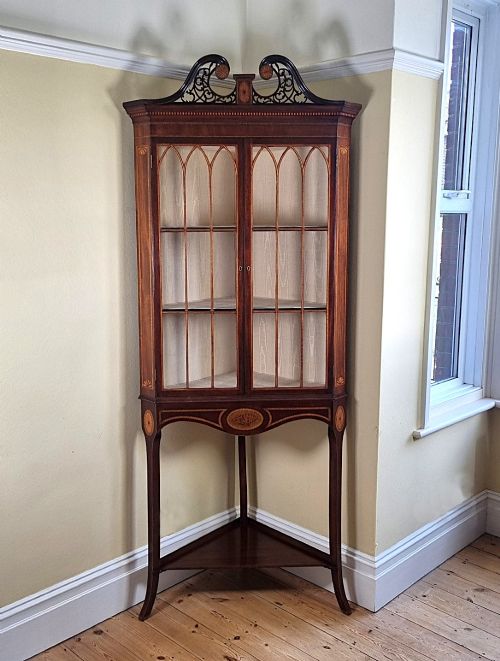
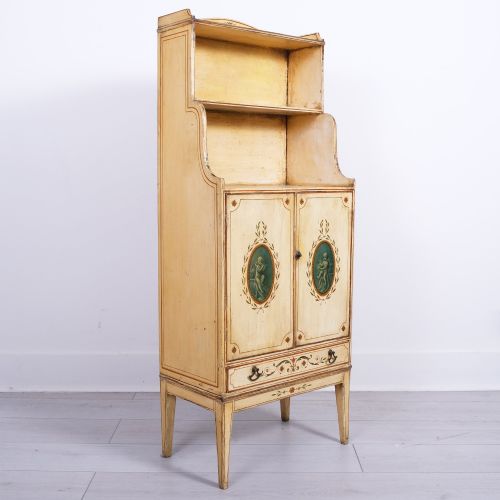
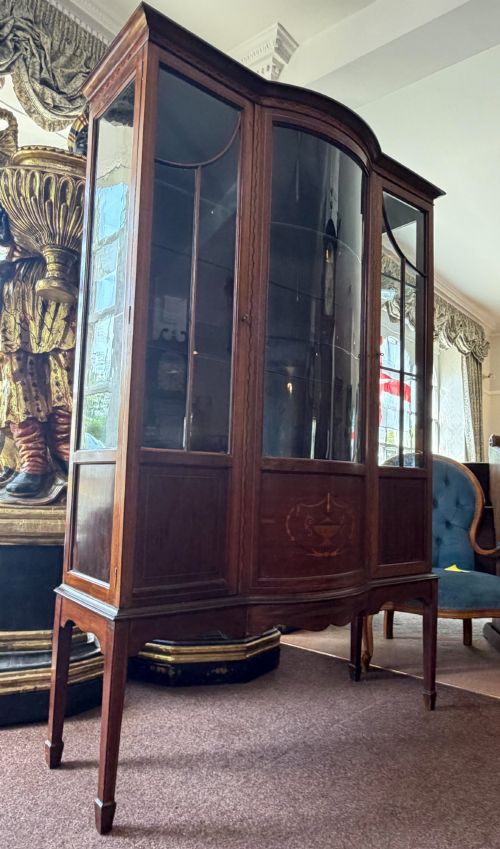
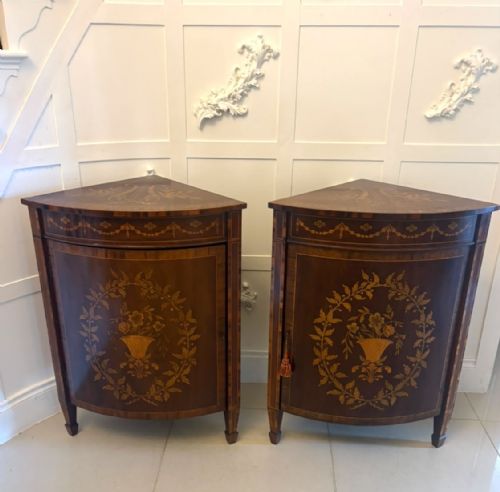
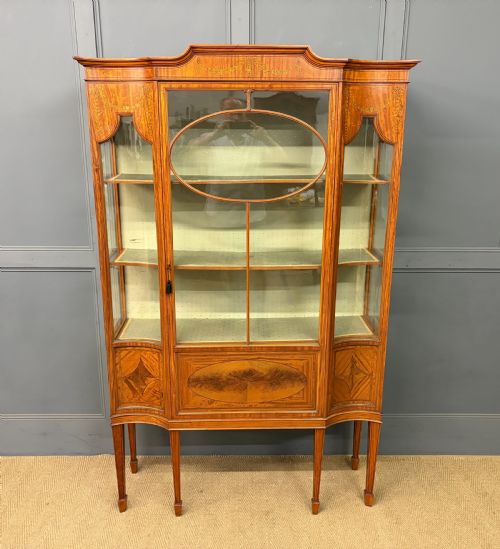
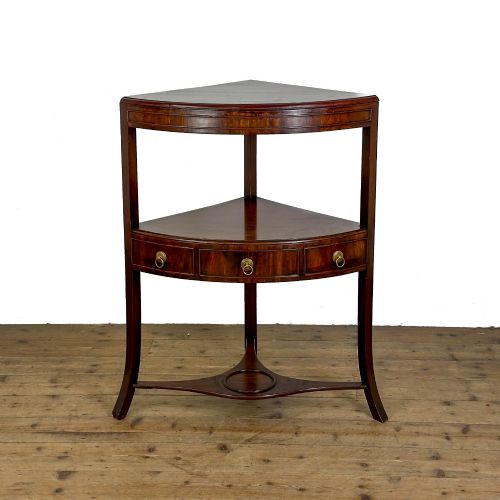
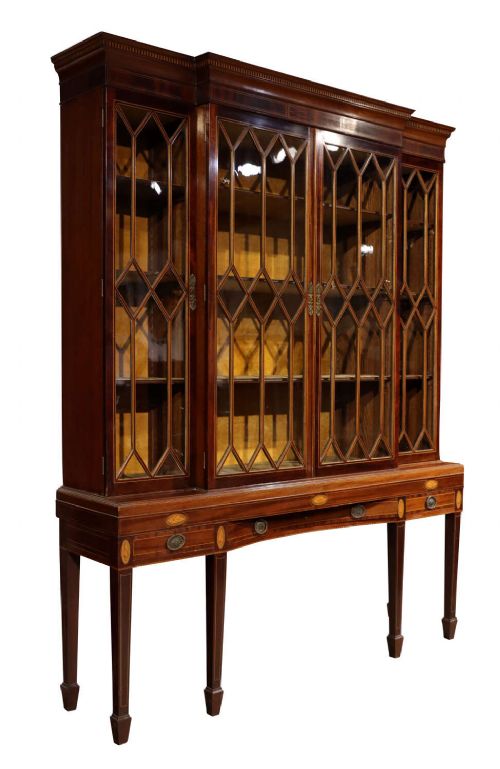
Pieces under sheraton style display encompass cabinets, vitrines, bookcases and occasional tables designed with neoclassical lightness and symmetry. The evidence shows these forms appearing primarily in Edwardian revivals and the late nineteenth century, alongside original Georgian examples from the eighteenth century. Cabinets with glazed doors and delicate corner units dominate the selections available today.
Makers and workshops reproduced these neoclassical lines across several decades, producing breakfront display cabinets and smaller occasional tables with equal attention to form. Edwardian reinterpretations sit alongside late Victorian and original George III pieces, showing a continuous appreciation for disciplined geometric shapes and upright proportions. These items served then, as they do now, to display prized possessions while adding architectural refinement to a room.
How they were made
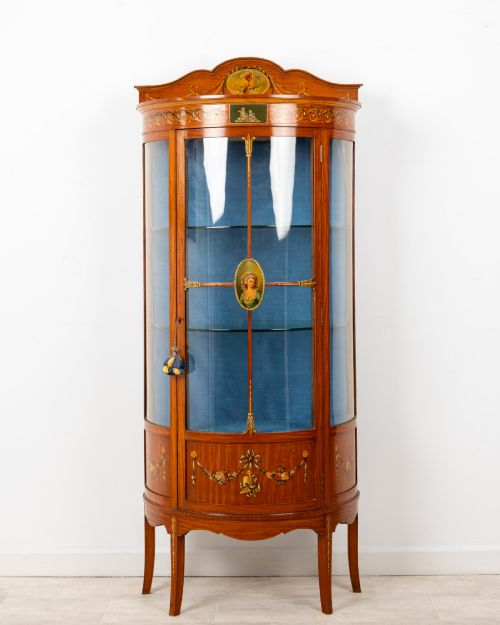
Cabinet makers utilised mahogany as a sturdy structural timber, frequently overlaying it with satinwood veneers to achieve a luminous, pale surface. Artisans embellished these primary woods using boxwood and general wood inlay, creating contrasting stringing and neoclassical motifs like urns and swags.
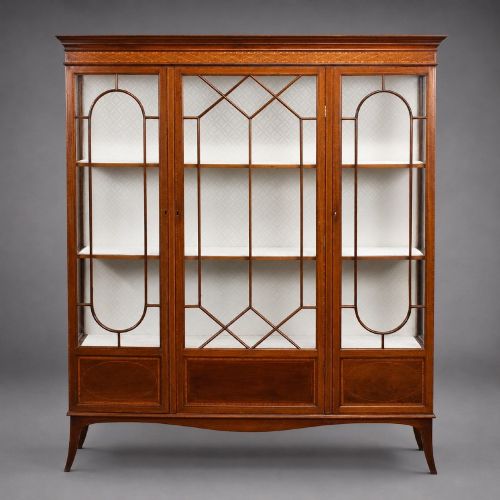
Glazing bars divided glass panels into precise geometric patterns, notably astragal formations that added structural rhythm to cabinet doors. Brass hardware, painted decoration and marquetry panels completed the construction, balancing utility with refined surface ornament.
Some Edwardian tables hide tiny compartments for trinkets, proving that Victorians loved a secret hiding spot as much as anyone.
What varies in quality
The sophistication of the timber preparation and the precision of the inlay dictate the distinction between standard and superior examples. Fine pieces display meticulously matched satinwood grains and sharply cut boxwood stringing that remains flush with the surrounding wood.
Structural harmony also separates the work, seen in the balance of proportions between glazed upper sections and lower stands or cupboards. Original painted decoration and hand-drawn astragal glazing bars further elevate the character of a piece above mass-produced alternatives.
Maple & Co.·Waring & Gillow·Edwards & Roberts·Gillow
The Sheraton Style Display Glossary
- Astragal
- Glazing bars moulded in a rounded profile that hold individual panes of glass within a cabinet door. They create neat geometric lattices typical of neoclassical furniture.
- Satinwood
- A durable, lustrous timber native to India and Ceylon with a natural golden yellow sheen. It serves as a primary veneer for fine cabinet work.
- Marquetry
- The art of forming decorative patterns using thin veneers of various coloured woods applied to a supportive carcase. It requires immense skill to achieve seamless interlocking shapes.
- Etagere
- A set of open shelves supported by slender pillars, designed for displaying small ornaments and curiosities. These pieces emerged in the late eighteenth century and remained popular through the Edwardian era.
- Vitrine
- A glass-fronted cabinet specifically built to showcase porcelain, miniatures and small collectibles. The term originates from the French word for glass.
Sheraton Style Display: Frequently Asked Questions
How do I spot a reproduction?
Examine the timber beneath the surfaces and inside the cabinet interiors for signs of modern machine cutting and contemporary fixings. Original pieces from the Georgian period or Edwardian revival show hand-planed secondary woods and period-appropriate joinery.
Check the consistency of the inlay and the ageing of the glass panes. Uniform machine-made components often indicate a later mid-century imitation rather than a genuine antique.
Where should I place a display cabinet?
Position these cabinets away from direct sunlight and strong heat sources to protect delicate satinwood veneers and antique glass. Stable indoor environments prevent the timber from drying out and cracking over time.
Allow enough clearance around corner units and breakfront bookcases so their proportions remain a visual focal point in the room.
What is the difference between Georgian and Edwardian pieces?
Georgian pieces date from the eighteenth century and represent the original neoclassical movement championed by designers of that era. They feature authentic period construction, hand-cut dovetails and mature timber patination.
Edwardian interpretations date from around nineteen hundred and revive those earlier eighteenth-century aesthetics. They utilise similar inlay techniques and light timbers but often display cleaner internal fittings and slightly different secondary woods.
How do I care for inlaid wood?
Dust surfaces regularly with a soft, dry cloth to prevent grit from settling into the delicate boxwood and satinwood stringing. Avoid silicone-based polishes that build up a hazy film over the original polish.
Feed the timber occasionally with a traditional wax to maintain the moisture and natural lustre of the wood without softening the glue beneath the marquetry.