





Satinwood Bijouterie Cabinet
These satinwood bijouterie cabinet examples offer elegant glazed housing for small treasures, combining fine timber with glass display.
Satinwood Bijouterie Cabinet
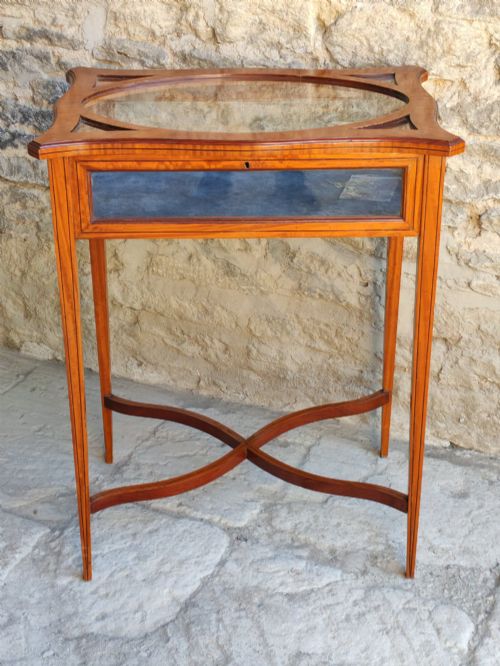
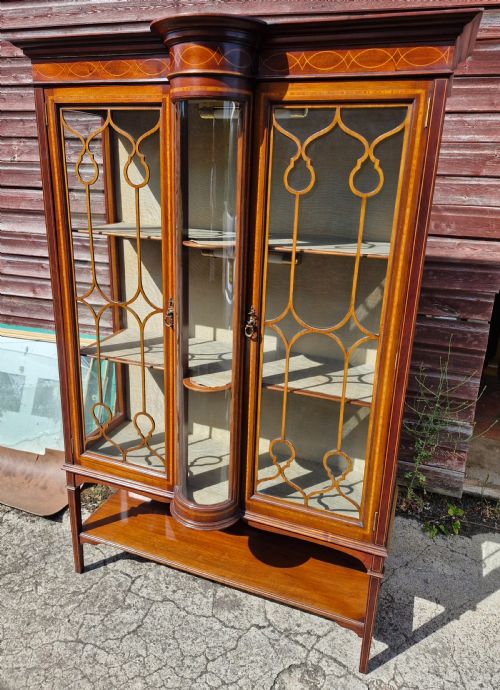
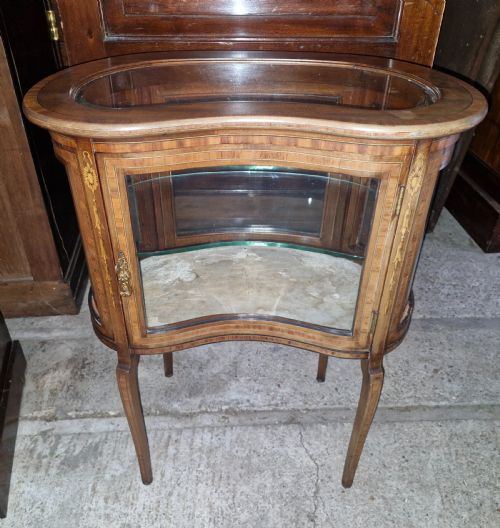
A satinwood bijouterie cabinet provides a glazed surface for displaying small treasures, curios and jewellery within a polished wooden frame. Most pieces found here date from the Edwardian period or around 1880, taking forms such as display tables, vitrines and cabinets.
Makers designed these objects to sit in drawing rooms and parlours where guests could inspect delicate possessions from above or through glass sides. The selection includes kidney shapes, shield forms, octagonal designs and traditional rectangular cabinets.
The satinwood bijouterie cabinet merges the utility of a display case with the refined aesthetics of late nineteenth and early twentieth century cabinet making. Buyers encounter mahogany and satinwood combinations frequently alongside dedicated satinwood constructions.
How they were made
Craftsmen built these display pieces using solid and veneered timbers, predominantly satinwood and mahogany, often enhanced by intricate marquetry and contrasting crossbanding. Brass mounts, hinges and locks provided both structural support and decorative contrast to the warm wood tones.
Glass panels were fitted into hinged or glazed lids and doors to protect the contents while offering an unobstructed view. Interiors were typically lined with fabric or velvet to cushion delicate items placed inside the display well.
Satinwood Bijouterie Cabinet Retail Price Guide 2026
Typical asking prices for satinwood bijouterie cabinet among the pieces listed under this phrase on Sellingantiques today, from the lower quarter to the upper quarter. They describe what is for sale here now, not the wider market.
Listings feature Edwardian, Victorian, and nineteenth century periods alongside glass, satinwood, mahogany, brass, and velvet materials.
What varies in quality
Quality in a satinwood bijouterie cabinet rests on the precision of the timber inlay, the choice of veneers and the crispness of the brass fittings. Superior examples display balanced proportions and refined geometric or floral marquetry rather than plain surfaces.
The integration of the glass case with the table or cabinet base determines the overall finish, with finer pieces showing meticulous joinery and careful matching of the wood grain across the entire structure.
Edwards and Roberts
The Satinwood Bijouterie Cabinet Glossary
- Satinwood
- A durable, lustrous timber with a golden sheen used extensively for fine cabinet making and decorative veneers. It provides a bright surface that catches the light in a drawing room.
- Bijouterie
- Small decorative objects, jewellery and curiosities designed to be housed in specialised display furniture. The term also describes the tables and cabinets built specifically to hold them.
- Crossbanding
- A decorative border of veneer laid around the edges of a panel with the grain running at right angles to the centre. This technique frames the primary wood surface.
- Vitrine
- A glass-fronted or glass-sided cabinet designed for displaying fine objects and porcelain. These cases protect contents from dust while maintaining full visibility.
- Marquetry
- Elaborate patterns created by fitting together different coloured wood veneers onto a structural surface. Craftsmen use this method to produce floral or geometric motifs.
Satinwood Bijouterie Cabinet: Frequently Asked Questions
What is a satinwood bijouterie cabinet?
It is a glazed display piece created to hold jewellery, small collectables and curiosities.
Cabinet makers utilised satinwood and mahogany to build these tables and vitrines primarily during the Edwardian era and the late nineteenth century.
How were these cabinets used?
Owners placed delicate possessions, medals and trinkets beneath the glass top or behind glass panels for guests to admire.
They functioned as both functional storage and decorative centrepieces in formal reception rooms.
How do I date a cabinet?
Dating relies on stylistic clues such as Edwardian marquetry work, 1880s proportions and specific wood combinations.
Construction methods and brass hardware also help distinguish late Victorian pieces from later twentieth century items.
What shapes are available?
Surviving examples appear in kidney shapes, shield forms, octagonal designs and rectangular table formats.
Each shape influenced how the cabinet sat within a room and how items inside were viewed.