
Sheraton Satinwood Desk
A Sheraton satinwood desk brings luminous timber and refined neoclassical lines to a room, offering a compact workspace steeped in history.
Sheraton Satinwood Desk
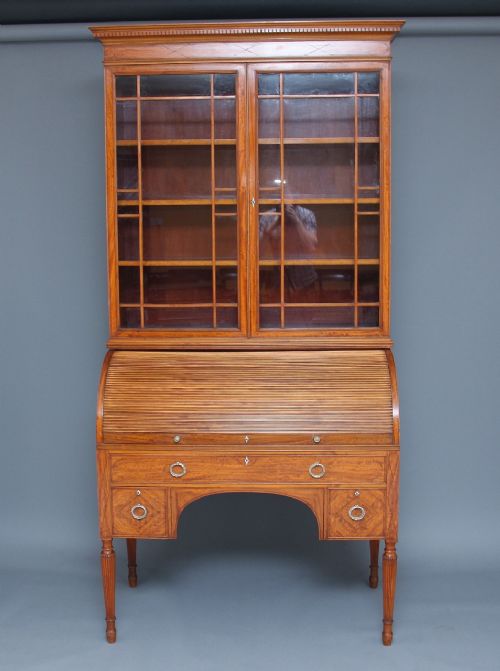
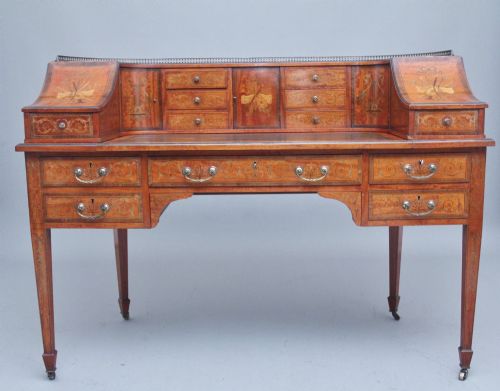
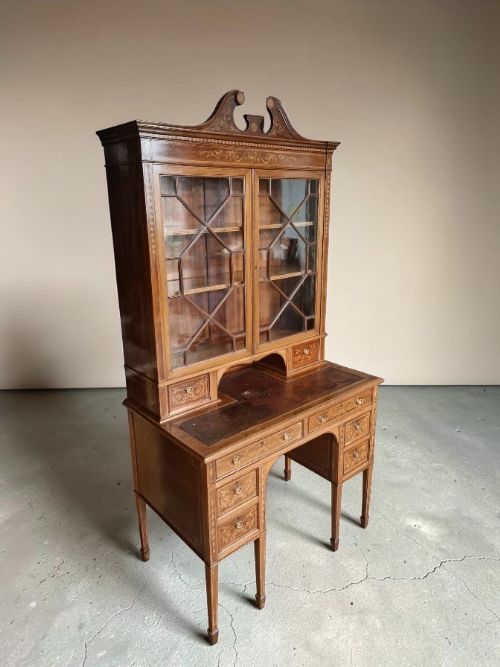
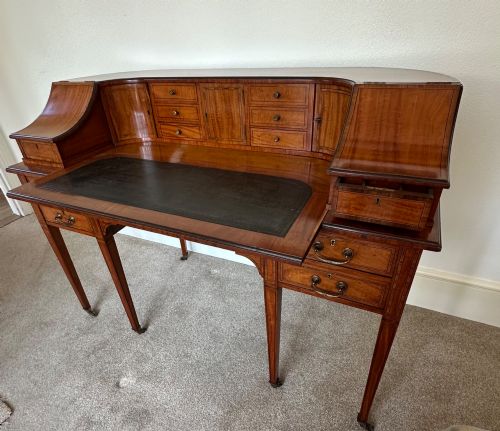
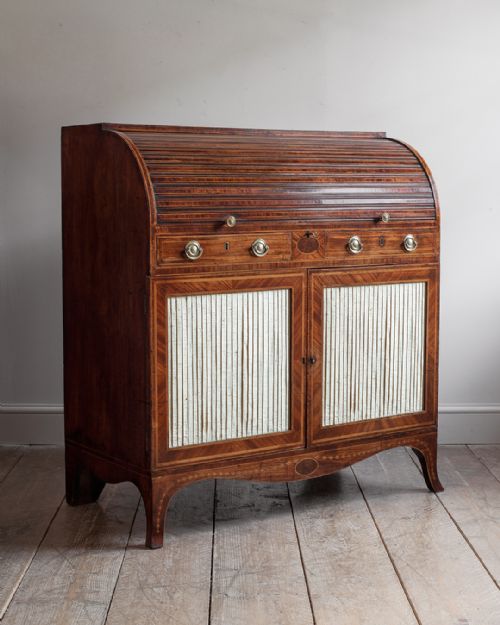
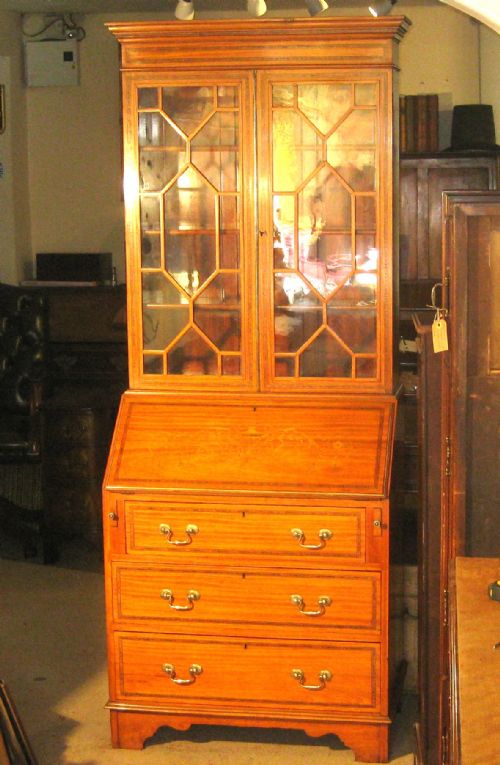
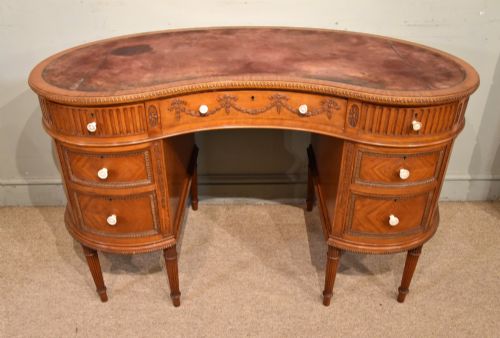
When you search for a sheraton satinwood desk, you encounter refined writing furniture spanning from the late eighteenth century through the Edwardian Sheraton Revival period. The pieces range from grand Carlton House desks with fitted superstructures to elegant kidney-shaped writing tables and cylinder bureaux.
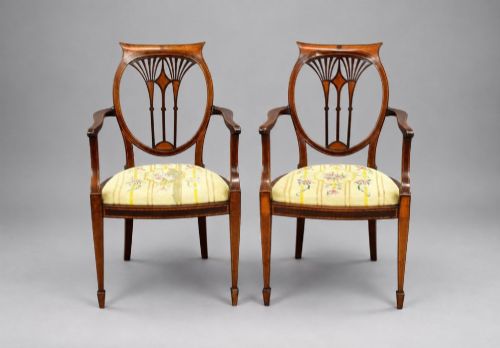
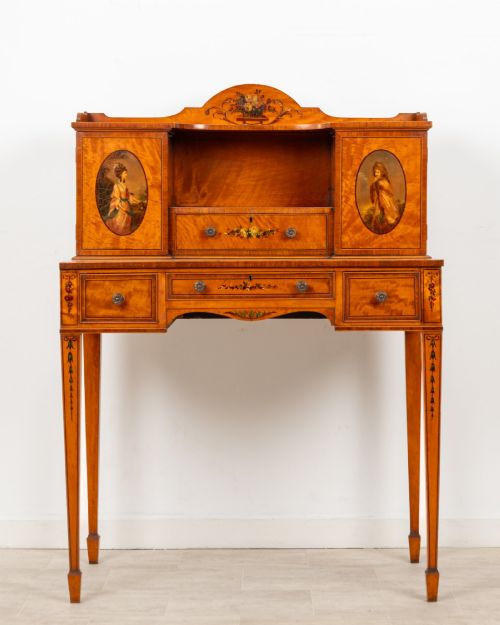
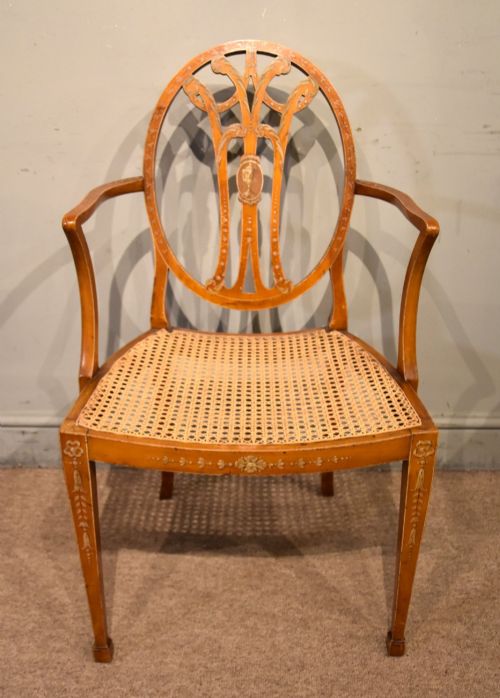
The version most commonly met on this page is the Edwardian interpretation, often dating around nineteen hundred, which reinterprets eighteenth-century George III forms with delicate painted decoration and intricate marquetry. These tables and desks combine utility with ornamental polish, designed originally for drawing rooms and ladies' writing chambers.
How they were made
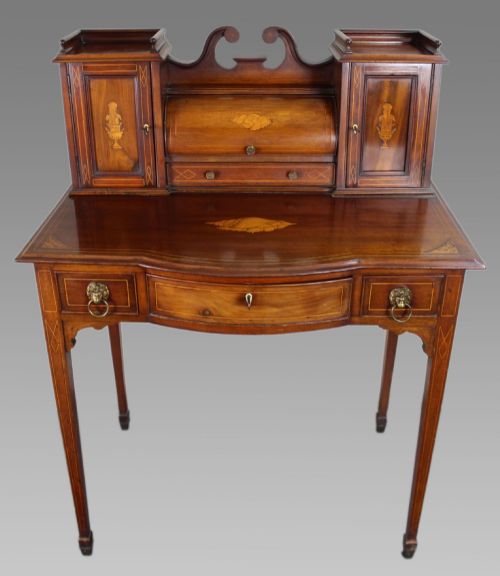
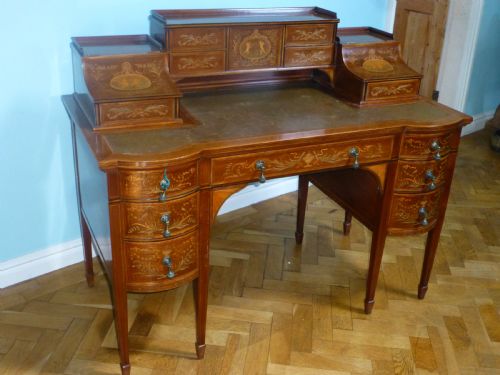
Cabinet makers utilised dense mahogany and exotic sabicu as structural timbers while applying translucent satinwood veneers to the visible exterior surfaces. Boxwood stringing and contrasting dark veneers created geometric borders and panel frames across drawers and writing flaps.
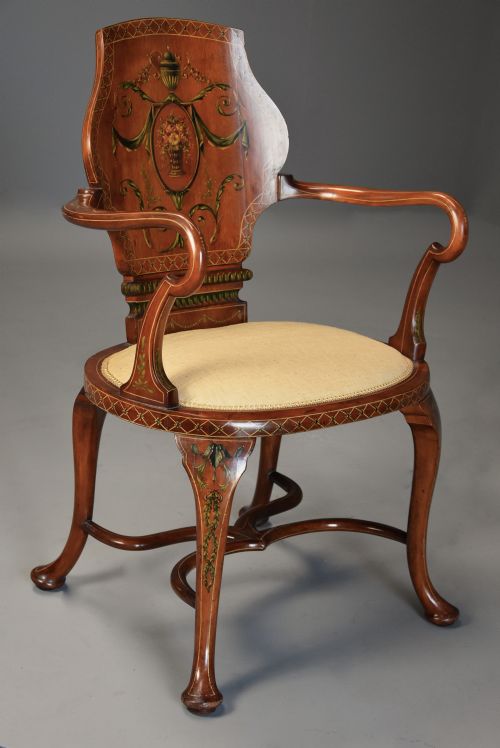
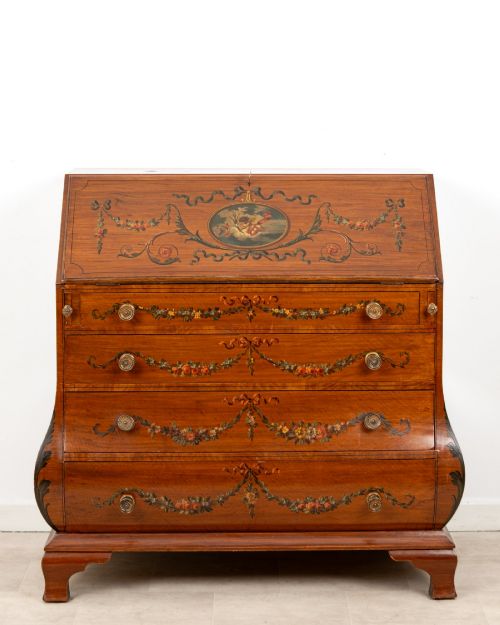
Surface ornamentation relied on hand-painted floral motifs, classical medallions, and intricate marquetry inlay executed with precision. Many items incorporated original leather inserts for the writing surface alongside brass handles, locks, and occasional silver mounts.
One silver-mounted box from seventeen ninety found a second career holding stationery instead of its original contents.
What varies in quality
The distinction between ordinary and superior examples lies in the crispness of the hand-painting and the complexity of the marquetry work. Elaborate pictorial panels and finely detailed floral garlands require exceptional artisan skill, elevating certain desks above simpler veneered surfaces.
Proportion and structural integrity also define the upper tier, where timber selection shows consistent grain matching and well-figured satinwood. Maker attribution and the retention of original brass hardware or leather writing inserts further elevate the standing of a piece.
Edwards and Roberts·Maple and Co
The Sheraton Satinwood Desk Glossary
- Satinwood
- A lustrous tropical hardwood native to Ceylon and the West Indies, prized for its golden sheen and smooth texture. It serves as the primary decorative veneer on neoclassical and revival furniture.
- Carlton House desk
- A form of writing table featuring a curved superstructure of small drawers and pigeonholes wrapping around the back and sides of the writing surface. Thomas Sheraton documented variations of this sophisticated desk type.
- Marquetry
- The art of forming decorative patterns by fitting together thin veneers of various coloured woods, ivory, and shell. Craftsmen apply these intricate pictorial compositions onto drawer fronts and tabletops.
- Stringing
- A narrow strip of contrasting timber inlaid flush into the surface of furniture to outline panels and borders. Boxwood is frequently utilised for this linear detail against darker woods.
- Cylinder bureau
- A writing desk fitted with a rolling quarter-circle wooden cylinder that conceals an interior arrangement of pigeonholes and small drawers. When closed, the curved shutter protects the writing space.
Sheraton Satinwood Desk: Frequently Asked Questions
What is a Carlton House desk?
A Carlton House desk is a distinctive writing table featuring a curved superstructure of small drawers and compartments enclosing the rear and sides of the top. This layout provides structured storage while maintaining a compact footprint.
Originating in the late eighteenth century, the form reappeared during the Edwardian Sheraton Revival with elaborate marquetry and satinwood veneers.
How do I date a satinwood desk?
Dating relies on examining construction methods, secondary timbers, and stylistic markers such as painted decoration or inlay techniques. Eighteenth-century originals display structural joinery and hand-cut elements distinct from later revival pieces.
Revival furniture from the Victorian and Edwardian eras often incorporates machine-prepared veneers and specific revival motifs that reflect nineteenth-century manufacturing standards.
Are these desks suitable for daily use?
These desks accommodate modern writing tasks and laptop computer use when chosen with appropriate dimensions and stable writing heights. Their compact proportions make them practical for home offices and living spaces.
Careful consideration of the leather writing surface and polished veneer helps preserve the antique finish during everyday employment.
What is the difference between original and revival pieces?
Original pieces date from the Georgian period, specifically the late eighteenth century, reflecting the direct influence of cabinet makers from that era. They carry the patina and structural characteristics of authentic period construction.
Revival pieces date from the late nineteenth and early twentieth centuries, reinterpreting earlier neoclassical aesthetics using the manufacturing techniques of their own time.