





Crossbanded Writing Desk
A crossbanded writing desk brings together rich timber borders and a dedicated surface for correspondence, shaped by Georgian, Regency, and Edwardian hands.
Crossbanded Writing Desk
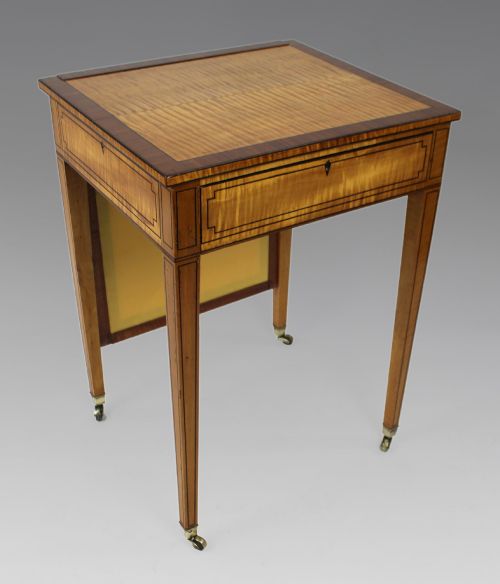
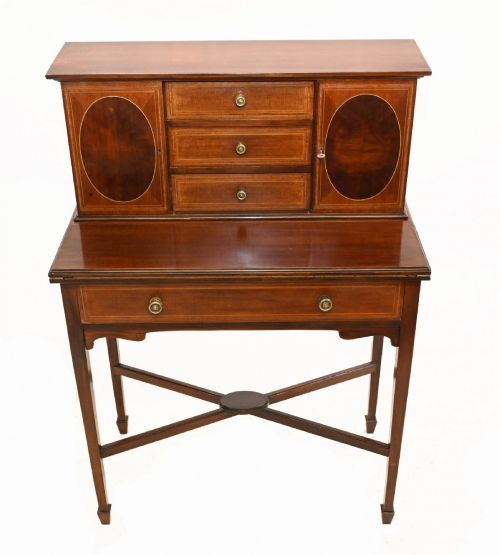
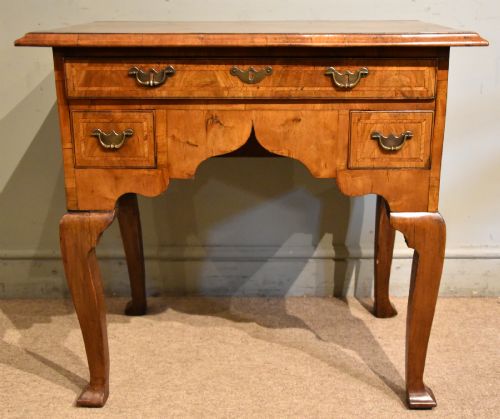
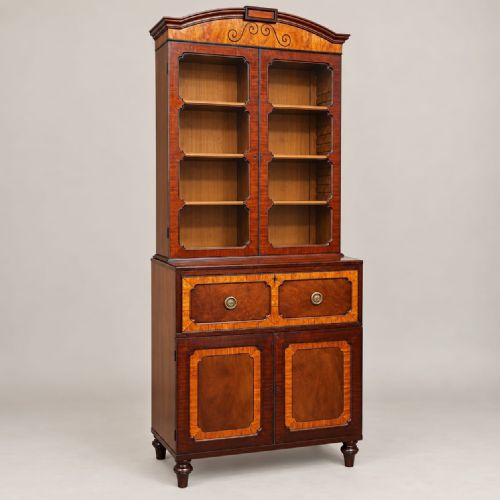
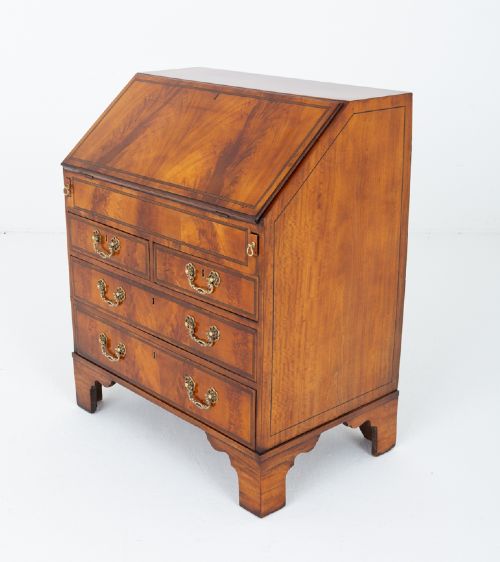
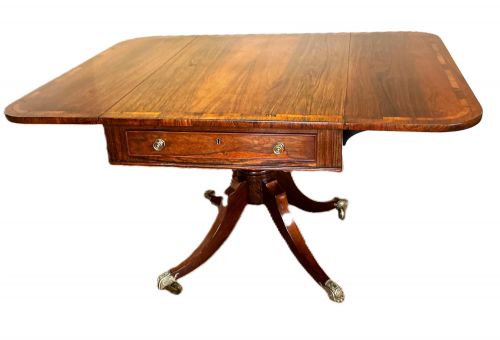
A crossbanded writing desk is a form defined by a border of timber veneer laid across the grain, framing the main surface. Buyers searching for a crossbanded writing desk typically encounter mahogany, satinwood, or walnut pieces dating from the 18th century through the Edwardian period.
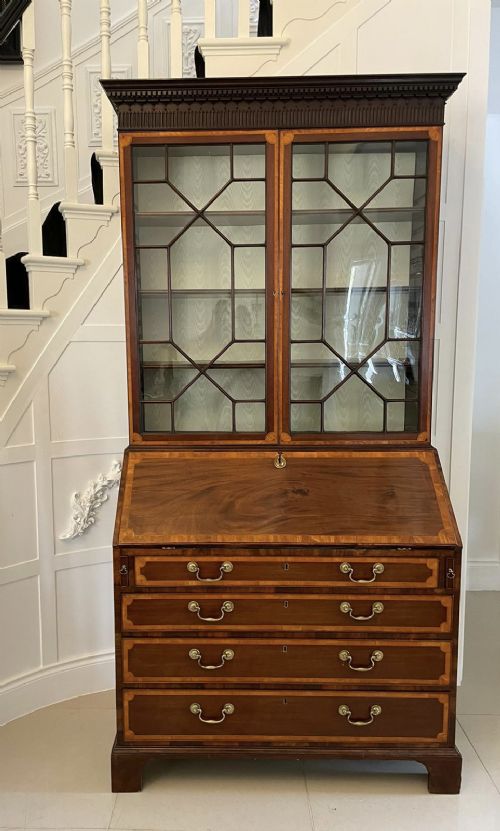
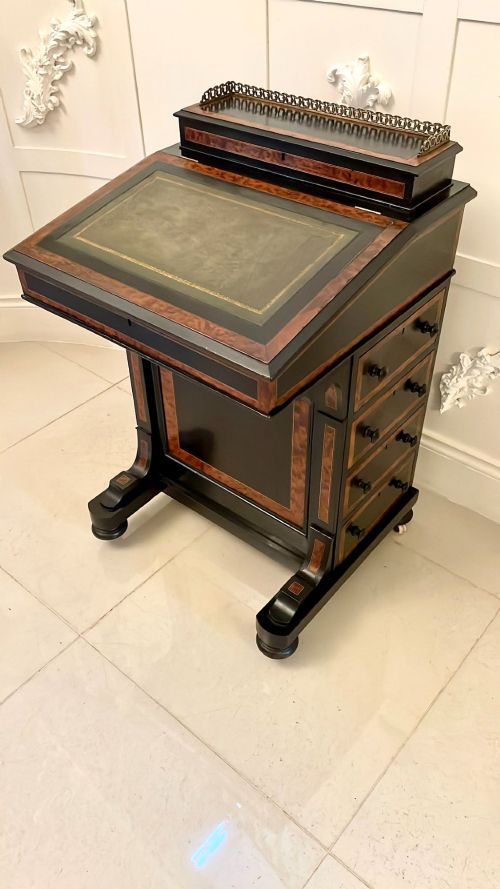
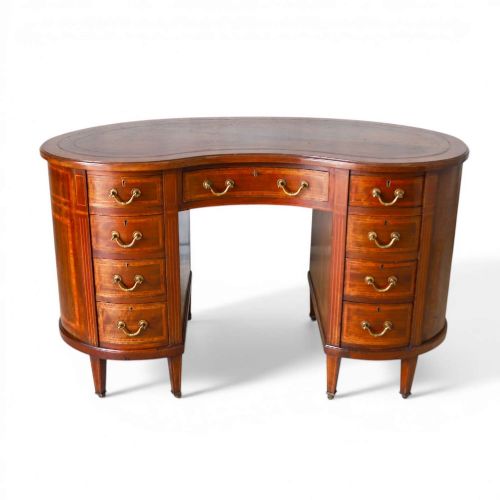
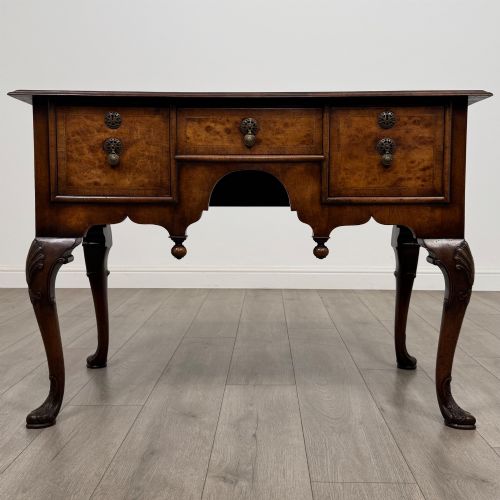
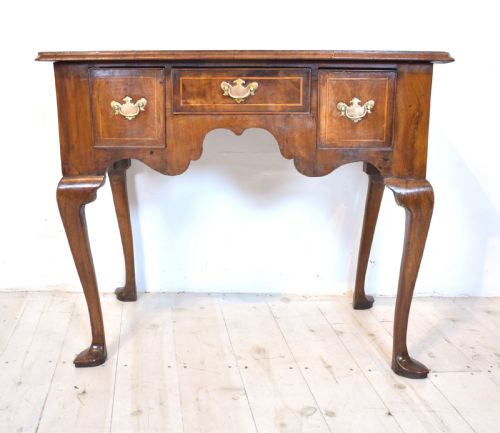
The selection ranges from George III bureau bookcases and kneehole dressing tables to Victorian davenports and Edwardian writing tables. These pieces often incorporate drop flaps, leather inserts, and stepped interiors with secret drawers.
Originating largely from British workshops across the Georgian and Regency eras, these desks combine utility with decorative banded decoration such as tulipwood or satinwood.
Materials and construction
Cabinetmakers constructed these desks using solid timbers like mahogany, oak, and walnut, frequently applying fine veneers of satinwood, burr walnut, and rosewood. Crossbanding involves laying strips of veneer with the grain running perpendicular to the surrounding surface to create a contrasting border.
Brass handles, escutcheons, and leather writing surfaces complete the construction, alongside hand-cut dovetails within the drawer construction.
Crossbanded Writing Desk Retail Price Guide 2026
Typical asking prices for crossbanded writing desk among the pieces listed under this phrase on Sellingantiques today, from the lower quarter to the upper quarter. They describe what is for sale here now, not the wider market.
The listings feature mahogany, satinwood, walnut, and oak desks spanning the Georgian, Regency, Victorian, and Edwardian periods.
Markers of quality
Quality rests in the precision of the crossbanding and the choice of figured timber, such as flame mahogany or burr walnut, matched symmetrically across the desk front. Finer examples display meticulous inlay work and original leather inserts.
The internal architecture, including stepped drawers and secret compartments found in oak and walnut bureaux, separates standard workshop output from exceptional cabinetmaking.
Whytock And Reid·Willmington And Cope
The Crossbanded Writing Desk Glossary
- Crossbanding
- A border of veneer laid with the wood grain running perpendicular to the main panel, framing the top or drawers of a desk.
- Bureau
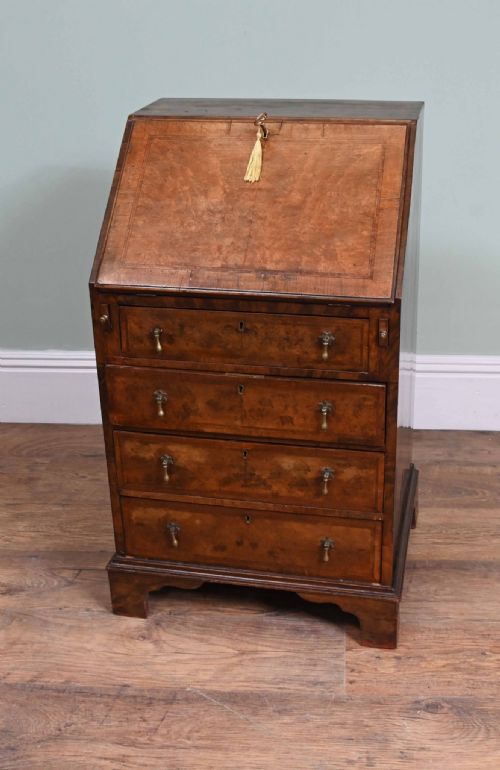
- A sloping writing desk that covers fitted interior compartments, often set upon a chest of drawers or a frame.
- Satinwood
- A durable, lustrous timber native to India and Sri Lanka, utilised extensively in fine 18th and 19th-century veneer work.
- Secret drawers
- Hidden compartments built into the interior of a bureau or desk, accessed by removing visible small drawers or sliding panels.
- Davenport
- A compact pedestal desk featuring a sloping, hinged writing surface and drawers opening to the side.
Crossbanded Writing Desk: Frequently Asked Questions
What is a crossbanded writing desk?
A crossbanded writing desk is a piece of antique furniture distinguished by decorative borders of veneer running perpendicular to the primary grain. These desks span bureau, pedestal, and table forms.
They were designed for correspondence and paperwork, featuring fitted interiors and writing surfaces made from wood, leather, or fabric.
How do I date an antique desk?
Dating relies on timber selection, structural joinery, and decorative styles such as George III inlay or Edwardian satinwood veneering. 18th-century pieces often utilise oak linings and solid walnut.
Later Victorian and Edwardian examples show machine-sawn elements and different secondary woods alongside revived styles.
How were these desks used historically?
These desks served as private writing stations for letters, household accounts, and estate management in period homes. Drawers and secret compartments kept stationery and documents secure.
Sofa tables and library desks additionally functioned as central room tables for reading and light paperwork.
Are the leather tops original?
Some desks retain their original tooled leather inserts, while others have received replacement leather during historical conservation. The presence of tooling, wear patterns, and edge gilding helps determine age.
Surviving early leathers show craquelure and dry patination consistent with centuries of use.
How do I care for a satinwood surface?
Satinwood veneer requires protection from direct sunlight to prevent fading and excessive drying of the timber. Maintaining a stable indoor humidity preserves the glue beneath the crossbanding.
Polishing should be minimal, utilising microcrystalline wax rather than silicone-based commercial sprays.