





Sheraton Period Seats
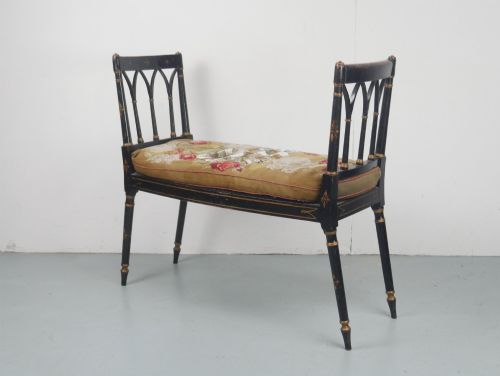
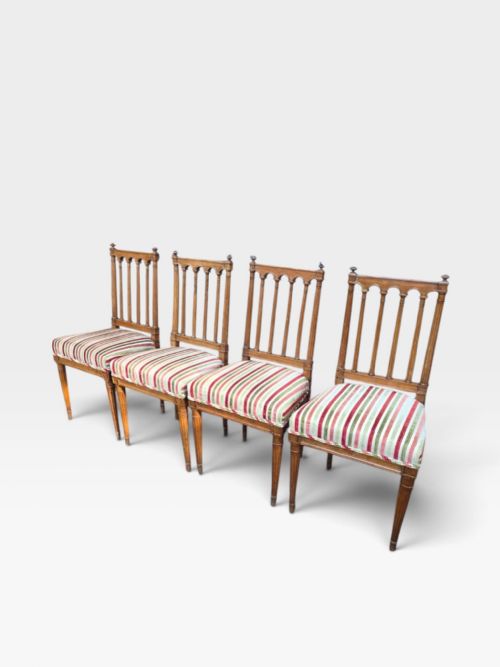
Sheraton period seats bring balanced neoclassical restraint to a room, offering dining chairs, armchairs and desk chairs shaped by eighteenth and nineteenth century design.
Sheraton Period Seats
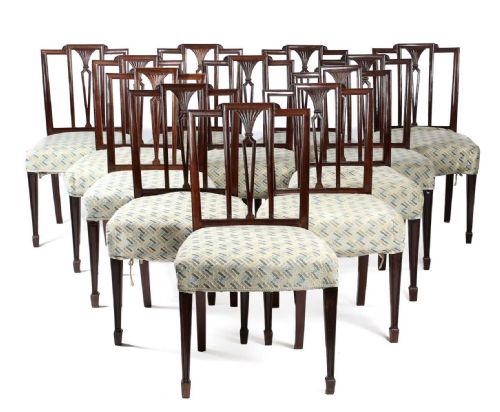
The form relies on geometric lines, rectilinear or shield backs, and tapered legs that reflect classical restraint. Examples range from eighteenth century George III originals to Edwardian Sheraton Revival pieces and later interpretations.
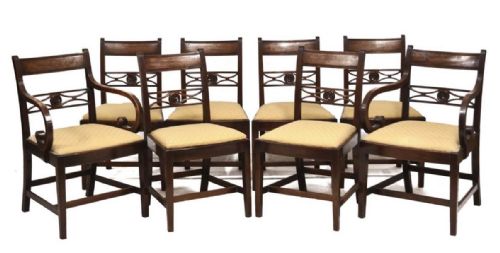
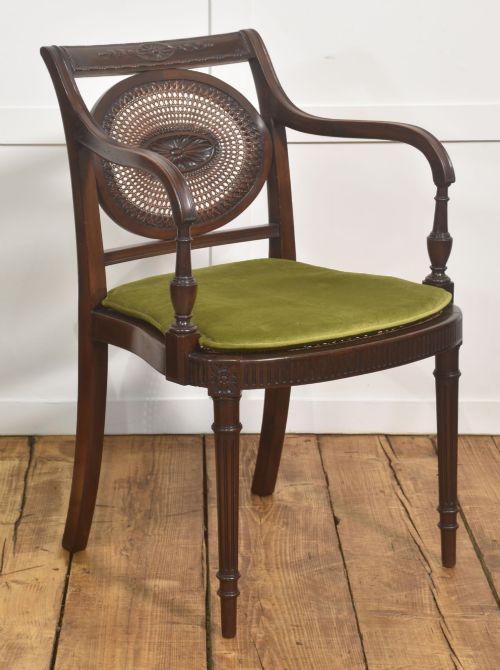
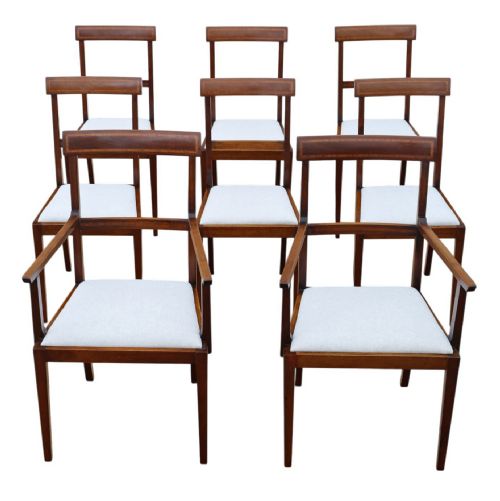
Many listings present complete dining sets, often combining single chairs with matching carvers for the heads of the table. Single library and desk chairs also appear, featuring cane seats, inlaid timber, and upholstered pads.
How they were made
Cabinetmakers utilised mahogany and satinwood as the primary framing timbers, often employing contrasting veneers and delicate inlay work to define the surfaces. Timber selection prioritised rich grain patterns that could be polished to a deep lustre.
Cane work provided lightweight seating panels for library and desk chairs, whilst upholstered pads utilised fabric, velvet and modern textiles. Frames relied on traditional joinery techniques to secure slender uprights and tapered legs without heavy bracing.
Sheraton Period Seats Retail Price Guide 2026
Typical asking prices for sheraton period seats among the pieces listed under this phrase on Sellingantiques today, from the lower quarter to the upper quarter. They describe what is for sale here now, not the wider market.
Listings feature mahogany, satinwood, cane, and velvet across Georgian, Edwardian, and Victorian periods.
What varies in quality
Quality separates through the crispness of the carving, the precision of the timber inlay, and the structural integrity of the frame. Superior examples demonstrate finely rendered shield or square backs with balanced proportions that feel entirely resolved from every angle.
The handling of the wood and the subtlety of painted or inlaid decoration distinguish exceptional pieces from standard workshop output. Original timber surfaces and tight joinery command greater appreciation than heavily restored or structurally compromised frames.
The Sheraton Period Seats Glossary
- Shield back
- A chair back shaped like a heraldic shield, characteristic of late eighteenth century neoclassical design. This form often incorporates carved drapery or vertical splats.
- Carver
- An armchair designed to match a set of single dining chairs, typically placed at the ends of a dining table. The arms provide additional support while matching the overall back design.
- Satinwood
- A pale, hard timber with a natural sheen, frequently utilised for contrasting inlay and veneering on premium furniture. It provides a bright visual accent against darker mahogany frames.
- Splat
- The vertical wooden strip down the centre of a chair back, connecting the top rail to the seat. In these pieces, splats often feature geometric or classical urn motifs.
- Cane
- Woven rattan material used to create resilient, lightweight seat panels or back inserts. It offers flexibility and a breathable surface for desk and library chairs.
Sheraton Period Seats: Frequently Asked Questions
How do I spot a true Georgian piece?
Examine the timber construction, joinery methods, and wear patterns beneath the frame. Eighteenth century examples display aged mahogany patination and hand-cut joinery that differs from twentieth century revival work.
Compare the proportions and decorative inlay against documented neoclassical motifs. True period pieces show integration between the structural frame and the decorative elements.
What is a Sheraton Revival chair?
Sheraton Revival furniture refers to pieces manufactured during the late nineteenth and early twentieth centuries, particularly the Edwardian era. These items reinterpreted eighteenth century neoclassical designs using contemporary workshop methods.
Such pieces often combine mahogany with lighter woods and intricate inlay. They offer the aesthetic of the Georgian period with the sturdiness of a later manufacturing date.
Are dining chair sets usually matching?
Many sets combine single dining chairs with matching armchairs, often configured as groups of six singles with two carvers. These groupings were assembled to accommodate standard dining tables of the period.
Minor variations between individual chairs can occur due to hand craftsmanship. When evaluating a set, consistency in timber tone, leg style, and back design indicates whether the pieces belong together.
How should I care for mahogany frames?
Keep wooden frames away from direct sunlight and sudden temperature shifts to prevent timber shrinkage and veneer lifting. Regular dusting with a soft cloth maintains the polished surface without accumulating residue.
Avoid liquid polishes containing silicone, choosing natural waxes instead. Periodic mild conditioning preserves the depth of the mahogany grain.