
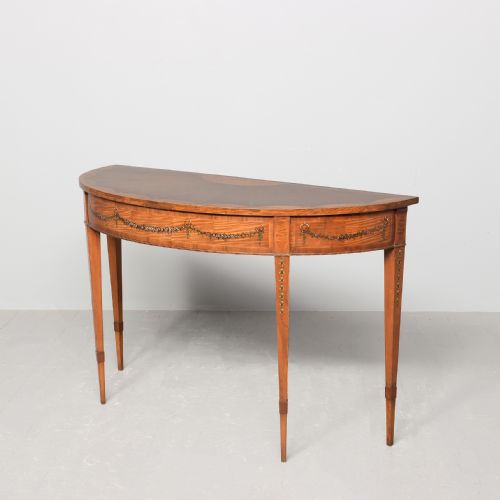
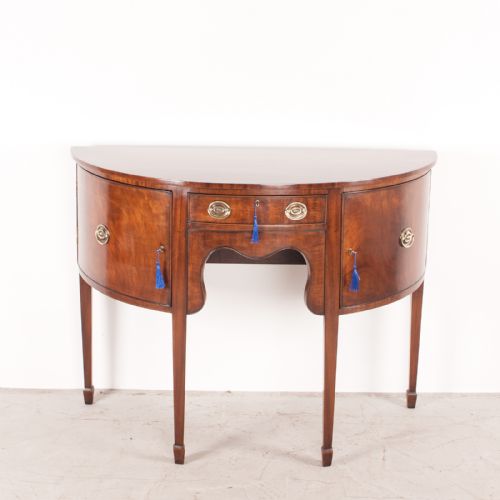


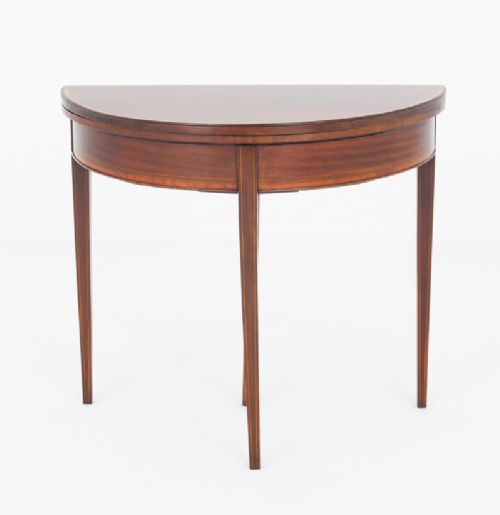


Sheraton Demi Lune Table
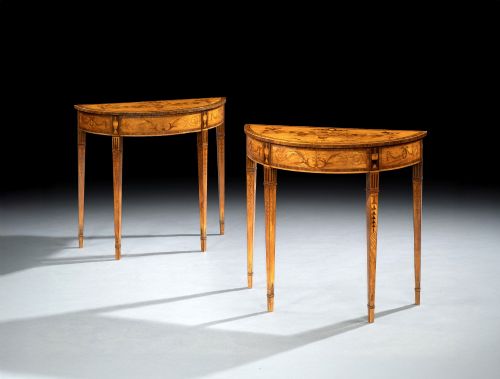
A sheraton demi lune table brings classical grace to an interior, offering a semicircular form designed to sit flush against a wall.
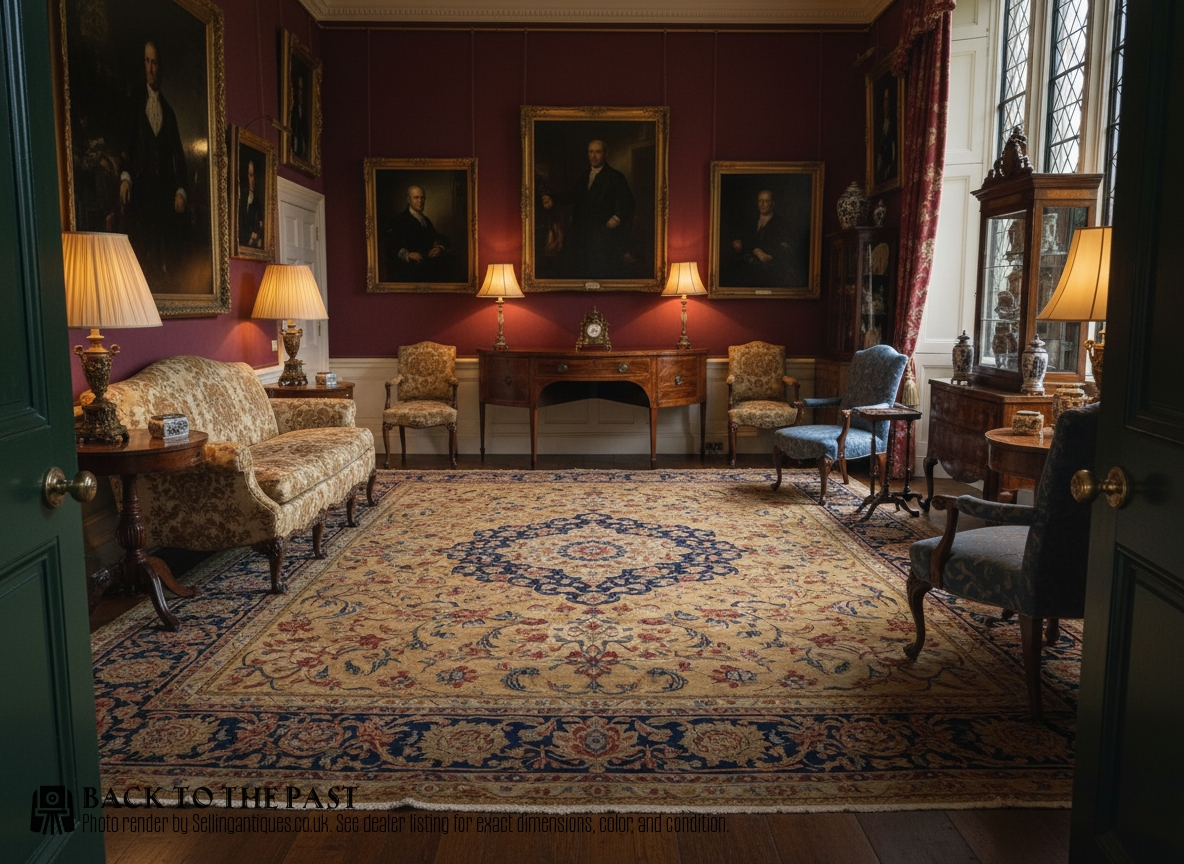
Sheraton Demi Lune Table
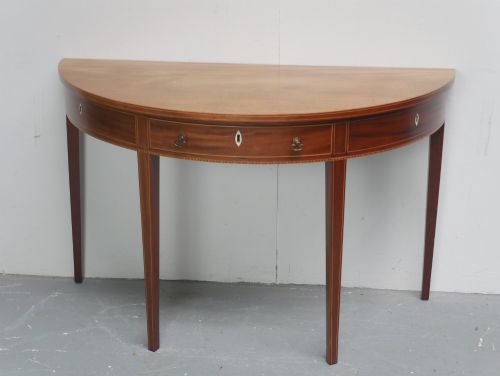
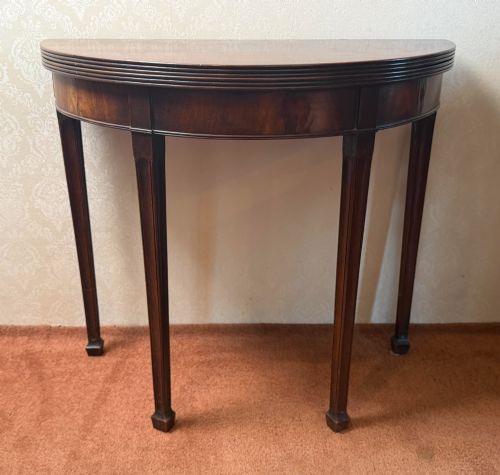
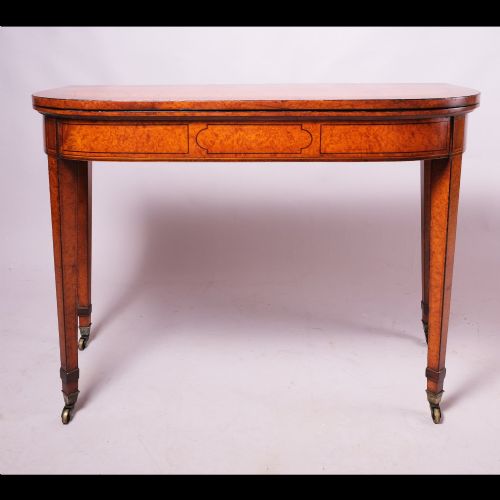
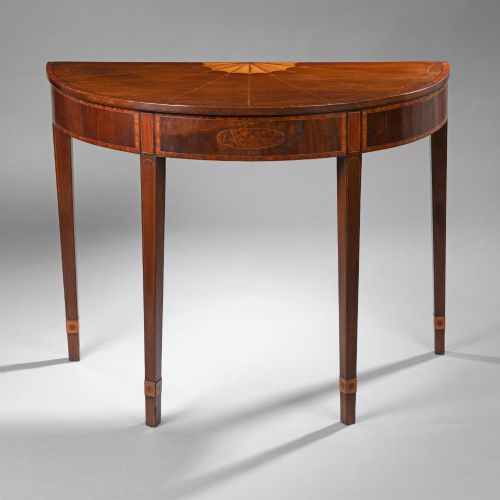
A sheraton demi lune table typically takes the form of a semicircular console, side, or pier table engineered to fit neatly against a vertical surface. Many surviving examples function as fold-over card, tea, or games tables, opening on hinges to reveal a finished surface for evening entertainment.
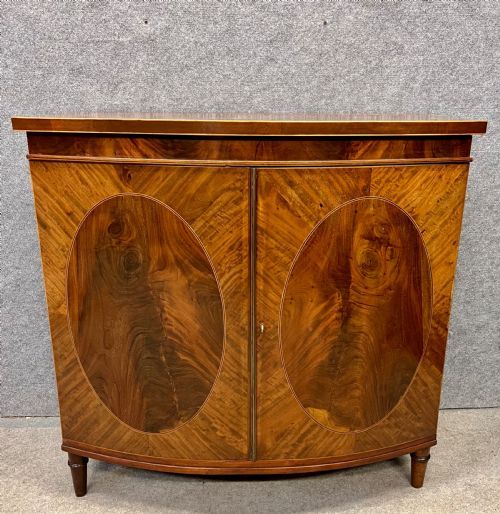
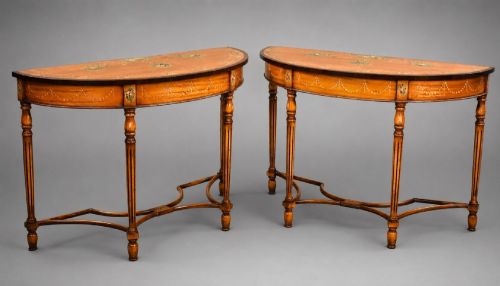
The selections span original Georgian and George III periods alongside later Edwardian and Sheraton Revival interpretations. Pieces range from straightforward mahogany sideboards to elaborately decorated console tables created in the nineteenth and early twentieth centuries.
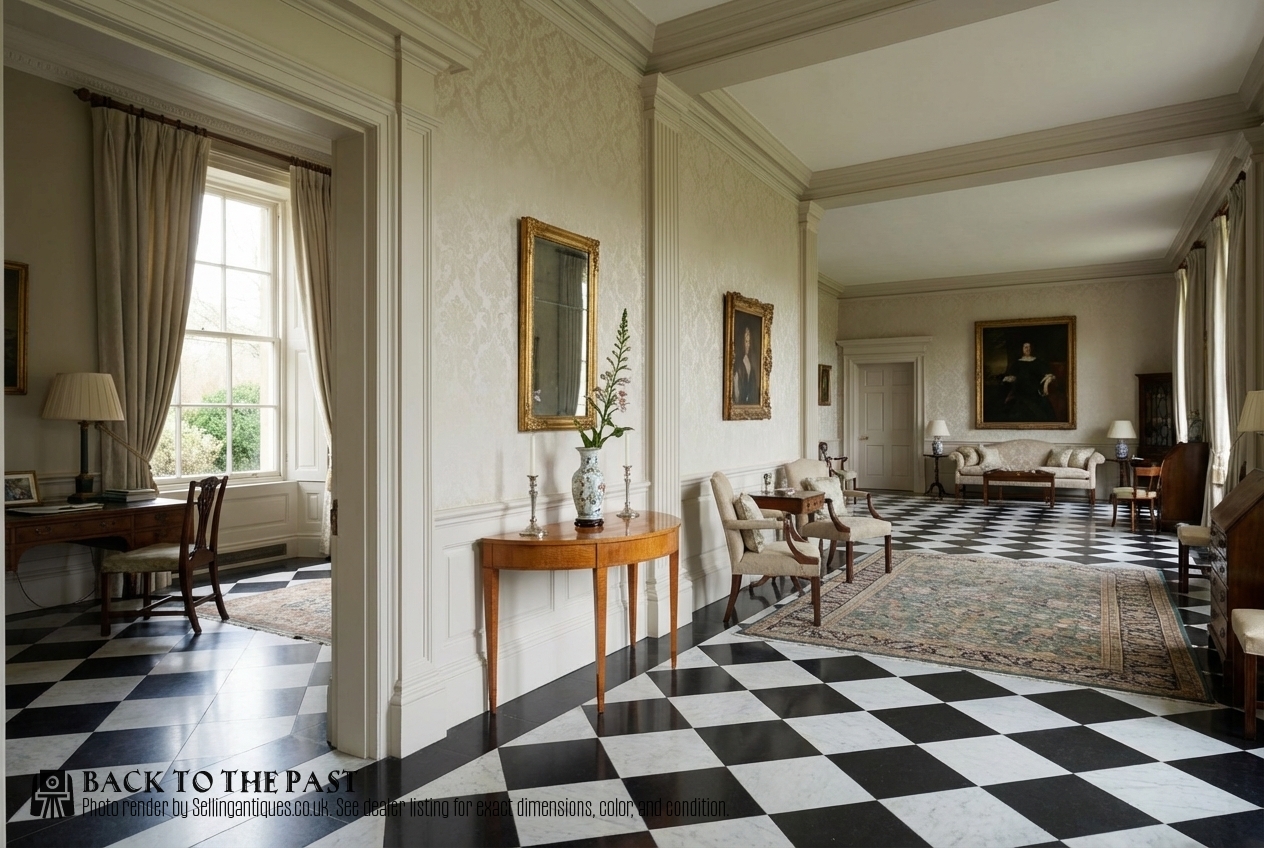
Materials and Construction
Cabinetmakers built the structural carcases primarily using solid mahogany or satinwood, often applying detailed veneers across the curved tabletops. Workshops integrated boxwood inlay, contrasting stringing, and elaborate marquetry motifs to decorate the friezes and legs.
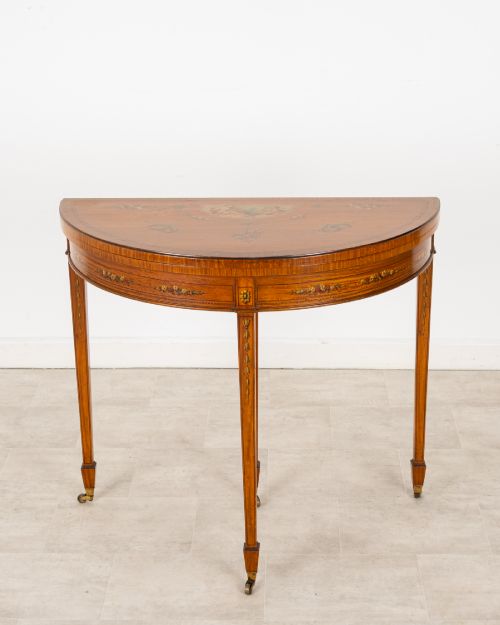
Many lighter satinwood tables incorporate hand-painted neoclassical motifs, botanical swags, or sunburst designs directly onto the timber surface. Folding tops utilise hinged joints that allow the semicircular surface to double in footprint when opened.
Listings feature mahogany and satinwood construction paired with boxwood inlay, painted decoration, and marquetry.
Judging Quality
The standard of a sheraton demi lune table rests upon the crispness of its inlay and the selection of figured timber veneers. Superior examples display precisely matched grain patterns that follow the sweeping curve of the top without distortion.
The refinement of the painted decoration or the complexity of the marquetry distinguishes workshop output, alongside the stability and precision of the folding mechanism on card tables. Proportion in the tapering legs and the integration of brass accents further separate standard production from exceptional pieces.
Edwards and Roberts
The Sheraton Demi Lune Table Glossary
- Demi-lune
- French for half-moon, describing any semicircular furniture designed to stand flat against a wall. This profile became particularly popular during the neoclassical period.
- Console table
- A bracketed or leg-supported table traditionally fixed or placed flat against a wall. They frequently serve as decorative side fixtures in hallways and reception rooms.
- Crossbanding
- A strip of veneer applied to the border of a tabletop with the grain running perpendicular to the central panel. This technique creates a distinct visual framing effect.
- Marquetry
- The art of forming decorative patterns using fitted pieces of wood veneer, shell, or ivory. Craftsmen assemble these elements into intricate pictorial or geometric designs.
- Card table
- A folding table specifically engineered for indoor games like whist or ombre. They usually feature a baize-lined interior surface and a swing-out rear leg for support.
Sheraton Demi Lune Table: Frequently Asked Questions
How do you use a card table?
A card table operates with a hinged top that folds open to double the surface area. The swing-out leg supports the lifted leaf during evening games.
In period settings, these tables remained closed against the wall when not in use. They opened only when guests gathered for cards or tea.
How do I date a Sheraton table?
Dating relies on examining the timber species, construction techniques, and decorative styles present. Original Georgian pieces feature period construction methods and native hardwoods.
Revival pieces from the Edwardian era often utilise brighter satinwood finishes and distinct machine-assisted joinery alongside hand-painted details. Comparing the specific inlay motifs and hardware styles helps establish the era of manufacture.
Where should I place a console table?
A console table fits naturally in entrance halls, living rooms, or dining spaces where floor space is restricted. Its flat rear edge sits flush against the wall.
These tables work well beneath mirrors, artwork, or windows. They provide a display surface for lamps and decorative objects without blocking room circulation.