




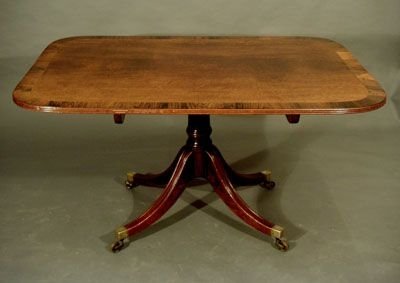


Sheraton Centre Table
These sheraton centre table pieces bring refined timber work and classical inlay to a room, offering both decorative presence and practical surface space.
Sheraton Centre Table
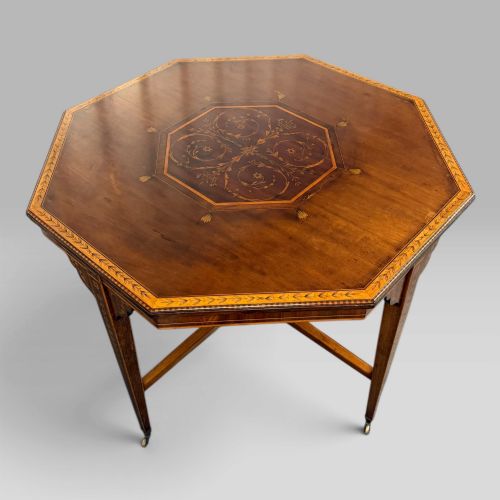
A sheraton centre table stands free in a room rather than against a wall, displaying finished detail on all sides. These pieces emerge predominantly in Edwardian revivals of the late nineteenth and early twentieth centuries, alongside older nineteenth-century examples and occasional George III pieces.
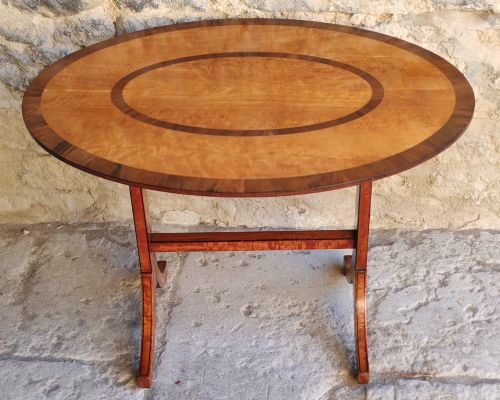
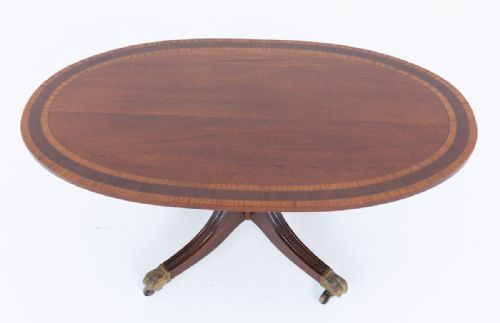
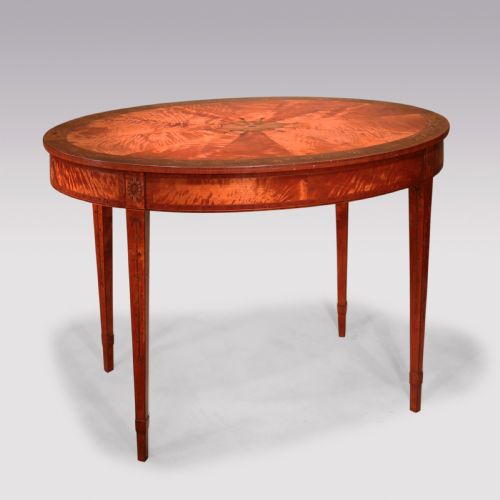
The form appears in various shapes including circular, oval, octagonal, and rectangular formats. Makers often combined occasional table utility with the formal presence of a true centre table, creating versatile furniture for drawing rooms and libraries.
How they were made
Carpenters built these tables using solid mahogany or satinwood carcasses, frequently applying contrasting veneers and fine stringing. Rosewood and boxwood also appear as secondary timbers for banding and linear inlay.
Marquetry and painted decoration define the surface ornament on many examples, using botanical or classical motifs. Brass mounts and hardware occasionally accent the timber framework on specific pieces.
Sheraton Centre Table Retail Price Guide 2026
Typical asking prices for sheraton centre table among the pieces listed under this phrase on Sellingantiques today, from the lower quarter to the upper quarter. They describe what is for sale here now, not the wider market.
Edwardian production and Sheraton Revival styling account for the majority of the recorded pieces.
What varies in quality
The crispness of the inlay and the selection of figured timber separate standard production from finer workshop output. Closely matched veneer grains and precise boxwood stringing indicate superior cabinet-making.
Painted decoration ranges from simple linear borders to detailed figurative panels handled by skilled hands. Structural stability in the leg joints and timber seasoning further distinguish better examples from simpler ones.
The Sheraton Centre Table Glossary
- Sheraton Revival
- A style popular from the late nineteenth century onwards that reinterprets the lighter neoclassical furniture designs of the eighteenth-century designer Thomas Sheraton. It relies heavily on satinwood veneers, painted details, and inlaid stringing.
- Satinwood
- A dense, hard timber with a natural golden sheen that takes a high polish. It served as a primary face veneer for decorative neoclassical and revival tables.
- Stringing
- Thin strips of contrasting wood inlaid into channels cut into the surface of the primary timber. This technique creates delicate geometric borders around table tops and legs.
- Marquetry
- The art of forming decorative patterns using fitted pieces of various wood veneers. Artisans assemble these pictorial or geometric designs before gluing them to the table substrate.
- Occasional table
- A small, movable table designed for a specific, non-permanent use within a room. Many centre tables in this group double in function as occasional pieces.
Sheraton Centre Table: Frequently Asked Questions
Where should a centre table go?
A centre table belongs in the middle of a room where people can walk around it and appreciate the finish on all sides.
Position it beneath a central ceiling light or in an open drawing-room space to let the inlaid top catch the light.
How do I spot a revival piece?
Revival pieces generally date from the Edwardian period or the late nineteenth century rather than the eighteenth century. They display machine-cut veneers and construction methods typical of later industrial cabinet shops.
Examine the secondary woods underneath and inside the drawers to confirm the actual period of manufacture.
Can I use one for writing?
Certain examples include drawers or fitted writing surfaces intended for correspondence. Most centre tables, however, function better as display surfaces for lamps or books rather than heavy desk work.
Check the height of the kneehole space if the table has a drawer before attempting to sit at it regularly.
How do I care for satinwood?
Keep satinwood surfaces away from direct sunlight to prevent the golden timber from fading unevenly. Dust with a dry, soft cloth and avoid silicone polishes that build up a cloudy film over time.
Apply a microcrystalline wax occasionally to protect the polish from moisture rings and everyday wear.