

Shaped Top Writing Desk
A shaped top writing desk brings classic elegance to a room, offering a curved surface designed for correspondence and daily work.
Shaped Top Writing Desk
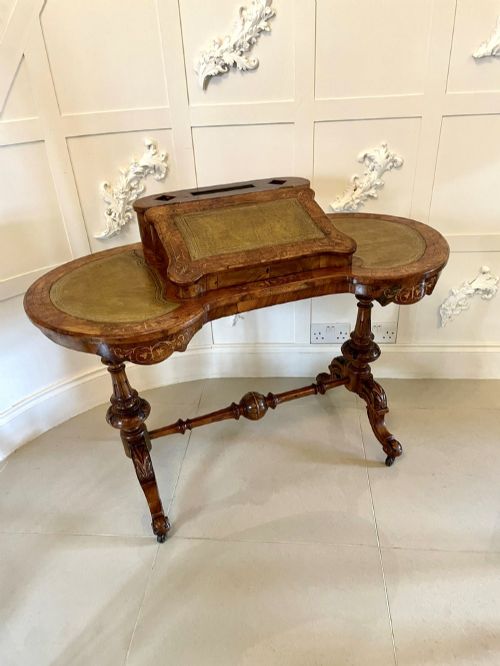
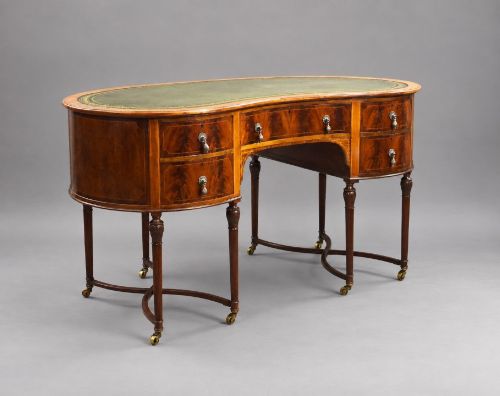
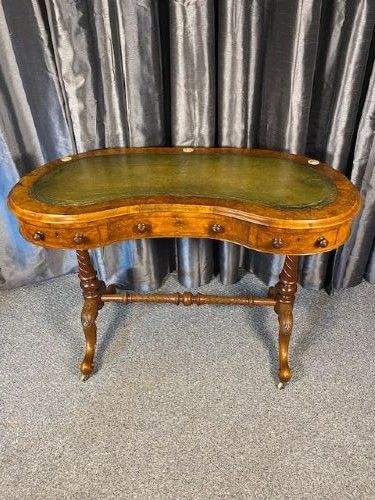
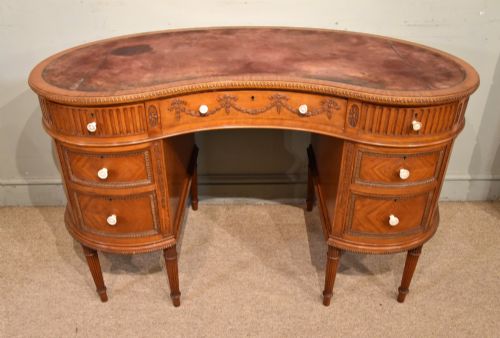
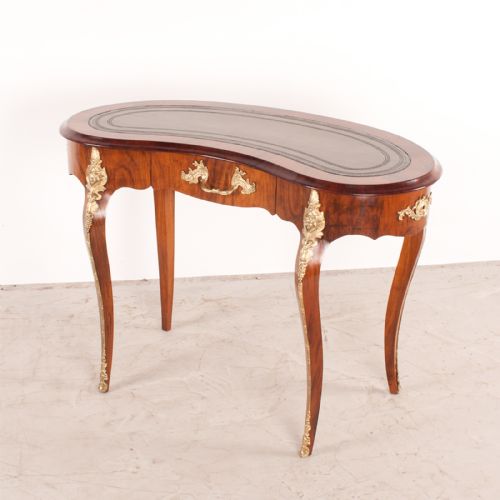
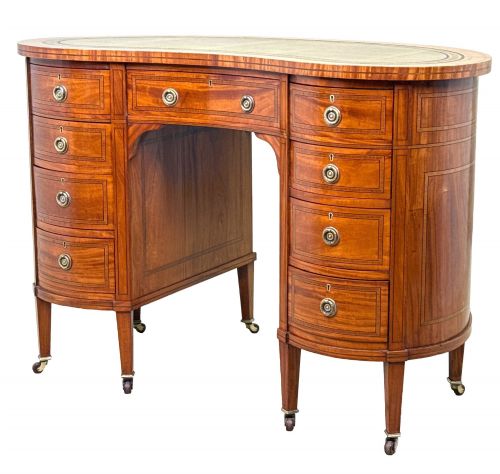
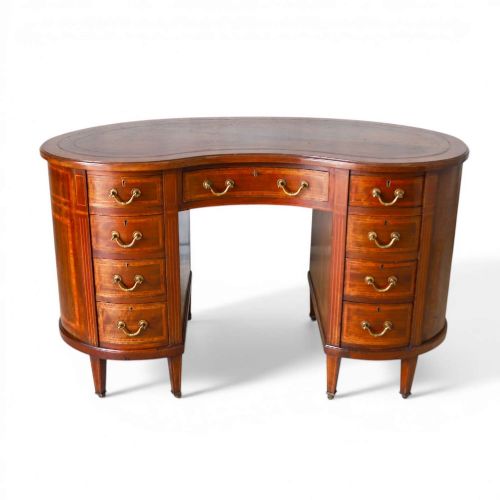
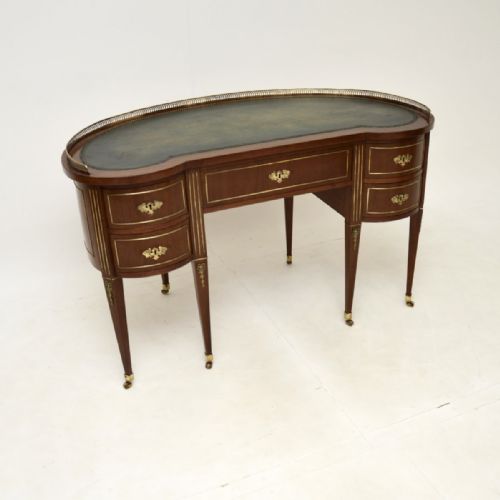
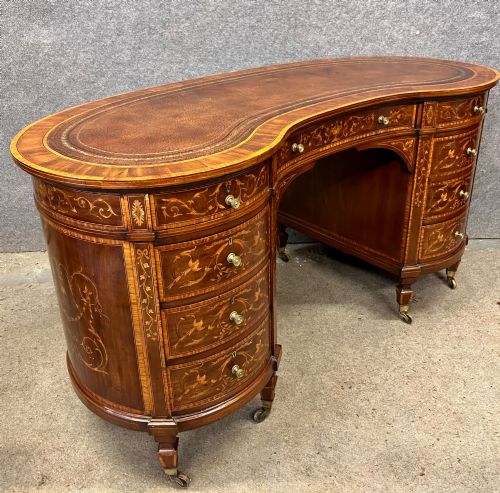
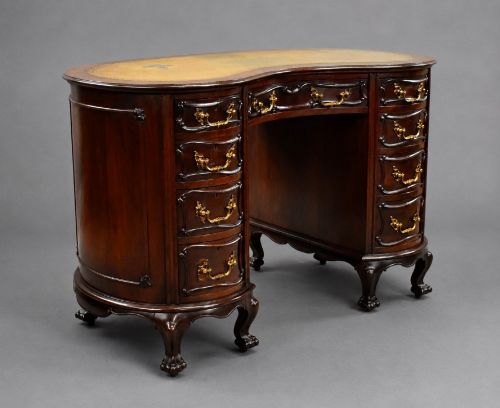
A shaped top writing desk is a piece of furniture designed for writing and paperwork, characterised by a distinctive curved or serpentine profile. The most common version met on this page is the kidney-shaped writing desk, often featuring an inset leather writing surface and delicate tapering legs.
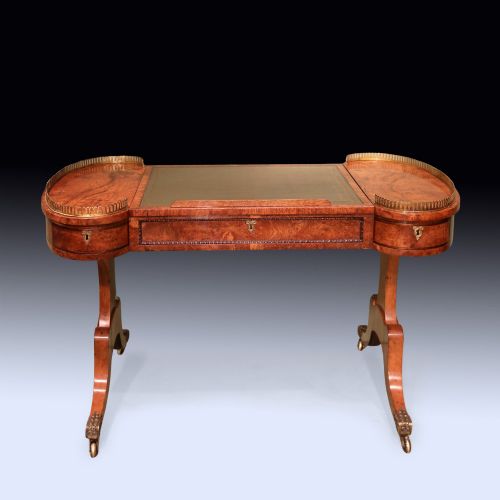
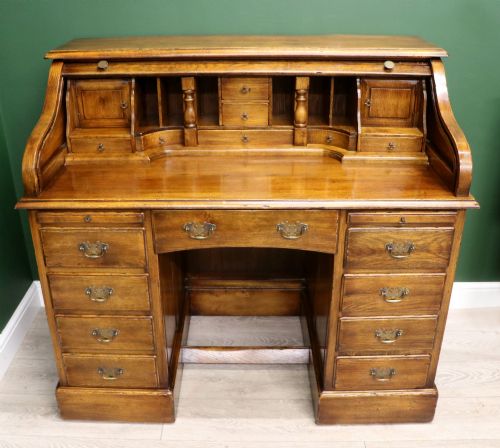
The pieces span several periods, with particular representation from the Victorian and Edwardian eras, alongside earlier Regency examples. Makers often utilised forms such as free-standing writing tables, pedestal desks, and compact ladies writing desks suited for boudoirs and studies.
Origins vary between English workshops and continental makers influenced by French styles, resulting in varied proportions and decorative schemes. Buyers encounter everything from utilitarian oak and mahogany pieces to highly decorative satinwood and burr walnut furniture.
How they were made
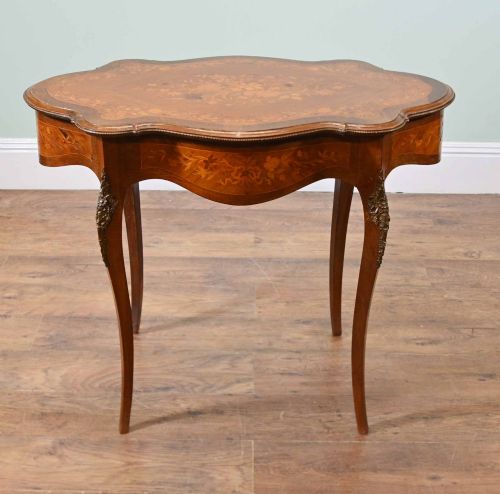
Cabinet makers utilised choice timber veneers such as burr walnut, flame mahogany, satinwood, and kingwood applied to sturdy secondary woods. Curved forms required skilled handling of timber, often incorporating delicate stringing, marquetry inlay, and cross-banding around the shaped perimeters.
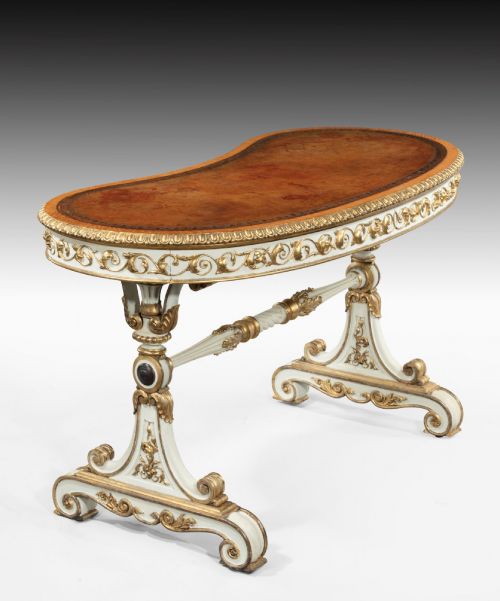
Writing surfaces were frequently inset with tooled leather, complemented by brass handles, ormolu mounts, and cast bronze details. Structural integrity relied on traditional joinery, with drawer linings in oak or mahogany and handcrafted dovetailed construction.
What varies in quality
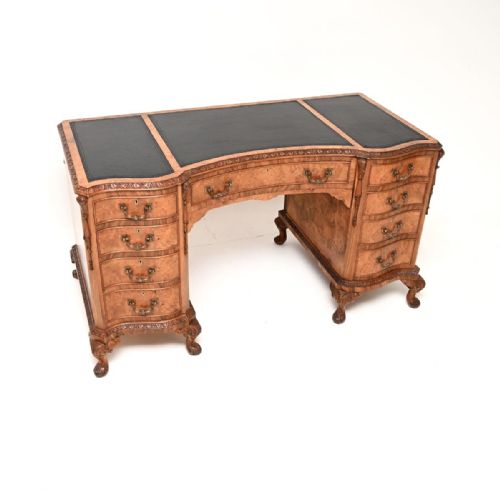
The tier of a shaped top writing desk depends on the selection of figured timber and the precision of its marquetry or inlay. Superior pieces exhibit seamless curves, perfectly matched veneers, and finely cast ormolu mounts rather than mass-produced brass work.
Finished backs and fully freestanding capability distinguish finer examples meant to sit in the centre of a room from simpler models meant for a wall. The harmony of the proportions and the crispness of carved details mark the difference between standard production and workshop masterworks.
Maple & Co·Wolfe & Hollander·Shapland & Petter·Gillows
The Shaped Top Writing Desk Glossary
- Kidney-shaped
- Describing a writing desk with a concave front curve that wraps around the user. This distinct contour defines many of the most sought-after tables.
- Ormolu
- Gilded bronze ornamentation applied to furniture. This decorative technique appears on French-influenced desks from the nineteenth century.
- Marquetry
- Decorative patterns formed by fitting together small pieces of coloured wood veneer. Master craftsmen used this technique to create floral and geometric tabletop designs.
- Pedestal desk
- A heavy writing desk supported by two banks of drawers reaching down to the floor. These offer substantial storage space compared to lighter writing tables.
- Bureau-plat
- A flat-topped writing table, often freestanding and fitted with drawers. The term reflects the strong French influence on nineteenth-century English desk design.
Shaped Top Writing Desk: Frequently Asked Questions
What is a shaped top writing desk?
A shaped top writing desk is a historic piece of furniture featuring a curved, serpentine, or kidney-shaped writing surface. These desks were designed to combine practical workspace with elegant room aesthetics.
They appear frequently in nineteenth and early twentieth-century styles, utilising fine timbers like mahogany and walnut.
Where were these desks placed?
Many examples were built as freestanding pieces meant to sit in the centre of a study or drawing room. Finished backs allowed them to look polished from every angle.
Smaller kidney-shaped variations often served as ladies writing desks positioned in private boudoirs or bedrooms.
How do I care for the leather top?
The leather inset requires gentle cleaning with a slightly damp cloth and occasional application of appropriate leather balm. Avoid harsh chemical cleaners or excessive moisture that might damage the surrounding wood veneer.
Keeping the desk away from direct sunlight prevents the leather and wood from fading over time.
How do I distinguish Victorian from Edwardian desks?
Victorian desks tend to feature heavier timbers, rich dark mahogany, and robust construction with deep carving. Edwardian pieces often display lighter satinwood, delicate inlay work, and influences from the Sheraton Revival.
Examining the secondary woods and interior drawer construction helps clarify the manufacturing period.