
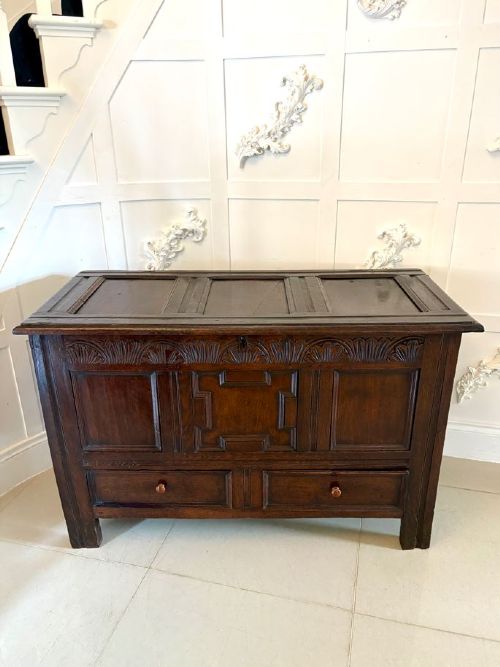
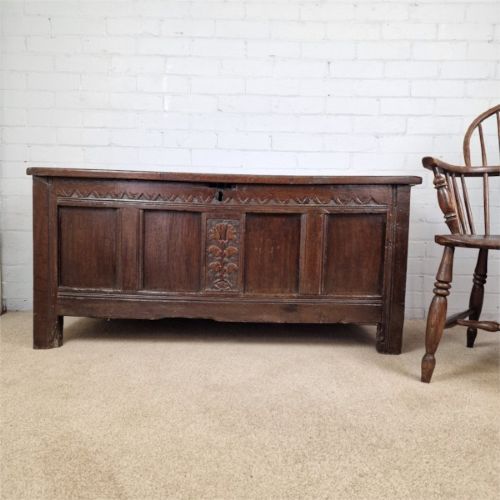
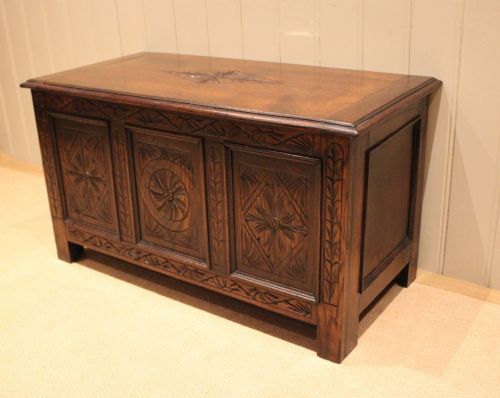
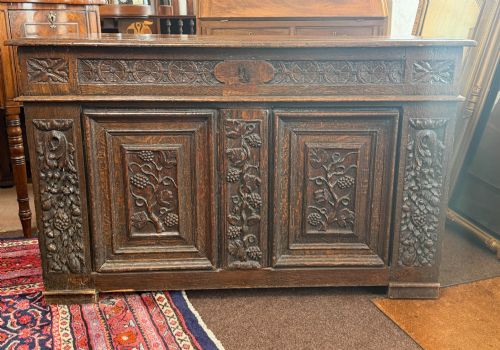
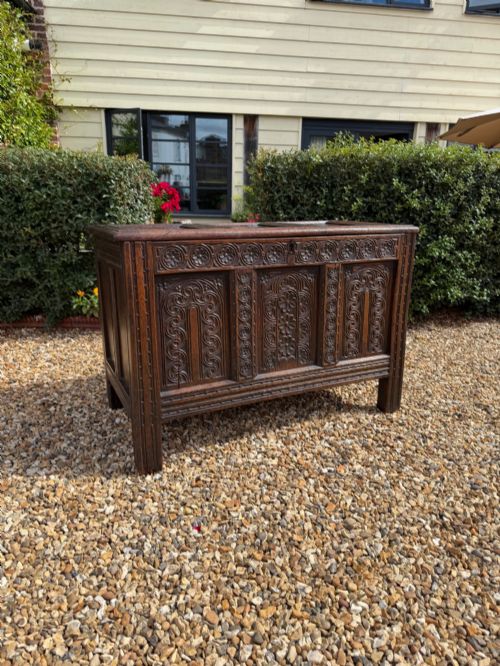
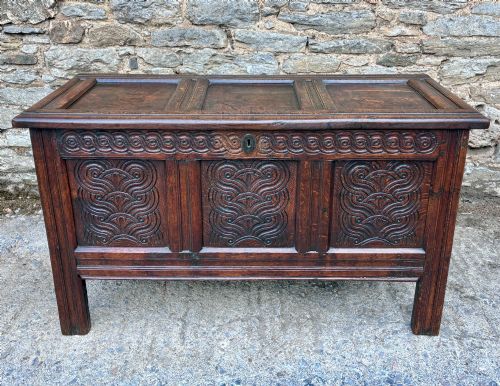
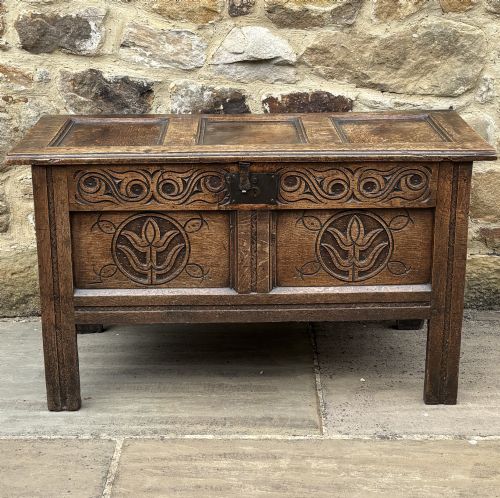
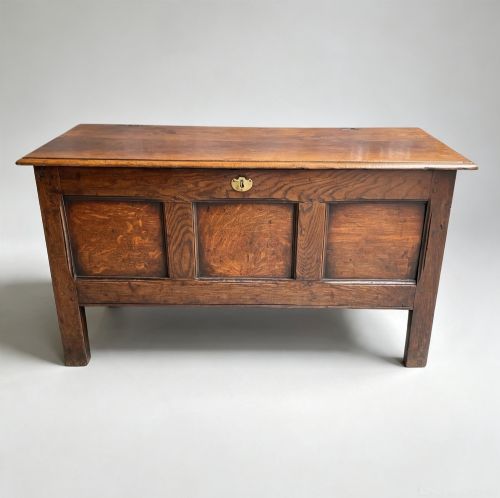
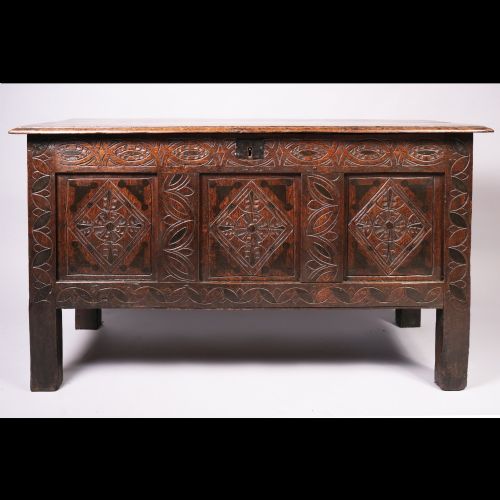
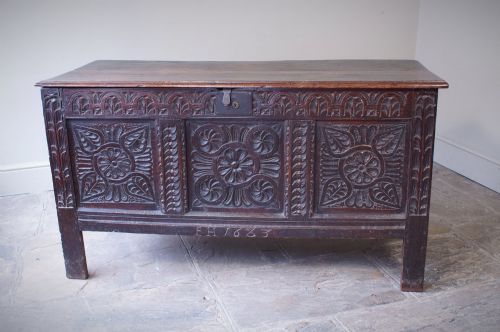
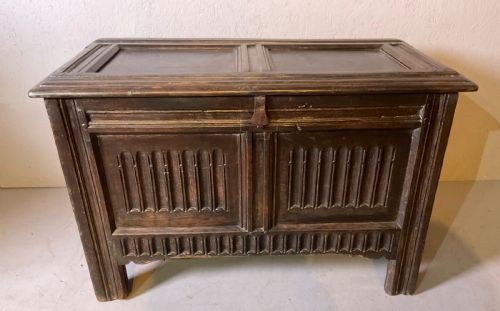


Seventeenth Century Mule Chest
These seventeenth century mule chest pieces combine storage and a lower drawer, offering serious timber build quality for daily utility.
Seventeenth Century Mule Chest
A seventeenth century mule chest is a sturdy box for household storage fitted with one or more drawers beneath the main compartment. When you search for a seventeenth century mule chest, you encounter sturdy pieces primarily made from solid oak with iron and brass fixings.
The inventory on this page spans regional styles such as Welsh Vernacular, Jacobean, and William III designs. These storage items bridge the gap between simple coffers and later drawer-base chests, originating from specific areas including Yorkshire, the Leeds area, and Snowdonia.
Most examples date to the seventeenth century or around seventeen hundred, alongside later nineteenth century revivals and pieces dated nineteen ten. Buyers find variants ranging from plain panels and linen fold designs to carved surfaces and inlaid panels.
Materials and construction
These chests rely heavily on solid oak, shaped through traditional joinery and panel construction to house garments and household goods. Wood inlay adds decorative surface patterns, whilst stained oak provides alternate surface tones.
Makers integrated iron and brass fittings for hinges, locks, and handles, securing heavy lids and drawer fronts. Regional cabinet makers utilised local timber resources, resulting in distinct regional characteristics across North Country, Lakeland, and Welsh workshops.
Some chests carry old marriage dates carved into the oak, serving as permanent wooden records for eighteenth century unions.
Judging quality and period integrity
Quality rests in the originality of the timber, the crispness of any carved detailing, and the structural integrity of the lower drawer runners. Pieces featuring integrated wood inlay or regional provenance display higher levels of cabinet making skill.
The distinction between genuine seventeenth century examples and later nineteenth century Jacobean Revival pieces alters the character of the item. Original period surfaces and untouched hardware elevate the standing of a mule chest within a collection.
The Seventeenth Century Mule Chest Glossary
- Mule chest
- A storage chest featuring a hinged lid above one or more drawers built into the base. This form evolved from the standard coffer by adding lower storage access.
- Coffer
- A heavy wooden box with a lid used for storing valuables, textiles, or documents. These form the primary structural base for the development of mule chests.
- Jacobean
- A style spanning the early to mid seventeenth century, characterised by rigid geometric panels and strapwork carving. Many mule chests reflect this distinct aesthetic period.
- Linen fold
- A carved panel motif resembling folded parchment or linen cloth. This technique appears frequently on seventeenth century oak panels.
- Coffor Bach
- A small Welsh chest designed for domestic storage. These compact pieces demonstrate regional vernacular furniture traditions.
- William III
- A style period dating around the late seventeenth and early 1700s, showing continental influences on English furniture design.
Seventeenth Century Mule Chest: Frequently Asked Questions
What is a seventeenth century mule chest?
A seventeenth century mule chest is a large wooden storage box with a hinged top and a drawer fitted beneath the main compartment.
These pieces combine the deep storage of a traditional coffer with the easy access of a drawer for linen or clothes.
How do I spot a real period piece?
Examine the timber construction, joint methods, and wear patterns across the oak panels and interior surfaces.
Regional variations and period hardware help distinguish original seventeenth century examples from later revival pieces.
Where were these chests made?
Makers constructed these items in various English and Welsh regions, including Yorkshire, Lakeland, and Snowdonia.
Local timber availability and regional woodworking traditions shaped the specific carving and panel styles.
How do I use one at home?
These robust chests serve as blanket boxes at the foot of a bed or as coffee tables in a living space.
The flat top provides surface area while the internal compartment keeps household items out of sight.