
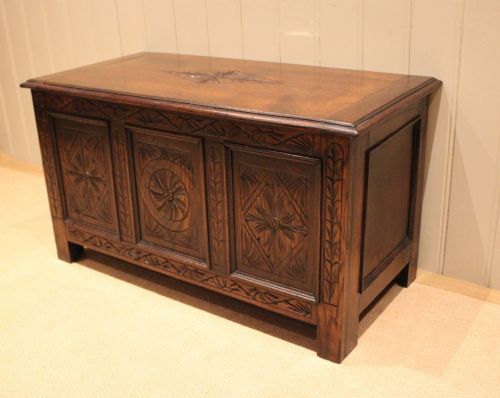

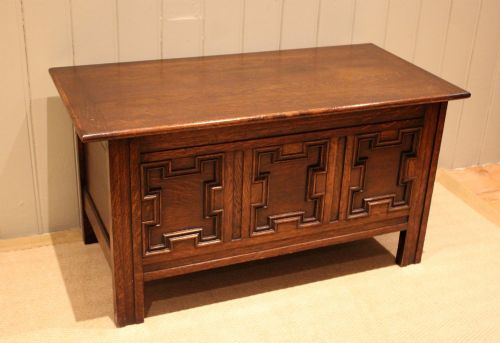
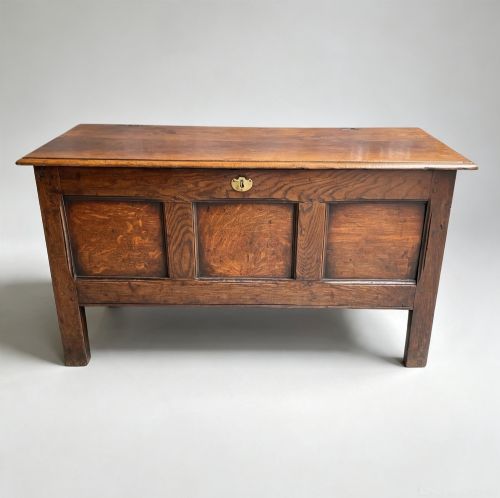


Carved Oak Dowry Chest
These carved oak dowry chests are heavy storage vessels built to hold household goods, offering durable construction and historic joinery.
Carved Oak Dowry Chest
A carved oak dowry chest is a robust storage piece designed to hold household goods and valuables. These items appear across the seventeenth, eighteenth, and nineteenth centuries, along with later revivals from nineteen ten and nineteen twenty.
The versions most commonly met on this page take the form of coffers, trunks, and storage chests in traditional country and Jacobean styles. Examples range from seventeenth century West Country and Yorkshire pieces to Georgian designs and early twentieth century interpretations.
How they were made
These pieces are built primarily from oak, utilising solid timber joined for structural strength. Metal elements in brass and iron appear in hardware and fittings.
Surface decoration relies on hand-carving and scratch-carving techniques applied directly to the timber. Certain pieces also incorporate ebonised wood details to create contrast.
Some trunks doubled as window seats, giving seventeenth century household inhabitants a sturdy place to watch the street.
What varies in quality
The standard of workmanship varies significantly between utilitarian storage boxes and finely decorated examples. Depth and precision in the hand-carved ornamentation distinguish superior items from plain variants.
Age and regional origin influence character, with seventeenth century West Country or Yorkshire pieces displaying distinct local woodworking traditions compared to later Georgian or revival works.
The Carved Oak Dowry Chest Glossary
- Coffer
- A large wooden chest used historically for storing valuables, linen, or documents. These sturdy boxes often served multiple purposes including seating.
- Scratch carved
- A simple form of surface decoration where a design is gouged or scratched into the wood using basic tools. This technique predates more complex chisel work on many regional items.
- Jacobean style
- An aesthetic reflecting early seventeenth century English design, characterised by geometric panelling and heavy proportions. Revival versions of this style were produced later.
- Dowry chest
- A container commissioned or used to hold household goods, linen, and personal possessions brought by a bride to her marriage. These are also referred to as marriage chests.
Carved Oak Dowry Chest: Frequently Asked Questions
What were carved oak dowry chests used for?
These chests were primarily utilised to store valuable household possessions, textiles, and wedding linens. Families kept important documents and portable wealth inside them.
Over time, they frequently doubled as seating benches or window seats within domestic interiors due to their sturdy flat lids.
How do I date a carved oak coffer?
Dating relies on examining the construction methods, tool marks, and overall proportions of the timber. Seventeenth century pieces often display hand-split panels and scratch carving.
Later pieces from the eighteenth and nineteenth centuries, or early twentieth century revivals, exhibit different joinery techniques and styling influences.
Where were these chests made?
Many items originate from specific English regions, with West Country and Yorkshire pieces representing distinct local cabinet-making traditions. Regional workshops utilised local timber and characteristic carving motifs.
Earlier examples reflect domestic English craftsmanship before industrial manufacturing standardsed furniture production.
How do I care for an antique oak chest?
Maintain the timber by keeping the piece away from direct heat sources and sudden humidity changes. Natural wax can be applied periodically to nourish the dry oak surface.
Avoid harsh chemical cleaners and protect the brass or iron hardware from moisture to prevent corrosion.