
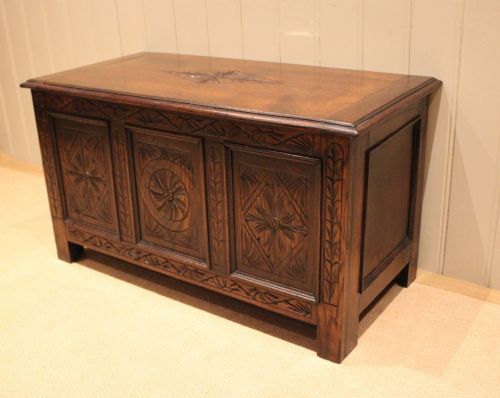
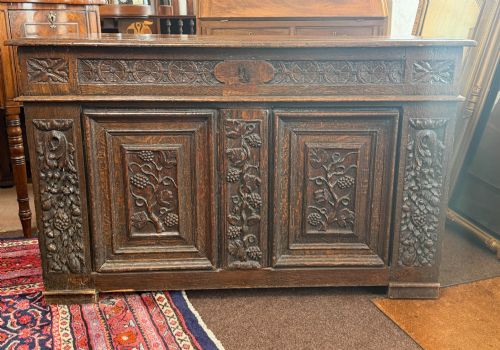
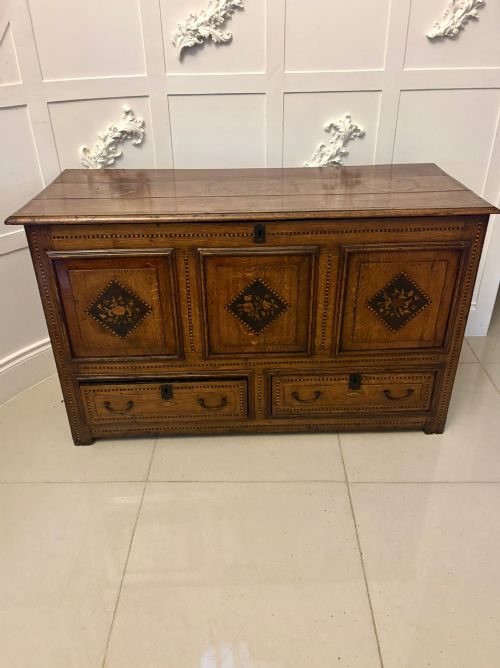
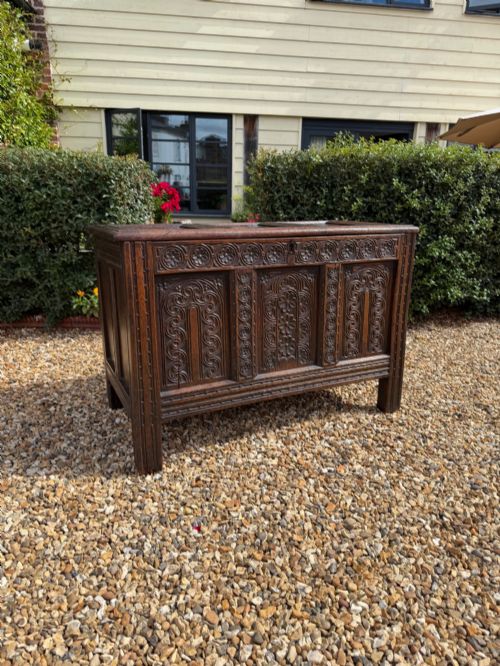
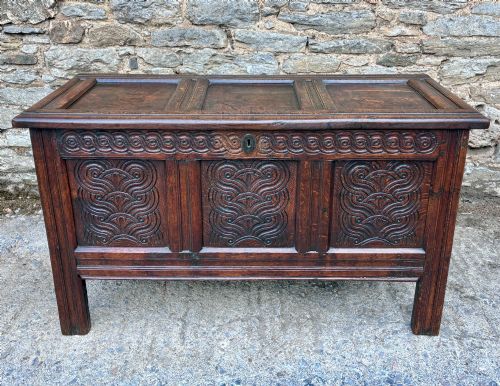
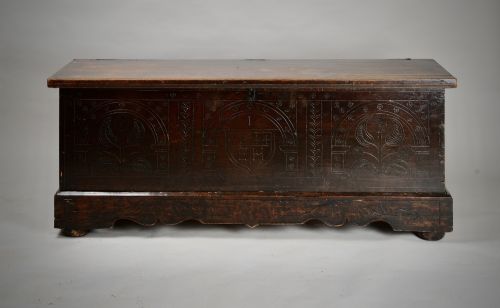
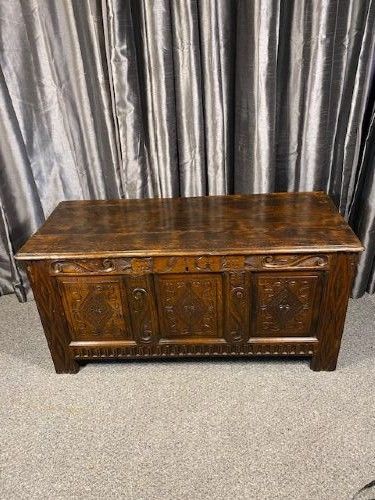
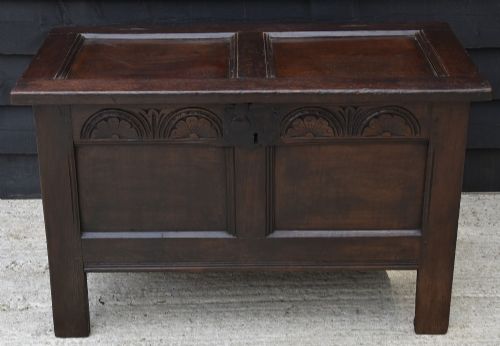
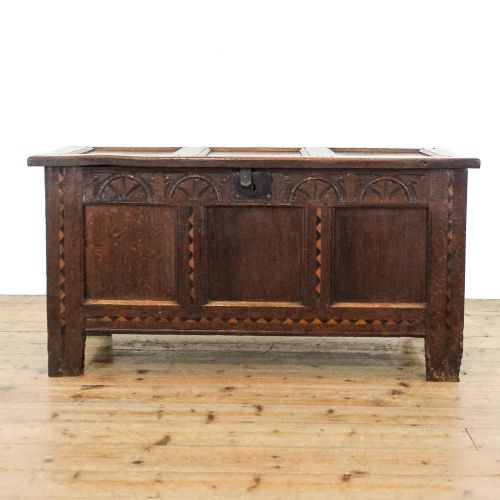
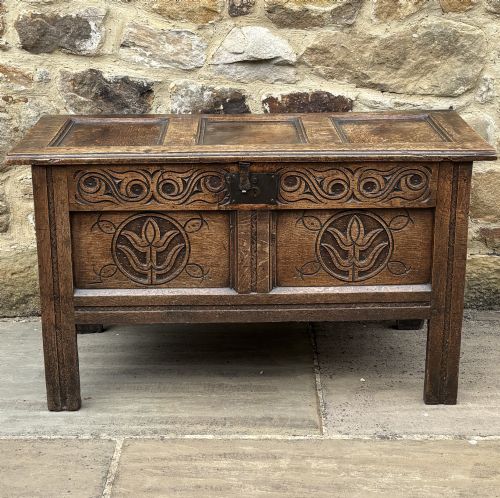
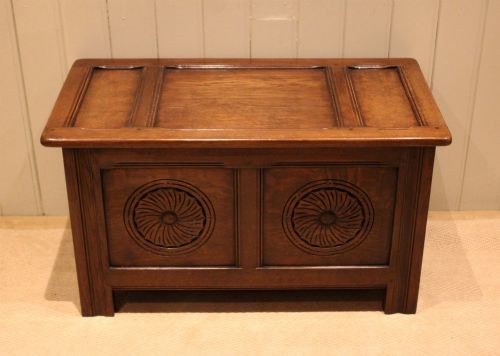
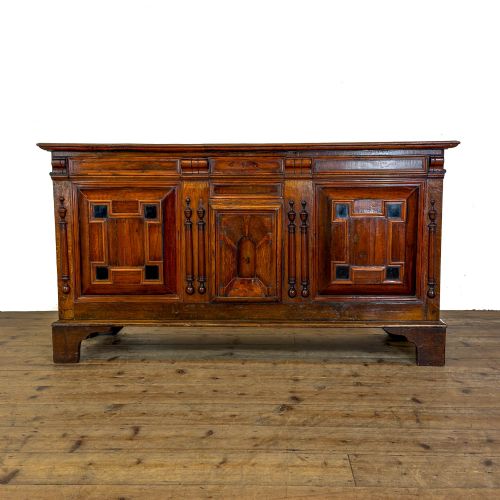
Jacobean Mule Chest
A jacobean mule chest brings heavy timber storage and centuries of domestic history straight into a room.
Jacobean Mule Chest
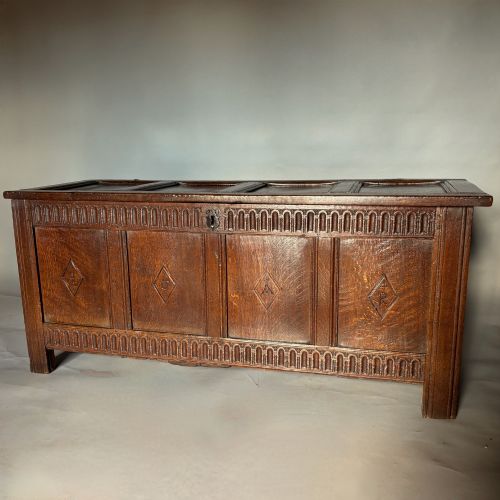
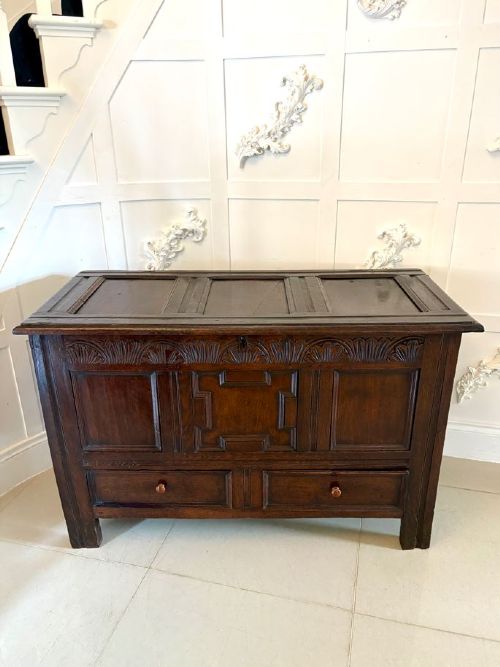
A jacobean mule chest is a sturdy storage piece combining a coffer box with one or more drawers beneath the main compartment. These items emerge primarily from the seventeenth and eighteenth centuries, alongside later revival pieces produced in the twentieth century.
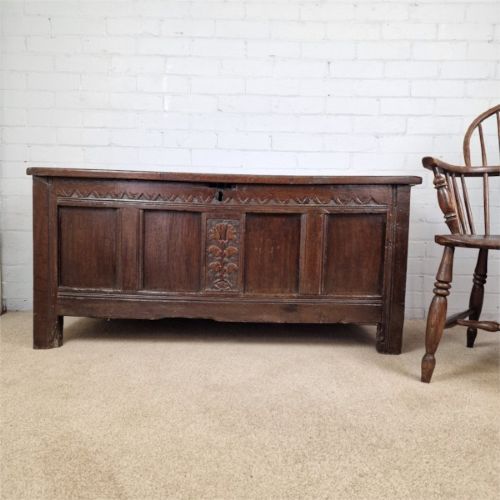
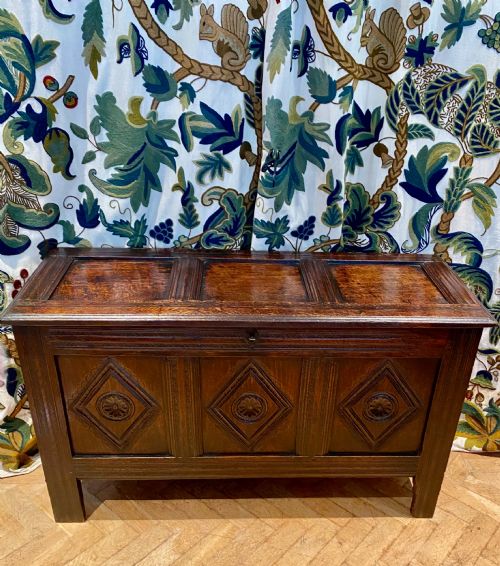
Most examples found here span forms described as coffers, trunks, and blanket chests. The seventeenth-century pieces form the core of the selection, showing panelled construction and traditional English joinery.
The measure of quality
Quality rests in the crispness of the original carved details and the integrity of the timber framing. Pieces retaining their early boards and authentic surface patination stand apart from heavily restored or later constructed items.
Proportion and scale also dictate distinction, with smaller cottage proportions and regional variations holding particular interest for collectors.
Several chests carry regional signatures like Snowdonia grain arks, proving that even laundry storage once required a local address.
The Jacobean Mule Chest Glossary
- Coffer
- A large wooden chest used historically for storing valuables, textiles, or documents. These boxes form the basis of the mule chest design.
- Mule chest
- A chest fitted with one or more drawers at the base beneath the main lift-top compartment. This hybrid form bridges the gap between simple coffers and full chests of drawers.
- Linen fold
- A carved wooden panel motif imitating folded linen cloth. This decorative technique appears frequently on seventeenth-century English woodwork.
- Marquetry
- The art of applying pieces of veneer to a structure to form decorative patterns. Examples employ contrasting woods for geometric or floral designs.
- Ebonised
- Wood treated to imitate ebony through staining or chemical darkening. This finish appears on specific decorative elements of seventeenth-century furniture.
Jacobean Mule Chest: Frequently Asked Questions
What is a jacobean mule chest?
A jacobean mule chest is a traditional storage box featuring a hinged lid above a base fitted with drawers. They combine the deep storage of a coffer with the accessible drawer space of a cabinet.
Most surviving examples date from the seventeenth century and later revival periods, constructed from solid oak with panelled walls.
How were mule chests used?
These chests served primarily for storing household linens, blankets, and woollen garments in domestic spaces. The lower drawers allowed frequent access to smaller items without disturbing the contents of the main upper compartment.
In period homes, they functioned as portable wardrobes and general security boxes for valuable possessions.
How do I date an old oak chest?
Dating relies on examining the joinery marks, wood shrinkage, and hand-carved decorative motifs. Pegged frame construction and tool marks indicate period hand-working techniques.
Subtle shifts in panel styles and regional building traits help narrow down the decade of manufacture.
How do I care for antique oak?
Keep oak furniture away from direct heat sources and dramatic humidity shifts to prevent the timber from splitting. Regular dusting with a dry cloth maintains the surface without stripping the historic wax or oil finish.
A light application of traditional beeswax every few years preserves the natural grain and deepens the patina.