

Seventeenth Century Box
A seventeenth century box brings solid oak utility and centuries of domestic history straight into a room.
Seventeenth Century Box
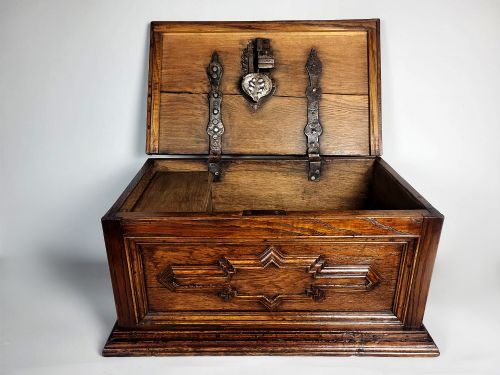
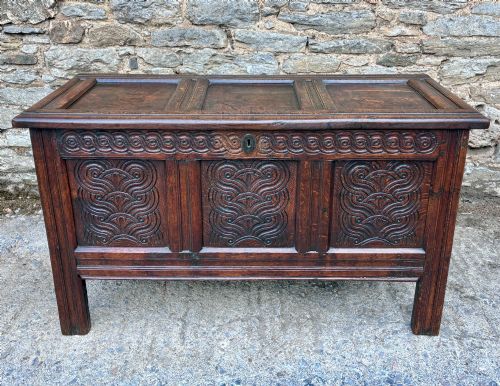
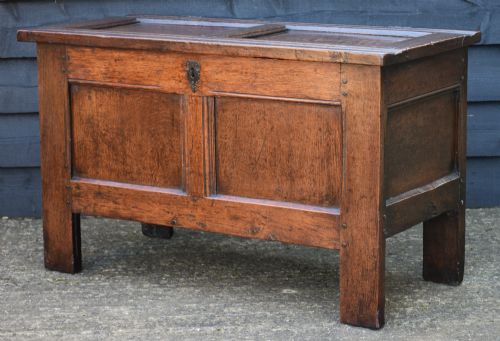
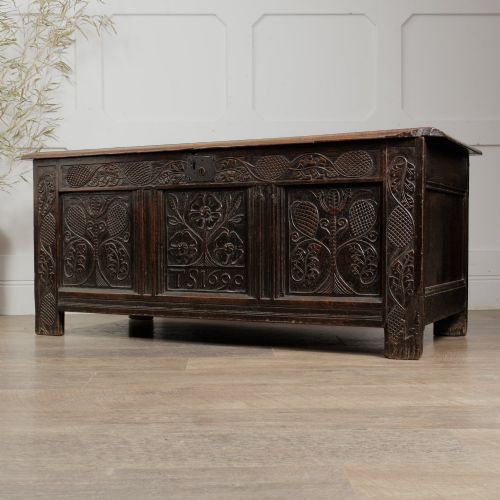
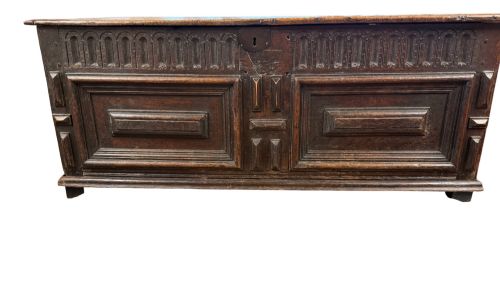
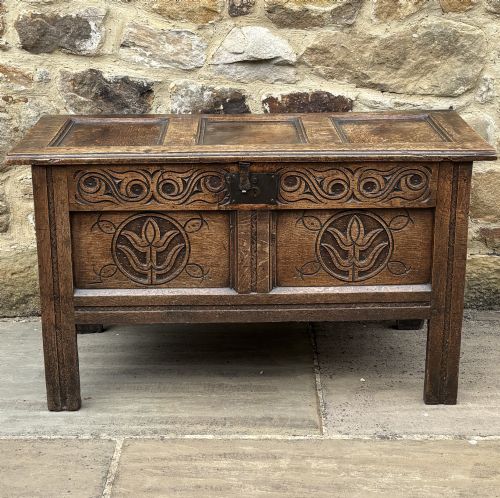
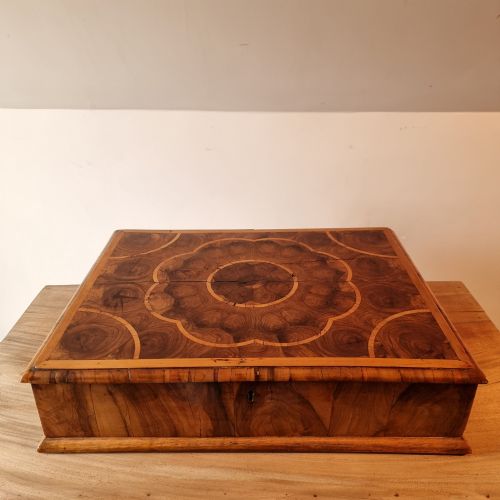
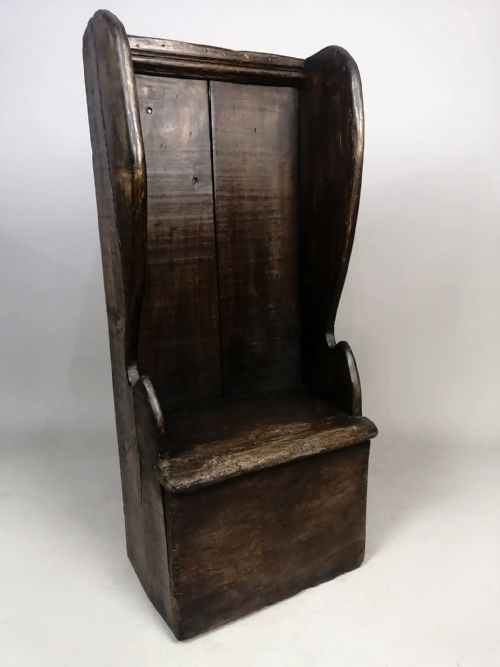
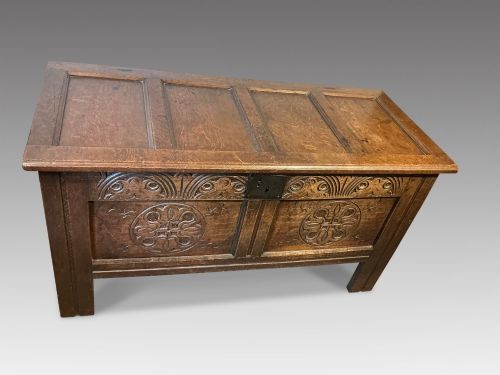
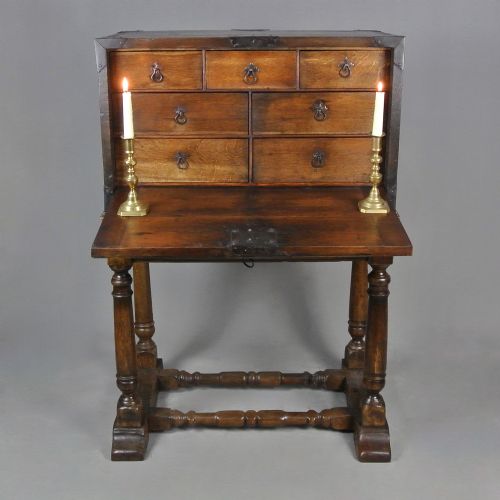
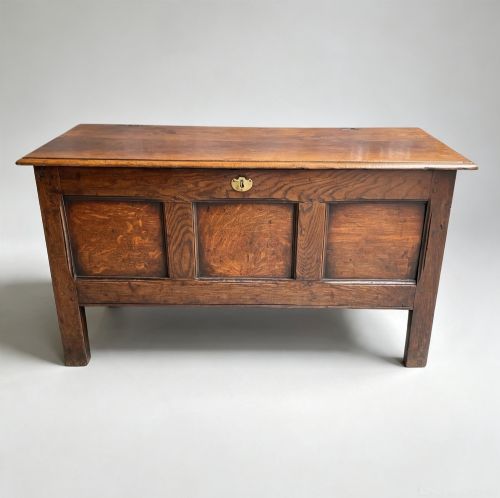
A seventeenth century box encompasses small tabletop receptacles, Bible boxes, desk boxes, and larger coffers or chests designed for secure household storage. Most pieces encountered here stem from the seventeenth century and Jacobean eras, built primarily from English oak with occasional regional variations.
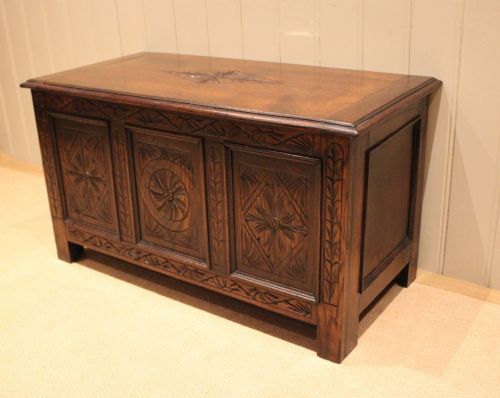
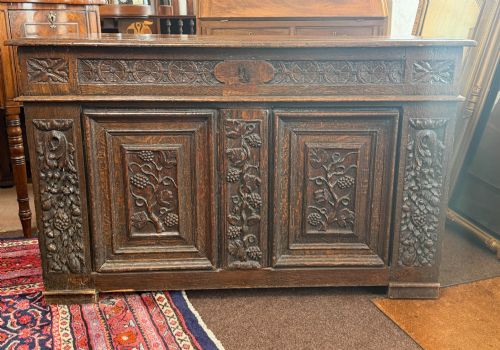
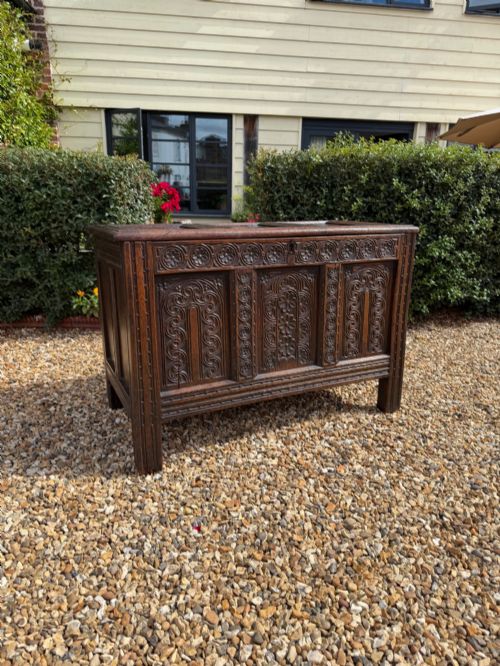
Makers shaped these timber containers for domestic, ecclesiastical, or administrative use, holding documents, textiles, or valuables. Forms range from simple boarded constructions to panelled receptacles featuring carved enrichment, arcading, or linenfold details.
Materials and Construction
Carpenters utilised native oak alongside secondary woods like fruitwood, constructing bodies through joined panels, pegged framing, and boarded joints. Surfaces frequently display hand-carved decoration, incised patterns, or geometric mouldings applied directly to the timber.
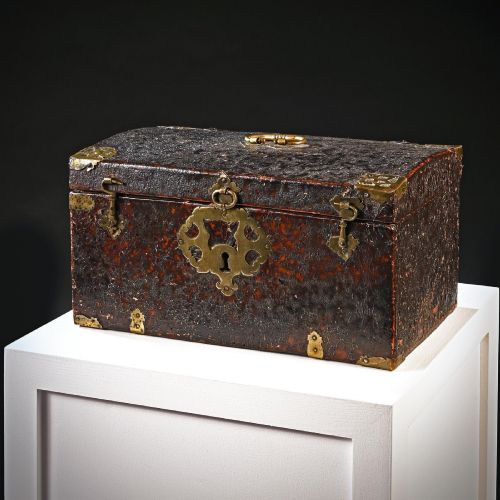
Hardware played a vital functional role, incorporating iron, brass, and steel components such as hinges, strapwork, and complex locking mechanisms. Leather also appears on specific travelling formats, stretched over wooden carcasses and secured with brass studs.
Object forms documented here include bible boxes, desk boxes, strong boxes, and large storage coffers.
Assessing Quality
Quality rests upon the integrity of the original timber, the crispness of the hand-carving, and the survival of primary structural elements. Pieces retaining their original floorboards, hinges, and complex steel locks command greater interest than heavily restored examples.
Proportion and regional character also dictate distinction, as specific regional styles like those from Wales, Dorset, or the North Country display characteristic workmanship. The presence of contemporary ironwork or untouched surface patination separates standard utility items from superior survivals.
Thomas Dennis
The Seventeenth Century Box Glossary
- Coffer
- A large wooden chest used for storing valuables, textiles, or household goods. These heavy receptacles typically feature hinged lids and sturdy boarded or panelled construction.
- Bible Box
- A small tabletop desk box historically used to store sacred texts and writing materials. Many feature sloping lids designed to double as writing surfaces.
- Arcaded
- Decorated with a series of rounded arches supported by pillars, carved directly into wooden panels. This architectural motif appears frequently on finer seventeenth-century case furniture.
- Linenfold
- A style of wood carving that mimics the appearance of folded linen fabric. It appears commonly on panels within domestic furniture of this period.
- Joined Oak
- Furniture construction utilising mortise and tenon joints secured with wooden pegs rather than simple nailed boards. This method provided exceptional strength and stability.
Seventeenth Century Box: Frequently Asked Questions
What were seventeenth century boxes used for?
These containers served multiple household functions, primarily keeping valuable documents, textiles, and domestic items safe from damp and theft. Smaller tabletop versions held Bibles and writing implements, while larger coffers stored household linens and clothing.
Locked compartments provided security for family archives and currency before modern banking became widespread. Their robust construction allowed them to double as occasional seating or tables within the home.
How do I identify a seventeenth century box?
Examine the construction methods for pegged mortise and tenon joints, hand-sawn boards, and evidence of original iron or steel hardware. Tool marks left by pit saws and adzes indicate period manufacture rather than later machine production.
Timber shrinkage, dry patination, and the absence of modern adhesives or screws point toward authenticity. Regional carving styles and traditional joining techniques further confirm the age of the piece.
Where were these boxes made?
Domestic pieces originated largely in English workshops, with distinct regional traits emerging from areas such as Dorset, Wales, and northern counties. Local carpenters utilised readily available native timber like oak and fruitwood.
Certain pieces reflect specific provincial traditions or urban Guild standards, while others show influences from continental styles filtered through regional makers. Each area developed slight variations in moulding profiles and carving motifs.
How should I care for an oak box?
Keep wooden pieces away from direct heat sources and drastic humidity changes to prevent the oak panels from splitting or warping. Maintain stable indoor environments to preserve the natural moisture within the aged timber.
Apply occasional traditional wax polish to nourish the surface without building up synthetic residues. Avoid modern liquid cleaners that can strip the historic patination accumulated over centuries.