
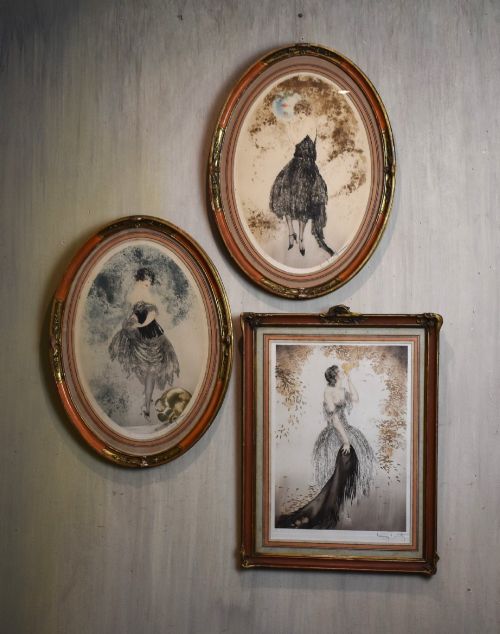
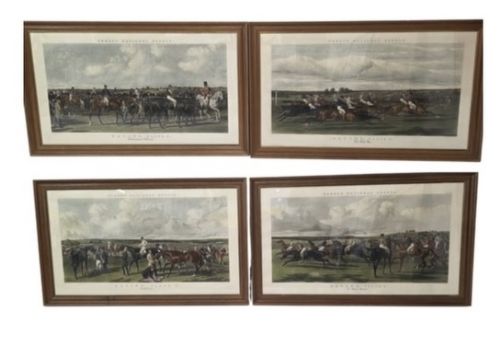

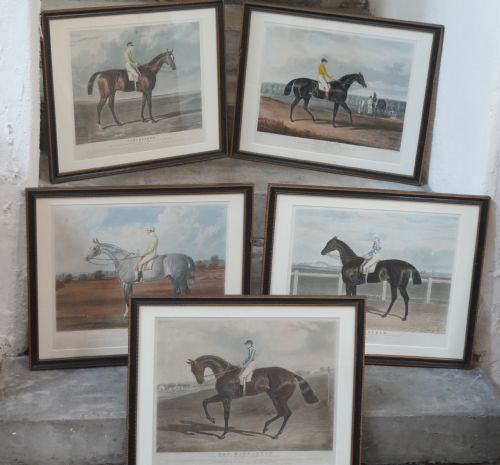


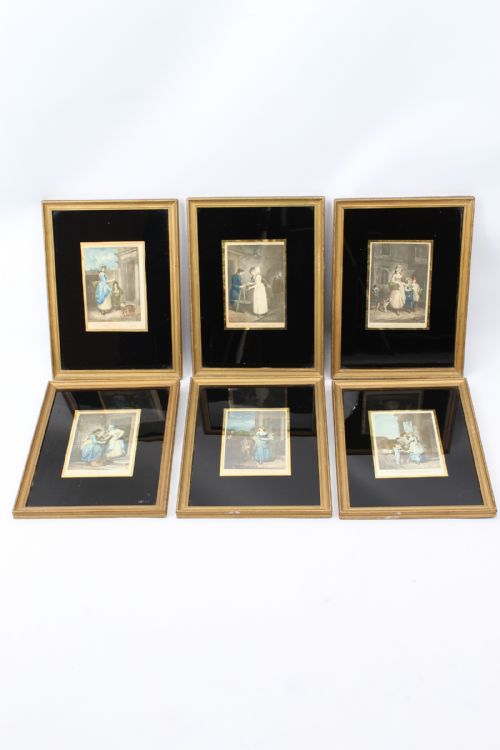

Set of Picture Frames
A proper set of picture frames holds a unified collection together on the wall, balancing the art within them.
Set of Picture Frames
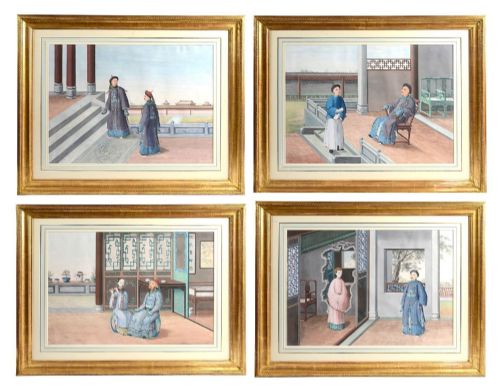
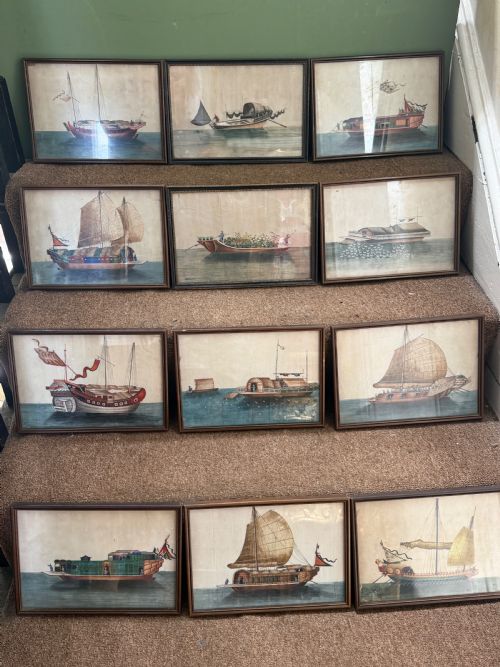
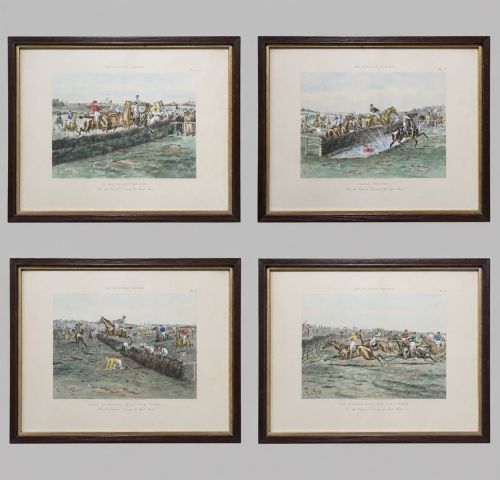
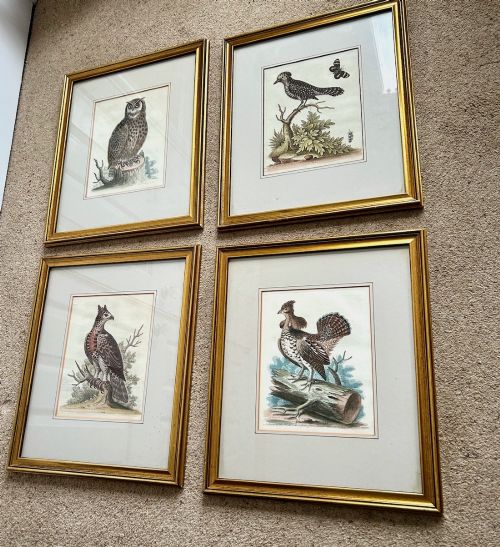
The selections span numerous eras, from eighteenth-century groupings to twentieth-century collections. Surviving examples frequently retain their original artwork, ranging from botanical studies and sporting scenes to architectural prints and Chinese export gouaches.
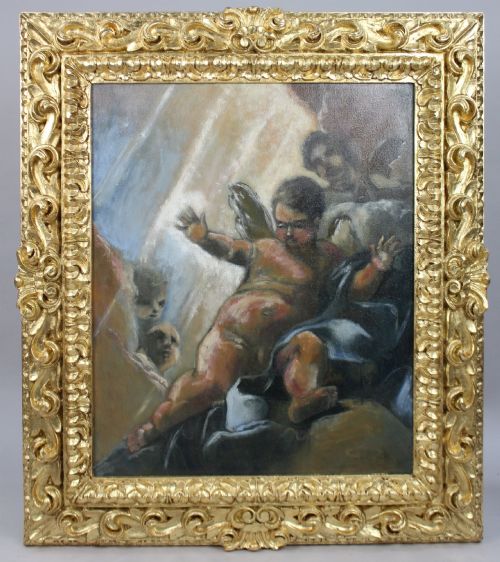
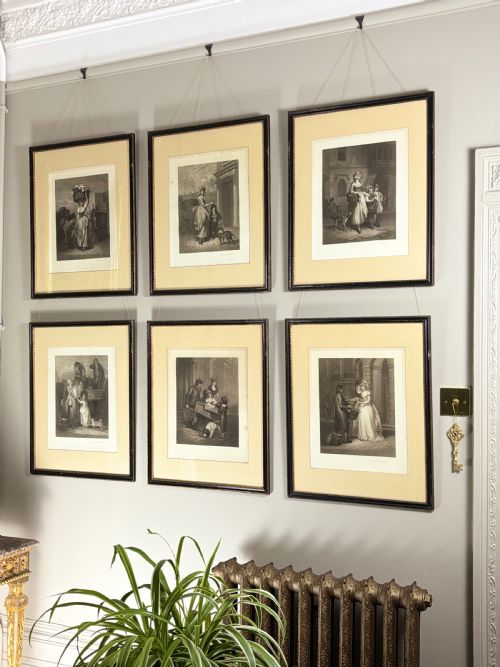
Many groupings feature carved giltwood or simple oak profiles designed to complement the specific artistic style of their contents. These assemblages offer a ready-made gallery wall with inherent harmony in scale, mounting, and material.
Materials and construction
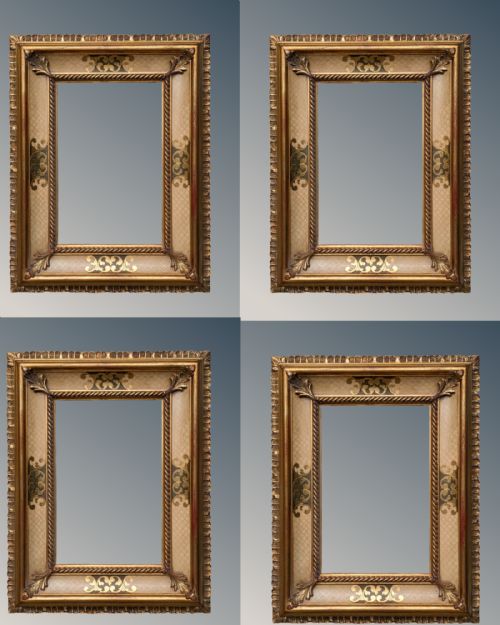
Traditional framing relies heavily on timber, with wood and carved giltwood forming the primary structural elements of the mouldings. Artisans applied gold leaf over prepared grounds to achieve the brilliant metallic surfaces seen on eighteenth and nineteenth-century examples, while oak provided sturdy, plain housings.
Gilt bronze and champleve enamel appear in more decorative, highly finished examples designed for tabletop or intimate wall display. Glass protects the delicate paper works, watercolours, and prints housed within the frames, sealing the contents from atmospheric damage.
Listings feature paper, glass, wood, and gold leaf, spanning the eighteenth, nineteenth, and twentieth centuries.
Markers of distinction
Quality rests upon the crispness of the carving, the integrity of the gilding, and the harmony between the frames and their contents. Superior examples display hand-carved ornamentation rather than moulded composition decoration, showing sharp detail in foliate or neo-classical motifs.
The preservation of original glass, backing boards, and matching hardware elevates a grouping significantly. A cohesive set where every member matches in timber shrinkage, wear pattern, and proportion demonstrates superior workshop production from its period.
George Edwards·Thomas G Appleton·Charles Johnson Payne Snaffles·Louis Icart·William Swainson
The Set of Picture Frames Glossary
- Giltwood
- Timber that has been coated with a thin layer of gold leaf. This finish gives frames a luminous, reflective quality that catches interior candlelight or daylight.
- Engraving
- An intaglio printmaking process where an artist cuts lines into a metal plate with a burin. The resulting impressions offer exceptional line clarity and tonal range.
- Gouache
- An opaque water-based paint featuring pigment bound in glue or similar sizing agents. It yields flat, saturated areas of colour commonly found on historical export paintings.
- Mezzotint
- A printmaking method on copper where the surface is roughened to produce dark tones and scraped to create highlights. This technique allows for subtle gradients and velvety shadows.
- Cartagloria
- An ornate altar frame or central liturgical card holder from the eighteenth century. These pieces often feature elaborate Italian gilt ornamentation.
Set of Picture Frames: Frequently Asked Questions
How do I hang a large set?
Plan the layout on a flat surface before placing any fixings in the wall. Maintain consistent spacing between each piece to preserve the visual rhythm of the grouping.
Ensure the hanging wire or D-rings match the weight of the timber and glass. Use secure wall anchors appropriate for your specific wall construction.
Can I separate the frames?
Separating a matched set diminishes the historical and aesthetic value of the collection. These pieces were gathered or created to function as a single visual unit.
Keeping them together maintains the narrative and balance intended by the original maker or later collector.
Are original glass panes important?
Old glass often exhibits small bubbles, waves, and thickness variations that contribute to the authentic character of an antique piece. Retaining this glass preserves the historical integrity of the framing.
Modern replacement glass lacks this optical texture and alters how light interacts with the artwork beneath.