




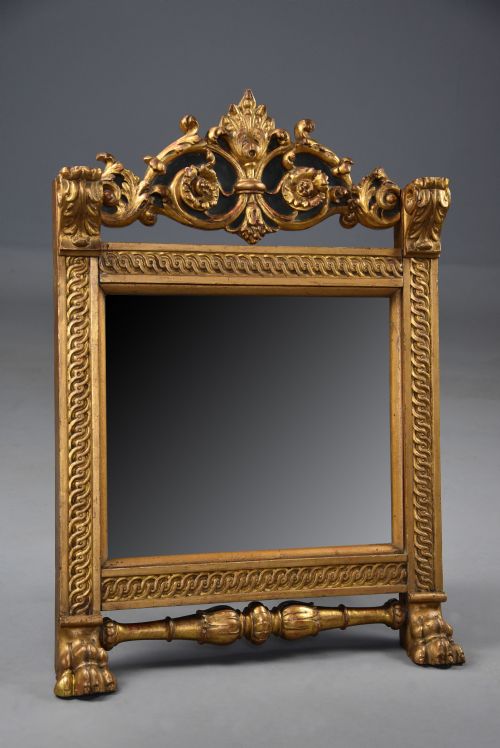



Renaissance Style Frame
A renaissance style frame brings historical depth to a room, enclosing oil paintings and mirrors in carved and gilded wood.
Renaissance Style Frame
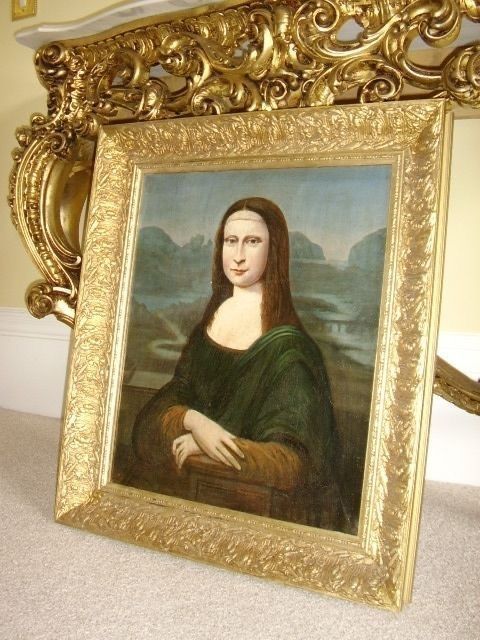
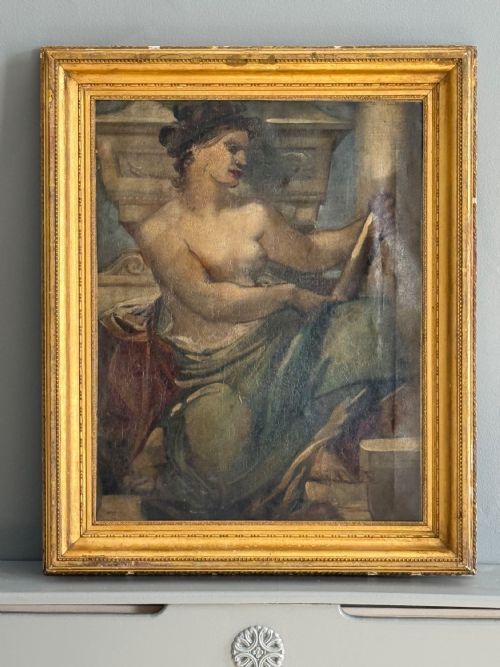
A renaissance style frame houses oil paintings, portraits, and mirrors, drawing on Italian and Northern European precedents from centuries past. Buyers looking at this selection encounter pieces originating predominantly from the nineteenth century alongside older examples, reflecting a persistent nineteenth-century revival of historical aesthetics.
The forms vary from large cassetta frames and easel table mirrors to gilt sets and architectural wall mirrors. These items frequently accompany portraits after masters such as Raphael or Titian, completing an aesthetic rooted in historical revivals.
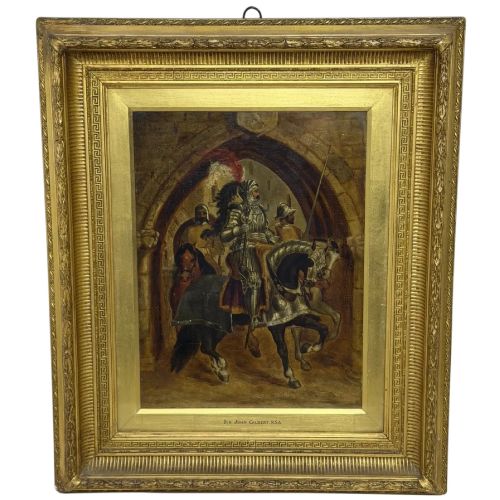
Most entries on this page couple wood construction with surface treatments like gold leaf or gilding. They serve to mount historical genre scenes, religious subjects, and decorative art panels.
How they were made
Maker workshops utilised solid timber foundations, predominantly working with wood such as walnut or oak to construct the structural body of the frame. Carvers shaped the profiles by hand, executing relief work and mouldings directly into the timber base.
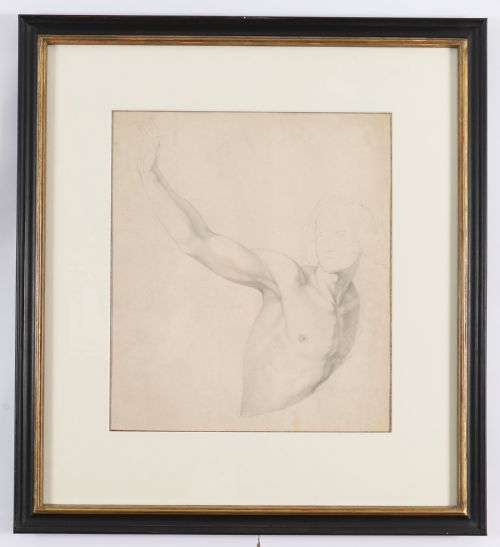
Surface decoration relied on the application of gold leaf or gilt layers over prepared grounds, sometimes combined with ebonised sections or contrasting finishes. Artisans applied oil paint and gold leaf to canvas and panel inserts held within these surrounds.
A walnut X-framed stool awaits anyone wishing to sit like a sixteenth-century Tuscan nobleman.
What varies in quality
The standard of carving determines much of the visual character, separating crisp hand-cut details in wood from softer, moulded composition ornament. Depth of relief and the precision of architectural profiles show the level of artisan skill involved in the construction.
Gilding techniques dictate the richness of the surface, distinguishing genuine gold leaf applications that age with a warm patina from flat metallic paints. The integrity of the underlying wooden structure and the preservation of original gilt layers govern the overall integrity of the piece.
White, Allom And Co·Samson·Icilio Federico Joni
The Renaissance Style Frame Glossary
- Cassetta frame
- A flat-profile picture frame style characterised by a central frieze flanked by raised mouldings, popular during the Italian Renaissance. This form provides a substantial architectural border for oil paintings.
- Giltwood
- Timber that has been coated with a thin layer of gold leaf or gold paint. This material defines the reflective, ornate surfaces seen on classical and revival picture frames.
- Renaissance Revival
- An artistic movement spanning the nineteenth century that drew inspiration from fifteenth and sixteenth-century European design. Objects in this style incorporate classical motifs and traditional construction methods.
- Curule
- A style of X-shaped seating furniture originating from ancient Rome and revived during the Renaissance. These chairs feature intersecting structural legs and often incorporate upholstered elements.
Renaissance Style Frame: Frequently Asked Questions
What is a cassetta frame?
A cassetta frame is a flat-profile picture frame featuring a central decorative frieze bounded by raised outer and inner mouldings. This structural layout originated in Italy during the Renaissance.
Such frames were designed to complement traditional oil paintings by adding architectural weight without overwhelming the canvas. They remain a distinct subcategory within antique framing.
How do I date a renaissance style frame?
Dating relies on examining the underlying timber, the composition of the gesso and gilt layers, and the tool marks left by the carver. Nineteenth-century revival pieces often display machine assistance or different wood preparation compared to sixteenth-century originals.
Secondary indicators include the style of fixings, the backing boards, and the nature of any associated artwork or mirror glass. Comparing the carving depth with documented period examples clarifies the age.
Are these frames meant only for paintings?
While primarily constructed to house oil paintings on canvas or wood panels, these surrounds also enclose wall mirrors and decorative textile panels. The historic formats adapted readily to various wall-mounted items.
Easel table mirrors also utilise these profiles for domestic display on desks and surfaces. The architectural borders suit flat visual media of diverse types.
How should I care for gilded wood?
Gilded wood requires a stable indoor environment away from direct sunlight and excessive moisture fluctuations to protect the delicate gold leaf and gesso layers. Dusting should be done gently with a soft, dry brush.
Avoiding liquid cleaners is essential, as moisture penetrates micro-fissures in the finish. Professional conservation is recommended for any structural repairs or surface consolidation.