



Serpentine Marquetry Desk
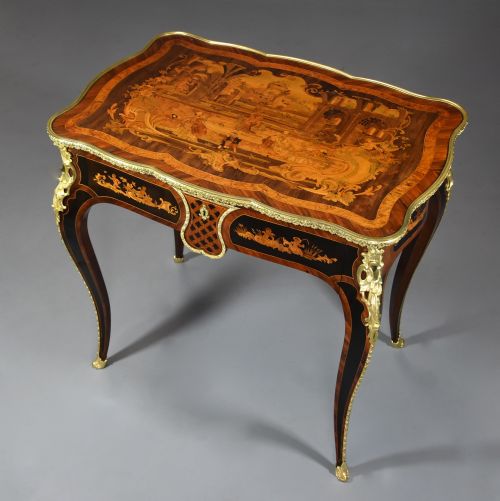
A serpentine marquetry desk combines a curving outline with intricate inlaid wood, offering a functional writing surface designed to anchor a principal room.
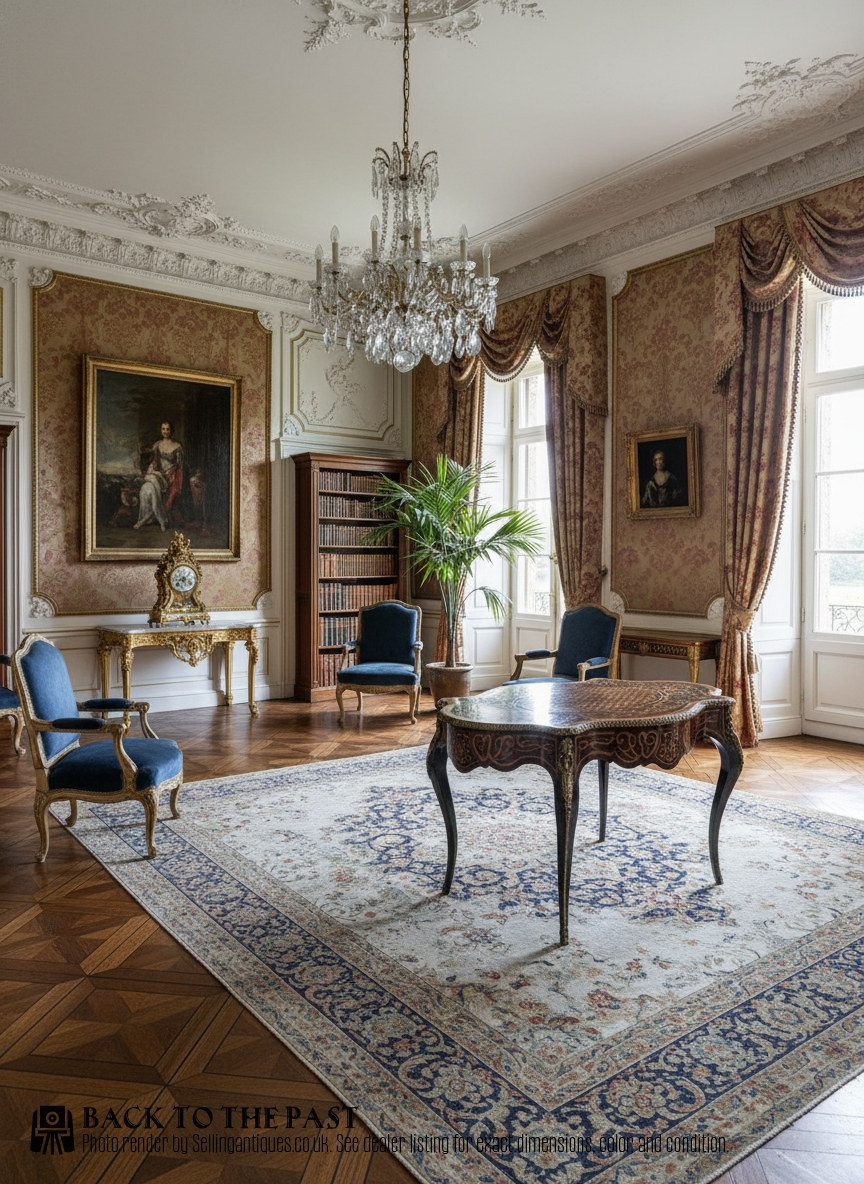
Serpentine Marquetry Desk
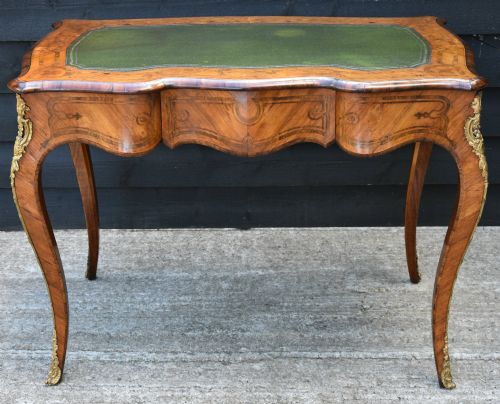
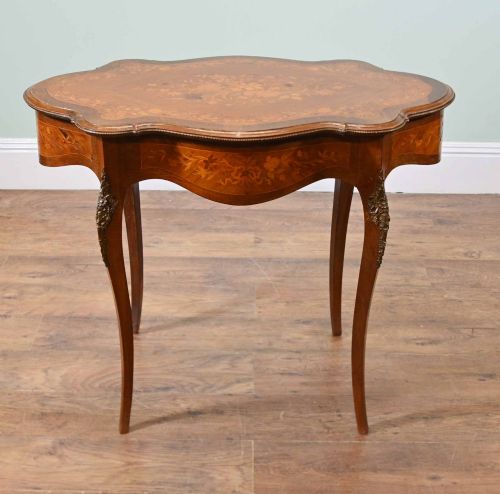
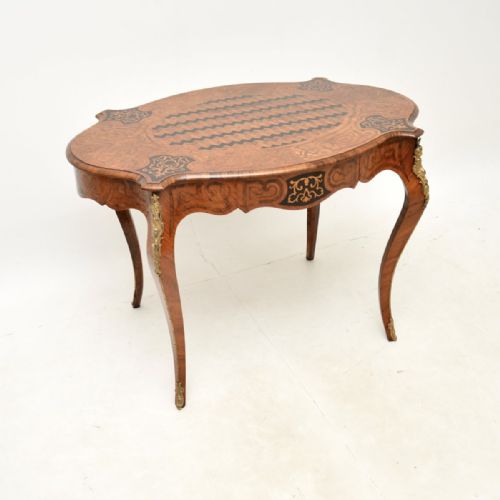
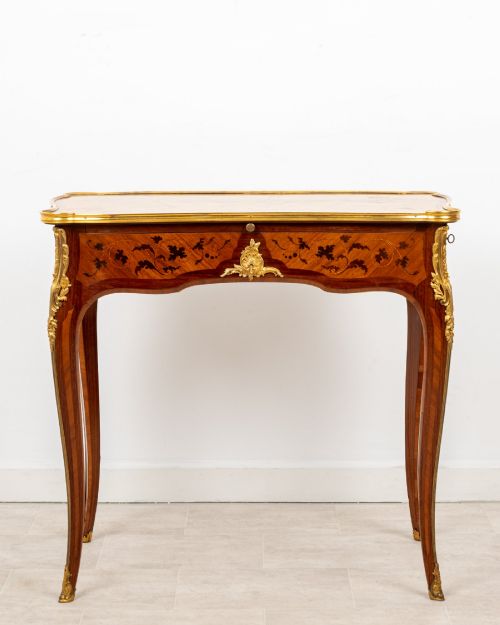
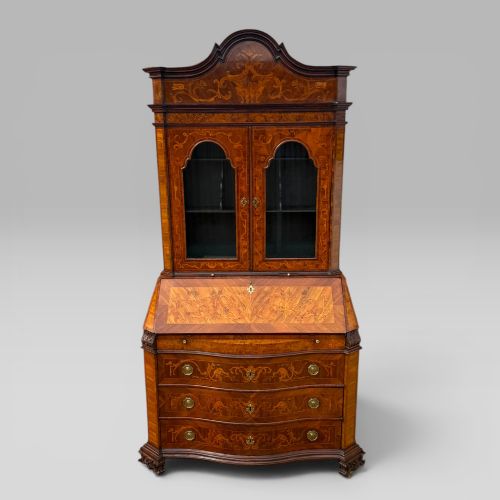
A serpentine marquetry desk presents a distinctive undulating front and sides, paired with complex wood inlay patterns across the writing surface and drawers. These pieces emerge predominantly from nineteenth century French workshops, alongside eighteenth century Italian and English examples.
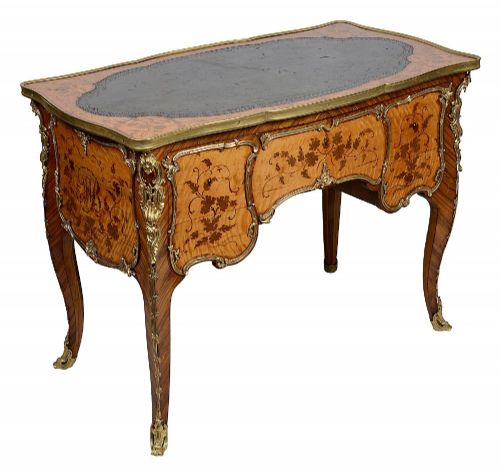
The form encompasses various writing tables, bureau plat desks, and smaller bureau de dame variants. Buyers encounter nineteenth century revival pieces heavily influenced by Louis XV styles alongside earlier walnut and mahogany iterations.
Materials and construction methods
Cabinet makers utilised exotic timber veneers such as kingwood, satinwood, walnut, and tulipwood, laid over robust secondary woods to build up complex marquetry scenes. These decorative surfaces frequently incorporate contrasting brass, ormolu mounts, and fine metal inlay.
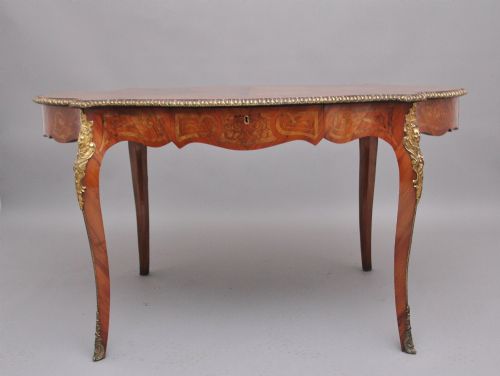
Structural integrity relies on traditional joinery methods, allowing wood panels to expand and contract naturally. Ormolu mounts and cast brass elements are fitted to corners and legs to protect edges and accentuate the undulating curves.
Listings feature walnut, kingwood, mahogany, and satinwood combined with brass and ormolu mounts across nineteenth and eighteenth century periods.
Distinguishing quality across examples
Quality rests in the precision of the veneer cutting and the natural grain variation within the marquetry motifs. Finer pieces demonstrate seamless transitions along curved serpentine joints where the inlay aligns perfectly across moving drawer fronts.
The crispness of ormolu mounts and the weight of internal drawer construction signal workshop standards. Superior examples maintain original patination on the timber surfaces without obscuring the delicate contrast of the inlaid woods.
Durand·Maison Millet
The Serpentine Marquetry Desk Glossary
- Serpentine
- A furniture outline featuring a curving front with a convex centre flanked by concave ends. This contour requires precise woodworking to shape both the solid frames and the applied veneers.
- Marquetry
- A decorative technique arranging thin slices of varied wood veneers into pictorial or geometric designs. Craftsmen assemble these elements on a paper backing before pressing them onto the furniture carcase.
- Bureau Plat
- A freestanding writing table fitted with drawers across the frieze, lacking a superstructure. These desks typically feature leather inset writing surfaces bordered by inlaid wood and bronze mounts.
- Ormolu
- Gilt bronze ornamentation applied to furniture edges, feet, and keyhole escutcheons. The material provides a bright metallic contrast against dark kingwood and walnut surfaces.
Serpentine Marquetry Desk: Frequently Asked Questions
What is a serpentine marquetry desk?
A serpentine marquetry desk is a writing table defined by a curving, undulating outline and detailed wood veneer inlay across the top and drawers.
These pieces often follow French revival designs from the nineteenth century, combining utility with decorative craftsmanship.
How do I care for inlaid wood?
Inlaid wood surfaces require stable indoor humidity and protection from direct sunlight to prevent the delicate veneers from lifting or fading.
Regular dusting with a dry cloth preserves the finish without introducing moisture that can damage older adhesives.
Are these desks suitable for daily writing?
These desks function well for daily use provided the writing surface is protected with a suitable pad when writing extensively.
Many period examples include original leather writing inserts designed specifically to take the wear of everyday correspondence.
How do I identify a nineteenth century piece?
Nineteenth century examples often display revival styles such as Louis XV or Napoleon III, utilising kingwood, satinwood, and ormolu mounts.
Construction details, timber choices, and secondary wood types help differentiate these later interpretations from eighteenth century originals.