


French Freestanding Table
A french freestanding table brings versatile elegance to a room, designed to be viewed from every side rather than pushed against a wall.
French Freestanding Table
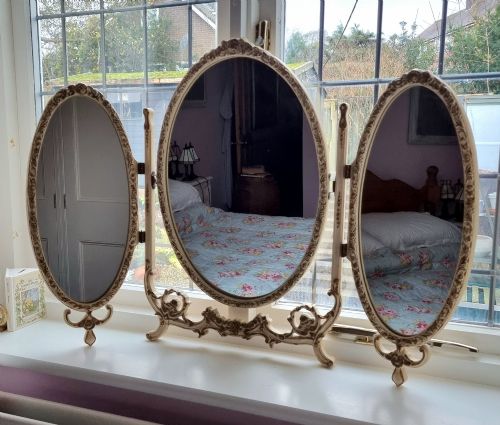
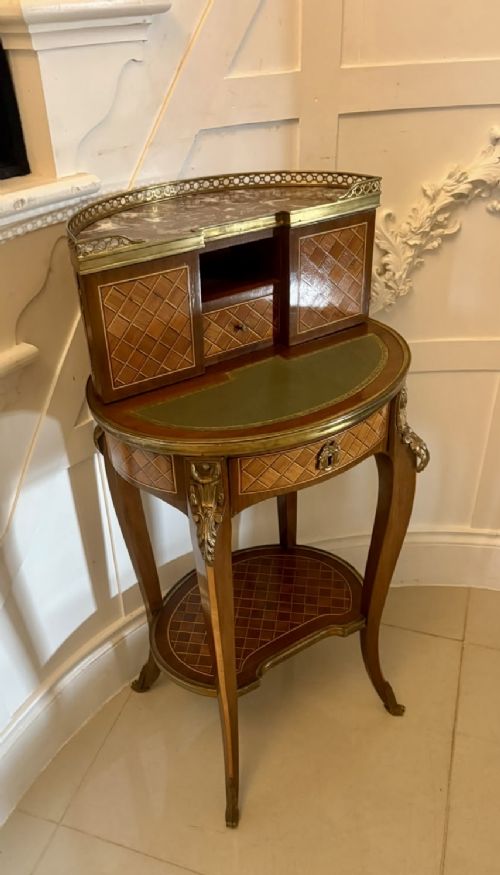
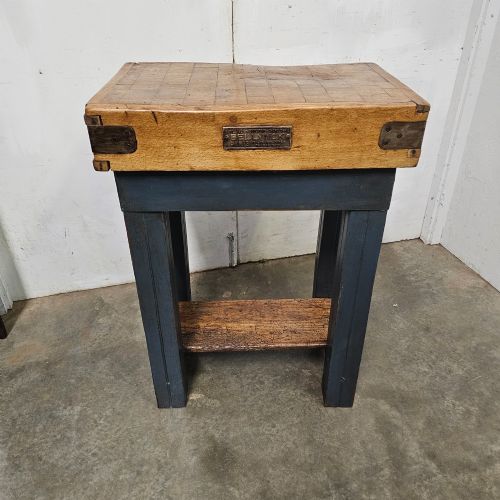
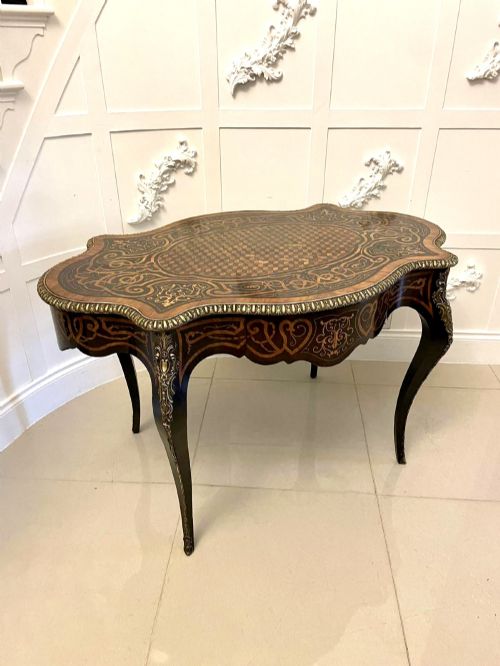
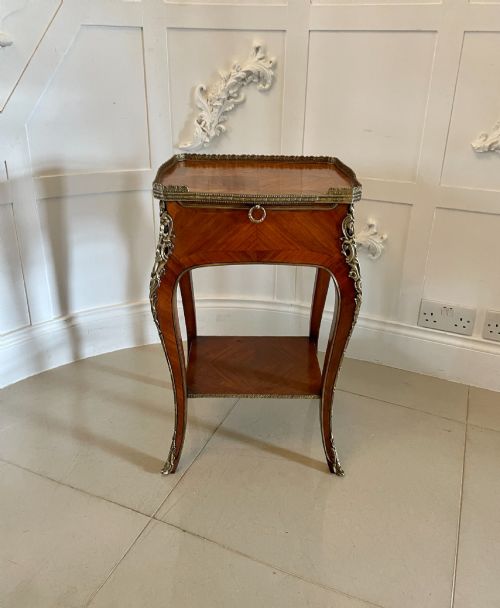
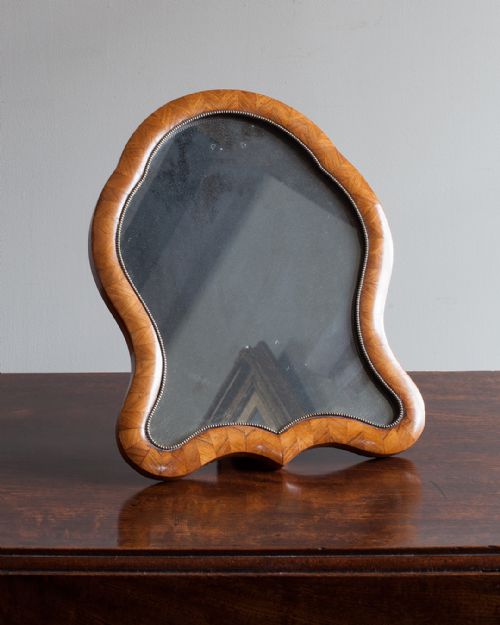
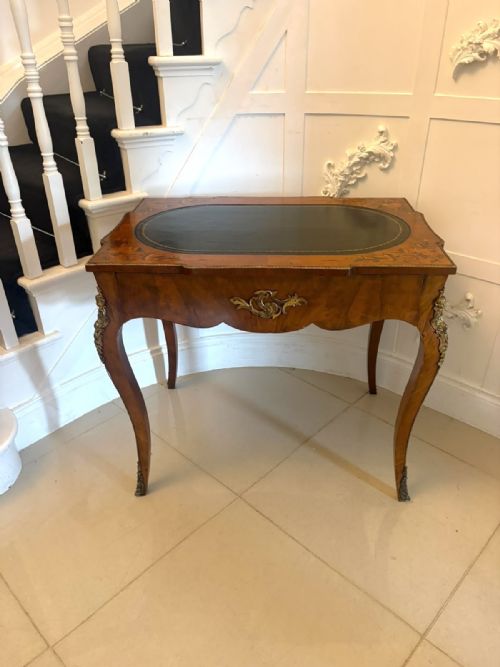
A french freestanding table encompasses a variety of forms designed to stand away from walls, from grand centre and lamp tables to writing desks and butchers blocks. The examples appearing here span from the eighteenth century through the nineteenth century and into the nineteen-thirties.
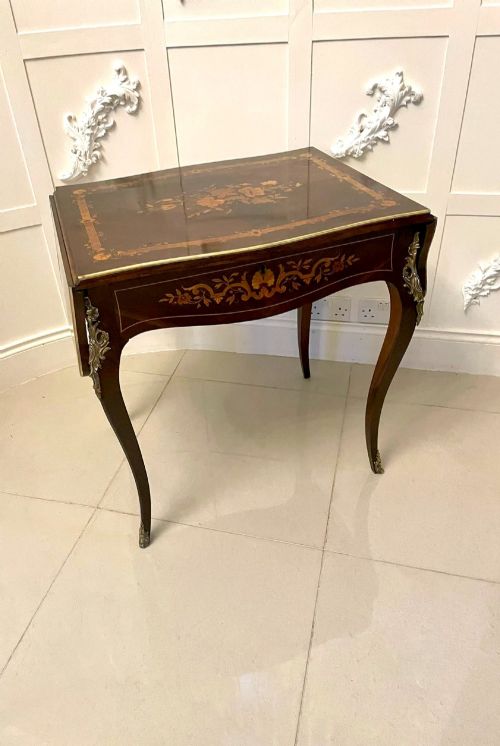
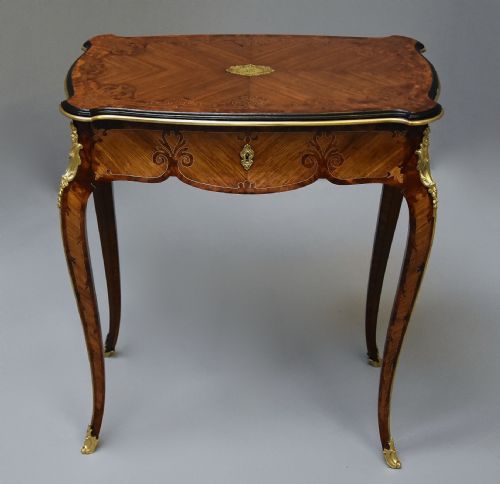
Centre tables and writing desks emerge frequently in kingwood, walnut, and rosewood, often displaying marquetry or parquetry. Side tables and occasional pieces adopt Louis XV revival styles alongside industrial and provincial influences.
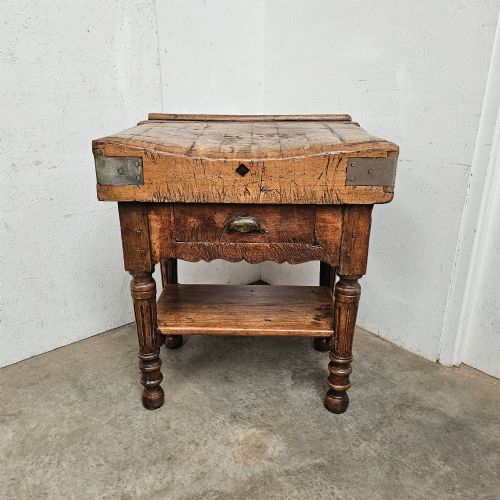
Practical domestic items also appear under this grouping, including butchers blocks in beech and small decorative stands. These diverse objects share the characteristic of finished all-round construction, allowing placement in the middle of a room.
Materials and construction
Cabinetmakers utilised dense timbers such as kingwood, walnut, and rosewood as foundational bases for intricate marquetry and parquetry patterns. Beech serves in utilitarian forms like butchers blocks, while mahogany and burr walnut provide richer cabinet finishes.
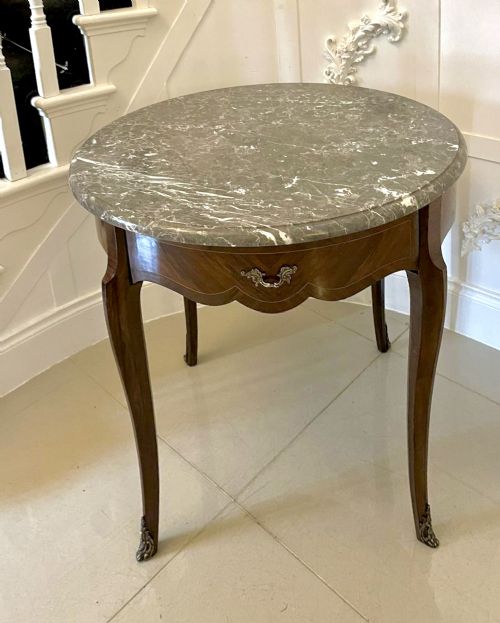
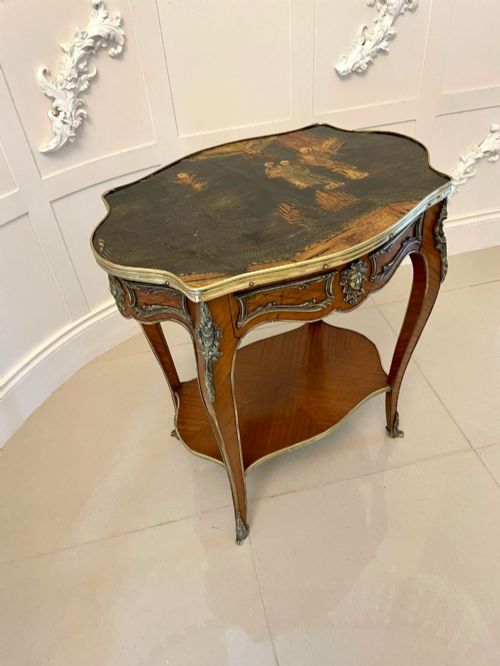
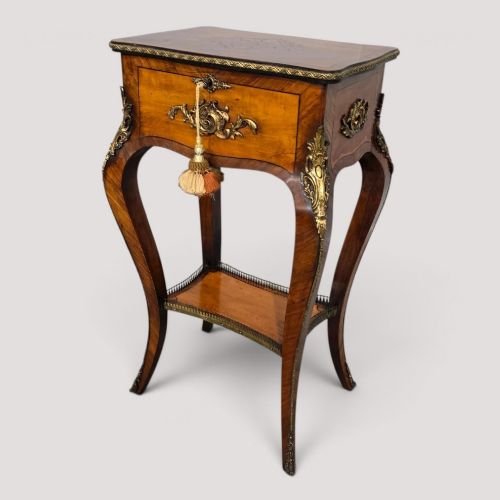
Ormolu mounts and brass details accent the woodwork, particularly on pieces influenced by Louis XV and Rococo revivals. Marble tops appear on select tables and bedside cabinets, providing durable surfaces that contrast with polished wooden frames.
French Freestanding Table Retail Price Guide 2026
Typical asking prices for french freestanding table among the pieces listed under this phrase on Sellingantiques today, from the lower quarter to the upper quarter. They describe what is for sale here now, not the wider market.
Several heavy butchers blocks on sturdy stands wait alongside delicate kingwood desks and rosewood cabinets.
Craftsmanship and detail
The sophistication of the timber veneers and the precision of the marquetry inlay distinguish superior examples from simpler ones. Hand-chased ormolu mounts with crisp detail separate finer cabinets and tables from mass-produced or later replacements.
Structural complexity, such as sophisticated opening mechanisms on occasional tables, indicates higher workshop standards. The integration of finished backs and uniform polish across all four sides dictates whether a piece succeeds truly as a freestanding object.
The French Freestanding Table Glossary
- Freestanding table
- An item finished on all sides intended to sit away from a wall. This design ensures that every angle displays the same level of decorative detail.
- Marquetry
- Decorative veneer patterns formed by fitted pieces of wood, shell, or ivory. Craftsmen apply these designs to table tops and drawer fronts.
- Parquetry
- Geometric wood mosaic patterns used for flooring and furniture surfaces. Squares and triangles create repeating diagonal designs.
- Ormolu
- Gilded bronze used for decorative mounts and feet. Found frequently on furniture inspired by French revivals.
- Bureau plat
- A type of freestanding writing desk featuring a flat top with a leather insert. These desks typically have drawers along the frieze and finished backs.
French Freestanding Table: Frequently Asked Questions
What is a french freestanding table used for?
These pieces serve multiple functions across a home, acting as central display surfaces, writing desks, or serving tables. Their finished backs allow them to float in the middle of a room rather than line a wall.
Smaller variants function effectively as lamp tables or occasional surfaces beside seating. Larger centre tables anchor a room layout, providing a surface that is accessible from all sides.
How do I distinguish revival styles from original periods?
Revival pieces often combine construction methods from their actual manufacture date with decorative motifs borrowed from earlier monarchs like Louis XV. Examining secondary timbers and joinery helps clarify the true age.
Many tables date to the nineteenth century while adopting eighteenth-century design vocabulary. Notice the tool marks and hardware to separate nineteenth-century interpretations from original period items.
Where should I place a centre table?
Position a centre table in the middle of a room where its finished sides and marquetry top remain visible. They work well beneath hanging light fixtures or as focal points in large hallways.
Ensure adequate clearance around the piece so people can walk past comfortably. This placement highlights the all-round design intent of the maker.
How do I care for wood and marble tops?
Clean wooden surfaces with a soft, dry cloth and avoid excessive moisture or direct sunlight that might fade veneers. Maintain stable room humidity to protect intricate marquetry and parquetry.
Marble surfaces require gentle wiping with mild soap and water to prevent staining. Avoid acidic cleaners which can etch the polished stone.