




French Serpentine Desk
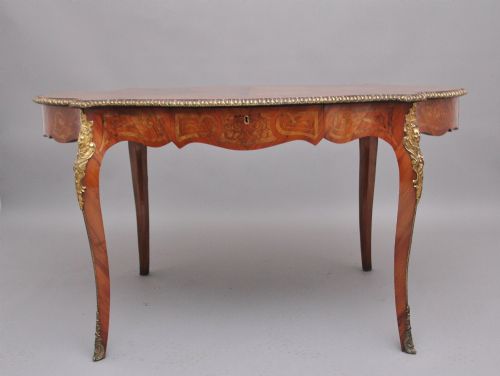
A french serpentine desk brings fluid, undulating curves and rich continental woods into a room with undeniable presence.
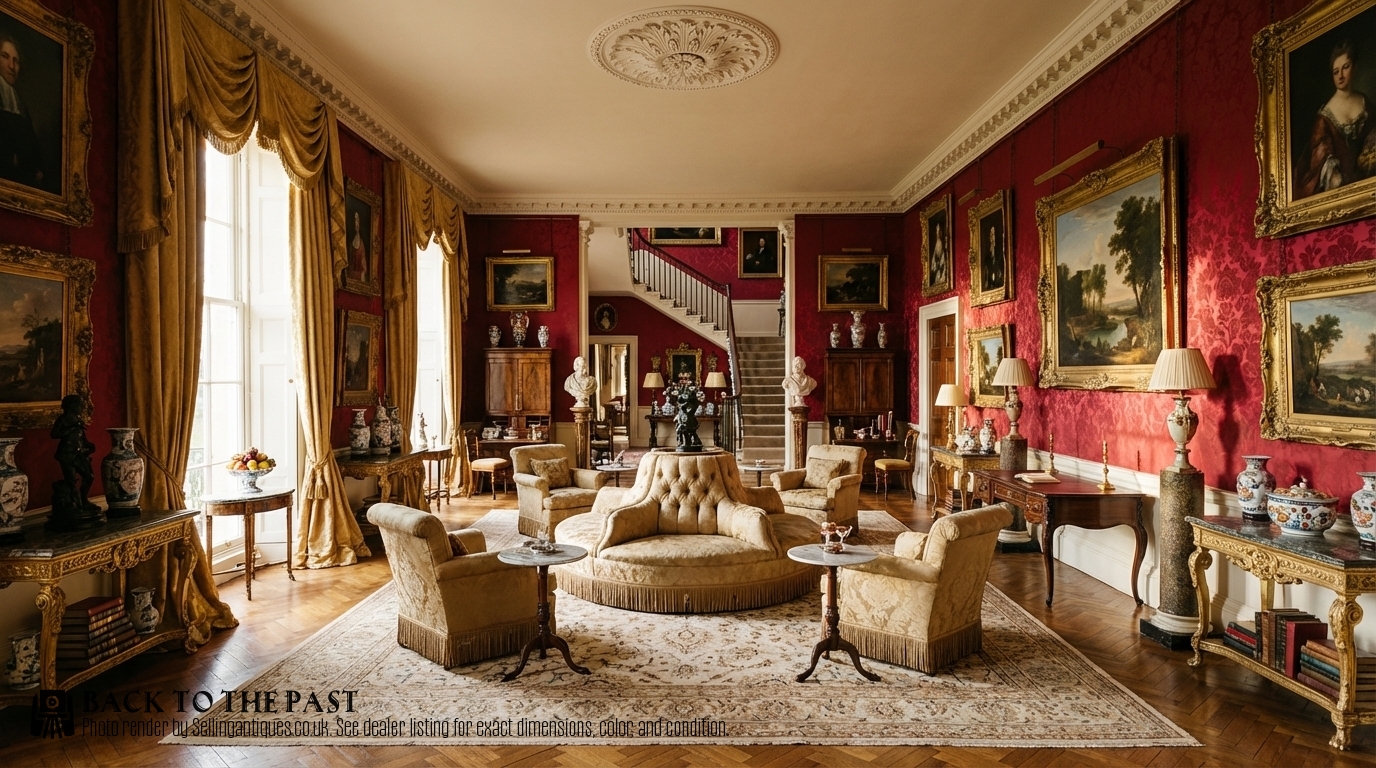
French Serpentine Desk
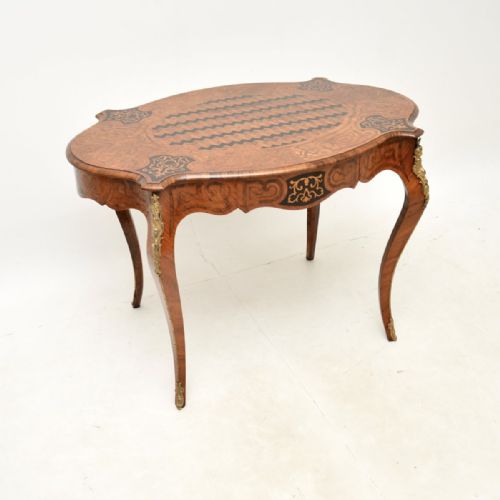
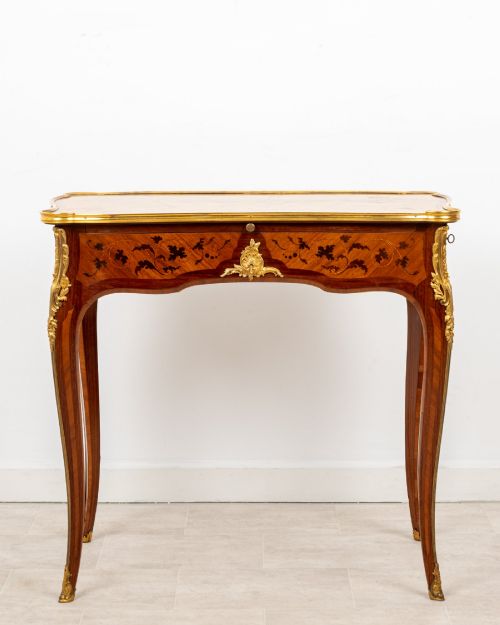
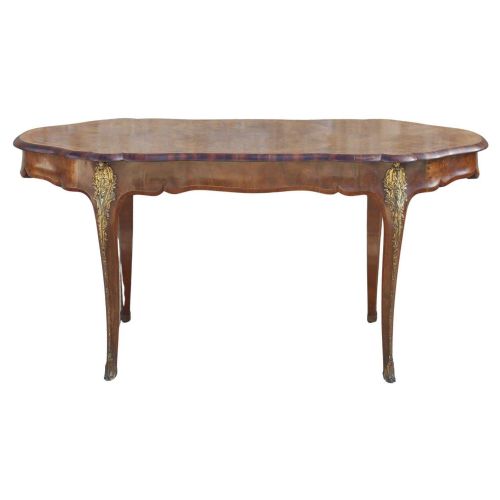
A french serpentine desk displays a sinuous, undulating outline across the front and frequently the sides, drawing on continental design traditions. Buyers looking for this form encounter writing desks, bureau plats, and occasional writing tables shaped with distinct rhythmic curves.
The pieces on this page span the eighteenth and nineteenth centuries, with nineteenth-century revivals of Louis XV styles appearing most frequently. These later interpretations capture the lighter, asymmetrical forms of earlier periods through confident joinery and varied timber selections.
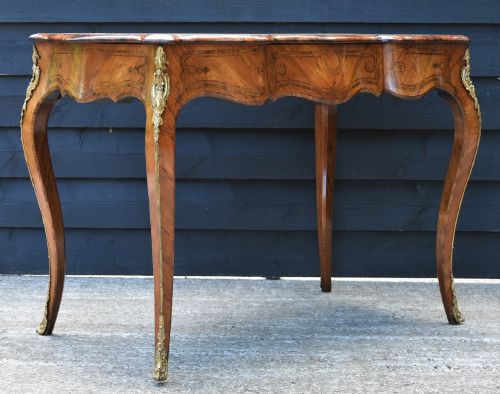
Cabinet makers designed these tables to stand freely in the centre of a room rather than pushed against a wall, finishing the back surfaces with equal care. Alongside dedicated writing desks, related centre tables and side tables share the same characteristic curved profile.
Materials and construction
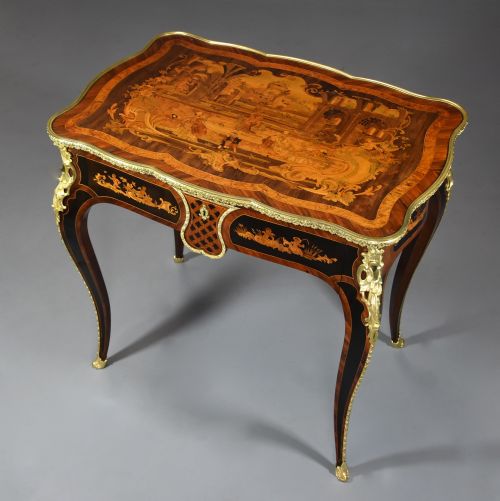
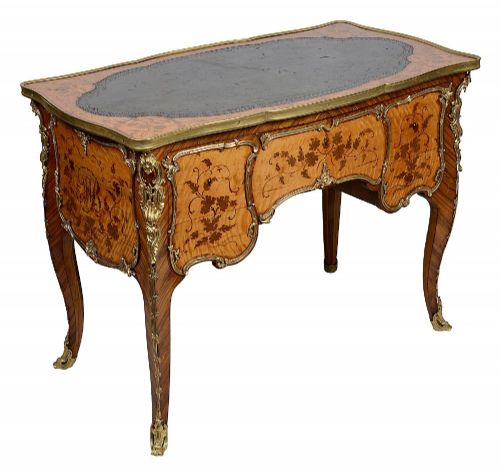
Craftsmen built the carcases of these desks using solid structural timbers like walnut, mahogany, and rosewood, applying decorative veneers such as kingwood and burr walnut over the surfaces. Marquetry and parquetry patterns arranged in geometric or floral motifs further enriched the wooden expanses.
Cast ormolu and gilt bronze mounts define the corners, aprons, and handles, following the contours of the serpentine woodwork precisely. Brass and silver inlays also appear, adding linear contrast to dark ebonised or polished timber grounds.
Listings feature nineteenth-century burr walnut, kingwood, and mahogany shaped with traditional serpentine fronts and ormolu mounts.
Distinguishing quality
The standard of a piece rests upon the fluidity of the serpentine curve and the precision of the timber matching. Superior examples display grain patterns that flow seamlessly around the undulating angles without awkward interruptions.
The crispness of the cast ormolu mounts and the finesse of the marquetry cutting separate workshop standards. Higher grade pieces integrate bronze mounts that sit flush against the timber, matching the exact contours of the shaped carcase.
Durand·Maison Millet·Zweiner·Duverdrey and Bloquel
The French Serpentine Desk Glossary
- Serpentine
- A shaped furniture front or top characterised by a sweeping concave centre flanked by convex ends. This rhythmic contour requires skilled woodworking to maintain symmetry.
- Bureau Plat
- A freestanding writing table fitted with drawers across the frieze. These tables traditionally stood in the middle of a room for official correspondence.
- Ormolu
- Gilt bronze mounts applied to furniture for decorative accent. The technique involves applying a mercury and gold amalgam to cast bronze.
- Marquetry
- Decorative veneer work forming pictures or patterns using various tinted woods. Artisans cut thin sheets of timber and fit them together like a puzzle.
- Cabriole leg
- A furniture leg that curves outward at the knee and tapers inward toward the foot. This form mimics animal limbs and typifies revival styles.
French Serpentine Desk: Frequently Asked Questions
What is a bureau plat?
A bureau plat is a flat-topped writing table featuring a finished back so it can stand in the middle of a room rather than against a wall. These tables typically include one or more drawers built into the frieze beneath the writing surface.
Craftsmen often lined the top with leather or tooled writing surfaces to provide a durable workspace for correspondence. Their finished appearance made them central display pieces in nineteenth-century studies and salons.
How do I spot Louis XV style?
Louis XV style furniture relies on asymmetrical curves, naturalistic floral marquetry, and sweeping serpentine outlines. The absence of straight lines defines this aesthetic, visible in the flow of the cabriole legs and shaped aprons.
Revival pieces from the nineteenth century adopted these earlier motifs with considerable technical skill. Ormolu mounts on these later interpretations generally follow the organic curves of the wood closely.
Where should I place a centre table?
Centre tables are designed to be viewed from all sides because cabinet makers finished the rear panels with the same attention as the front. Placing one in the middle of a room or a large hallway allows the serpentine shape and ormolu mounts to be seen fully.
These surfaces serve as display areas for decorative objects, lamps, or writing materials. Their finished backs ensure they maintain visual interest regardless of viewing angles.
How do I care for inlaid wood?
Inlaid wood surfaces require stable room environments away from direct sunlight and strong heat sources. Excessive temperature changes cause timbers to shrink or expand, which can loosen delicate veneers and brass stringing.
Applying a traditional beeswax polish helps nourish the wood and maintain its lustre over time. Gentle dusting with a soft cloth prevents abrasive particles from scratching the polished finish.