

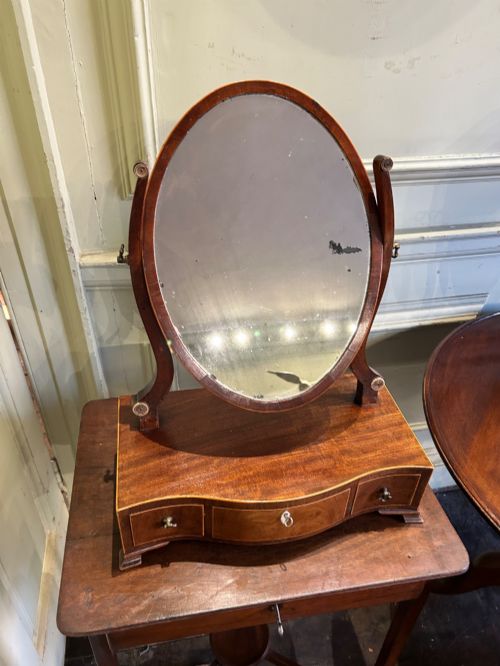
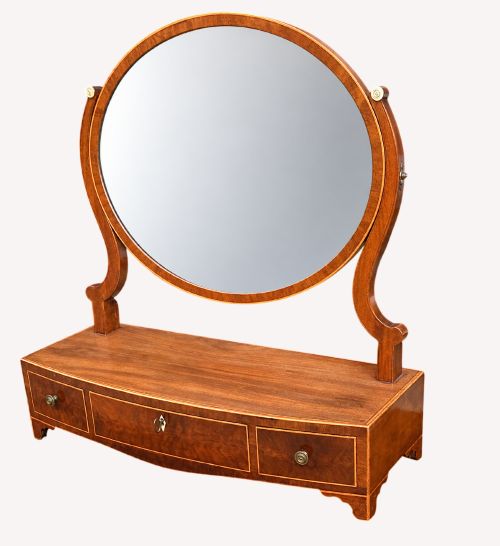
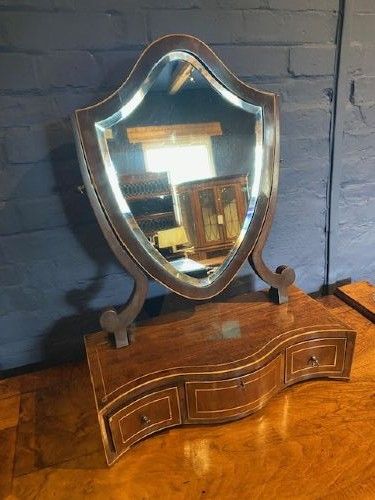
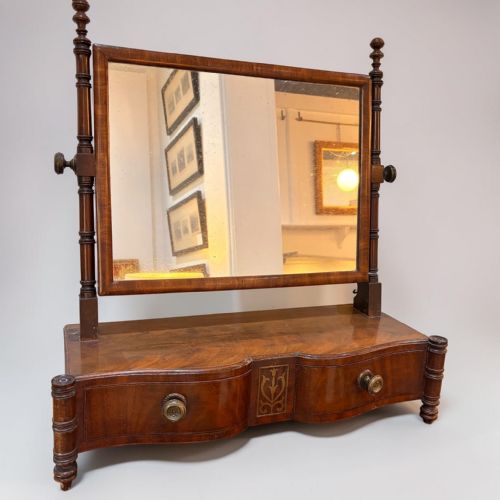




Serpentine Mahogany Toilet Glass
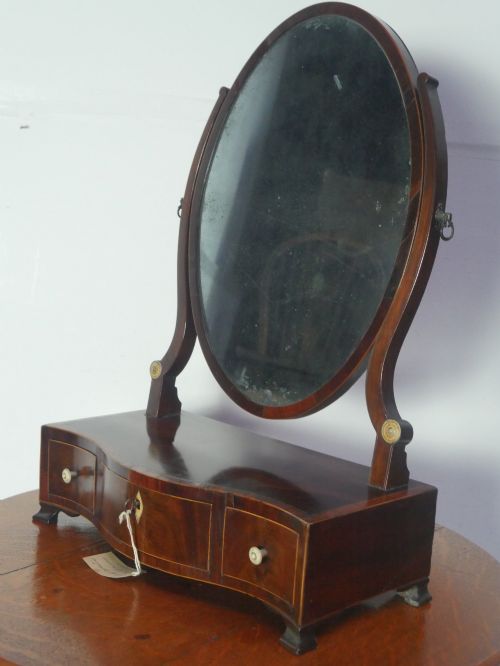
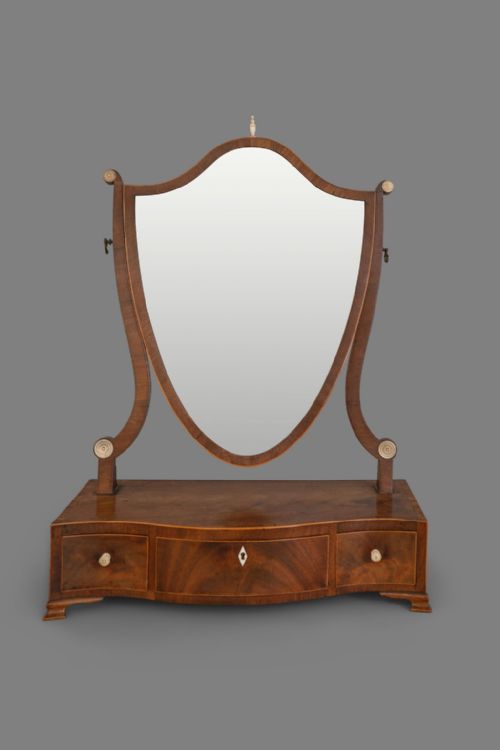
These serpentine mahogany toilet glasses are table mirrors built for grooming, offering a practical glass set above a serpentine base with drawers.
Serpentine Mahogany Toilet Glass
When you search for a serpentine mahogany toilet glass, you find a dressing mirror designed to sit atop a chest or table, bringing a polished reflective surface and small storage drawers to a room. Most examples on this page date from the eighteenth and nineteenth centuries, spanning Georgian and Victorian periods.
Makers produced these mirrors in various styles including Sheraton, George II, George III, and Regency, resulting in both rectangular and oval glass plates. They served as essential bedroom furnishings for daily grooming before full-length mirrors became common.
How they were made
Cabinet makers built the frames and shaped bases using solid mahogany, often selecting timber with rich grain patterns such as flame mahogany. They constructed the serpentine fronts by cutting curved profiles into the solid wood or applying shaped drawer fronts to the carcase.
The mirrors utilise original or replacement mirror glass held within adjustable frames mounted on brass pivots. Decorative details frequently include boxwood inlay, satinwood stringing, and small bone escutcheons around the drawer keyholes.
Serpentine Mahogany Toilet Glass Retail Price Guide 2026
Typical asking prices for serpentine mahogany toilet glass among the pieces listed under this phrase on Sellingantiques today, from the lower quarter to the upper quarter. They describe what is for sale here now, not the wider market.
Some drawers are so shallow they could only ever hide a love letter or a stray hairpin.
What varies in quality
Quality in a toilet glass rests upon the precision of the serpentine curve and the thickness of the mahogany used in the base. Superior pieces display crisp drawer dovetailing and well-proportioned mirror uprights that support the glass without sagging.
The choice of secondary timbers and the subtlety of boxwood or satinwood inlay also distinguish finer examples from standard workshop production. Original brass hardware and undamaged mirror glass contribute further to a piece's standing.
The Serpentine Mahogany Toilet Glass Glossary
- Serpentine
- A curved shape featuring a convex centre flanked by concave sides. This undulating profile defines the drawer fronts on these specific toilet glasses.
- Toilet Glass
- A period term for a dressing table mirror or swing mirror. These items sat upon furniture surfaces rather than standing on the floor.
- Swing Mirror
- A mirror plate mounted on pivots between two upright posts, allowing the user to tilt the angle of reflection. They form the upper section of a toilet glass.
- Satinwood Inlay
- Contrasting light-coloured timber embedded into the mahogany surface for decorative effect. It appears frequently in Sheraton style pieces.
- Shield Glass Plate
- An oval or shield-shaped mirror glass popular during the late eighteenth century. It softens the geometric lines of the rectangular base.
Serpentine Mahogany Toilet Glass: Frequently Asked Questions
What is a serpentine mahogany toilet glass?
It is a table-top dressing mirror featuring a distinctive undulating front curve and a small set of drawers in the base.
These pieces were designed for bedrooms to assist with grooming and personal care.
How were they used historically?
Placed upon chests of drawers or dressing tables, they provided a portable reflective surface for shaving and styling.
The small drawers beneath held cosmetics, pins, and personal valuables.
How do I date a Georgian mirror?
Dating relies on timber selection, construction methods such as hand-cut dovetails, and stylistic markers like inlay and brass hardware.
Georgian and Victorian examples show distinct shifts in proportion and decorative detail.
Are the mirror plates original?
Many older mirrors have replacement glass due to the fragile nature of silvered mirror plates over centuries of use.
Original glass often exhibits light foxing or subtle imperfections while replacements appear clearer.
How do I care for antique mahogany?
Keep the wood away from direct sunlight and sudden temperature changes to prevent warping or fading.
Regular dusting with a dry cloth helps maintain the polish without damaging the surface.