





Swing Frame Mirror
These swing frame mirror pieces offer practical elegance, designed to tilt for personal grooming.
Swing Frame Mirror
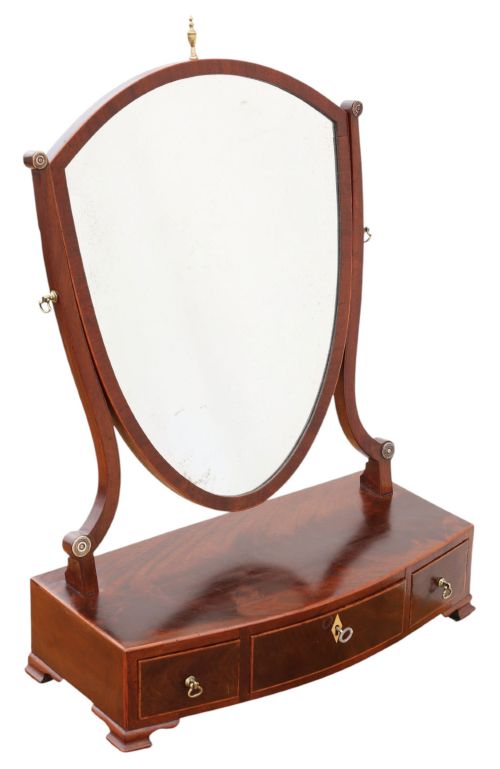
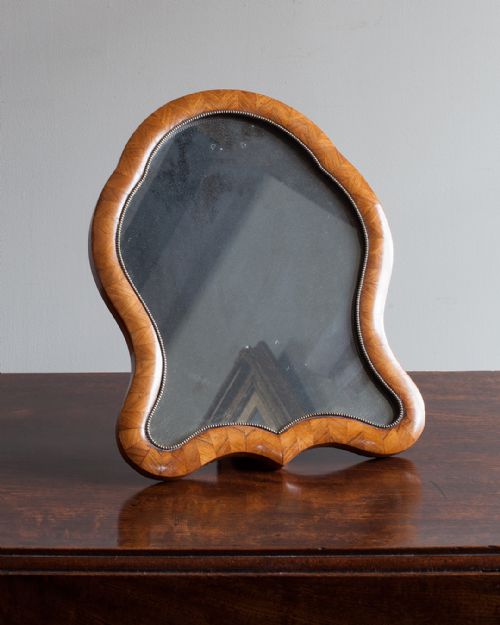
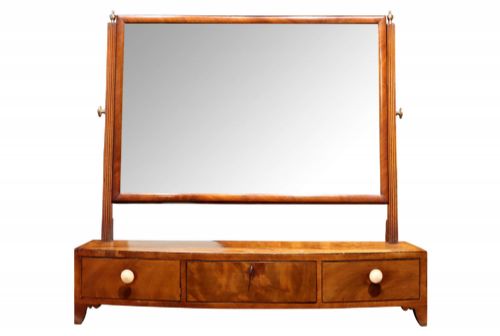
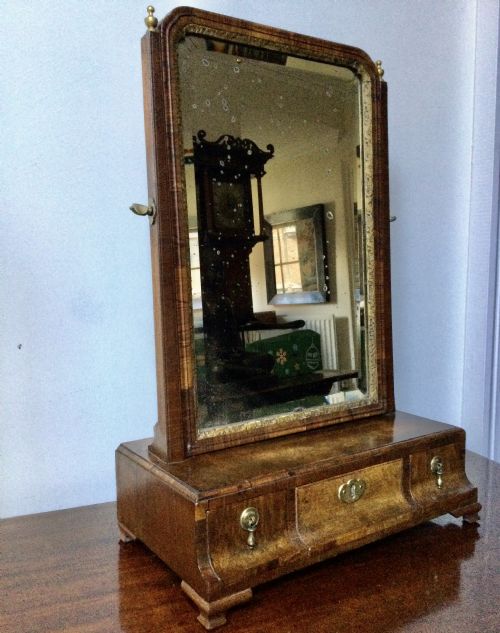
A swing frame mirror comprises a glass plate held within a pivoting frame, supported by uprights on a base, designed for tabletops, dressing tables, or freestanding floor use.
You are most likely to meet mahogany examples from the Georgian and Victorian periods, often featuring small drawers integrated into the base block.
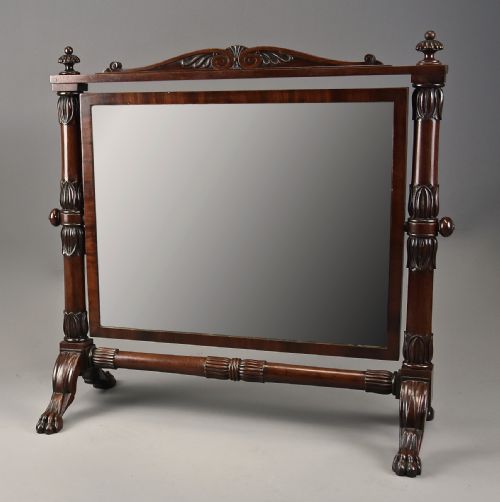
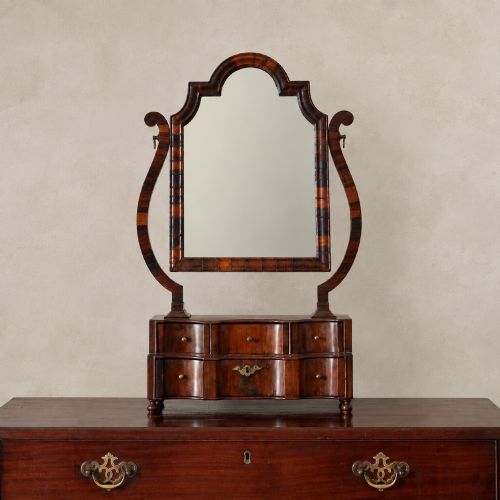
The selection ranges from compact Queen Anne walnut toilet mirrors to large Regency and Victorian cheval mirrors designed to reflect the entire figure.
How they were made
Cabinetmakers constructed these frames using dense timbers like mahogany, walnut, kingwood, and laburnum, frequently incorporating decorative wood inlay.
The pivoting mechanism relies on side screw pins or pivots inserted into the upright supports, allowing the glass frame to tilt securely to various angles.
Swing Frame Mirror Retail Price Guide 2026
Typical asking prices for swing frame mirror among the pieces listed under this phrase on Sellingantiques today, from the lower quarter to the upper quarter. They describe what is for sale here now, not the wider market.
Even the tiniest tabletop mirror retains its original tilting pin, ready to tilt through the centuries.
What varies in quality
The sophistication of the timber grain, such as flame mahogany or figured walnut, distinguishes standard examples from more ambitious pieces.
Refinement in the base construction, including shaped serpentine fronts and well-fitted drawer boxes, marks the standard of the maker's workshop.
P & MA Nicholson
The Swing Frame Mirror Glossary
- Cheval mirror
- A large freestanding swing mirror supported on four legs that allows the viewer to see their full length. These stand independently on the floor rather than resting on a table.
- Toilet mirror
- A smaller tabletop swing mirror historically placed on a dressing table or washstand. These often incorporate small drawers in the base for trinkets.
- Shield dressing table mirror
- A mirror featuring a glass plate shaped like a heraldic shield, mounted on uprights above a box base. This form is particularly characteristic of the Georgian period.
- Skeleton toilet mirror
- An example constructed with an open, minimalist frame that dispenses with the standard solid box base. This lighter form appears in Georgian designs.
- Bowfront
- A curved convex front to the base of the mirror, commonly found on Georgian and Victorian mahogany pieces. This shaping requires skilled woodworking.
Swing Frame Mirror: Frequently Asked Questions
What is a swing frame mirror?
A swing frame mirror is a pivoting glass plate mounted within a wooden frame, supported by two uprights on a base or floor stand.
They were designed primarily for personal grooming and dressing rooms, allowing the user to adjust the angle of reflection.
Where were they placed?
Smaller versions sat upon dressing tables, chests of drawers, or tabletops as toilet mirrors.
Larger freestanding variants, known as cheval mirrors, stood directly on the floor in bedrooms and dressing areas.
How do I maintain the pivot mechanism?
The pivoting action depends on side screws or metal pins that pass through the uprights into the mirror frame.
Checking these fixings gently ensures the frame holds its tilt without placing undue stress on the surrounding wood.