
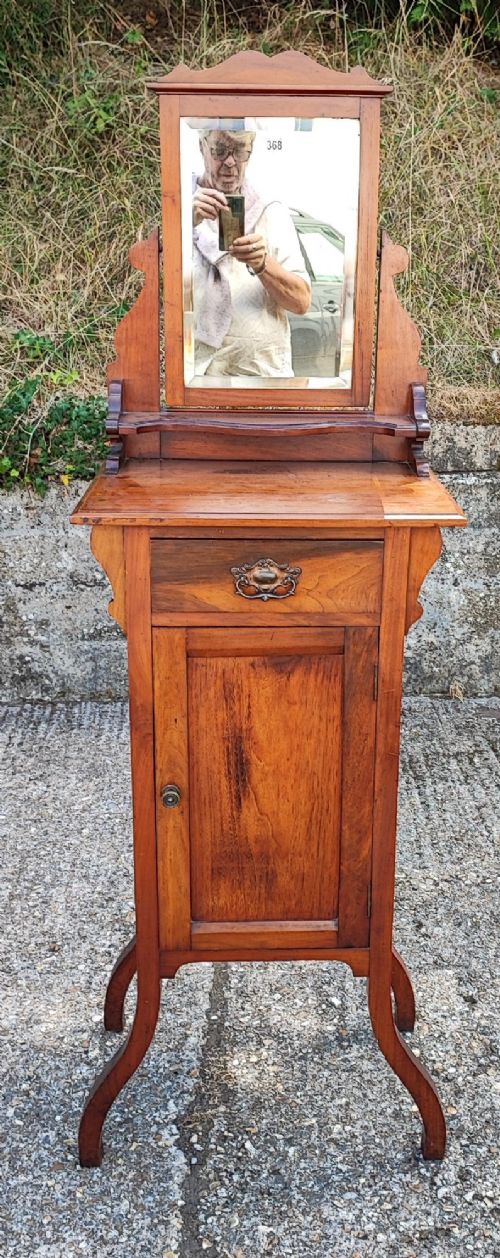
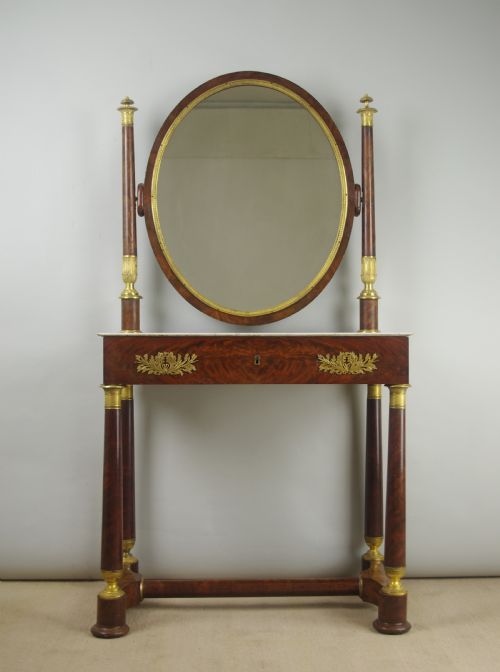
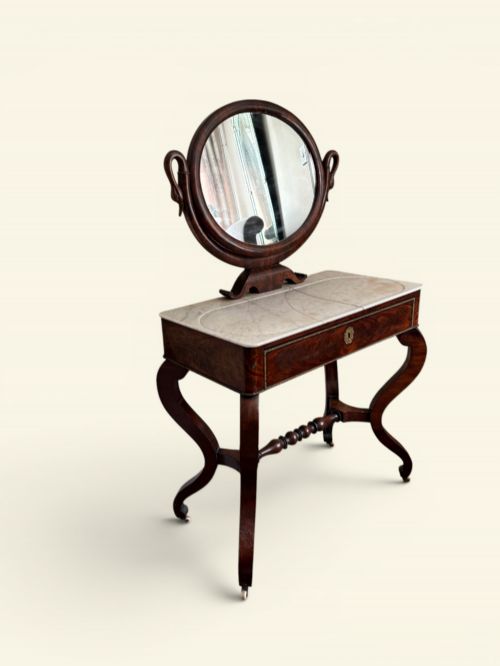
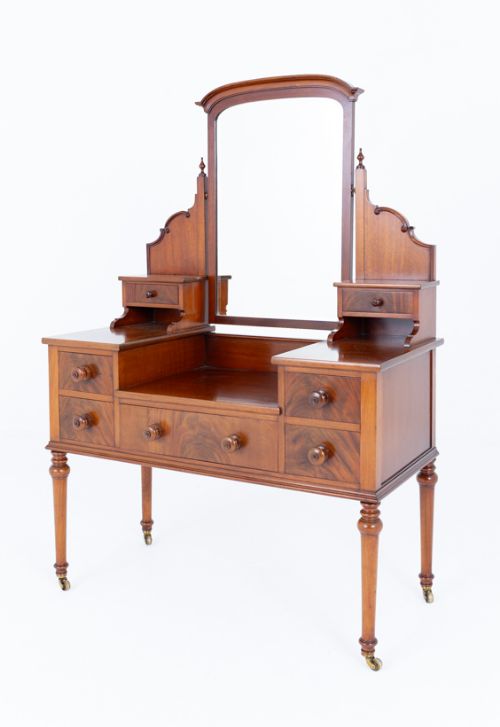
Mahogany Swivel Dressing Mirror
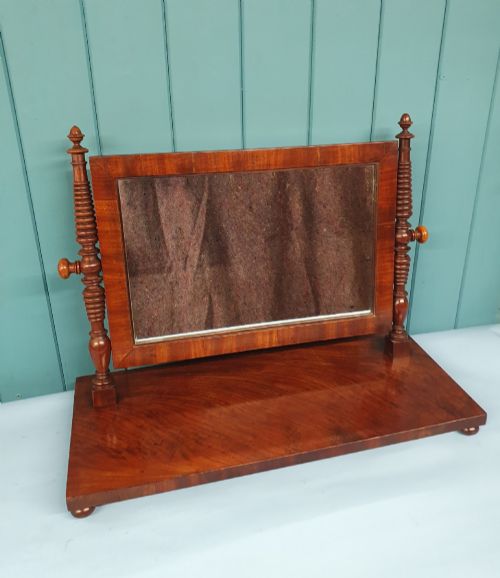
A mahogany swivel dressing mirror stands ready on a chest or floor, offering a clear reflection framed in rich timber.
Mahogany Swivel Dressing Mirror
A mahogany swivel dressing mirror is a functional furnishing designed for grooming, combining a pivoting glass plate with a stable wooden frame or base. These pieces appear across multiple periods, including the Georgian, Regency, Victorian, and Edwardian eras.
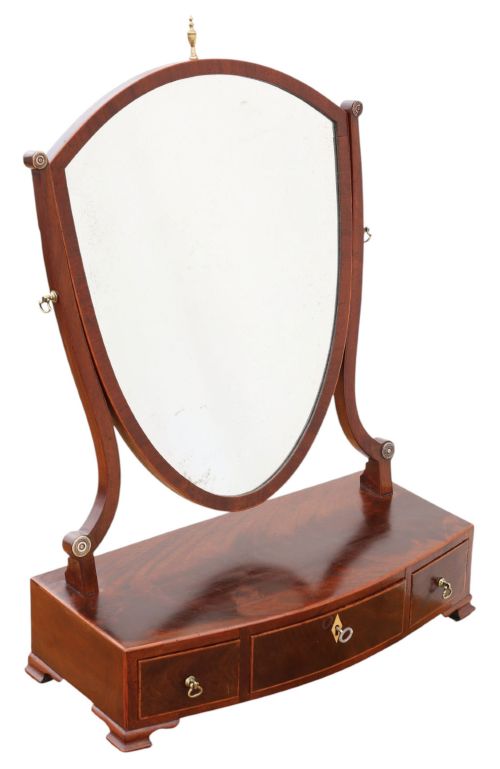
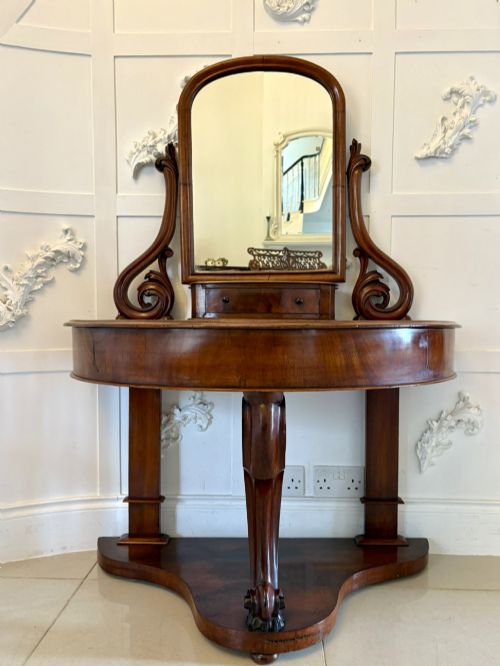
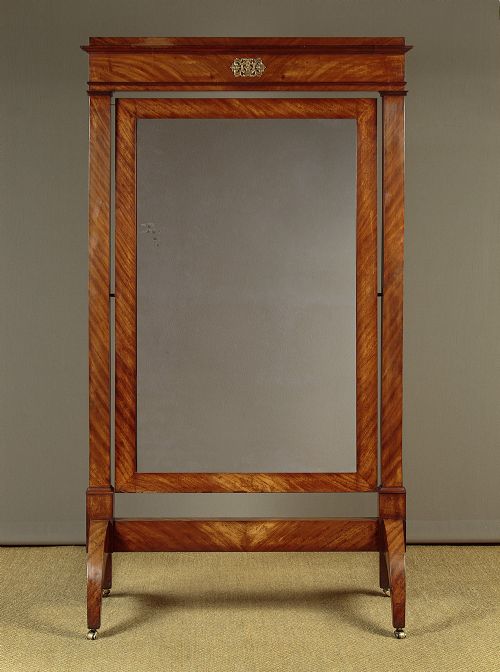
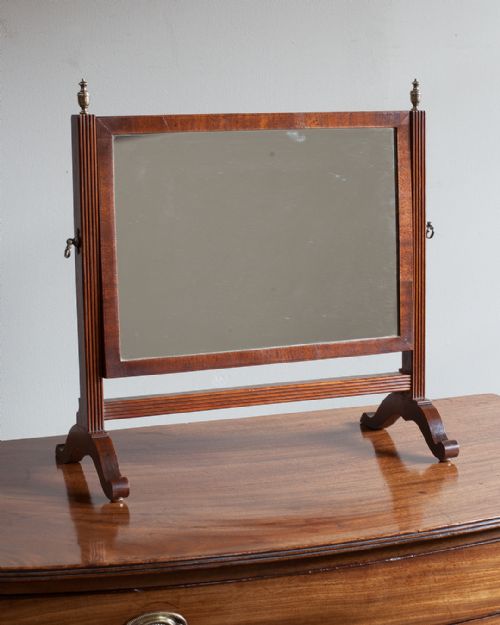
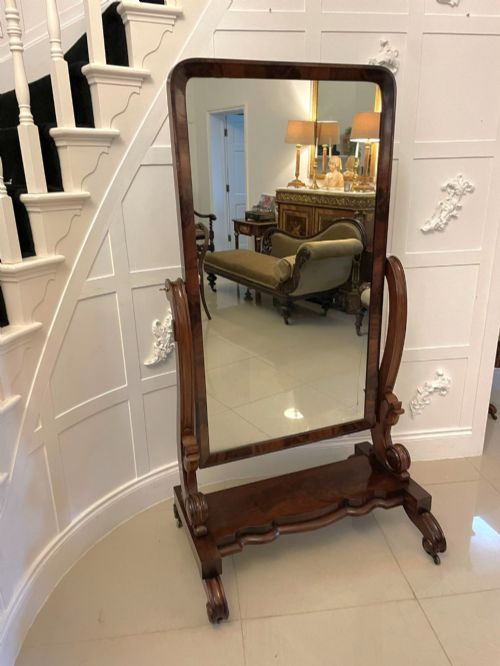
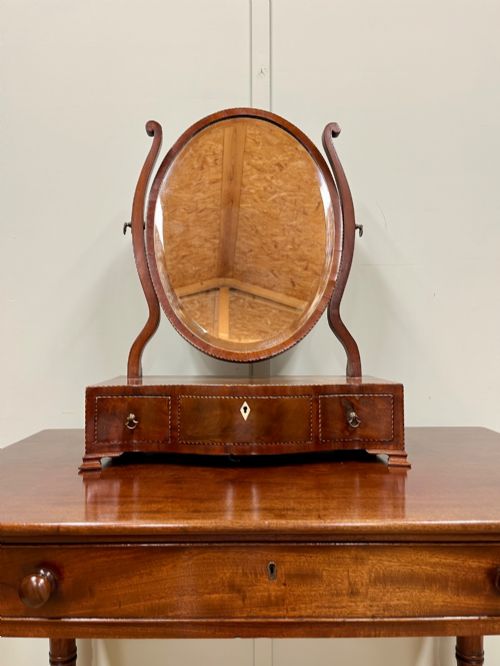
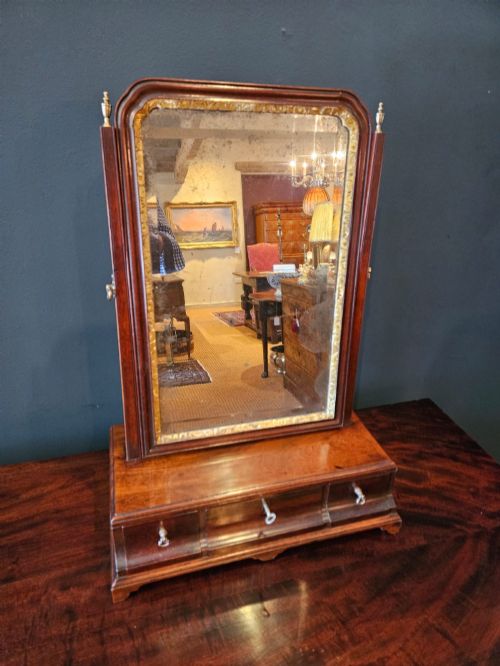
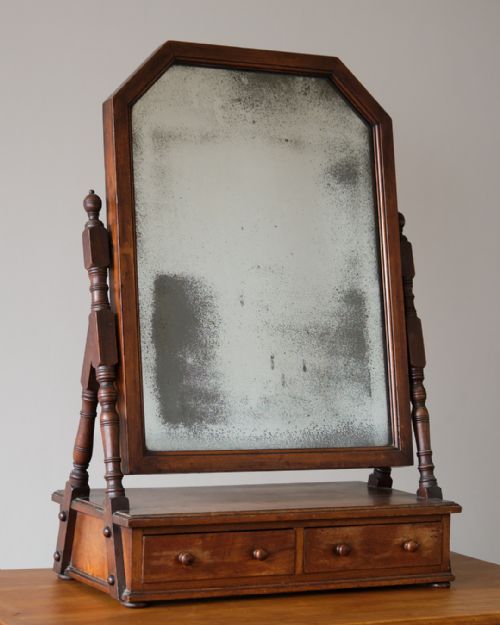
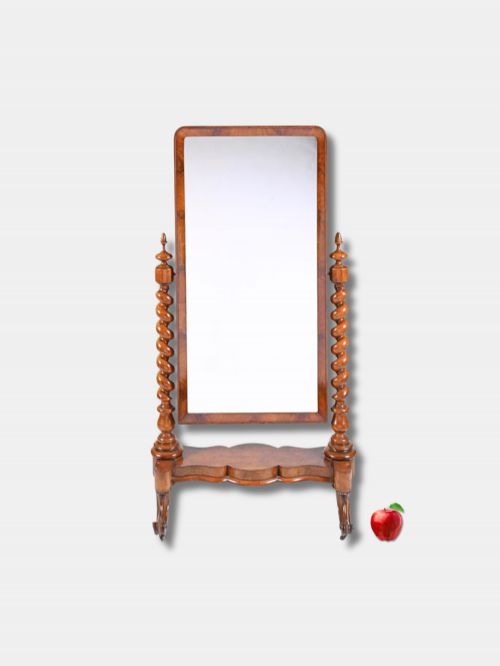
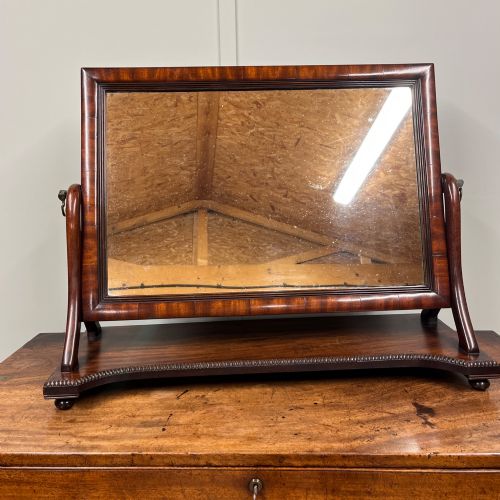
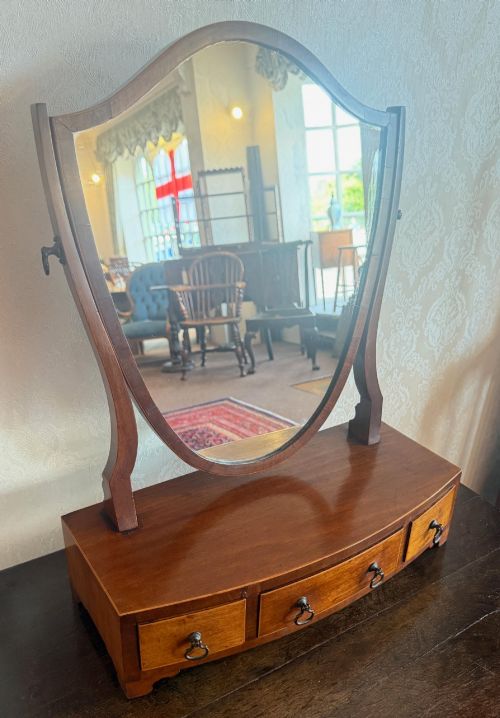
The most common formats on this page are table top toilet mirrors with small drawer bases and larger floor-standing cheval mirrors. Makers constructed these mirrors in various shapes, including shield, oval, and rectangular plate designs.
Originating primarily as dressing table accessories or standalone floor glasses, these items reflect the shifting domestic habits and interior tastes of the eighteenth, nineteenth, and early twentieth centuries.
Materials and Construction
Craftsmen utilised solid mahogany and mahogany veneers for the frames, upright supports, and drawer bases, often selecting timber with rich grain patterns. Secondary woods and structural inserts provided stability to the pivoting mechanisms.
Glass plates were silvered and fitted into rebated frames, secured by wooden beads or pins. Metal components such as brass swing screws, sabots, and castors allowed the mirror plate to tilt smoothly on its axis.
Details like bone escutcheons, parcel-gilt highlights, and ormolu mounts appear on specific examples, demonstrating the range of decorative techniques applied by period cabinet makers.
Listings feature mahogany swivel dressing mirrors spanning from the Georgian period through the Victorian and Edwardian eras, incorporating materials like brass, bone, and glass.
Evaluating Quality
Quality in a mahogany swivel dressing mirror rests upon the crispness of the cabinet work, the selection of figured timber, and the integrity of the original joints. Finer examples display carefully dovetailed drawer construction and well-proportioned upright supports.
The sophistication of the brass hardware and the presence of original mirror glass influence the character of the piece. Subtle carving, parcel-gilt detailing, or specialised supports such as barley twist columns distinguish higher-grade examples from simpler utility pieces.
Heal & Sons
The Mahogany Swivel Dressing Mirror Glossary
- Cheval mirror
- A full-length swing mirror supported by a standing frame with four legs. This large form allows a person to view their entire outfit.
- Toilet mirror
- A smaller dressing mirror designed to sit on top of a table, chest, or dressing stand. These often incorporate small drawers in the base.
- Shield mirror
- A mirror plate shaped like a heraldic shield, popular during the Georgian period. The curved upper outline sits within a supportive wooden frame.
- Parcel-gilt
- Partially gilded with gold leaf or paint over a prepared surface. This technique highlights carved mouldings and decorative motifs on mahogany frames.
- Sabot
- A metal sleeve or shoe fitted over the foot of a furniture leg. Brass sabots protect the timber and frequently accompany castors on cheval mirrors.
Mahogany Swivel Dressing Mirror: Frequently Asked Questions
How do you date an antique mahogany mirror?
Dating relies on observing the construction methods, wood selection, and plate shape typical of specific eras. Georgian and Regency pieces often show hand-cut dovetails and lighter framing.
Victorian and Edwardian examples tend to feature heavier proportions, different turning styles on the supports, and machine-cut elements.
Are the mirror plates usually original?
Many older mirrors have replacement glass plates because silvering degrades over long periods. Original glass often shows minor foxing, dark spots, or subtle distortions.
Replacement plates are common and practical for everyday use, while surviving original glass appeals to collectors of period items.
Where should I place a dressing mirror in a room?
Table top versions sit securely on top of chests of drawers, sideboards, or dedicated dressing tables in bedrooms and dressing rooms. Ensure the supporting surface is level and deep enough to bear the weight.
Freestanding cheval mirrors occupy floor space in corners or alongside wardrobes where they can be tilted to the desired angle.