
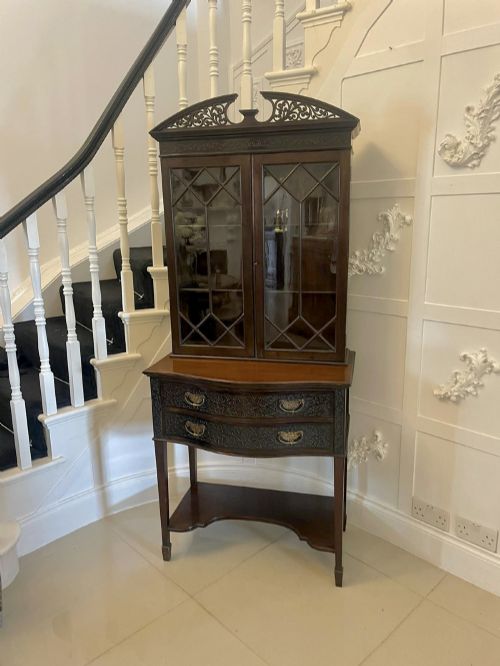
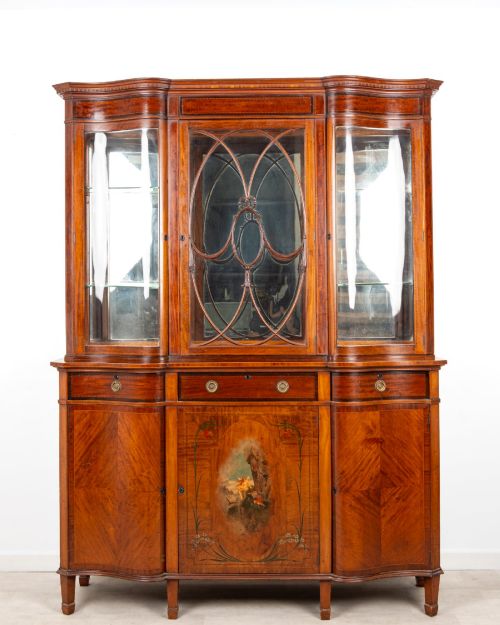
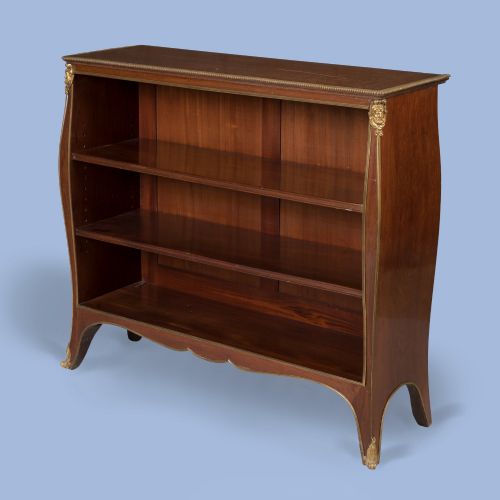
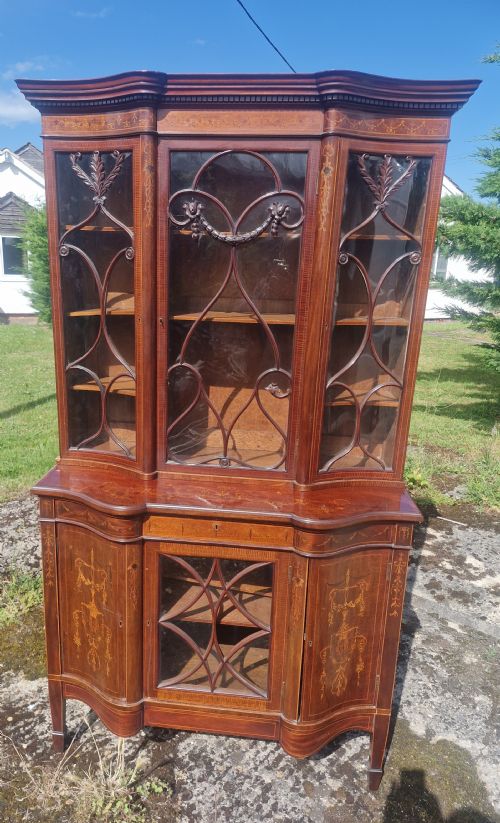
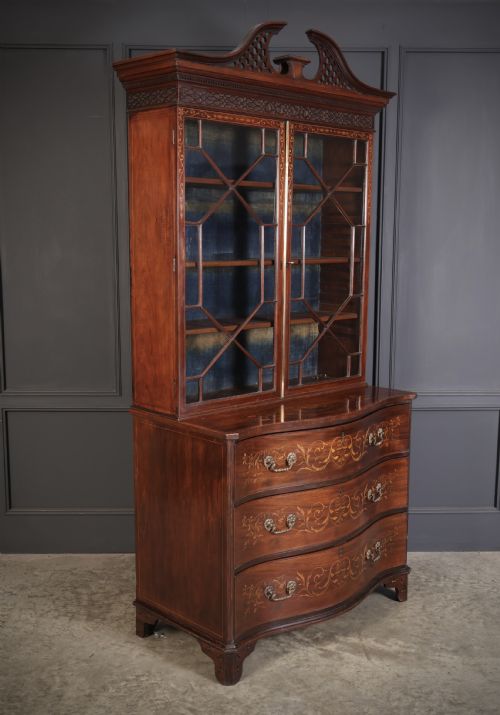


Serpentine Mahogany Bookcase
These serpentine mahogany bookcase pieces offer a gently curving display for a room, combining rich timber with graceful cabinet work.
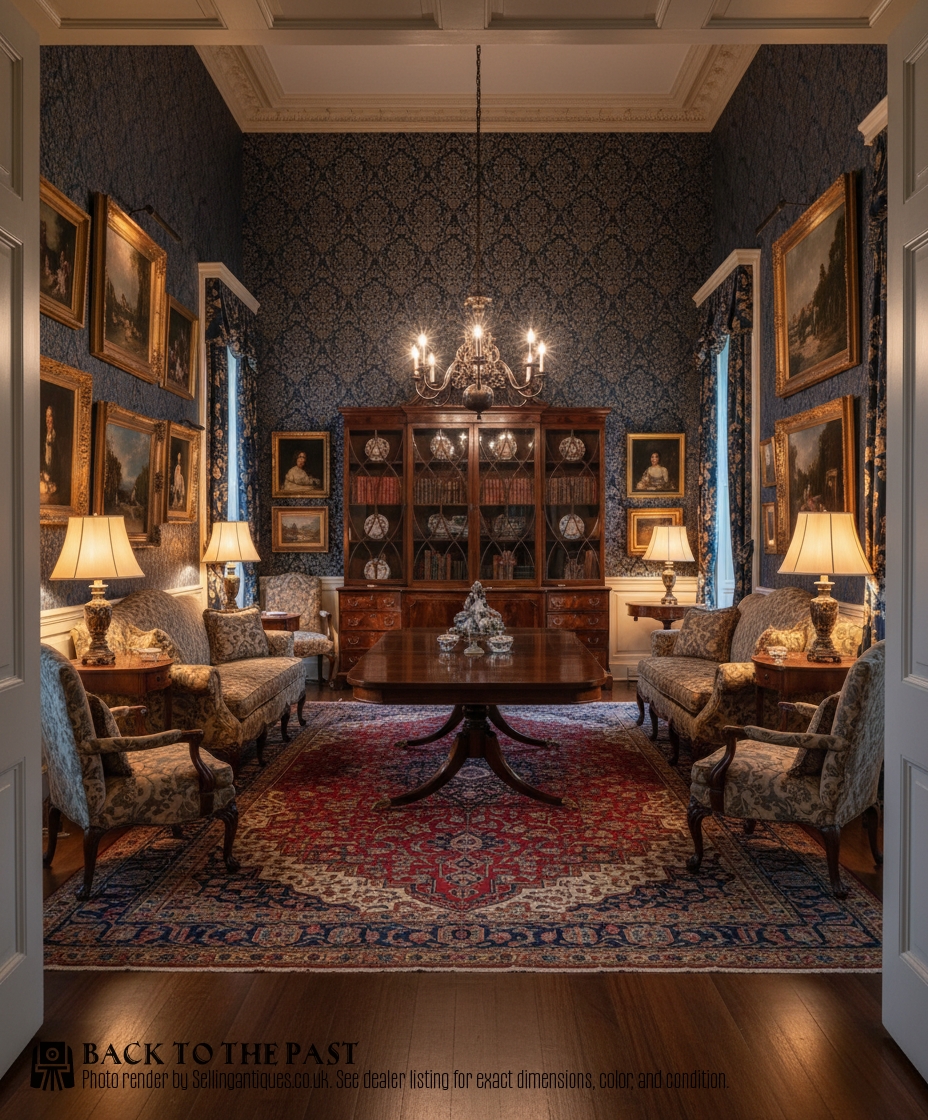
Serpentine Mahogany Bookcase
A serpentine mahogany bookcase presents a characteristic undulating front profile that brings movement to traditional furniture design. Pieces on this page span the Georgian and Victorian eras through to the Edwardian period and the early twentieth century.
The form appears in various configurations, including tall library bookcases, two-part display cabinets, standing corner cupboards, and revolving tabletop versions. Glazed doors and open shelves alternate with enclosed bureau sections and secretaire drawers.
Makers and revivalists of the nineteenth and twentieth centuries adopted George III and Chippendale idioms, applying satinwood inlay, marquetry, and ormolu mounts to the curving mahogany carcass.
Materials and construction
Makers utilised solid and veneered mahogany over robust structural timbers, shaping the signature curved front through careful timber selection and joinery. Satinwood inlay and marquetry foliage add contrast to the dark grain across panels and friezes.
Glazing bars divide glass panel doors, while brass handles, escutcheons, and occasional ormolu mounts provide metalwork detail. Fabric linings sometimes back open shelves or glass-fronted display sections.
The listings span the eighteenth century through to nineteen ten, incorporating Georgian periods, Victorian eras, and Edwardian revivals.
Judging the work
The refinement of the curving front line dictates the visual success of the piece, separating standard cabinet work from superior productions. Crispness in the marquetry inlay and the depth of the mahogany grain distinguish finer examples.
Proportion and the integration of secondary timbers, alongside the handling of brass fittings and glass, mark the distinction between ordinary workshop output and pieces bearing maker stamps.
Edwards & Roberts·Heals·Thomas Chippendale
The Serpentine Mahogany Bookcase Glossary
- Serpentine
- A front profile characterised by a convex central section flanked by two concave curves. This shaping requires expert cabinet work to achieve a fluid line.
- Marquetry
- Decorative patterns formed by inserting pieces of contrasting wood veneer into a prepared ground. It appears frequently on Edwardian and Georgian revival surfaces.
- Secretaire
- A desk form featuring a pull-down writing flap concealing small drawers and pigeonholes. It integrates into the upper structure of a bookcase.
Serpentine Mahogany Bookcase: Frequently Asked Questions
What is a serpentine front?
A serpentine front curves outward in the middle and inward at the sides, creating a wave-like shape across the width of the furniture.
This contour distinguishes standard flat-fronted bookcases from more decorative examples produced during the Georgian and later revival periods.
How do I date an Edwardian bookcase?
Edwardian pieces often feature lighter mahogany tones, delicate satinwood inlay, and machine-cut dovetails within the drawer construction.
Cabinet makers working around nineteen hundred frequently drew inspiration from eighteenth-century Sheraton and Chippendale designs.
Where were revolving bookcases used?
Revolving bookcases sat beside armchairs or desks in libraries and studies to hold frequently consulted reference volumes.
The rotating mechanism allowed users to access multiple shelves without moving the heavy mahogany carcass.
Are glazed doors original?
Glazed doors on these bookcases generally feature individual small glass panes held together by wooden glazing bars known as astragals.
Inspect the uniformity of the glass and the timber patination around the frame to understand the period of the door construction.