




Serpentine Inlaid Side Tables
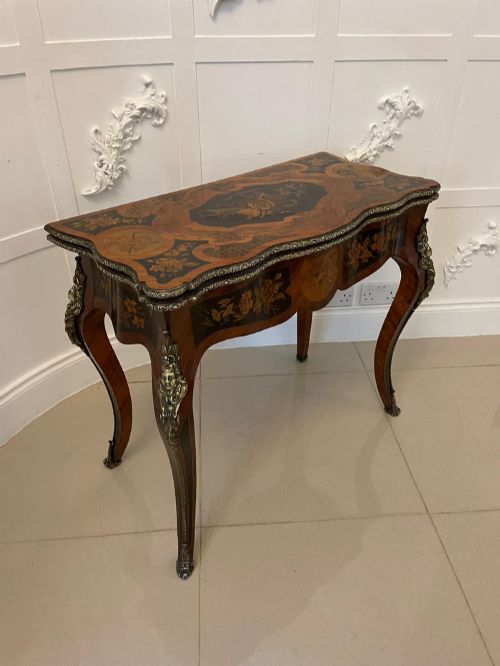
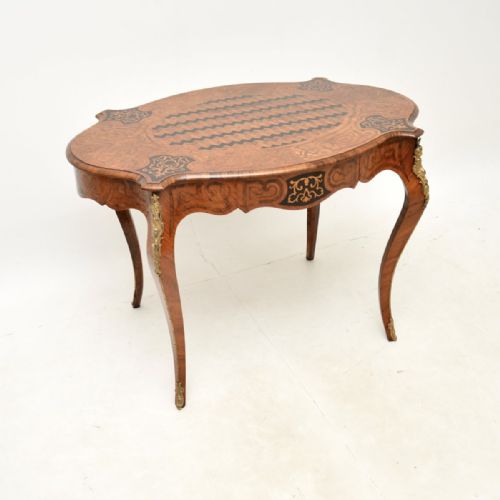
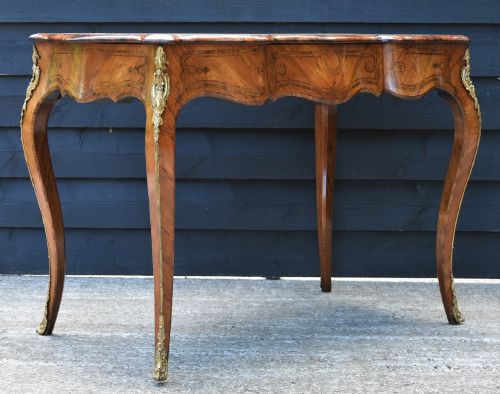
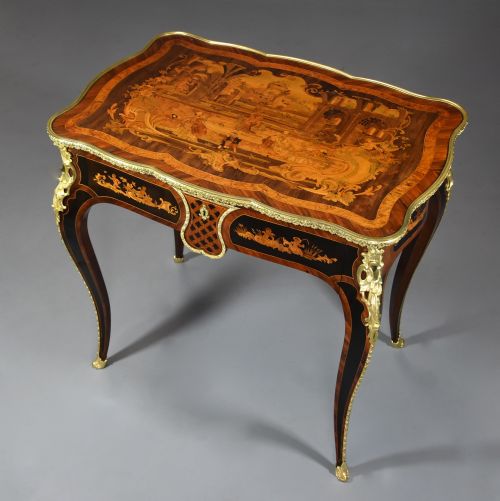
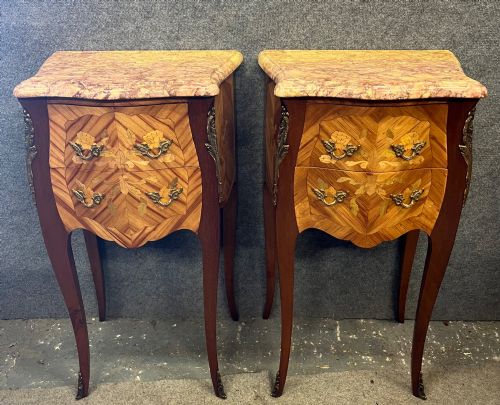
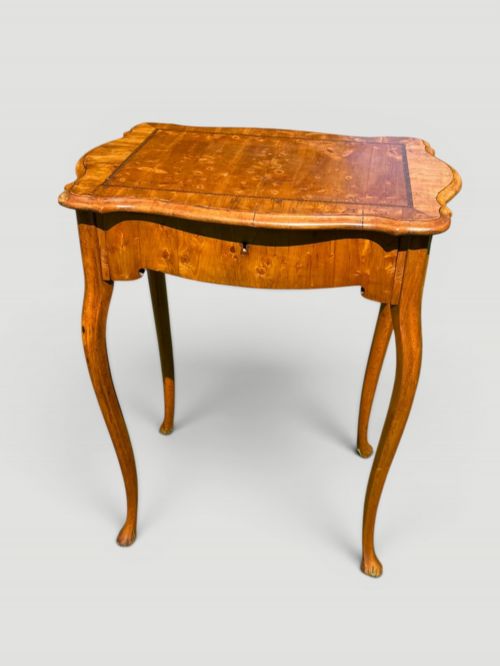
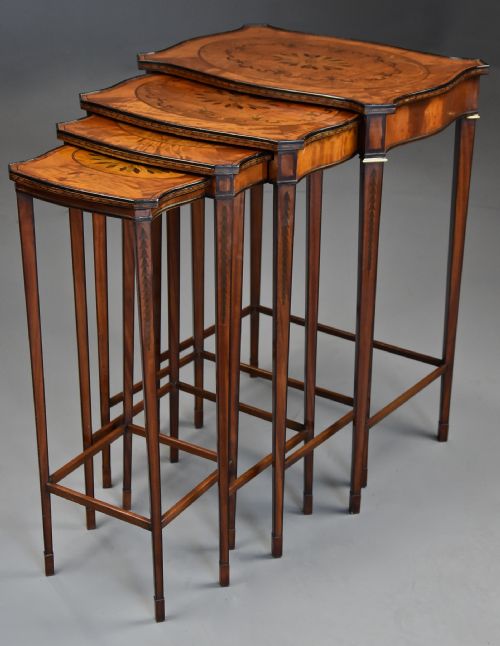
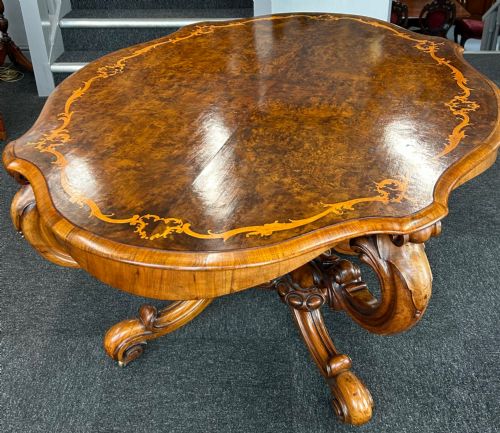
These serpentine inlaid side tables combine curved mahogany, kingwood or satinwood with intricate marquetry and ormolu mounts to anchor a room.
Serpentine Inlaid Side Tables
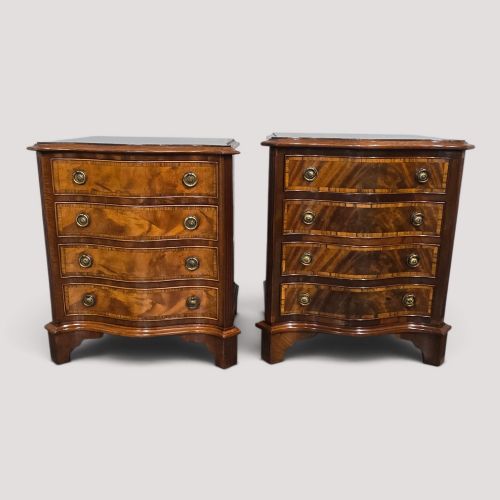
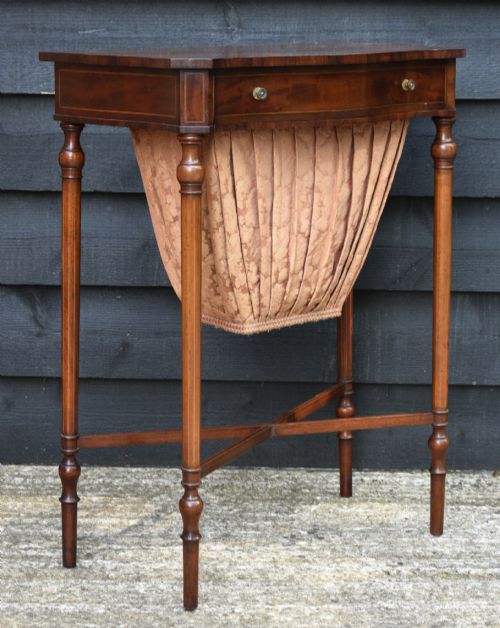
Serpentine inlaid side tables comprise pieces shaped with a distinctive undulating front or edge, frequently found in Georgian mahogany, Victorian walnut, and Edwardian satinwood formats. The selection here spans from eighteenth-century George III serving and card tables to nineteenth-century French Louis XV revival pieces finished with intricate wood inlay.
Buyers encounter a variety of forms beyond standard side tables, including centre tables, occasional tables, console tables, and specialised writing desks. These furnishings reflect periods ranging from the Georgian era through to the Edwardian period, often displaying continental influences such as French marquetry and ormolu details.
How they were made
Cabinetmakers constructed these tables using a carcase of mahogany, walnut, or kingwood, applying decorative veneers such as satinwood and burr walnut over the curved serpentine frames. Wood inlay and marquetry techniques created floral or geometric patterns across the surfaces, requiring considerable precision to follow the undulating contours of the timber.
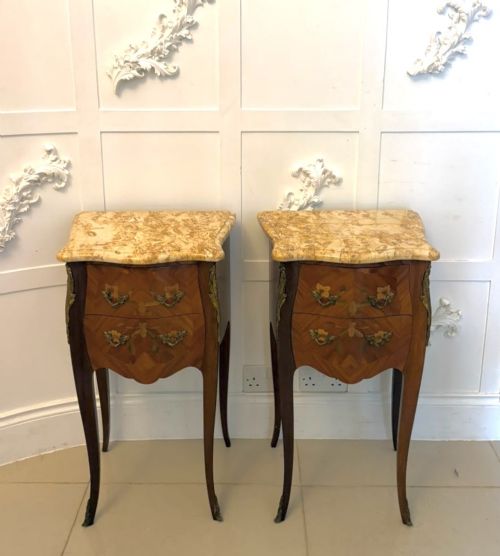
Many examples incorporate cast brass or ormolu mounts along the edges, feet, and aprons to accentuate the serpentine outlines. Marble tops also appear on specific continental and bedside variants, fitted directly onto the wooden framework.
Several tables include hidden compartments designed for clandestine correspondence or jewellery.
What varies in quality
The degree of refinement in the marquetry and the choice of underlying timber dictate the standard of execution across these tables. Dense burr walnut, figured kingwood, and finely grained satinwood denote higher tiers of production, particularly when combined with crisp ormolu mounts and hand-cut veneers.
Structural integrity along the curved serpentine edges and the precision of the joinery distinguish workshops of note from standard commercial output. Tables bearing documented signatures or attribution to makers such as Maison Millet or Henry Dasson reflect a superior level of craftsmanship.
Maison Millet·Henry Dasson
The Serpentine Inlaid Side Tables Glossary
- Serpentine
- A furniture design featuring a front or edge shaped with a central convex curve flanked by concave sweeps. This undulating profile requires skilled woodworking to shape the solid timber and apply veneers.
- Marquetry
- The art of applying small pieces of veneer to a structure to form decorative patterns and pictorial scenes. Craftsmen utilise contrasting woods like satinwood, walnut, and kingwood.
- Ormolu
- Gilded bronze mounts applied to furniture edges, legs, and corners. This decorative technique appears frequently on French revival pieces.
- Parquetry
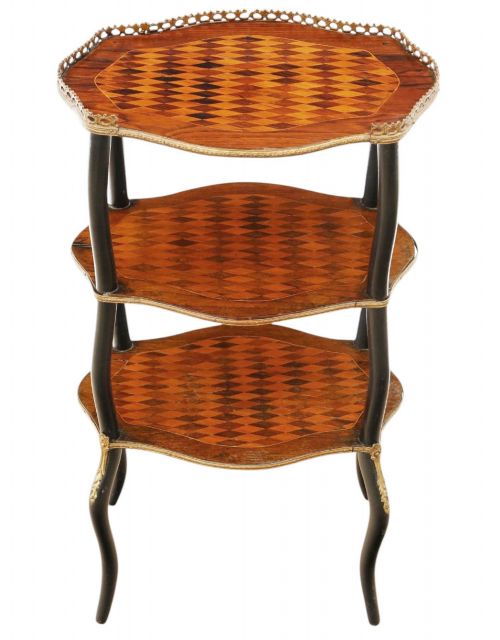
- Geometric wood inlay work arranged in patterns such as cubes or chequers. It differs from marquetry by using regular geometric shapes rather than pictorial designs.
- Kingwood
- A dense, heavily grained timber imported from Brazil, prized for its rich dark brown colouring and pale golden streaks. Makers utilised it extensively in high-status nineteenth-century French furniture.
Serpentine Inlaid Side Tables: Frequently Asked Questions
How do I identify George III tables?
George III pieces date from the eighteenth century and typically utilise solid mahogany with understated inlay or carving. They rely on proportions and timber grain rather than heavy ornamentation.
Comparing these to later nineteenth-century revival styles reveals a transition from structural simplicity to more elaborate marquetry and applied bronze mounts.
Where were these tables placed?
Side tables and console tables were traditionally positioned against walls in hallways, drawing rooms, and dining parlours. Freestanding centre tables occupied the middle of large reception rooms.
Smaller occasional tables and bedside chests served functional roles in bedrooms and private chambers, holding lamps or writing materials.
What is the difference between marquetry and parquetry?
Marquetry involves cutting varied veneers to create pictorial or organic motifs, such as floral sprays. Parquetry constructs repeating geometric patterns using precise blocks of wood.
Both techniques decorate the surfaces of these tables, often appearing together on nineteenth-century French and English pieces.