


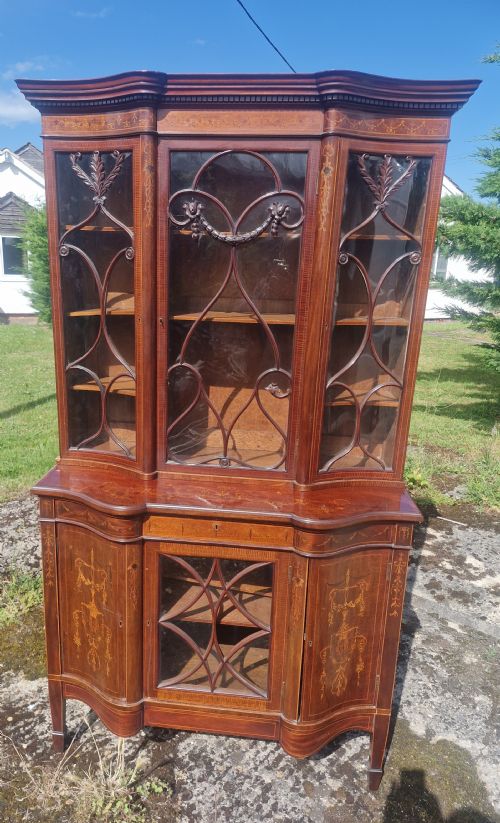
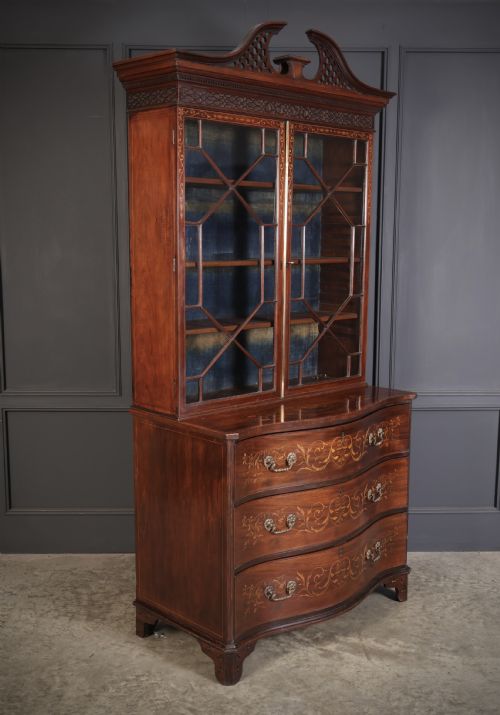


Serpentine Glazed Cabinet
A serpentine glazed cabinet brings together curved glass and rich timbers, offering a refined way to display collections inside traditional rooms.
Serpentine Glazed Cabinet
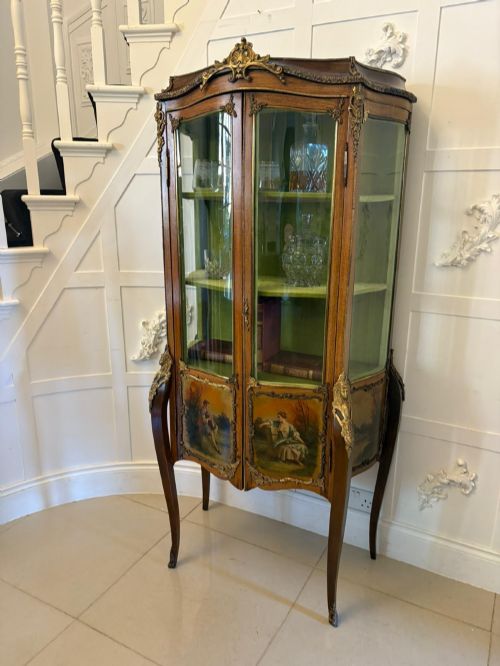
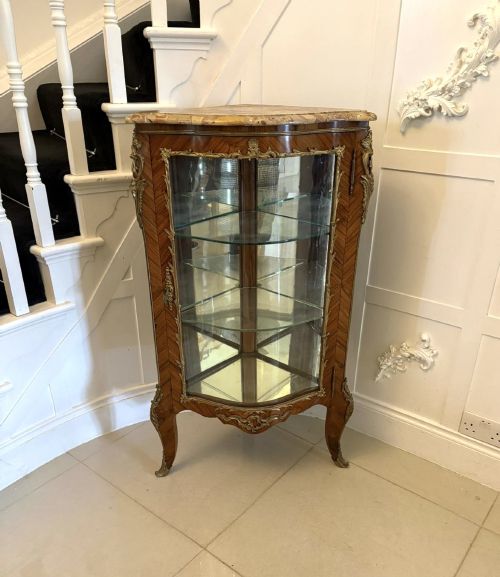
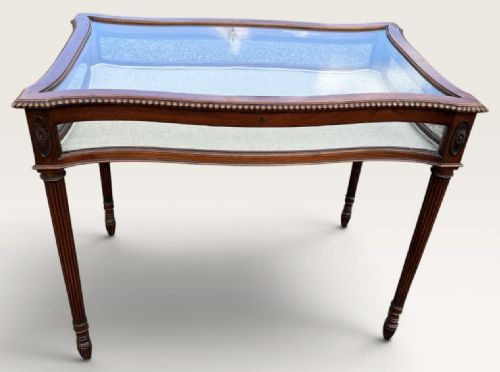
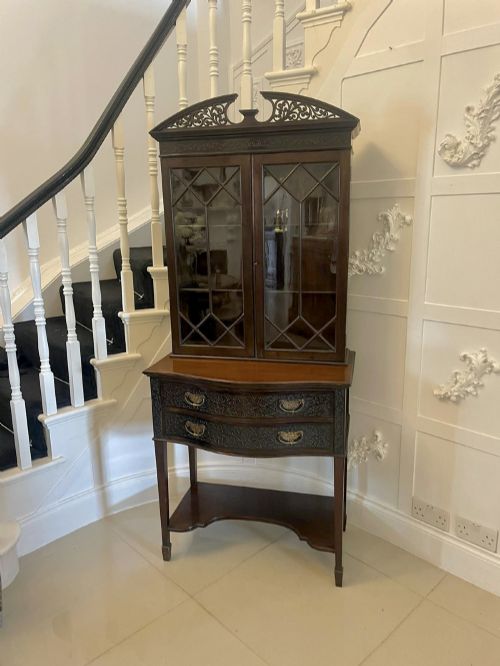
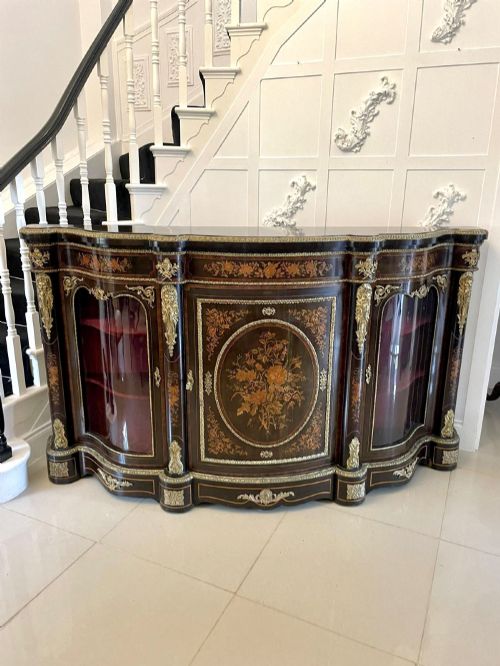
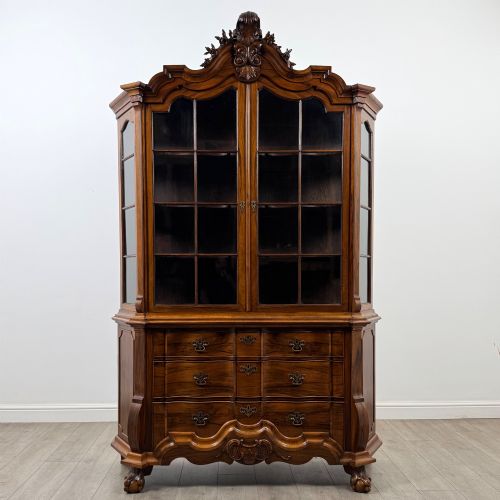
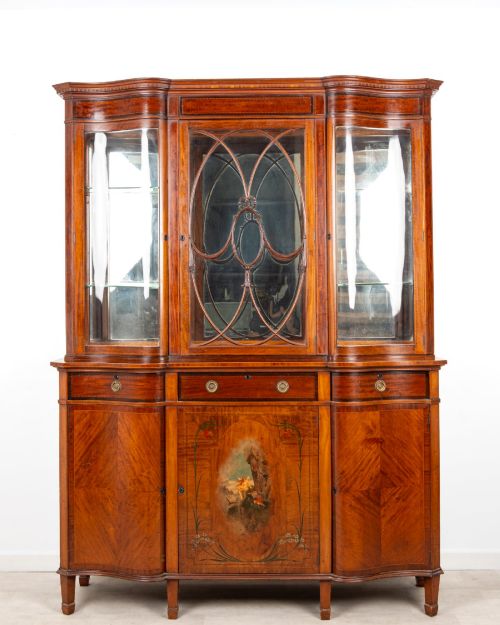
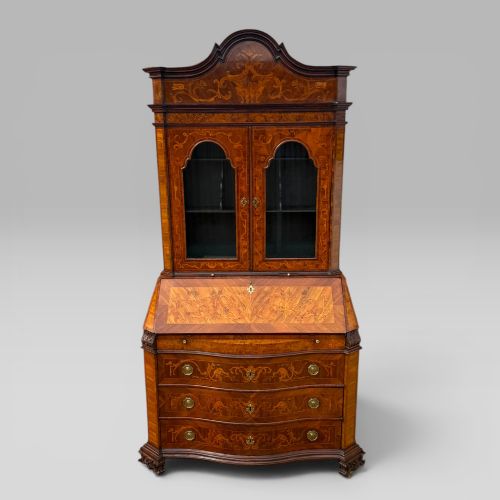
A serpentine glazed cabinet is defined by its distinctively undulating, wave-like front profile combined with glass panels for display. These pieces emerge predominantly from the nineteenth and early twentieth centuries, spanning Victorian, Edwardian, and revivalist periods.
Buyers will encounter several variations in form across this selection, including corner display cabinets, standing vitrines, and expansive credenzas. The serpentine curve defines the timber carcase and dictates the shape of the glazed doors or side panels.
Origins stretch across English workshops and continental makers, particularly drawing on French Louis XV and Rococo aesthetic influences. Walnut, mahogany, and kingwood frequently form the foundational structures of these display items.
How they were made
Cabinetmakers constructed the undulating serpentine carcases using dense timbers such as mahogany, walnut, and kingwood, often enhanced by burr walnut or satinwood veneers. Marquetry inlay and floral patterns decorate many surfaces, requiring precise hand-cutting of contrasting woods.
Cast ormolu mounts punctuate the corners and borders, whilst glass panels are secured within curved wooden framing to maintain the continuous front wave. Traditional joinery underpins the stability of these complex multi-timber constructions.
Some cabinets hide their contents behind such complex curves that even the glassware inside appears to engage in a slow, silent dance.
What varies in quality
The sophistication of the timber veneers and the intricacy of the marquetry inlay dictate the upper tiers of craftsmanship. Finer examples display harmonious grain selection across the curved serpentine fronts without visual disruption.
Chasing and weight of the cast ormolu mounts separate standard production from superior pieces. Heavier, crisply detailed metalwork integrated seamlessly into the woodwork indicates a higher grade of workshop output.
Edwards & Roberts
The Serpentine Glazed Cabinet Glossary
- Serpentine
- A curved furniture front shaped in a convex-concave-convex wave resembling a serpent's path. This profile requires skilled timber bending and custom glazing.
- Marquetry
- Inlaid patterns formed by fitting small pieces of veneer into a prepared wooden ground. Cabinetmakers used various exotic woods to create floral or geometric motifs.
- Vitrine
- A glass-fronted cabinet designed specifically for displaying porcelain, curiosities, or silver. These pieces often incorporate mirrored backs to reflect light.
- Credenza
- A low cabinet, frequently fitted with glass doors or side cupboards, used historically for serving and display. Victorian iterations often include serpentine shaping and marquetry.
Serpentine Glazed Cabinet: Frequently Asked Questions
Where should I place a serpentine glazed cabinet?
These cabinets suit drawing rooms or dining spaces where natural light can catch the curved glass and highlighted timber veneers. Positioning them away from direct heat sources protects the antique wood and veneer.
Because the front profile undulates outward, allow sufficient clearance in walkways so the curved shape remains fully visible and unobstructed.
How do I care for the timber and ormolu?
Dust the surfaces regularly with a soft, dry cloth and avoid modern aerosol polishes that leave chemical buildups on the finish. Period timber benefits from occasional applications of appropriate wax.
Keep ormolu mounts clean by dusting gently with a soft brush, ensuring moisture does not linger in the crevices of the cast metal.
How do I distinguish Victorian from Edwardian pieces?
Victorian cabinets from the mid to late nineteenth century often feature heavier burr walnut, rich marquetry, and substantial ormolu ornamentation. The aesthetic frequently leans toward French revival styles.
Edwardian pieces tend to display lighter mahogany frames, delicate satinwood inlay, and a generally brighter, less ornate approach to surface decoration.
What is the purpose of the curved glass?
The curved glass follows the serpentine contour of the wooden frame, softening the silhouette compared to flat-fronted display cases. It allows light to enter the cabinet from multiple angles.
This shaping enhances visibility for displayed objects while demonstrating the advanced glass-bending capabilities of period workshops.